DbcultAccessing Vault...
5.2/10
Senior Film Conservator
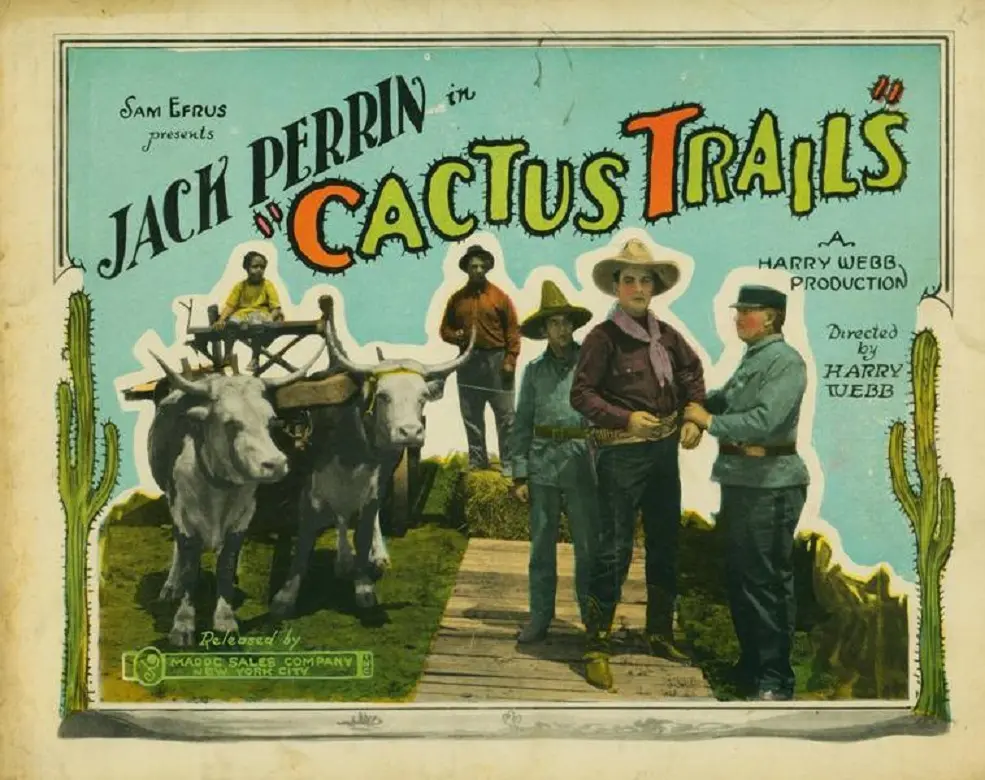
A definitive 5.2/10 rating for a film that redefined the boundaries of cult cinema. Cactus Trails remains a cornerstone of transgressive art.
Is Cactus Trails worth your time in the modern age? Short answer: only if you possess a deep-seated appreciation for the kinetic, unpolished energy of 1920s 'Poverty Row' westerns. This film is for the cinematic archaeologist who finds beauty in grainy celluloid and the raw athleticism of silent-era stuntmen; it is decidedly not for anyone who requires a coherent plot or nuanced character development to stay engaged.
This film works because the physical chemistry between Jack Perrin and his equine co-star, Starlight, provides a genuine sense of momentum that the script lacks. This film fails because its middle act collapses into a series of static ranch scenes that drain the tension built during the opening rescue. You should watch it if you want to see a rare example of a female lead in a silent western—Inez Almado—taking an active role in a jailbreak rather than merely waiting to be saved.
Jack Perrin was never the most expressive actor of his generation, but in Cactus Trails, his stoicism serves the character of Jack Wiley well. Wiley is a man of few words—literally, given the medium—but his actions speak to a rugged individualism that was already becoming a trope by 1927. When he saves Inez from her own team's incompetence, he doesn't do it for a reward. He does it because it's the only logical thing to do in a landscape that actively tries to kill the weak.
The film takes an interesting, albeit brief, detour into social commentary when Wiley is jailed for helping a servant. This moment of injustice is the film's strongest thematic beat. It suggests a world where the law is a tool for the powerful rather than a shield for the righteous. This isn't quite as dark as the themes found in The City of Silent Men, but for a standard western, it’s a surprisingly sharp observation on class dynamics. It works. But it's flawed by how quickly the film moves on from the gravity of that imprisonment.
It is an unconventional observation, but Starlight the Horse is arguably a better actor than half the human cast. In the silent era, 'wonder horses' were a major draw, and Starlight carries the final act of this film on his back. The way the camera captures the horse navigating the treacherous terrain of the desert is more thrilling than any of the dialogue cards. The horse has a presence that demands attention.
Take the final rescue scene, for instance. As Jack Wiley pursues the abductors, the cinematography shifts from static wide shots to a more frantic, handheld-adjacent style that emphasizes the speed of the chase. You can almost feel the dust in your throat. This sequence stands in stark contrast to the earlier, more theatrical scenes at the Almado ranch. The film is at its best when it stops trying to tell a story and starts showing a race.
Cactus Trails is a functional piece of genre entertainment from a bygone era. It provides a clear, linear story with a defined hero and villain. While it lacks the artistic ambition of major studio releases from the same year, it offers a window into the type of 'Saturday Matinee' content that fueled the American film industry. It is a reliable, if predictable, western experience.
When placed alongside other films of the period, such as '49-'17, Cactus Trails feels significantly more traditional. Where '49-'17 played with the idea of the 'Old West' as a performance, Cactus Trails plays it straight. There is no irony here. There is only the trail, the gun, and the girl. This sincerity is both its greatest strength and its most glaring weakness.
The film also features Chris-Pin Martin, an actor whose career would span decades. Seeing him here in an early role provides a fascinating look at how Hollywood utilized character actors of color in the 1920s. While the role is somewhat stereotypical, Martin’s natural charisma shines through the limitations of the script. He brings a levity to the proceedings that Perrin simply cannot manage.
The direction by Scott Pembroke is workmanlike. He knows how to frame a horse at a gallop, but he struggles with the interior scenes at the ranch. The pacing during the middle thirty minutes of the film is glacial. We spend far too much time watching Jack Wiley be a 'guest' when we really just want to see him back on the trail. The film feels trapped between being a character study and an action flick, and it succeeds at neither during these moments.
However, the jailbreak sequence is a masterclass in low-budget tension. Alma Rayford’s Inez Almado isn't just a prize to be won; she’s the catalyst for Jack’s freedom. The way she navigates the shadows of the town to reach the jail cell shows a level of agency that was often denied to women in westerns like Wild Women. It’s a punchy, effective scene that justifies the price of admission—or at least the time spent watching it on a streaming archive.
Pros:
The outdoor cinematography captures the desolation of the frontier effectively. Jack Perrin’s riding skills are genuinely impressive. The film avoids some of the more saccharine romantic tropes of the era in favor of a more grounded, transactional relationship between the leads.
Cons:
The print quality of surviving copies is often poor, making some night scenes difficult to parse. The villain is a cardboard cutout with zero motivation beyond 'being bad.' The subplot involving the servant is introduced and then discarded far too quickly to have any lasting impact.
If you are a student of film history, yes. There is a specific thrill in watching how these early filmmakers utilized the natural landscape to create drama. If you are looking for a casual movie night, however, you might find yourself reaching for the fast-forward button during the ranch sequences. It is a film of moments—brilliant flashes of action buried in a somewhat tedious narrative structure.
Compared to more polished works like Jamestown or the dramatic weight of The House Built Upon Sand, Cactus Trails is a B-movie through and through. But there is a charm in that lack of pretension. It knows exactly what it is: a vehicle for a man and his horse.
Cactus Trails is a dusty, imperfect relic of the silent era that manages to entertain despite its structural flaws. It’s a film that reminds us that before there were CGI explosions and complex anti-heroes, there was just a man, a horse, and a dusty trail. It’s not a masterpiece. It’s barely a classic. But it is a fascinating piece of the puzzle that is American cinema history. Watch it for Starlight, stay for the jailbreak, and forgive the rest.
IMDb 5.8
1928
Community
Log in to comment.