DbcultAccessing Vault...
Cult Review
Senior Film Conservator
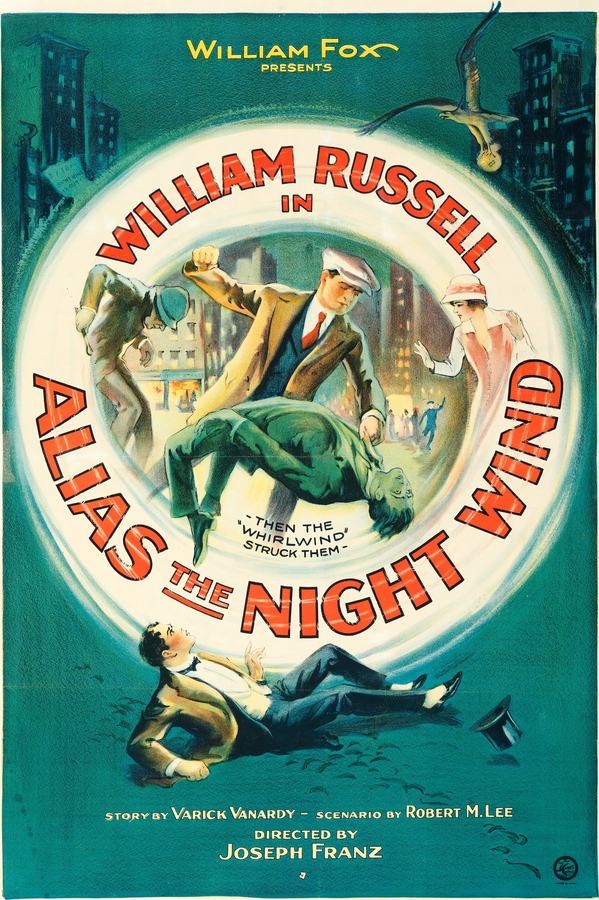
In the pantheon of early 20th-century cinema, few figures embody the frantic energy of the wrongly accused quite like Bing Howard in Alias the Night Wind. This 1923 silent thriller, adapted from the prose of Frederic Van Rensselaer Dey, serves as a searing indictment of a justice system susceptible to the whims of the corrupt. Howard, portrayed with a palpable, jittery intensity by William Russell, is not merely a man on the run; he is a symbol of the fragile middle class, a stockbroker whose social standing is annihilated by a single act of forensic forgery. The film captures the terrifying velocity of a life unspooling, where the familiar streets of the city transform into a predatory maze. Unlike the more domestic tragedies found in Sins of the Parents, this narrative thrives on the externalization of internal panic, utilizing the urban landscape as a secondary antagonist.
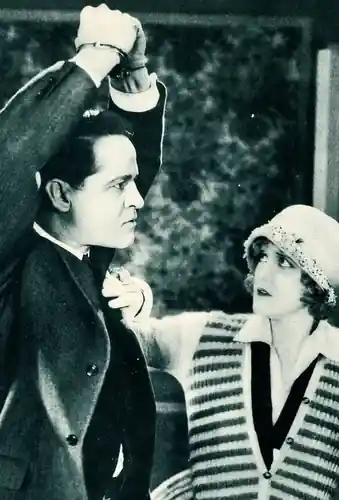
The antagonist, Clifford Rushton, represents a chilling precursor to the noir villains of the 1940s. He is the institutional rot personified—a private detective who has weaponized his authority to facilitate his own larceny. The framing of Howard is not merely a crime of opportunity but a calculated maneuver to maintain the status quo of his criminal enterprise. When we observe Rushton's methods, we see a dark reflection of the themes explored in The Shadows of a Great City, where the metropolis hides the most venal of sins behind a veneer of professional respectability. Rushton’s failure to apprehend Howard is not due to a lack of resources, but rather the 'Night Wind’s' supernatural ability to traverse the city's periphery—a testament to the character’s evolution from a man of finance to a creature of the nocturnal elements.
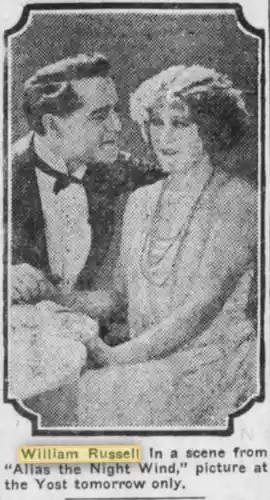
The pivot point of the film occurs with the introduction of Katherine Maxwell, known in the underworld and the precinct alike as 'Lady Kate.' In an era where female roles were often relegated to the damsel or the vamp, Lady Kate emerges as a sophisticated intellectual force. Her motivation is deeply personal, rooted in the historical trauma of her brother's imprisonment—a narrative thread that shares a spiritual kinship with the familial burdens seen in Held in Trust. Kate does not merely seek to capture Howard; she seeks to dismantle the mechanism that ensnared him. Her 'alias' is a tool of liberation, contrasting sharply with Howard's 'alias,' which is a badge of exile. The chemistry between the fugitive and the detective is built on a foundation of shared victimhood, creating a partnership that transcends the typical romantic tropes of the period.
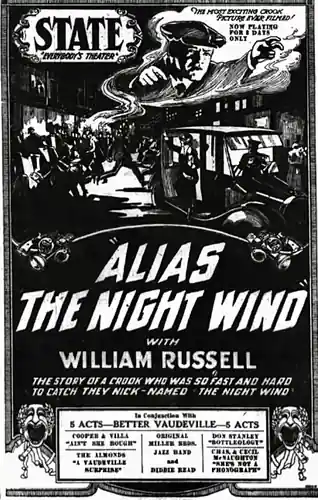
The cinematography of Alias the Night Wind utilizes the limitations of silent film to its advantage. The use of low-key lighting and high-contrast shadows anticipates the expressionistic fervor that would later define the genre. As Howard flees through the industrial skeletons of the city, the camera captures a sense of claustrophobia that is reminiscent of the haunting atmospheres in Spöket på Junkershus. There is a rhythmic quality to the editing, particularly during the sequences where Howard evades Rushton’s dragnet. The film understands that suspense is not merely a product of plot, but of pacing. The visual storytelling here is more robust than in contemporary works like The Wrong Door, favoring a visceral, almost documentary-style approach to the chase.
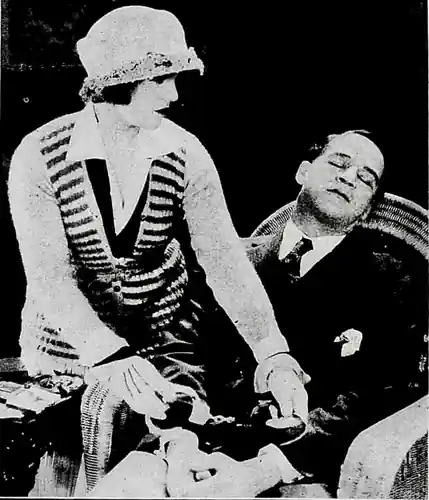
When placed alongside The Cheater Reformed, Alias the Night Wind offers a more cynical take on the possibility of redemption. In the former, the path to righteousness is clear and moralistic; in the latter, the path is obscured by systemic corruption. Howard cannot simply 'reform' his way out of a frame-up; he must actively combat the forces that define his identity. This thematic complexity is also mirrored in The Scarab Ring, where objects of power and evidence dictate the fate of the protagonists. The film also touches upon the class dynamics of the 1920s, showing a stockbroker’s fall from grace with a gravity that contrasts with the lighter social critiques of Hickville to Broadway.
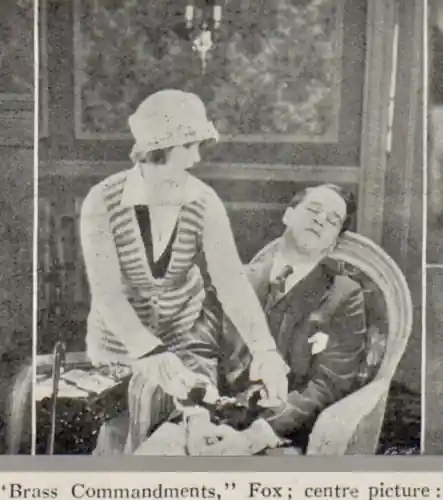
The screenplay by Robert N. Lee, based on Frederic Van Rensselaer Dey’s work, is a masterclass in structural efficiency. It avoids the melodramatic pitfalls often found in silent adaptations of pulp novels. The stakes are established early and reinforced through a series of escalating encounters. The screenplay manages to weave together three distinct threads: Howard’s survival, Rushton’s greed, and Maxwell’s quest for vengeance. This tripartite structure provides a depth of field that is often lacking in more linear narratives like Laws and Outlaws. Lee’s writing ensures that every character is motivated by a specific, tangible need, making the eventual revelation of Rushton’s guilt feel earned rather than coincidental.
The moniker 'Night Wind' is more than just a colorful epithet; it signifies Howard’s transition into an elemental force. He becomes intangible, a presence that is felt but cannot be grasped. This ethereal quality is a stark contrast to the heavy, grounded reality of the police station and the courtroom. In many ways, Howard represents the burgeoning anxiety of the post-WWI era—a man who has lost his place in the sun and must learn to navigate the dark. This sense of existential wandering is a theme that resonates through international cinema of the time, such as in the evocative Pesn lyubvi nedopetaya. However, Alias the Night Wind grounds this metaphysical wandering in the gritty reality of American crime fiction.
Released in 1923, the film stands at the precipice of the Golden Age of Hollywood. It showcases a sophistication in storytelling that moved beyond the simple morality plays of the previous decade. While films like Every Girl's Dream or Nature's Handiwork focused on idyllic or fantastical themes, Alias the Night Wind leaned into the darkness of the human condition. It shares an affinity with the sprawling urban mysteries of Les mystères de Paris, yet it maintains a uniquely American focus on individual agency and the corruption of the frontier spirit within the city limits. The film also avoids the exoticism of The Pagan God, choosing instead to find horror in the familiar and the mundane.
The enduring appeal of Alias the Night Wind lies in its universal fear: being blamed for a crime one did not commit. This primal anxiety is what drives the audience's empathy for Bing Howard. As he hides in the temporary sanctuary provided by Lady Kate, we see a man stripped of his ego, forced to rely on the mercy of a stranger. This vulnerability is rarely seen in the stoic heroes of early cinema. It brings a level of humanism that transcends the pulp origins of the story. Even compared to the emotional depth of Die lachende Seele, Howard’s plight feels remarkably modern. The resolution, where Lady Kate proves Rushton’s double-crime, is not just a victory for Howard, but a restoration of the moral universe.
To watch Alias the Night Wind today is to witness the birth of a genre. It is a film that understands the power of the shadow and the weight of a name. The performances, particularly from William Russell and the actress playing Katherine Maxwell (Maude Wayne), are nuanced and devoid of the over-the-top theatricality that plagued many silents. The direction is confident, utilizing the frame to emphasize Howard's isolation. While it may not have the surrealist leanings of some European counterparts, its technical proficiency and narrative drive make it a cornerstone of 1920s American cinema. It is a testament to the fact that even in the silent era, the most powerful stories were those that spoke to the inherent struggle for truth in a world governed by deception. The 'Night Wind' may eventually stop blowing, but the impact of this film remains a constant breeze in the history of the thriller genre.
IMDb —
1926
Community
Log in to comment.