DbcultAccessing Vault...
Cult Review
Senior Film Conservator
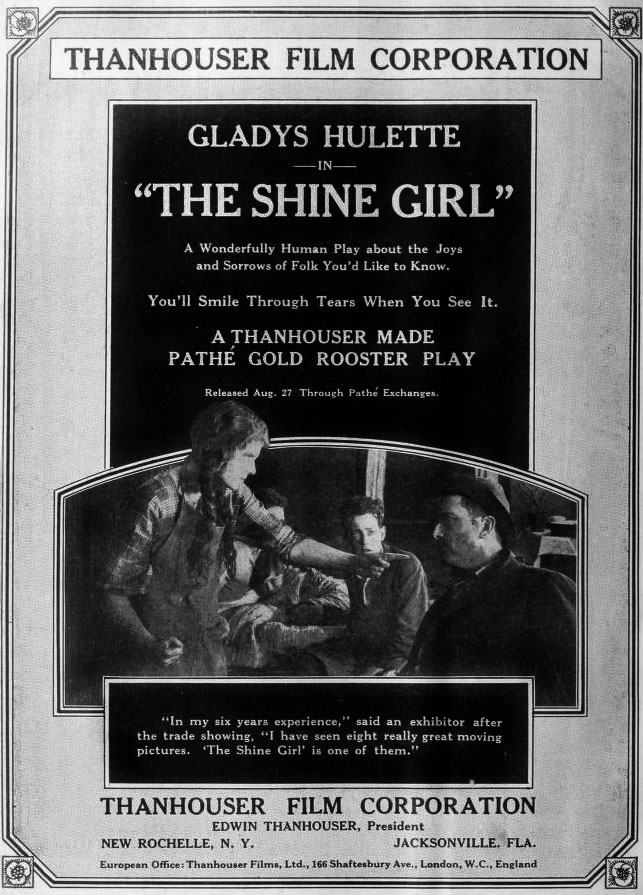
The year 1916 was a period of profound aesthetic transition for American cinema, a time when the crudeness of early nickelodeon shorts gave way to the sophisticated narrative architectures of feature-length dramas. Among these emerging treasures, The Shine Girl, produced by the venerable Thanhouser Film Corporation, stands as a luminous example of the 'social reform' subgenre. Written by the prolific Agnes Christine Johnston, the film navigates the precarious boundary between sentimentalism and sharp social observation, avoiding the mawkish pitfalls that frequently ensnared contemporary productions like Hoodoo Ann.
At the center of this celluloid tapestry is Gladys Hulette, an actress whose physical vocabulary was uniquely suited to the silent medium. As the titular 'Shine Girl,' Hulette portrays a character who earns her precarious living polishing the footwear of the city’s indifferent proletariat. Unlike the grim protagonists found in European realism of the same era—think of the starkness in Der Katzensteg—Hulette’s character is infused with an ebullience that borders on the transcendent. Her performance is not merely one of survival; it is one of defiance. She refuses to allow the urban grime to penetrate her interior landscape.
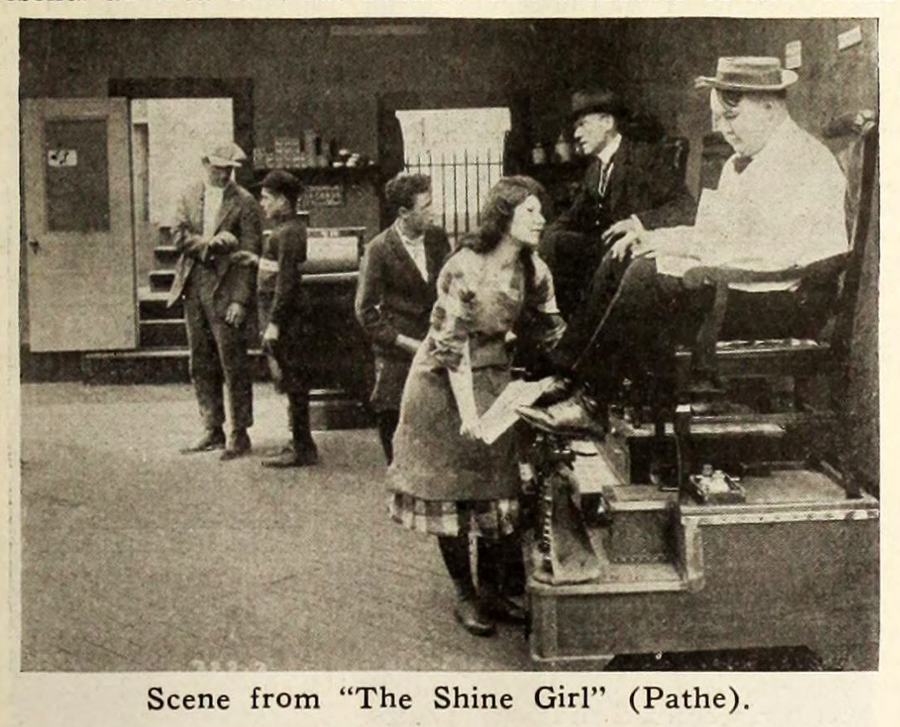
The cinematography during the city sequences utilizes a high-contrast palette that emphasizes the claustrophobia of the tenements. We see the influence of early pictorialism here, where the smoke and steam of the city create a hazy, almost suffocating atmosphere. This visual density serves as a foil to the protagonist's inner light. When she interacts with her geranium, 'Sally,' the camera lingers in tight close-ups, a technique that was becoming increasingly sophisticated in the mid-1910s. The plant is not merely a prop; it is a mirror. As the girl struggles to find sunlight in the shadows of skyscrapers, so too does Sally. This botanical symbolism provides a poignant through-line that elevates the film from a simple rags-to-riches tale into a meditation on the necessity of beauty in the face of deprivation.
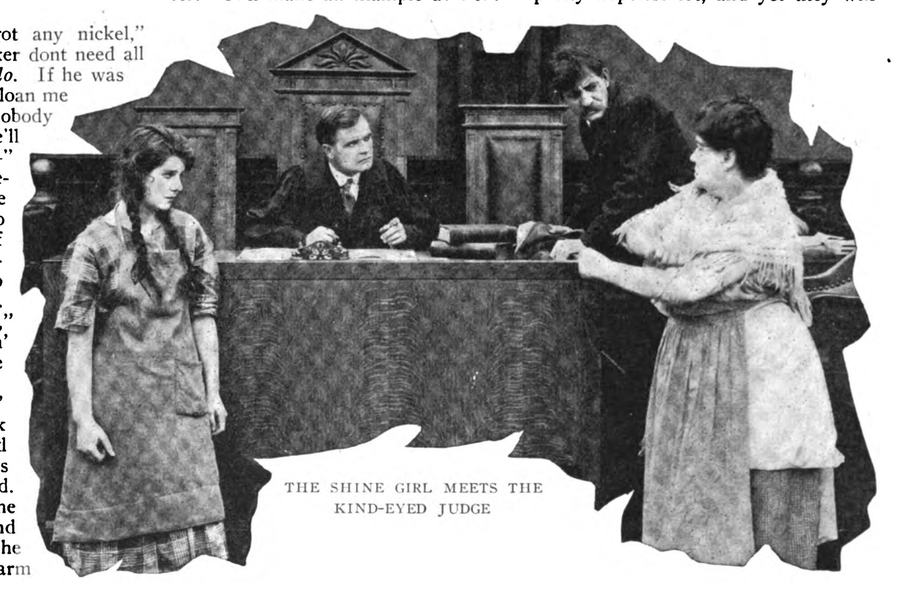
The narrative fulcrum of the film is the Children’s Court sequence. In 1916, the American legal system was undergoing a shift toward juvenile specialized courts, and The Shine Girl captures this zeitgeist with remarkable clarity. John Cook, playing the judge, embodies the paternalistic meliorism of the Progressive Era. His character represents the state as a benevolent gardener, seeking to prune the 'weeds' of the street and replant them in more fertile soil. This thematic preoccupation with social engineering is a common thread in films like The Cotton King, though The Shine Girl approaches it with a more intimate, character-driven focus.
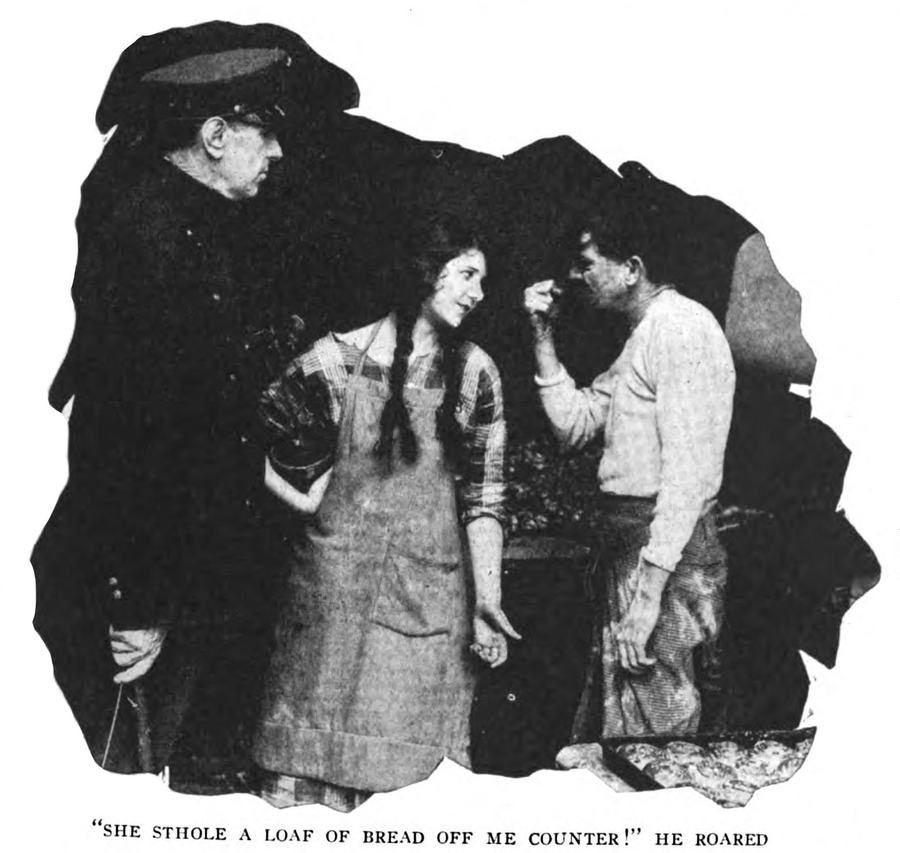
The encounter between the judge and the girl is handled with a delicate touch. There is no heavy-handed moralizing; instead, Johnston’s script allows the girl’s inherent potential to manifest through her concern for her plant. This moment of recognition—where the judge sees not a delinquent, but a displaced soul—is the film’s emotional apex. It contrasts sharply with the more cynical portrayals of authority seen in foreign imports like Beneath the Czar. Here, the American judiciary is presented as an enlightened instrument of salvation, a bridge between the squalor of the slums and the promise of the pastoral.
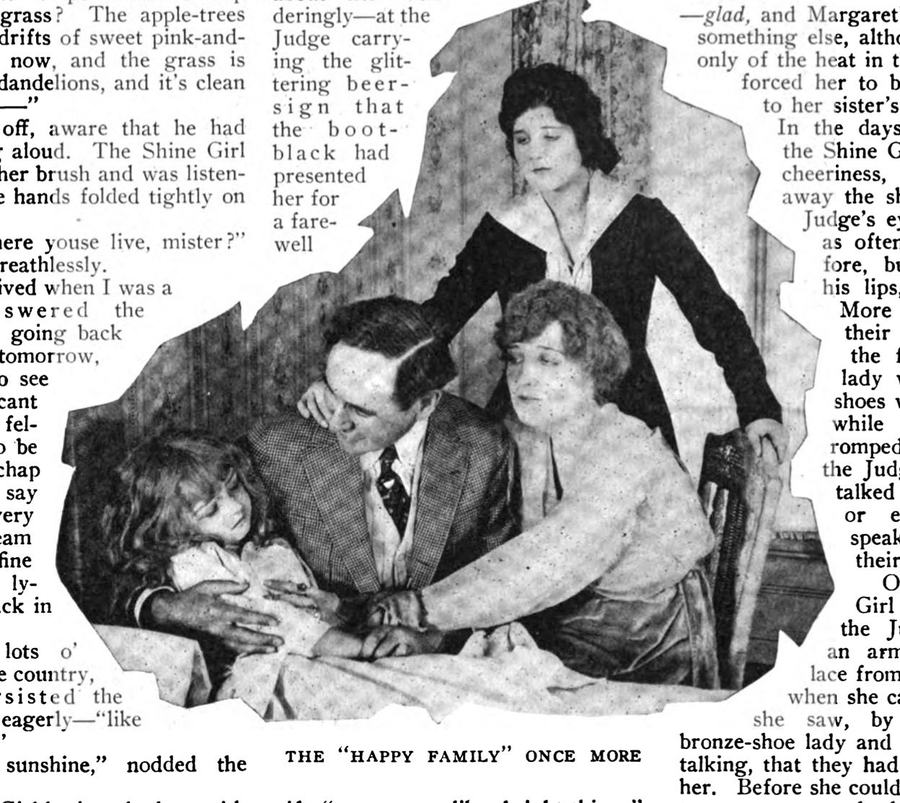
The final act of the film sees the protagonist relocated to the judge’s mother’s country home. This transition is marked by a radical shift in visual language. The jagged lines of the city are replaced by the soft, rolling contours of the countryside. The lighting becomes warmer, more diffused, signaling a shift from survival to flourishing. In this environment, the girl and Sally the geranium undergo a parallel metamorphosis. The rural setting functions as a secular Eden, a place where the stains of the city can be washed away by the restorative power of nature and maternal care (provided by the excellent Blanche Davenport).
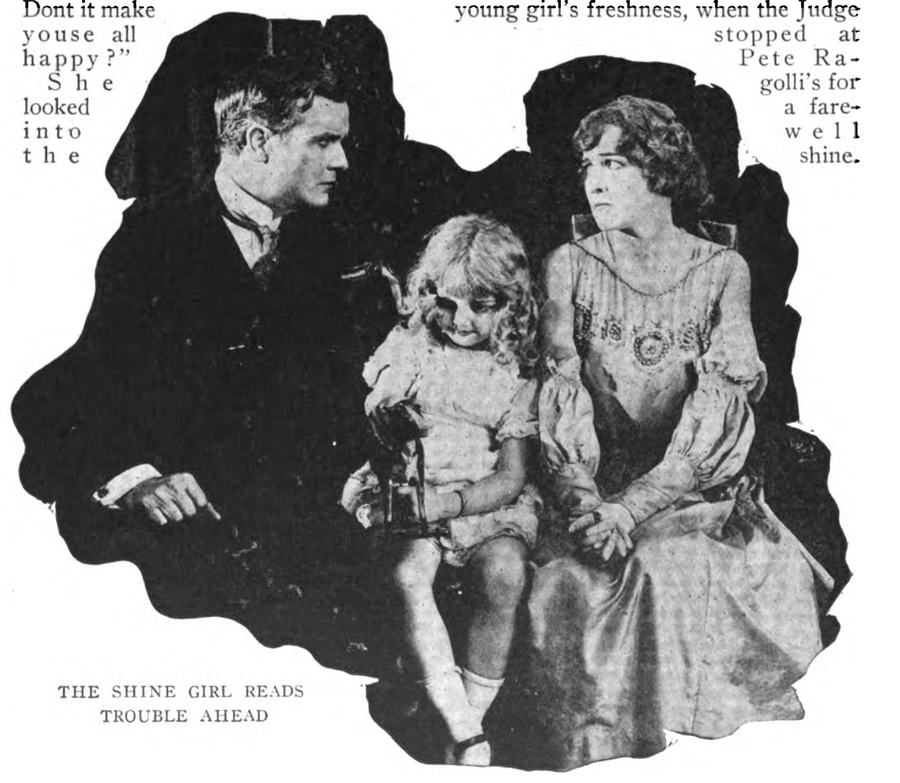
This 'back to nature' trope was a recurring motif in silent cinema, often used to critique the dehumanizing effects of urbanization. We see similar thematic echoes in Meg o' the Mountains. However, The Shine Girl distinguishes itself through its specific focus on the 'cultivated' nature of the garden. It is not a wild wilderness like that in Robinson Crusoe, but a managed, domestic space that requires work and attention. This mirrors the protagonist’s own development; she is not just existing in the country; she is being educated and refined. The judge’s mother acts as a mentor, guiding her through the nuances of a higher social stratum with a kindness that avoids the rigid class barriers found in His Brother's Wife.
Agnes Christine Johnston’s writing deserves special commendation. In an era where intertitles often leaned toward the bombastic, her dialogue and narrative pacing are surprisingly restrained. She understands the power of the visual beat. For instance, the scene where the girl first enters the country house is devoid of unnecessary text; Hulette’s wide-eyed wonder and the way she tentatively touches the fine upholstery tell the story far more effectively than any caption could. This economy of language is a hallmark of the Thanhouser style, which prioritized naturalistic acting over the exaggerated gesticulations common in earlier Vitagraph or Biograph films.
The supporting cast, including Wayne Arey and Kathryn Adams, provides a solid framework for Hulette’s performance. Arey, in particular, avoids the woodenness often associated with male leads of the period, offering a subtle performance that complements the film’s overall tone of quiet dignity. The pacing of the film is deliberate, allowing the audience to inhabit the protagonist’s emotional states. While some modern viewers might find the tempo slower than the frantic action of The Vampires: Satanas, it is this very patience that allows the film’s thematic depth to resonate.
To view The Shine Girl today is to witness a crucial moment in the evolution of cinematic empathy. It is a film that argues for the intrinsic value of every individual, regardless of their social origins. It suggests that poverty is an environmental condition rather than a moral failing—a radical notion for many in 1916. While it shares some DNA with the 'lost girl' tropes found in Cora or The Sorrows of Love, it ultimately chooses a path of hope and constructive reform rather than tragic martyrdom.
The film’s focus on a female protagonist who is both a worker and a dreamer also reflects the shifting gender dynamics of the time. The Shine Girl is not a passive victim; she is an active participant in her own rescue, primarily through her refusal to let her spirit be crushed by her circumstances. This agency, however small it may seem, was a vital component of the 'New Woman' archetype that actresses like Gladys Hulette helped to forge on screen. Even when compared to the mysterious or exoticized female roles in The Mysterious Mr. Wu Chung Foo, Hulette’s character feels grounded in a tangible, relatable reality.
In the broader context of 1910s cinema, The Shine Girl serves as a bridge between the moralistic fables of the past and the character-driven dramas of the future. It lacks the Gothic shadows of The Dead Secret or the psychological intensity of Obozhzhenniye krylya, but it possesses a luminous sincerity that remains undimmed by the passage of a century. It is a testament to the power of simple storytelling, executed with a sophisticated understanding of the medium’s visual potential. For the modern cinephile, it offers a window into a world where a single geranium could represent the entirety of a human soul’s yearning for the light.
The Shine Girl remains a cornerstone of the Thanhouser legacy, a poignant reminder that even in the darkest corners of the city, something beautiful can always be made to grow.

IMDb —
1918
Community
Log in to comment.