DbcultAccessing Vault...
Cult Review
Senior Film Conservator
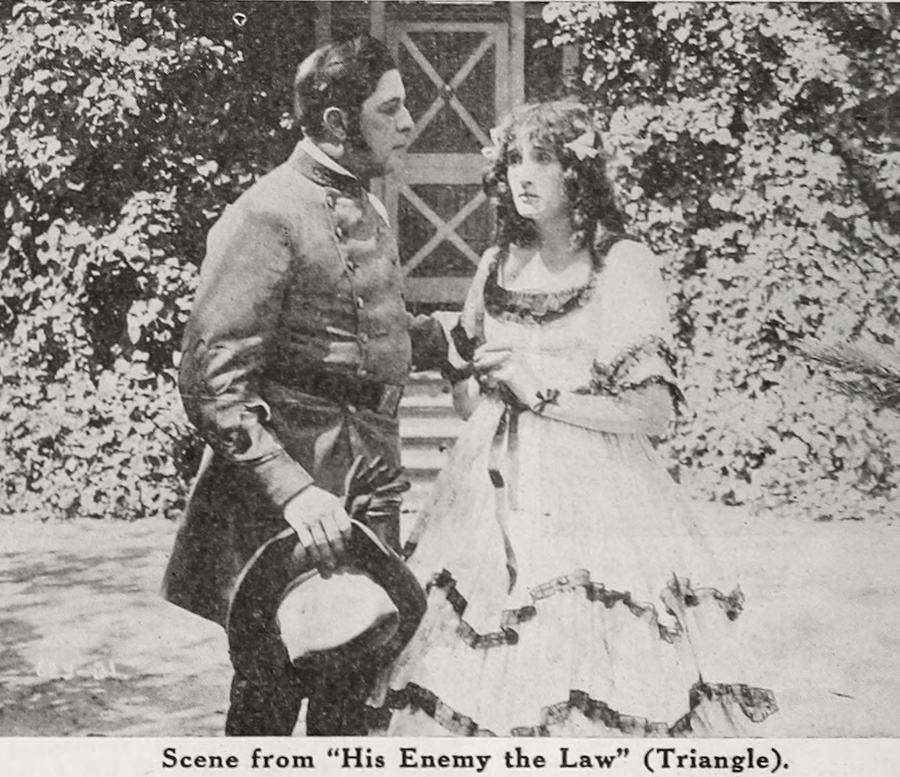
The first image we see is a tattered flag, its stripes hanging like snapped violin strings; already the film confesses that the republic for which it stands has become a creditor’s carnival. Director Walt Whitman—no relation to the good gray poet, though he shares the same bardic hunger for carnal detail—lets the camera linger until the cloth trembles in the wind like a guilty verdict that refuses to be read aloud.
Jack Rogers, played by Burwell Hamrick with the harrowed gaze of a man who has smelled his own mortality, steps off a train that wheezes like an asthmatic witness. The town’s boardwalks clatter with the sound of opportunity slamming doors: Sarah’s father, a fur-trader whose beaver pelts once bankrolled a chapel, now tallies Jack’s army back-pay and declares it insufficient dowry. The engagement is annulled in the time it takes a telegraph key to click—an efficiency that prefigures the film’s obsession with transactions: love for land, blood for bail, reputation for retainer.
"The West, that vast forge of American myth, becomes Jack’s anvil: he swings a pick, then a pistol, until a stage-coach holdup spatters red across alkali dust."
Cut to sagebrush and buttes the color of dried tobacco. Jack’s pickaxe arcs against quartz like a metronome counting down the remainder of his idealism. Months collapse into montage: a claim that yields fool’s gold, a letter bearing news of Sarah’s marriage to Randolph—an aristocrat whose side-whiskers are as meticulously maintained as the books in a predatory bank. Jack’s heart does not break; it bankrupts, and bankruptcy, as any financier knows, is merely the prelude to liquidation. He weds a nameless widow whose mourning weeds are already yellowed with boredom; the honeymoon is shot in chiaroscuro so steep their silhouettes seem carved from coal. Hamrick’s face, half-illuminated by lamplight, registers the moment when eros curdles into revulsion—a silent howl that the intertitle dares not caption.
The narrative skips like a stone across years, landing on the day Jack bolts from this domestic purgatory clutching his infant son. Ten Strike, a boomtown whose saloon signs promise “Whiskey, Women, and Warrants,” becomes the stage for his final metamorphosis. The robbery sequence is staged in a single dusk-drenched long take: a stagecoach lurches, a shotgun blasts, and Jack reels, clutching his ribcage as if surprised to find mortality lodged there. The posse’s bullets arrive with the punctual cruelty of creditors. As Jack bleeds into the dust, Jack Richardson’s sheriff—eyes the color of tarnished dimes—scoops up the orphaned John, an adoption that feels less mercy than foreclosure on parenthood itself.
Now the film’s true subject reveals itself: not the sins of the father, but the interest those sins accrue. John, embodied by adult Graham Pettie with a smile like a switchblade, prowls marble courthouse halls. His legal arguments are conjurer’s tricks: subpoenas folded into paper cranes, habeas corpus wielded like a scalpel to excise guilt from the body politic. In one bravura sequence, he defends a cattle rustler by invoking the Homestead Act, transforming theft into manifest destiny. The jury—twelve grim apostles of private property—acquit, and Pettie’s half-bow drips with contempt so sweet it could sugar-coat cyanide.
Enter Sally Randolph, Mae Giraci in a role that demands she glow and grieve simultaneously. Her lover, a ranch hand accused of knifing a foreman, is the latest lamb whose fleece John must launder into innocence. The courtroom set—all mahogany and moral rot—becomes a cathedral of ambiguity. Cinematographer Buster Irving tilts the camera so the justice statue’s scales appear to tip offscreen, as though truth itself has defected. John’s victory is pyrrhic: the boy exits prison into a bullet’s embrace, a murder so casual it feels bureaucratic. The camera watches the body crumple from the vantage of a buzzard, underscoring the film’s thesis that in the marketplace of absolution, someone always pays the vig.
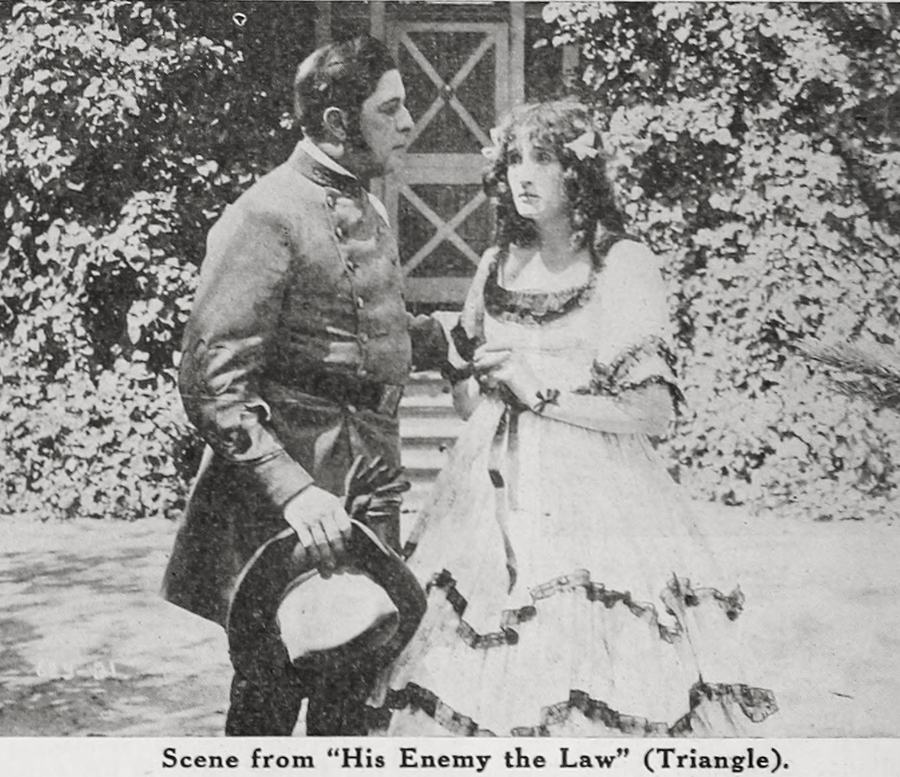
Only then do the lovers learn their parents’ thwarted romance—a revelation delivered via a mildewed daguerreotype that Sarah clutches like a promissory note on happiness. Their marriage is less reconciliation than merger, two ruined dynasties pooling what remains of their collateral: DNA. The final shot—an iris closing on their wagon as it rolls toward a horizon the color of dried blood—refuses catharsis. Instead, the circle shrinks until the frame itself feels like a noose fashioned from celluloid.
Whitman and Irving collaborate on a visual lexicon where every shadow is a balance sheet. Note the recurrence of doors: Jack is shown out of one engagement, barred from another, and finally carried through a jail gate that becomes his son’s cradle. Thresholds in this universe are not transitions but audits; cross one and your moral assets are reassessed. The color tinting—amber for avarice, cerulean for the law’s pretense of neutrality—shifts like mood-ring revelations. When John burns his father’s wanted poster, the flame burns sea-green, a chemical reaction between guilt and oxygen.
Hamrick’s Jack speaks volumes in the way he fingers a locket containing a lock of Sarah’s hair—each stroke a reminder that memory is a luxury taxed by time. Pettie, by contrast, weaponizes stillness; his John stands so rigid during cross-examination that when he finally unleashes a grin, the effect is like a guillotine dropping. Giraci has the film’s most thankless task—making idealism credible in a universe that monetizes hope—yet her tremulous inhale before pledging love is more eloquent than any intertitle.
Cinephiles will detect DNA shared with Rablélek, where familial shame festers into generational vendetta, and with The Serpent, another tale of justice perverted into personal enterprise. Yet whereas those films externalize revenge, His Enemy, the Law internalizes it, turning jurisprudence into a haunted house where every verdict moans with the voice of a father shot through the gut.
The current 4K restoration by Eye Filmmuseum interpolates a newly commissioned score—piano, muted trumpet, and the dry rattle of castanets evoking the Spanish-speaking deputies who once policed these borderlands. During the courthouse scenes, the composer lets single notes hang unresolved, sonic parallels to John’s unanswered ethical questions. The effect is hypnotic; you can hear the moral fibrillation in the gaps between chords.
What lingers is not the plot’s Shakespearean contortions but the film’s chill assertion that American institutions—marriage, law, even the mythic frontier—are rigged casinos where the house always redeems its losses in blood. In an era when silent cinema is often dismissed as melodramatic pantomime, His Enemy, the Law stands as a laconic rebuttal: a whispered thesis that the real national anthem is the rustle of papers changing hands.
Verdict: A bruised American masterpiece that deserves shelf space beside Conscience and Painted Lips—films equally unafraid to inspect the scar tissue beneath the stars and stripes.
IMDb —
1929
Community
Log in to comment.