DbcultAccessing Vault...
5.3/10
Senior Film Conservator
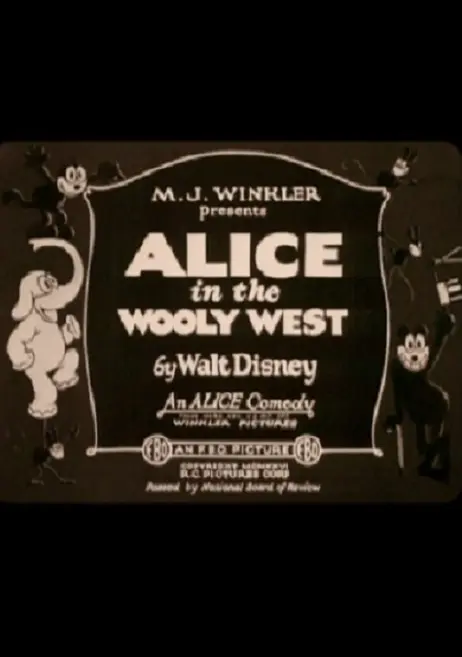
A definitive 5.3/10 rating for a film that redefined the boundaries of cult cinema. Alice in the Wooly West remains a cornerstone of transgressive art.
Is this film worth watching today? Short answer: Yes, but only if you view it as a primitive artifact of a studio before it found its soul. This film is for those who enjoy the clunky, experimental roots of the 'Inkwell' style, but it is certainly not for anyone looking for the polished storytelling of later Disney eras.
This film works because Julius the Cat provides a level of slapstick energy that the live-action footage lacks.
This film fails because the integration between the human actor and the cartoon world is jarringly disconnective.
You should watch it if you want to see the exact moment Walt Disney realized a cartoon animal was more marketable than a real girl.
Alice in the Wooly West is a fascinating, if occasionally uncomfortable, look at the technical birth pains of the Walt Disney Studio. Long before Mickey Mouse or Snow White, Disney was obsessed with the 'Alice Comedies'—a series that placed a real girl into a cartoon world. In this specific short, Margie Gay takes on the role of Alice, though calling it a 'performance' feels like a stretch. Gay is largely a reactive prop, a live-action anchor in a sea of ink that doesn't always want to cooperate with her presence. Unlike the gritty realism found in other silent Westerns like The Lone Wagon, this film trades grit for gags.
The film opens with Julius the Cat performing rope tricks. It is a sequence that goes on a bit too long, but it establishes the primary dynamic: the cat is the star, and the human is the passenger. Julius is a blatant rip-off of Felix the Cat, yet you can see the seeds of Disney’s future character design in his expressive, rubbery movements. When the stagecoach robbery begins, the film shifts into a frantic pace that was characteristic of the mid-20s. The bandits are generic, but their interactions with the environment are purely surreal. A cactus isn't just a plant; it’s a comedic threat that Alice must navigate with a stiff, theatrical terror that feels charmingly dated.
Does a seven-minute silent short from 1926 hold up for a modern audience? For the casual viewer, probably not. The pacing is erratic, and the visual quality—even in restored versions—can be a strain on the eyes. However, for the cinema enthusiast, the answer is a resounding yes. It represents a bridge between the vaudeville-style shorts of the early 1920s and the structured narrative animation that would follow. It lacks the thematic depth of The Fear Fighter, but it makes up for it with a sheer, unadulterated weirdness that you just don't see in modern, focus-tested animation.
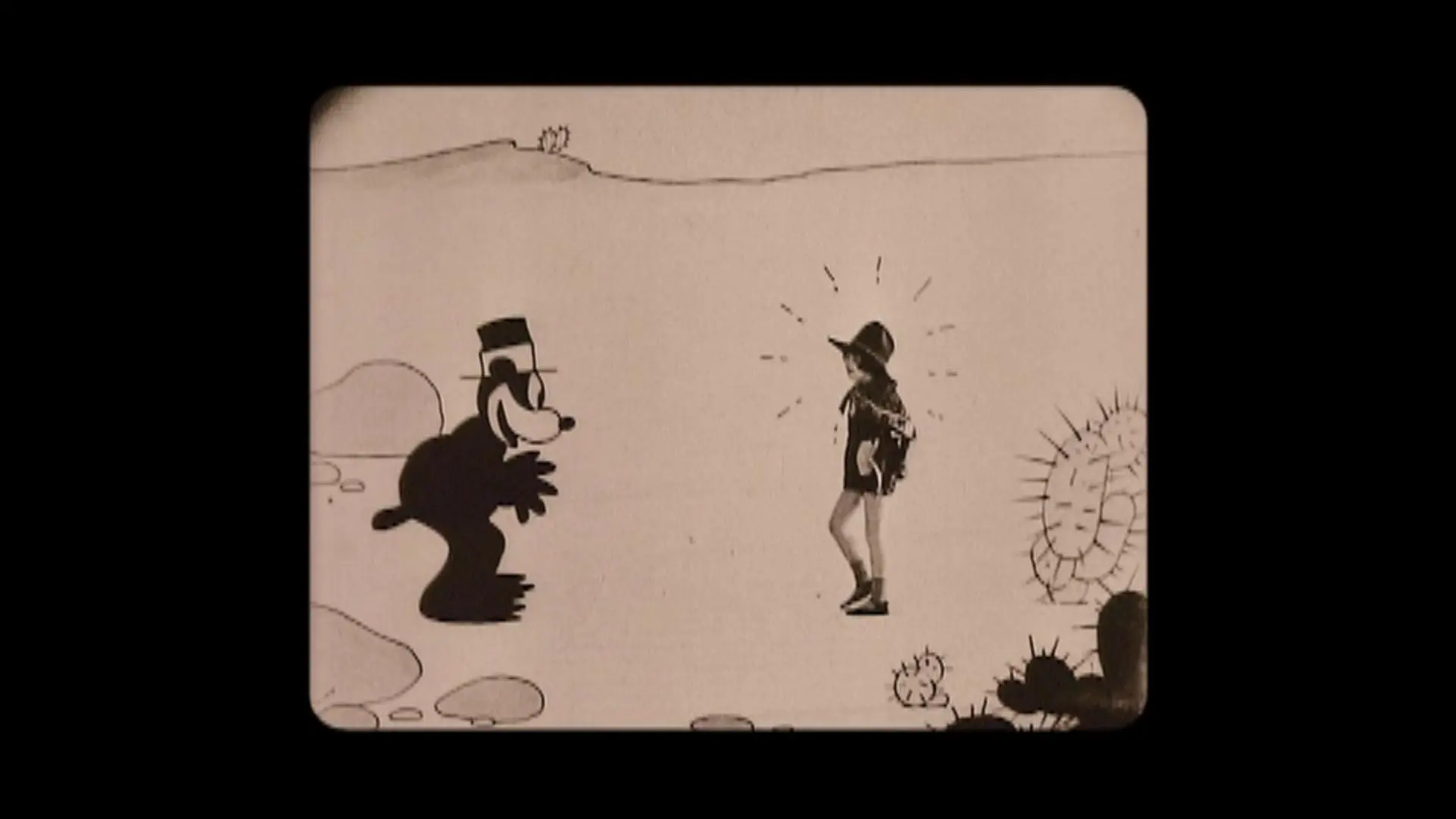
The highlight of the film is undoubtedly the confrontation on the rock outcropping. As Julius and the lead bandit battle, the animation takes over completely. The way the rock breaks off, sending them into a boulder field, defies every law of physics, yet it feels perfectly logical within the internal grammar of the short. The hide-and-seek sequence that follows is a masterclass in primitive visual storytelling. Julius, realizing he is outmatched in strength, uses his own anatomy as a weapon. He literally removes his fur, sending it out as a decoy while he sneaks up behind the villain.
This moment is both hilarious and slightly disturbing. It’s a level of body horror that the 1920s didn't seem to find horrific at all. It’s a pure gag. When Julius beats the bandit into the ground with a club, the violence is as weightless as a feather, yet it’s more creative than most modern action sequences. The final beat, where Julius hides behind a rock because he is 'naked' without his fur, is a stroke of comedic genius. It gives the character a sense of vulnerability and shame that is entirely relatable, despite the fact that we just watched him skin himself alive for a tactical advantage.
Walt Disney’s direction here is functional rather than artistic. He was clearly more interested in the 'how' than the 'why.' How do we make the girl look like she’s in the coach? How do we make the cat interact with the rock? The cinematography is static, which is standard for the era, but the framing of the boulder field shows an early understanding of depth. By placing Julius in the foreground and the bandit in the mid-ground, Disney and his animator, Ub Iwerks, created a sense of space that was revolutionary for the time. It’s a far cry from the more atmospheric work in The Dream Cheater, but for a comedy short, it’s remarkably effective.
The pacing is where the film struggles. The transition from the rope tricks to the stagecoach robbery feels abrupt. It’s as if two different ideas were stitched together with a very thin needle. One moment we are watching a cat play with a rope, and the next, we are in the middle of a life-and-death struggle. This lack of narrative flow is a common critique of the Alice series. The films often felt like a collection of gags looking for a home rather than a cohesive story.
Pros:
The animation by Ub Iwerks is fluid and inventive for the period. The film serves as a vital historical document of the Disney Studio's evolution. The 'nakedness' gag at the end is legitimately funny even by today's standards.
Cons:
The compositing between live-action and animation is very rough around the edges. The initial setup takes too long to get to the actual plot. Alice herself is a passive character with very little agency.
When you compare Alice in the Wooly West to other films of the mid-20s, like The Moral Sinner or Just Off Broadway, the difference in intent is staggering. While those films were exploring human drama and urban tension, Disney was playing with the very fabric of reality. This film doesn't care about the 'moral' or the 'sinner'; it cares about the absurdity of a cat losing his skin. It’s a reminder that animation, from its very inception, was the playground of the impossible. Even something like The Human Tornado, which featured its own brand of exaggerated action, feels grounded compared to the antics of Julius the Cat.
Alice in the Wooly West is a messy, vibrant, and essential piece of cinematic history. It isn't a masterpiece in the traditional sense. It’s flawed. The integration is clunky. But there is a spark of madness in Julius the Cat that explains why Disney eventually took over the world. If you can look past the flickering film stock and the primitive compositing, you’ll find a short that is bursting with a type of creative freedom that modern studios have largely forgotten. It’s a wild ride through a West that never was, led by a cat who doesn't believe in the laws of nature. Watch it for the history, stay for the fur-less cat.
IMDb —
1919
Community
Log in to comment.