DbcultAccessing Vault...
Cult Review
Senior Film Conservator
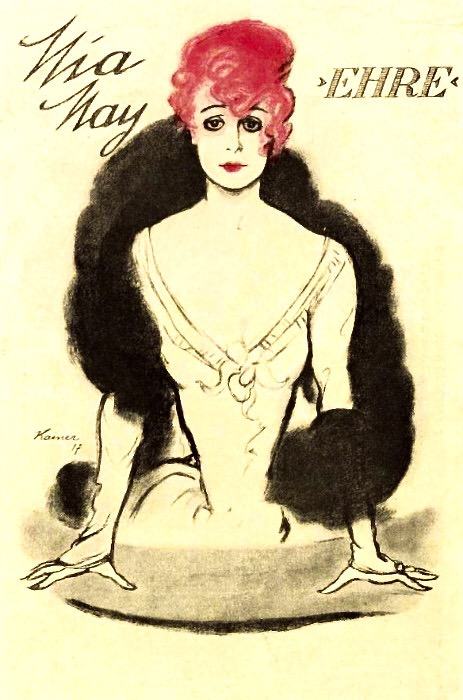
In the shimmering, often tumultuous landscape of early 20th-century cinema, certain films emerge not merely as historical artifacts but as profound examinations of the human condition, their silent narratives echoing with an enduring resonance. Joe May’s Ehre, a cinematic endeavor from 1917, is precisely one such gem. It isn't just a story; it's a meticulously crafted psychological study, a dramatic tapestry woven with threads of ambition, affection, and the insidious allure of unearned affluence. May, a formidable figure in German silent film, orchestrates a domestic drama that transcends its period trappings, delving into the very sinews of a relationship tested by an unforeseen reversal of fortune. What begins as a seemingly idyllic union in the bustling heart of Chicago soon morphs into a crucible where character is forged, or perhaps, irrevocably warped.
At the narrative's core stands Ralph O'Donell, portrayed with a compelling blend of gravitas and simmering intensity by Max Landa. O'Donell is not merely a businessman; he is an empire builder, a man whose name is synonymous with the colossal brewing industry of Chicago. His is a world of calculated risks, strategic foresight, and the tangible rewards of relentless endeavor. He is the quintessential self-made man, his identity intrinsically linked to his achievements and the vast wealth he has painstakingly accumulated. His life, one imagines, is a symphony of purpose and control, every note played with precision. It is into this meticulously constructed world that Helene Berger, brought to life with captivating nuance by Mia May (Joe May’s wife and frequent collaborator), enters. Their courtship, depicted with an understated elegance typical of the era, culminates in a marriage that appears to be the logical, beautiful culmination of shared affection and mutual respect. Their union, initially, is a testament to the power of love to bridge disparate pasts and forge a common future, bound by the unspoken promise of enduring partnership.
However, the narrative, with a deft turn, introduces an element of destabilization that shatters this domestic tranquility. The sudden, distant demise of Helene’s European aunt transforms her, almost instantaneously, into a universal heir. This isn't merely a modest inheritance; it is a seismic shift, a deluge of wealth that cascades upon her, altering her social and economic standing overnight. The irony is palpable: Ralph, the architect of his own immense fortune, now finds his beloved wife suddenly possessed of an equivalent, if not greater, patrimony, acquired not through toil but through the arbitrary decree of fate. This pivotal event serves as the catalyst for the film's profound exploration of human nature. The question that hangs heavy in the silent air, palpable through the expressive glances and gestures of the actors, is this: how will this newfound, unearned wealth impact a marriage built on conventional foundations of a man's provision and a woman's companionship?
The brilliance of Ehre lies in its nuanced portrayal of the psychological tremors that follow this financial upheaval. For Ralph, the self-made man, Helene's inheritance is not just a windfall; it's an existential challenge. His pride, so deeply intertwined with his role as provider and patriarch, is subtly, perhaps imperceptibly at first, wounded. Does he resent her sudden independence? Does he question his own worth now that his financial dominance is diminished, if not eclipsed? Mia May, as Helene, navigates this transformation with remarkable sensitivity. She is no longer merely Ralph's wife; she is a woman of immense means in her own right, suddenly endowed with a power that was previously solely her husband's purview. This shift in power dynamics, often unspoken but keenly felt, becomes the central tension of the film. It's a testament to May's direction and the actors' capabilities that these complex emotional shifts are conveyed with such clarity in the absence of spoken dialogue.
The film masterfully explores the corrosive potential of wealth when it infiltrates the sanctity of a personal relationship. It asks whether love, however sincere, can withstand the pressures of altered financial landscapes. Will the golden shackles of inheritance bind them closer or drive an irreparable wedge between them? The silent era, often characterized by overt melodrama, here finds a more subtle, introspective voice. The drama unfolds not through histrionics but through the quiet anguish of suspicion, the fleeting glances of resentment, and the subtle shifts in body language that speak volumes. It’s a compelling look at the very human tendency to allow external circumstances to redefine internal bonds. Comparisons could be drawn to films like Master of His Home, which similarly dissects the intricate power struggles within a domestic sphere, though perhaps with a different catalyst. The psychological depth in Ehre is truly remarkable for its time, anticipating later, more verbose dramas of marital strife.
Joe May’s directorial vision is evident in every frame. His use of visual storytelling, a necessity in the silent era, is particularly astute. He understands that a lingering shot, a carefully composed tableau, or the precise blocking of actors can convey more than pages of dialogue. The settings, whether the opulent interiors of the O'Donell mansion or the more somber European locales hinted at by Helene's past, are not mere backdrops; they are extensions of the characters' psychological states. The contrast between Ralph's self-made American prosperity and Helene's inherited European legacy subtly underscores the cultural nuances at play, adding another layer to the marital tension. It’s a sophisticated approach to visual narrative that elevates the film beyond a simple potboiler.
The performances are, naturally, central to the film’s impact. Max Landa, as Ralph, embodies the conflicted patriarch with a nuanced restraint. His moments of pride, suspicion, and eventual vulnerability are conveyed through an exquisite command of facial expression and gesture. He doesn't just act; he *feels* the character's internal turmoil. Mia May, on the other hand, portrays Helene with a luminous grace that belies the turmoil simmering beneath her composed exterior. Her journey from devoted wife to independent heiress is handled with an admirable lack of caricature, making her transformation believable and empathetic. The supporting cast, including Harry Liedtke and Hans Mierendorff, contribute to the intricate web of relationships, adding layers of potential influence and external pressure on the central couple. Their presence, though perhaps less central, helps to build a believable social milieu in which the main drama unfolds.
Thematically, Ehre is a rich tapestry. It probes the very definition of 'honor' itself, a title that is both literal and ironic. What is honor when confronted with the corrupting influence of wealth? Is it the honor of self-reliance, of building an empire from scratch? Or is it the honor of maintaining integrity and love amidst the shifting sands of fortune? The film suggests that true honor lies not in the accumulation of riches, but in the steadfastness of character and the resilience of human connection. This exploration of moral fortitude in the face of material temptation resonates powerfully, even today. One might even draw parallels to films like Troen, der frelser (Faith That Saves), which, while perhaps more overtly religious, also grapples with the internal struggles of individuals facing profound moral or existential challenges.
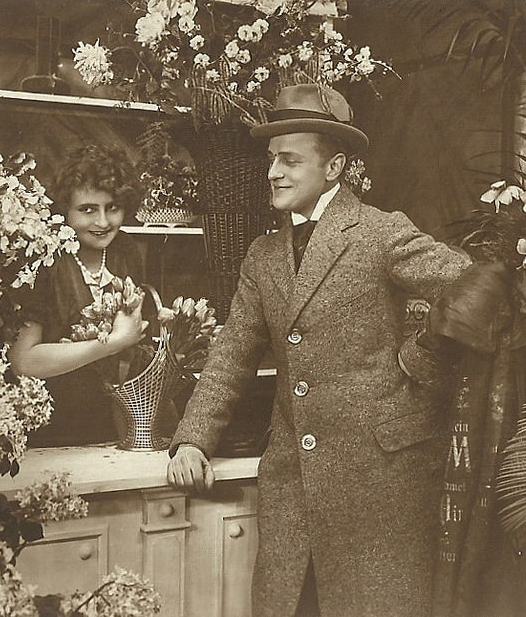
The film also serves as a fascinating document of its time, capturing the anxieties and aspirations of an era grappling with rapid industrialization and changing social structures. The burgeoning wealth of figures like O'Donell reflects the economic dynamism of cities like Chicago, while Helene's European inheritance hints at older, established forms of wealth and privilege. The juxtaposition of these two worlds within the intimate confines of a marriage provides fertile ground for social commentary. It’s a snapshot of a society in flux, where traditional roles and values are being re-evaluated in the crucible of modernity. The question of a woman's economic independence, while not overtly feminist in its portrayal, is certainly present, making Helene a character of quiet, burgeoning agency.
While the plot premise of sudden inheritance might seem a staple of melodrama, May elevates it through his keen psychological insight. This isn't a simplistic tale of good versus evil, but a complex examination of human frailty and resilience. Ralph’s struggle is not with an external villain but with his own pride and insecurity. Helene’s challenge is to navigate her new status without alienating her husband or compromising her own values. The film avoids easy answers, presenting a nuanced portrait of a couple grappling with circumstances beyond their control, yet entirely within their emotional purview. One could perhaps find thematic echoes in the intricate social machinations explored in The Secretary of Frivolous Affairs, though Ehre maintains a tighter focus on the marital core.
The pacing of Ehre is deliberate, allowing the emotional beats to register fully. May doesn't rush the narrative; instead, he allows the tension to build incrementally, like a slowly tightening spring. This measured approach enhances the impact of each revelation and each emotional confrontation. The intertitles, crucial conduits of information and emotion in silent cinema, are employed judiciously, guiding the audience without ever feeling intrusive. They serve to deepen understanding rather than simply advance the plot, often reflecting the characters' internal monologues or providing insightful commentary on the unfolding drama. This careful calibration of pace and exposition ensures that the audience remains deeply invested in the characters' fates.
The film's visual language is equally compelling. May, often working with gifted cinematographers of his era, crafts a world that is both realistic and imbued with symbolic weight. The lighting, for instance, is often used to highlight emotional states, casting characters in shadow when they are conflicted or illuminating them fully in moments of clarity. The compositions are frequently elegant, drawing the viewer's eye to the subtle interactions between characters or the significant details within a scene. This visual sophistication is a hallmark of the best silent films, and Ehre stands as a testament to its power. It’s a reminder that even without spoken words, cinema can communicate profound truths through the sheer artistry of its imagery.
Considering other films, the theme of sudden wealth and its disruptive potential is not unique. However, Ehre distinguishes itself by placing this external event firmly within the internal landscape of a marriage. Unlike, say, a crime drama like Stop Thief! where the focus is on the pursuit of stolen goods, or a lighter fare like Dimples, which explores personal charm, Ehre is intensely focused on the psychological repercussions. The external plot device serves primarily to ignite the internal conflict, making it a more introspective and ultimately more resonant work. The film’s exploration of how identity is tied to wealth, particularly for Ralph, is particularly poignant. His self-worth is challenged in a way that goes beyond mere financial standing, touching upon his very masculinity and societal role.
Furthermore, the subtle class distinctions hinted at by Helene's European lineage versus Ralph's American industrialist background add another layer of intrigue. It’s not just wealth, but the *source* of wealth, and the cultural baggage it carries, that informs the characters' reactions. This makes the drama richer, moving beyond a simple narrative of greed to a more complex interplay of tradition, ambition, and personal values. The film, in its quiet way, interrogates the very fabric of societal expectations placed upon men and women of means during that transitional period.
In conclusion, Ehre is far more than a historical curiosity; it is a timeless drama that continues to captivate with its incisive portrayal of human relationships under duress. Joe May, with the stellar performances of Mia May and Max Landa, crafts a narrative that is both deeply personal and broadly resonant. It’s a film that compels viewers to consider the true cost of wealth, the fragility of pride, and the enduring power of genuine connection. Its legacy lies not just in its pioneering techniques of silent storytelling but in its profound and unwavering commitment to exploring the intricate, often contradictory, landscape of the human heart. For anyone seeking to understand the enduring power of early cinema, or simply wishing to engage with a story that questions the very foundations of honor and love, Ehre remains an essential, luminous experience. Its quiet grandeur and psychological depth mark it as a truly significant work in the annals of film history, a film that speaks volumes without uttering a single word, its message as clear and impactful today as it was over a century ago. The nuanced exploration of human motivations and the subtle shifts in marital dynamics ensure its continued relevance, urging us to reflect on our own values and priorities in a world perpetually fascinated by fortune.
Critically acclaimed. Timelessly relevant.
IMDb 6.8
1929
Community
Log in to comment.