DbcultAccessing Vault...
5.6/10
Senior Film Conservator
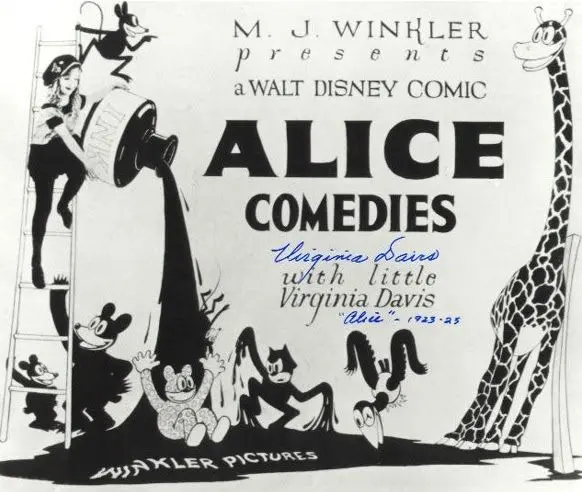
A definitive 5.6/10 rating for a film that redefined the boundaries of cult cinema. Alice the Collegiate remains a cornerstone of transgressive art.
Is Alice the Collegiate worth your time today? Short answer: yes, but primarily as a fascinating archaeological dig into the mind of a young Walt Disney rather than a laugh-out-loud comedy.
This film is for animation historians and those who appreciate the 'uncanny valley' of the 1920s. It is definitely not for viewers who demand high-definition visual effects or a coherent, high-stakes plot.
1) This film works because the physical chemistry between Margie Gay and her animated co-stars is surprisingly grounded for the era.
2) This film fails because the narrative structure is virtually non-existent, serving only as a clothesline for repetitive sight gags.
3) You should watch it if you want to see the exact moment where the 'Disney Style' began to prioritize character personality over simple motion.
Alice the Collegiate is worth watching for anyone interested in the technical evolution of cinema. It represents a bridge between the silent era's slapstick and the future of character-driven animation. If you enjoy the primitive charm of Monkeys Prefer Blondes, you will find a similar spirit of experimentation here.
The most striking element of Alice the Collegiate is the sheer audacity of its compositing. In 1926, the technology to place a human child inside a hand-drawn world was rudimentary at best. Yet, Margie Gay handles the challenge with a stoicism that her predecessor, Virginia Davis, often lacked.
Consider the scene where Alice stands in front of the chalkboard, lecturing a group of animated animals. Gay isn't just looking at empty space; she directs her gaze with a precision that suggests she can actually see the ink. This level of performance is often overlooked in silent shorts, but it is the glue that prevents the film from falling apart.
The animation itself, led by the legendary Ub Iwerks, is bouncy and fluid. Julius the Cat, who often feels like a prototype for Mickey Mouse, carries the athletic weight of the film. His movements during the football drills are exaggerated and rubbery, providing a sharp contrast to Gay's rigid, 'collegiate' posture.
The football game in the final act is where the film truly loses its mind. We see players flattened like pancakes, only to pop back up. We see the ball transformed into various objects. It is a masterclass in 'squash and stretch' before that term was even formalized in the industry.
However, the pacing here is a bit of a slog. Unlike the tight editing found in Soul Mates, this short tends to linger on a joke until the punchline has grown whiskers. The repetition of the 'Julius gets tackled' gag happens at least twice more than is necessary for the comedic beat.
Despite this, the film manages to capture the 'college fever' that was sweeping America in the mid-20s. It feels like a companion piece to the campus comedies of the era, though with a significantly higher percentage of ink-based violence.
Many critics point to the original Alice as the gold standard, but I would argue that Margie Gay brings a necessary grit to the role. In Alice the Collegiate, she doesn't just play 'the girl'; she plays the coach. She is authoritative and slightly annoyed, which makes the animated chaos around her even funnier.
There is a specific moment where she uses a megaphone to bark orders at a line of animated dogs. The way she handles the prop—heavy, metallic, and real—against the flickering, light-weight background is a beautiful metaphor for the film itself. It is the heavy reality of live-action meeting the weightless potential of animation.
It works. But it’s flawed. The film often forgets it has a human lead, leaving Gay to stand on the sidelines while Julius does the heavy lifting. This imbalance is a recurring issue in the later Alice shorts as Disney realized that animating a cat was cheaper and more flexible than filming a child.
When placed alongside other 1920s offerings like Disraeli or the dramatic weight of The Silence of Dean Maitland, Alice the Collegiate feels like a breath of fresh, albeit slightly dusty, air. It doesn't take itself seriously.
While films like Le rêve were exploring the boundaries of dreamscapes through cinematography, Disney was doing it through the inkwell. The 'dream' in this film is the college experience itself—a mythologized version of sports and social status that the animation both celebrates and mocks.
Pros:
The historical significance cannot be overstated. Seeing Ub Iwerks' early character designs for Julius is a treat. The film also has a surprisingly modern sense of irony regarding sports culture.
Cons:
The print quality of available versions is often grainy, making some of the finer animation details hard to track. The lack of a strong supporting live-action cast makes the world feel a bit empty.
To truly appreciate Alice the Collegiate, one must look at what else was happening in 1926. This was the year of The Conquest of Canaan and the height of silent melodrama. Against that backdrop, Disney’s work was practically avant-garde.
It wasn't trying to be a 'prestige' film like Menschen und Masken. It was trying to be a profitable, entertaining novelty. And it succeeded. The 'Collegiate' theme was a smart marketing move, tapping into the same energy that made Training for Husbands a popular concept at the time.
The film also avoids the darker tones found in His Darker Self or the social preaching of Open Your Eyes. It is pure, unadulterated play. There is a specific joy in watching a cartoon cat run a flea-flicker play that transcends the limitations of the silent medium.
Alice the Collegiate is a fascinating relic. It isn't a masterpiece of storytelling, but it is a masterclass in the 'can-do' attitude of early Hollywood. Margie Gay holds her own in a world that literally hasn't been drawn yet, and Julius the Cat proves why he was Disney's first real star.
If you can get past the flickering frames and the simplistic plot, you'll find a film that is bursting with imagination. It is a reminder that before the theme parks and the billion-dollar franchises, there was just a man, a camera, and a bottle of ink.
Final thought: Julius the Cat deserves a modern reboot more than half the characters currently in the Disney vault. He has a chaotic energy that this film captures perfectly, even if the football game lasts about three minutes too long.
IMDb —
1924
Community
Log in to comment.