DbcultAccessing Vault...
Cult Review
Senior Film Conservator
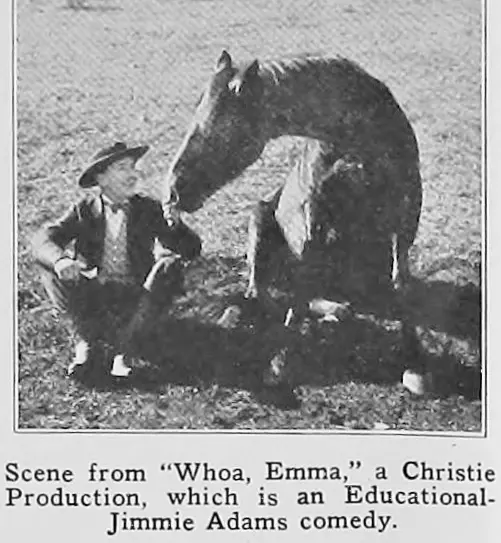
Short answer: Yes, but only if you have a high tolerance for the primitive, frantic energy of early slapstick. This is not a nuanced character study, but a fascinating relic of 1920s physical comedy that prioritizes animal antics over narrative depth.
This film is for the silent cinema completionist and fans of 'animal actors' who enjoy seeing horses outsmart humans. It is definitely NOT for anyone looking for a serious Western or a film with a complex, modern emotional arc.
1) This film works because of the surprising charisma of Trixie the Horse and the effortless physical comedy of Jimmie Adams.
2) This film fails because the 'correspondence school' subplot feels like a missed opportunity for sharper social satire.
3) You should watch it if you want to see how 1920s audiences interpreted the 'vamp' archetype through a literal animal.
Watching 'Whoa, Emma!' in the 21st century feels like opening a time capsule filled with dust and horsehair. It is worth watching for its historical curiosity alone. Unlike more polished works like The Agent, this short relies heavily on the 'fish out of water' trope, placing a dapper city man in the middle of a ranch. The humor is broad, the pacing is breathless, and the central conceit—a horse that flirts—is genuinely funny in its absurdity.
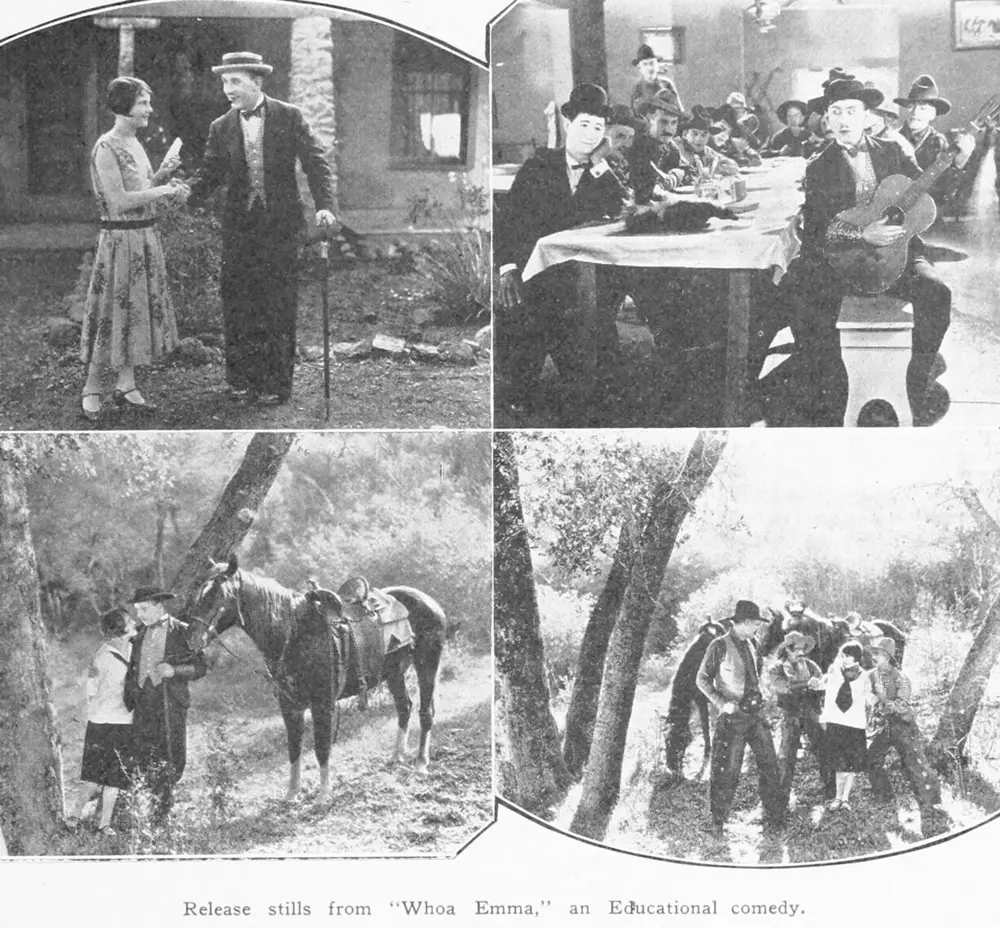
The most striking element of the film is the personification of Emma. In the early 1920s, the 'vamp' was a popular cinematic trope—usually a dangerous, seductive woman who led men to ruin. Writer Frank Roland Conklin takes this trope and applies it to a horse. It is a bizarre choice that works surprisingly well.
In one specific scene, Emma tosses her mane and bats her eyes at a group of ranch horses, causing them to abandon their work and follow her like lovestruck teenagers. This moment is captured with a series of medium shots that highlight Trixie’s 'acting' ability. It is a silly, effective bit of physical comedy that subverts the traditional image of the noble, stoic Western steed found in films like The Unblazed Trail.
Jimmie Adams plays the protagonist with a rubbery physicality that rivals the greats of the era. His arrival at the ranch is a masterclass in visual storytelling. Dressed in clothes far too clean for the frontier and accompanied by a valet, he looks like he belongs in Enemies of Women rather than a dusty corral.
Adams uses his entire body to convey Jimmie’s incompetence. When he first attempts to interact with the ranch hands, his movements are jerky and over-the-top, contrasting sharply with the stiff, judgmental poses of the real cowboys. It is a classic comedy setup: the man who has learned everything from books (or a correspondence school) facing the harsh reality of the physical world. It’s a theme explored with more grit in Fighting Blood, but here, it’s played purely for laughs.
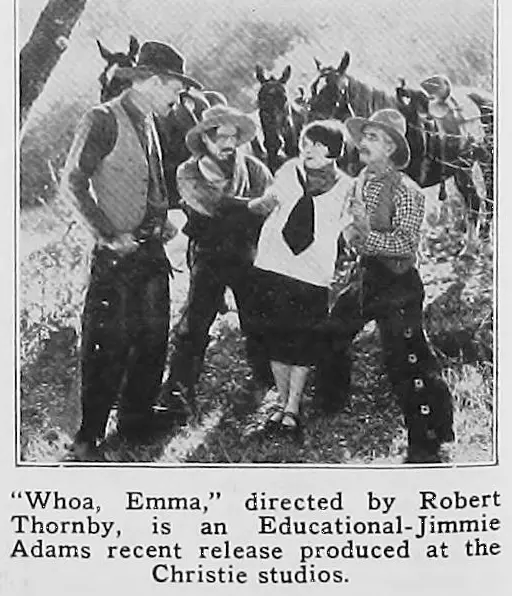
The direction is straightforward, as was common for short comedies of the time. However, there is a clear effort to capture the scale of the ranch. The camera often stays wide to show Emma leading her 'victims' across the landscape, which provides a sense of geography that many low-budget shorts lacked.
The pacing is relentless. From the moment Jimmie arrives, the film refuses to slow down. This can be exhausting, but it prevents the thin plot from wearing out its welcome. The editing is sharp, cutting between Jimmie’s failed attempts at 'horse whispering' and the ranch hands' growing frustration. It lacks the visual sophistication of The Virgin of Stamboul, but it understands the rhythm of a joke.
The film touches on a very 1920s phenomenon: the rise of the correspondence school. At the time, you could supposedly learn anything via mail-order lessons, from detective work (as seen in Sherlock's Home) to, apparently, horse taming.
There is a subtle bite to the way the film mocks Jimmie’s 'education.' He arrives with a certificate and a sense of superiority that is immediately dismantled by the natural world. While the film doesn't go as deep into social critique as something like Bonds of Love, it provides a lighthearted jab at the era's obsession with self-improvement through dubious means.
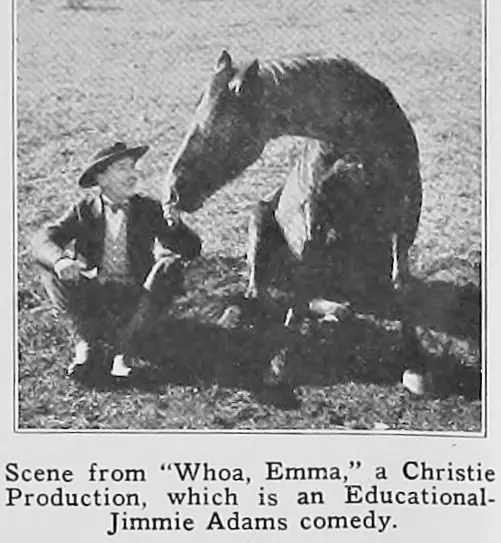
It is fascinating to note that 'Whoa, Emma!' treats the horse's 'vamping' as a legitimate personality trait rather than just a trained trick. There is a strange, almost surreal quality to the way the other horses react to her. It borders on the bizarre, reminiscent of the animal-human dynamics in Andy's Lion Tale.
Also, Hank Mann’s presence here is a reminder of how deep the talent pool was in silent comedy. Mann, a frequent collaborator with the greats, brings a grounded frustration to the ranch scenes that makes Jimmie’s flightiness even funnier. He acts as the 'straight man' to both a horse and a city slicker—a difficult balancing act that he pulls off with ease.
'Whoa, Emma!' is a frantic, dusty, and occasionally brilliant slice of 1920s comedy. It isn't a deep film. It doesn't have the emotional resonance of The Pitfall or the epic scope of The Master Key. But it doesn't try to be. It is a film that understands its primary goal: to make people laugh at the sight of a horse acting like a silent film star.
The chemistry between Jimmie Adams and Trixie is the heart of the film. Their instant friendship is a sweet, silly pivot from the expected 'breaking the wild beast' narrative. In the end, 'Whoa, Emma!' succeeds because it embraces its own absurdity. It works. But it’s flawed. It’s a quick, punchy reminder that even a century ago, we were just as entertained by animals acting like people as we are today on TikTok.
"A bizarre collision of Western tropes and silent-era flirtation that proves a charismatic horse is the best scene-stealer in cinema history."
IMDb —
1918
Community
Log in to comment.