DbcultAccessing Vault...
5.4/10
Senior Film Conservator
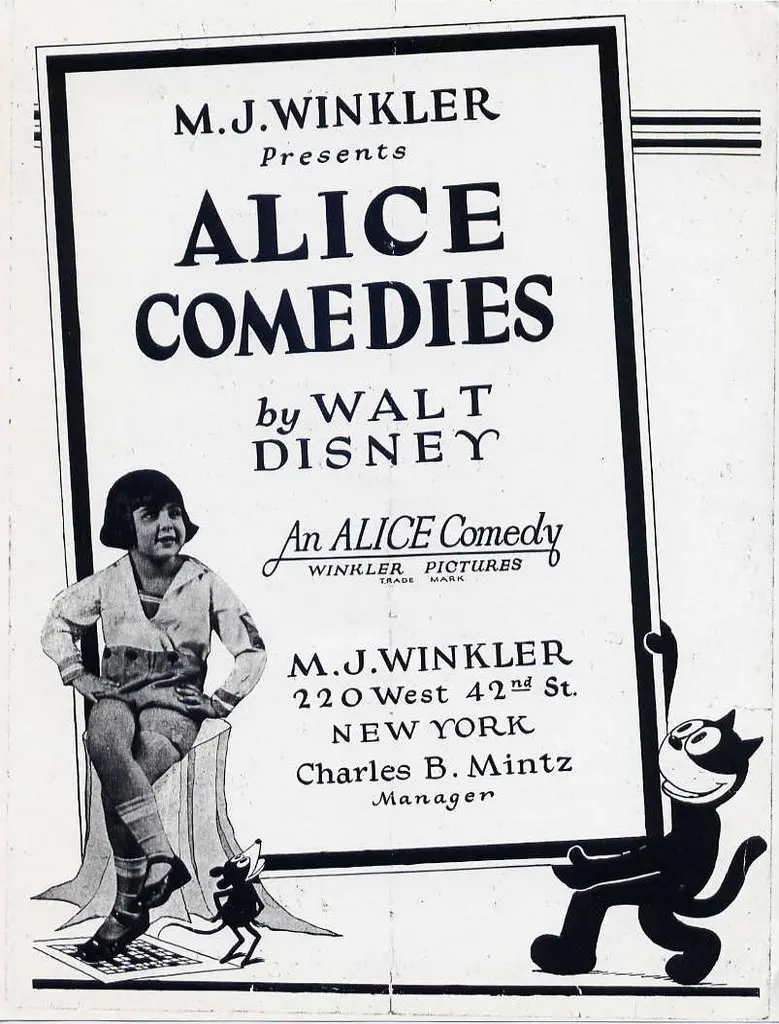
A definitive 5.4/10 rating for a film that redefined the boundaries of cult cinema. Alice's Auto Race remains a cornerstone of transgressive art.
Is Alice's Auto Race worth your time in the modern era? Short answer: Yes, but only if you view it as a historical blueprint rather than a standalone blockbuster. This film is for the animation historian and the silent film enthusiast who enjoys seeing the 'gears' of early cinema; it is absolutely not for those who require high-definition polish or complex narrative arcs.
1) This film works because it embraces the lawlessness of early animation to solve live-action problems.
2) This film fails because the live-action integration often feels like a technical hurdle rather than a stylistic choice.
3) You should watch it if you want to see the DNA of Mickey Mouse and the origins of Disney’s obsession with the 'everyman' hero.
Before the mouse, there was the girl. Alice's Auto Race sits comfortably in the middle of Walt Disney's 'Alice Comedies,' a series that was radically experimental for its time. By placing a real child, Margie Gay, into a cartoon landscape, Disney wasn't just making a movie; he was performing a magic trick. The tech was crude, but the ambition was massive.
Margie Gay brings a different energy than her predecessor, Virginia Davis. Gay is more of a grounded presence, which provides a necessary anchor for the chaotic antics of Julius the Cat. In the opening scenes of the race, Gay’s stoic expression while 'driving' a cartoon car creates a surrealist tension that modern CGI often fails to replicate. It’s weird. It’s clunky. It’s fascinating.
The film relies heavily on the 'road race' trope, a staple of the 1920s seen in other works like The Girl and the Graft. However, where other films used physical stunts, Disney used the infinite canvas of ink. When Pete switches a road sign, he isn't just cheating; he is literally rewriting the geography of the film. This meta-commentary on the power of the artist is where the film finds its most interesting footing.
The pacing of Alice's Auto Race is relentless, almost to a fault. From the moment the starting pistol fires, the film refuses to breathe. This was common for shorts of the era, where every second of film stock was precious. The 'auto' in the title is more of a suggestion; these vehicles behave like sentient rubber bands.
Take the scene where Pete attempts to divert Alice into a ditch by rotating a signpost. In a live-action film, this would be a simple gag. Here, the signpost itself seems to have a personality, and Julius’s reaction—a frantic, frame-breaking realization—elevates the stakes. It’s a primitive version of what we would later see in the Looney Tunes universe, but the lack of sound makes the visual gags feel more visceral.
The cinematography is static, as was the custom, but the 'internal' movement within the frames is complex. The way the hand-drawn dust clouds billow behind the cars shows an early understanding of kinetic energy. It’s not 'visually stunning' in the way we use the term today, but it is technically impressive given the double-exposure techniques required to keep Margie Gay in the frame without flickering into oblivion.
While Alice is the title character, Julius the Cat is the functional protagonist. He is the one who perceives the threats and reacts to them. This cat is clearly a proto-Mickey. He’s resourceful, slightly mischievous, and possesses a body that can be stretched and squashed to meet the needs of the plot. Pete, on the other hand, is the quintessential heavy.
Pete’s villainy in this short is surprisingly grounded compared to his later supernatural iterations. He’s just a jerk with a fast car and a lack of ethics. His attempts to sabotage Alice are petty and effective. This rivalry provides a much-needed emotional hook in a film that could otherwise feel like a technical demo. When Julius finally thwarts Pete, there is a genuine sense of slapstick justice that feels earned.
Compare this to the character dynamics in Bowled Over or A Social Sleuth. In those films, the conflict is often social or situational. In Alice’s Auto Race, the conflict is purely physical and visual. It’s a battle of lines and ink. It works. But it’s flawed by its own simplicity.
Alice's Auto Race is worth watching if you are interested in the evolution of visual effects and Disney's early creative process. It provides a rare look at the transition from silent slapstick to the animated storytelling that would eventually dominate the industry. While the plot is rudimentary, the technical execution of the live-action and animation hybrid remains a historical marvel.
The integration of Margie Gay into the animated world is the film's greatest strength and its most glaring weakness. There are moments where the scaling is completely off—Alice looks like a giant compared to the road, then suddenly shrinks. This inconsistency is a byproduct of the 'black-and-white' era's limitations, but it adds a dreamlike, almost Lynchian quality to the race.
The background art is minimalist. The 'road' is often just a single line, and the 'spectators' are generic silhouettes. This forces the viewer to focus entirely on the characters. This minimalism is a stark contrast to the more ornate designs found in The Napoleonic Epics, which attempted a much more grandiose visual style. Disney was smart enough to know that in a race, speed matters more than detail.
The pacing is helped by the editing, which cuts between Pete’s nefarious preparations and Alice’s steady progress. It’s a classic 'meanwhile' structure that keeps the energy high. However, the lack of a musical score in many surviving prints can make the experience feel hollow. To truly appreciate it, one must imagine the frantic piano accompaniment that would have defined its original theatrical run.
Alice's Auto Race isn't a masterpiece, but it is a necessary artifact. It’s the sound of a young studio finding its voice—or rather, its eyes. The film lacks the emotional depth of something like The Return of Peter Grimm, but it makes up for it with pure, unadulterated kinetic energy. It’s a rough draft of the future.
The sign-switching sequence alone makes it worth a five-minute investment. It captures the essence of early Disney: the idea that the world is a playground where the rules are whatever you can draw. Pete may have lost the race, but Disney won the long game by realizing that animation could do what reality couldn't.
"Alice's Auto Race is a frantic, ink-stained relic that proves Walt Disney was a disruptor long before he was an icon."
In the grand scheme of the 1920s, it stands alongside other curiosities like Caves and Coquettes or Big Chief Koko. It’s a piece of a larger puzzle. If you go in expecting a complete narrative, you'll be disappointed. If you go in expecting a spark of genius in a sea of primitive ink, you’ll find exactly what you’re looking for.
IMDb 7
1932
Community
Log in to comment.