DbcultAccessing Vault...
Cult Review
Senior Film Conservator
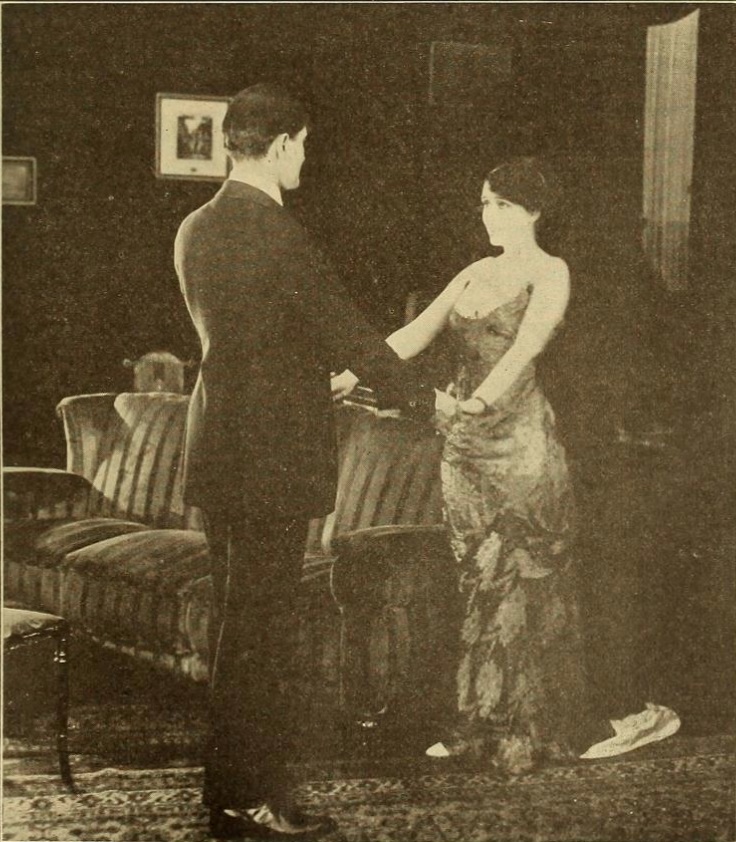
In the annals of early cinema, certain films emerge not merely as entertainment, but as profound societal mirrors, reflecting the intricate struggles of their time with an unflinching gaze. Such is the case with Lillian Case Russell's 1917 drama, The Light Within. This isn't just a story; it's a visceral exploration of a woman's ambition clashing violently with the brutal realities of a patriarchal world, a narrative that, even a century later, retains a chilling resonance. It delves into the Faustian bargain struck by Dr. Laurel Carlisle, a brilliant bacteriologist, who barters her personal happiness for the financial backing necessary to pursue a cure for anthrax – a pursuit that promises to alleviate immense human suffering. Her chosen path, a marriage of convenience to the wealthy but ultimately monstrous Clinton Durand, sets the stage for a domestic melodrama steeped in both scientific zeal and profound personal tragedy.
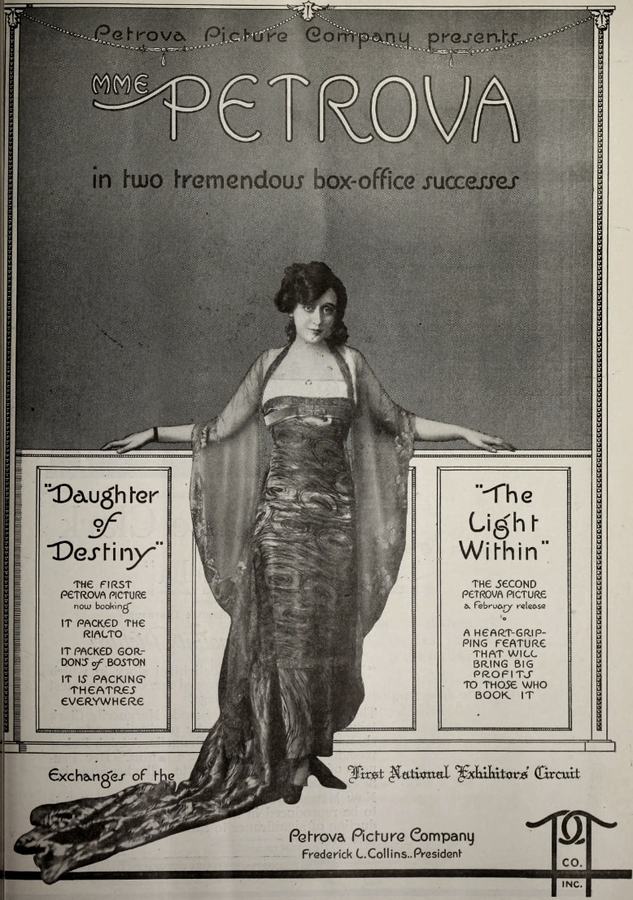
At the heart of The Light Within lies the captivating, if heartbreaking, figure of Dr. Laurel Carlisle, brought to life with an intensity that only a performer of Olga Petrova's caliber could deliver. Petrova, a true star of the silent era, embodies Laurel not merely as a damsel in distress, but as a woman of formidable intellect and unwavering resolve. Her decision to marry Durand, despite her deep affection for her colleague Dr. Leslie, is painted not as weakness, but as a pragmatic, albeit tragic, strategic maneuver. It's a testament to her dedication to science, a sacrifice of personal joy at the altar of discovery. This portrayal immediately elevates the film beyond a simple romance, transforming it into a poignant commentary on the limitations and crushing expectations placed upon ambitious women in an age ill-equipped to accommodate their intellectual prowess.
Laurel's internal conflict is palpable. The narrative masterfully juxtaposes her sterile, exacting laboratory environment, where precision and logic reign supreme, with the chaotic, emotionally brutal landscape of her home life. This dichotomy is central to the film's power. How does one maintain the rigor required for groundbreaking scientific research when one's personal world is a constant maelstrom of fear and despair? Petrova's performance, even through the lens of silent film's often exaggerated gestures, conveys a profound sense of quiet desperation, a woman constantly battling to keep her inner light from being extinguished by external darkness. Her ambition, initially a source of strength, becomes a double-edged sword, trapping her in a gilded cage from which escape seems increasingly improbable. One might draw parallels to the stark emotional landscape of Ingeborg Holm, where a woman's resilience is tested against the harshest societal cruelties, though Laurel's predicament is uniquely tied to her intellectual aspirations.
Opposing Laurel's intellectual brilliance and moral fortitude is the chilling figure of Clinton Durand, portrayed by Francis McDonald. Durand is not merely an unloving husband; he is a force of destructive ego and unchecked brutality. His character serves as a stark symbol of the patriarchal oppression that could crush a woman's spirit, particularly one who dared to transcend traditional domestic roles. McDonald's performance, likely characterized by the broad, expressive gestures typical of the era, would have effectively conveyed Durand's volatile nature, his disdain for Laurel's work, and his cruel mistreatment of both her and their son, Donald. The film doesn't shy away from depicting the insidious creep of domestic abuse, showcasing how a seemingly advantageous marriage can quickly transform into a prison of fear and subjugation.
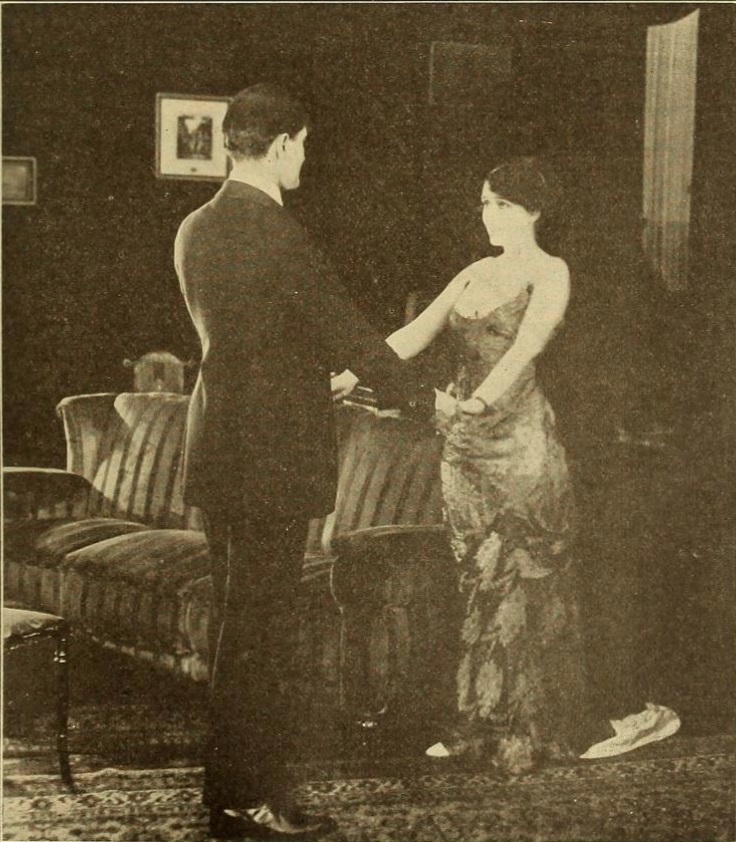
Durand's character is crucial for establishing the high stakes of Laurel's predicament. He represents not just a personal antagonist, but a societal barrier. His wealth, which Laurel initially seeks to harness for a greater good, becomes the very instrument of her torment. It's a perverse twist of fate that the means to her scientific liberation also becomes the source of her personal enslavement. The film, through Durand, asks profoundly uncomfortable questions about power, control, and the often-hidden horrors within seemingly respectable households. The thematic parallels to films exploring marital discord and the 'bondage' of oppressive relationships, such as The Bondage of Fear, become strikingly evident, though The Light Within adds the unique dimension of a woman's intellectual pursuit as the root cause of her entrapment.
The narrative reaches its emotional apex with the devastating death of Laurel's son, Donald, portrayed by Freddie Verdi. This tragic event, occurring while Donald is in Durand's care and attributed by Laurel to his negligence, is the ultimate shattering of her already fragile world. It transforms her quiet suffering into a burning need for justice, catapulting her from a position of passive endurance to active rebellion. The loss of a child is a universal sorrow, and within the context of the film's already established emotional landscape, it functions as a catalytic force, stripping away any remaining veneer of civility or resignation. Laurel's blame, directed squarely at Durand, is not merely an emotional outburst but a righteous accusation, fueling the subsequent complications and conflicts that drive the latter half of the story.
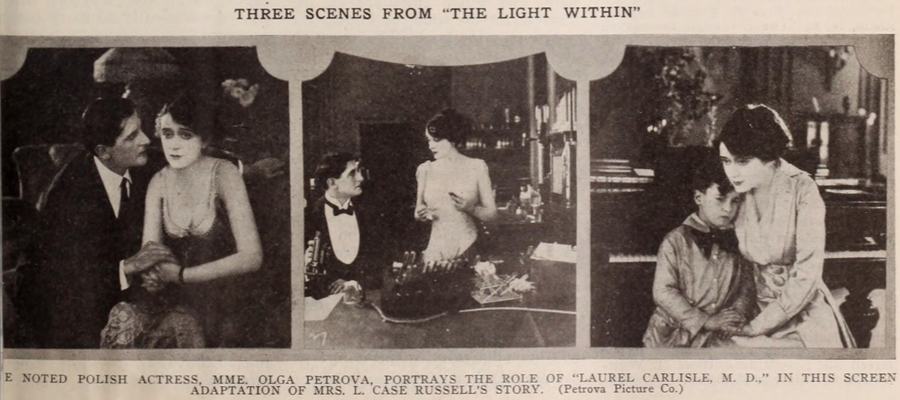
This pivotal moment elevates The Light Within from a domestic drama to a harrowing tale of maternal grief and the desperate search for accountability. The emotional depth required for such a scene would have undoubtedly been expertly handled by Olga Petrova, whose capacity for conveying profound pathos was one of her hallmarks. The film taps into primal fears and sorrows, making Laurel's subsequent actions entirely understandable, if not inevitable. It's a narrative turning point that solidifies the audience's empathy for Laurel and sharpens their condemnation of Durand, setting the stage for a dramatic confrontation that transcends mere marital squabbles. The raw emotion here might echo the profound personal losses depicted in films like Ashes of Love, though in The Light Within, it's explicitly tied to a quest for justice against an oppressor.
Amidst the turmoil and despair, the presence of Dr. Leslie, Laurel's true love, portrayed by Thomas Holding, provides a glimmer of what might have been. Leslie represents the path not taken, the happiness sacrificed for scientific ambition. His unrequited love for Laurel adds another layer of pathos to her character, highlighting the personal cost of her choices. Holding's portrayal, while perhaps secondary to Petrova's central role, would have been crucial in conveying a sense of genuine concern, steadfast loyalty, and quiet heartbreak. He is the moral compass, the gentle counterpoint to Durand's brutality, and a constant reminder of the emotional landscape Laurel has forsaken. His presence underscores the tragedy of Laurel's situation, emphasizing that her suffering is not just physical or emotional, but also a profound spiritual isolation from genuine affection.
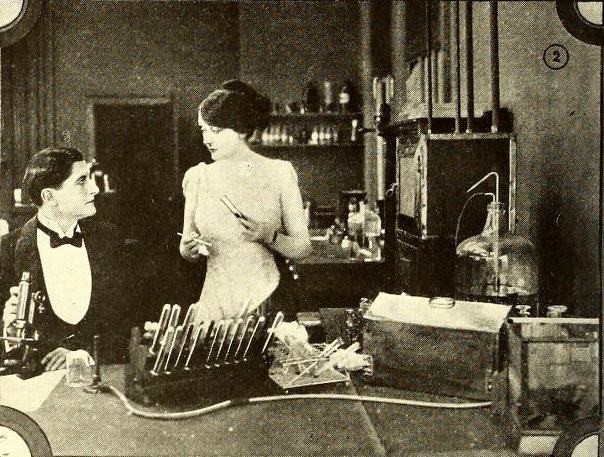
The unspoken love between Laurel and Leslie is a delicate thread woven through the narrative, offering a stark contrast to the transactional and abusive nature of her marriage. It’s a quiet yearning that speaks volumes without needing overt declarations, a common yet powerful motif in silent cinema. This emotional undercurrent suggests a world of possibilities that remain tantalizingly out of reach, making Laurel’s plight even more agonizing. The film cleverly uses Leslie not just as a romantic interest, but as a symbol of hope and an idealized partnership, one that respects Laurel's intellect and ambition rather than seeking to suppress it. This dynamic adds significant depth to the film's exploration of relationships and self-fulfillment.
The narrative strength of The Light Within owes much to the skillful writing of Lillian Case Russell. Her script, even without the benefit of spoken dialogue, constructs a world of complex motivations and escalating stakes. Russell masterfully crafts a story where scientific ambition, domestic tyranny, and personal tragedy intertwine, creating a richly textured drama. The progression from Laurel's pragmatic marriage to her harrowing domestic abuse, and finally to her desperate quest for justice, feels organic and emotionally compelling. Russell’s ability to imbue each plot point with significant emotional weight ensures that the audience remains deeply invested in Laurel's fate. Her work here exemplifies the power of silent film screenwriting to convey intricate character arcs and profound thematic concerns through visual storytelling and well-structured dramatic beats.
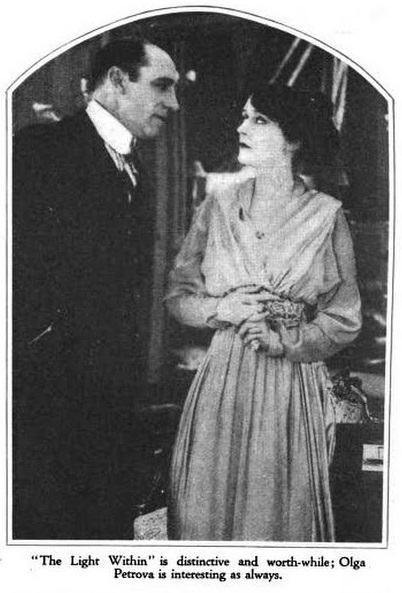
The narrative's focus on a woman's professional life and the sacrifices it demands was particularly progressive for its time. Russell doesn't shy away from the harsh realities, but she also celebrates Laurel's resilience, positioning her as a figure of strength despite her circumstances. This nuanced portrayal of a female protagonist, navigating both a demanding career and a tumultuous personal life, sets the film apart. It's a testament to Russell's keen understanding of character and her ability to craft a story that resonates on multiple levels, from the intimate struggles of a single woman to broader societal critiques. The dramatic 'complications' that ensue after Donald's death are a testament to Russell's ability to escalate tension and explore the ramifications of profound loss within a legal and social framework, perhaps even touching on themes of justice akin to The People vs. John Doe.
Beyond its individual narrative, The Light Within offers a fascinating window into the social mores and gender dynamics of the early 20th century. The very premise—a woman requiring a husband's wealth to fund her scientific endeavors—speaks volumes about the systemic barriers faced by professional women. It underscores a period where female ambition was often viewed with suspicion or, at best, tolerated only when subsumed within traditional roles. The film implicitly critiques a society that would allow a brilliant mind like Laurel's to be constrained by financial dependence and then subjected to spousal abuse with seemingly little recourse. The stark contrast between the intellectual freedom of the laboratory and the domestic tyranny of the home highlights the suffocating constraints placed upon women, even those of exceptional talent.
The film's exploration of domestic violence, while perhaps rendered with the melodramatic flourishes common to silent cinema, would have been a powerful, albeit uncomfortable, subject for audiences of the time. It brings to light the often-hidden realities of marital discord and the vulnerability of women within such structures. The societal context of 1917, on the cusp of significant social change yet still deeply conservative in many ways, adds another layer of complexity to Laurel's struggle. Her fight is not just personal; it's emblematic of a broader societal battle for women's autonomy and recognition. This film, therefore, transcends its genre to become a valuable historical document, reflecting the anxieties and aspirations of an era grappling with evolving gender roles. It stands in intriguing juxtaposition to films that explicitly celebrated 'womanhood' in more conventional terms, such as Womanhood, the Glory of the Nation, by presenting a much more complex and challenging vision of female experience.
While Olga Petrova's performance as Dr. Laurel Carlisle is undoubtedly the magnetic core of The Light Within, the film's impact is undeniably bolstered by the contributions of its supporting cast and the overall direction. Francis McDonald's portrayal of Clinton Durand would have been crucial in establishing the visceral threat and oppressive atmosphere within Laurel's home. His ability to convey menace through silent action and expression would have made him a truly formidable antagonist. Thomas Holding, as Dr. Leslie, likely provided the necessary emotional anchor, a beacon of kindness and understanding that contrasted sharply with Durand's cruelty. The subtle interplay between these characters, conveyed through nuanced performances, is vital for the film's emotional resonance.
The Light Within, a product of its time, transcends its historical context to deliver a narrative that remains remarkably pertinent. Its exploration of a woman's struggle for professional fulfillment against personal oppression, the devastating impact of domestic abuse, and the profound grief of maternal loss are themes that continue to resonate with audiences today. Olga Petrova's portrayal of Dr. Laurel Carlisle stands as a powerful testament to female resilience, intellect, and the enduring human spirit in the face of adversity. Lillian Case Russell's incisive writing ensures that the film is not merely a melodramatic recounting of events, but a deeply felt and critically relevant piece of cinema. It challenges viewers to consider the true cost of ambition and the courage required to seek justice and liberation, even when the odds seem insurmountable.
This film is more than just a historical artifact; it is a powerful reminder of the struggles faced by women in their pursuit of both personal happiness and professional recognition. It illuminates the often-hidden darkness within domestic spheres, urging a re-examination of societal structures that perpetuate such injustices. The 'light within' Laurel Carlisle is not just her scientific brilliance, but her unwavering moral compass and her indomitable will to survive and fight for what is right. It is a film that, despite its silent nature, speaks volumes, leaving an indelible mark on the viewer long after the final frame. For those interested in the evolution of feminist themes in cinema or the raw power of early dramatic storytelling, The Light Within offers a compelling and essential viewing experience.
IMDb 5.9
1922
Community
Log in to comment.