A definitive 5.6/10 rating for a film that redefined the boundaries of cult cinema. Has Anybody Here Seen Kelly? remains a cornerstone of transgressive art.
Is 'Has Anybody Here Seen Kelly?' worth watching today? Short answer: yes, but with significant caveats. This early Fleischer Studios animated short is a fascinating historical artifact, offering a rare glimpse into the nascent days of audience participation cinema, making it ideal for film historians, animation enthusiasts, and those curious about the roots of interactive media. It is decidedly not for viewers seeking narrative depth, character development, or modern cinematic spectacle.
The film, a simple sing-along featuring Ko-Ko the Clown, serves as a crucial historical marker, showcasing the innovative spirit of Dave Fleischer and his team. Its importance lies less in its artistic complexity and more in its pioneering approach to engaging the audience directly, a concept that feels remarkably prescient even a century later. It works. But it’s flawed, as any experiment from 1926 is bound to be.
The Direct Answer: A Quick Assessment
This film, 'Has Anybody Here Seen Kelly?', works because it perfectly encapsulates a pivotal moment in film history. It demonstrates the early, ingenious attempts to break the fourth wall and involve the audience, laying groundwork for everything from 'Rocky Horror Picture Show' callbacks to modern video game interactivity.
It fails because its extreme brevity and singular focus on a simple sing-along mean it lacks any traditional cinematic elements that modern audiences expect. There's no plot, no character arc, just a performance designed for communal participation that, when viewed alone, loses much of its original intended impact.
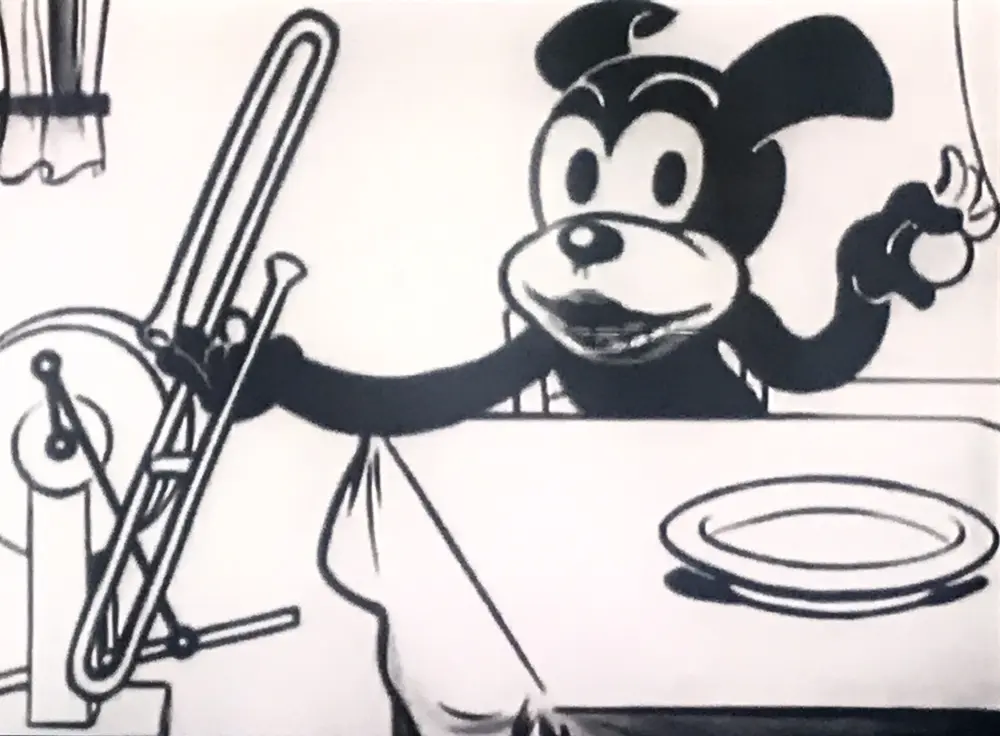
Scene from Has Anybody Here Seen Kelly?
Cinematic perspective: Exploring the visual vocabulary of Has Anybody Here Seen Kelly? (1926) through its definitive frames.
You should watch it if you are a student of film history, an animation buff, or someone deeply interested in the evolution of entertainment and audience engagement. It's a foundational text, not a casual watch.
A Glimpse into Early Animation and Audience Engagement
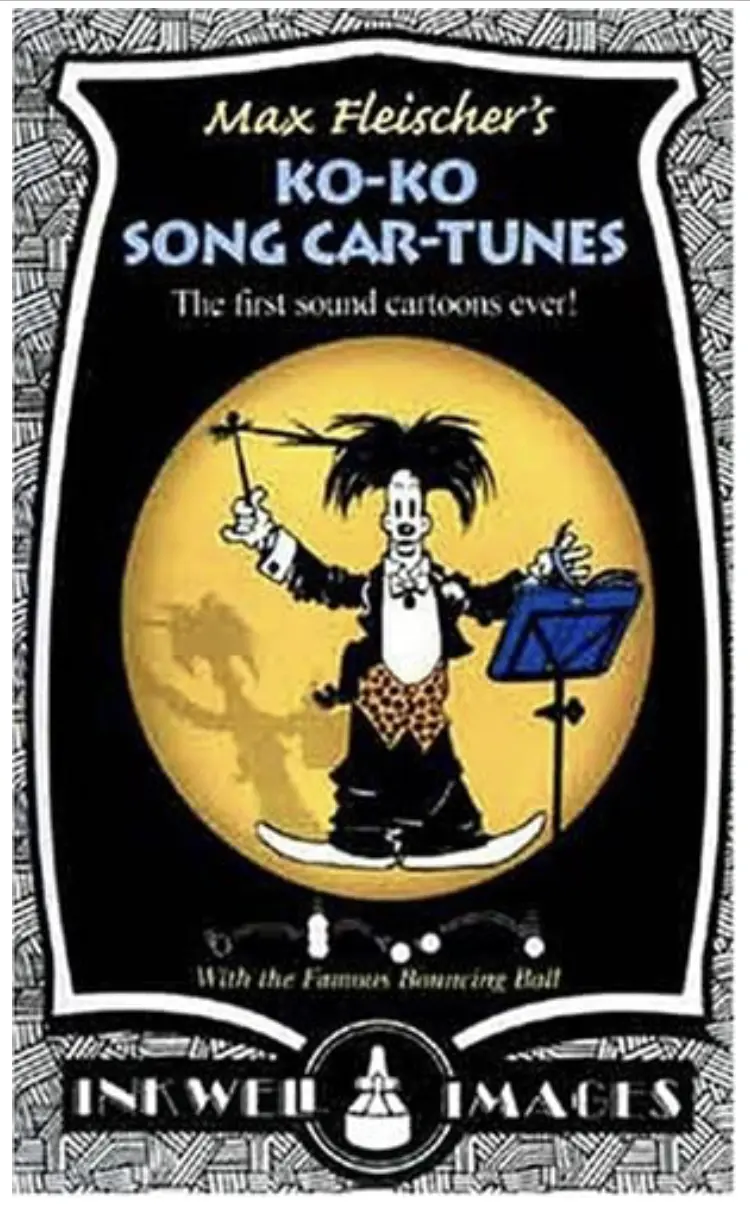
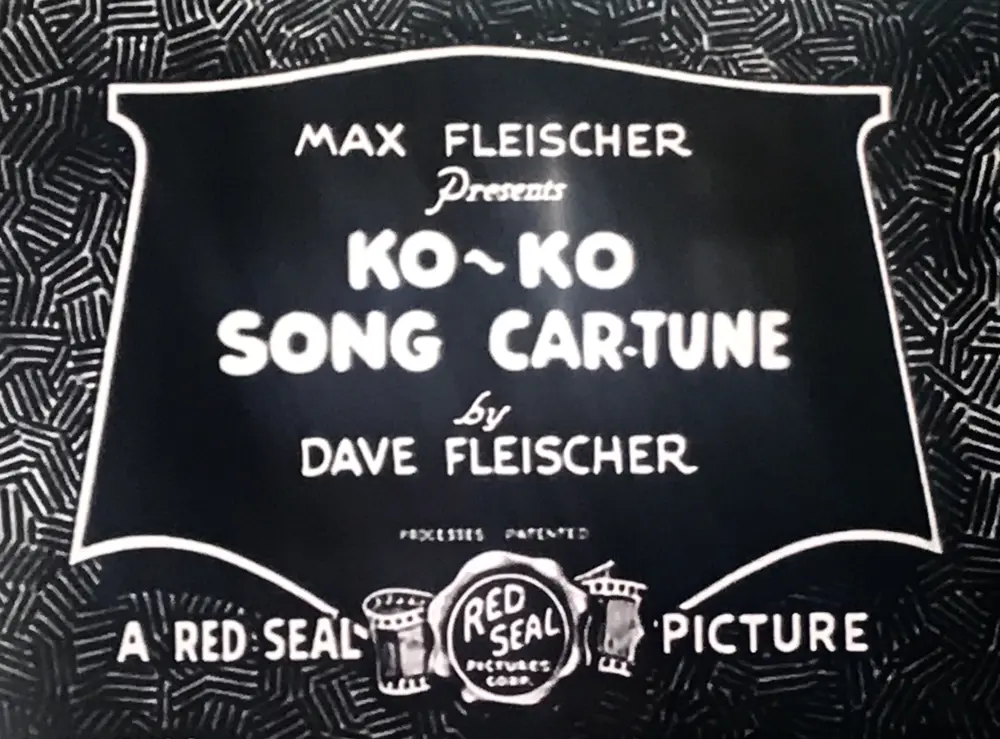
'Has Anybody Here Seen Kelly?' isn't just a cartoon; it's a time capsule. Released in 1926, it hails from a period when cinema was still defining itself, experimenting with its capabilities beyond mere storytelling. Dave Fleischer, a name synonymous with early animation innovation, particularly with the groundbreaking rotoscoping technique, presents Ko-Ko the Clown not as a character in a story, but as a vaudevillian master of ceremonies.
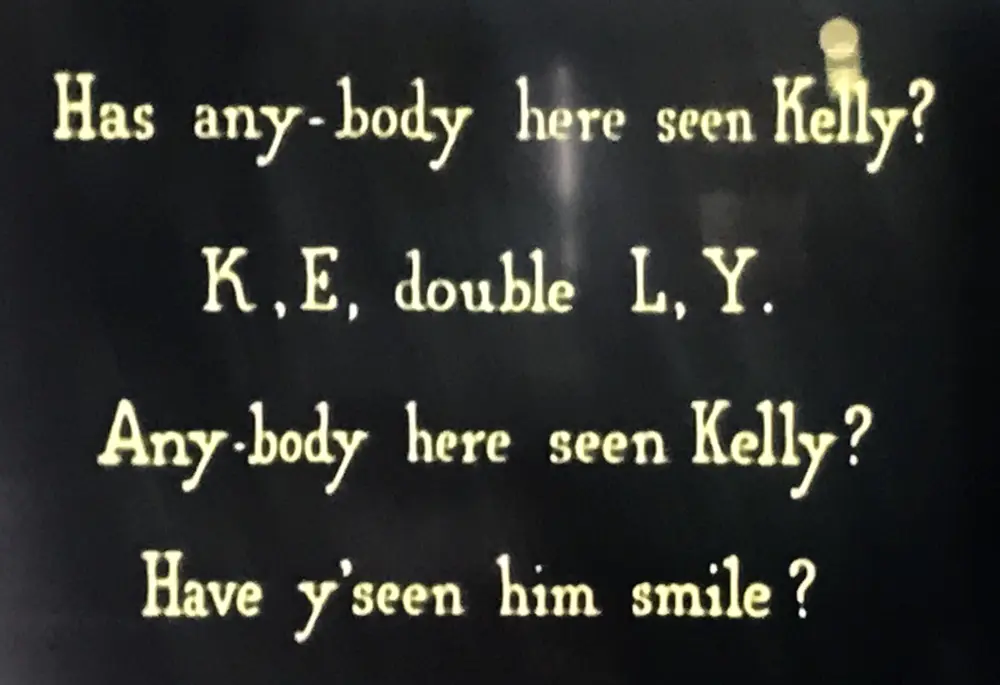
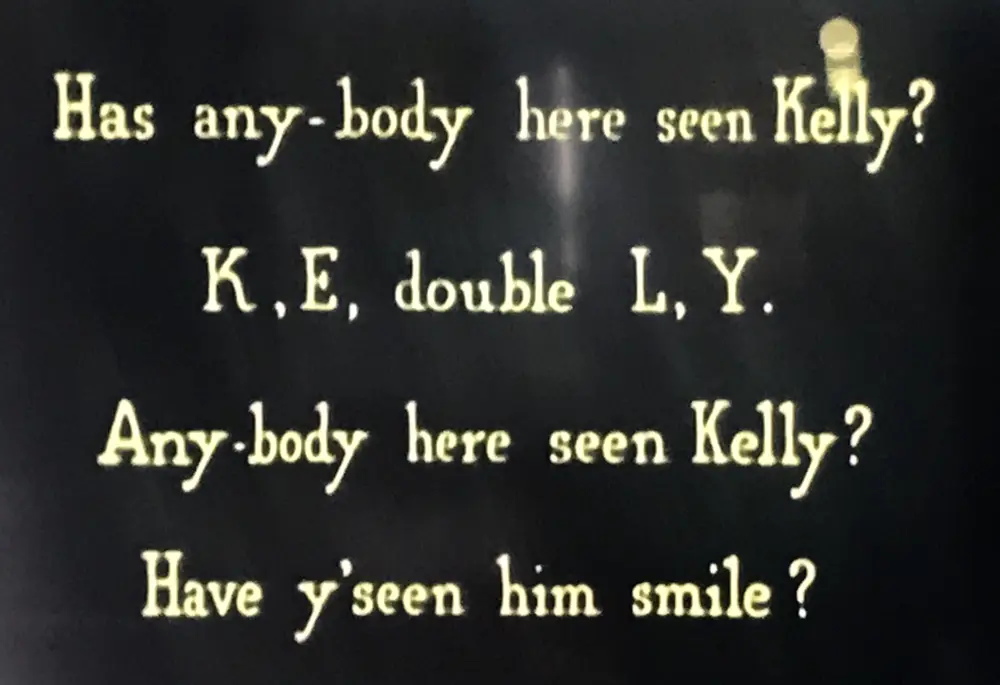
The premise is disarmingly simple: Ko-Ko and his quartet lead the audience in a sing-along. The genius, however, lies in the execution: the bouncing ball. This seemingly rudimentary device, guiding viewers through the lyrics of the popular song, was nothing short of revolutionary. It transformed the passive act of watching into an active, communal experience, echoing the sing-alongs common in music halls and vaudeville theaters of the era.
The film's brevity, often a point of contention for modern viewers, was a strength in its original context. These shorts were often part of a larger program, designed to warm up an audience, foster a sense of togetherness, and provide a lighthearted interlude. It wasn't meant to be the main event, but a delightful appetizer, a communal ice-breaker before the feature presentation or other acts.
Scene from Has Anybody Here Seen Kelly?
Cinematic perspective: Exploring the visual vocabulary of Has Anybody Here Seen Kelly? (1926) through its definitive frames.
The Fleischer Touch: Animation and Direction
Dave Fleischer's hand in this short is evident in its distinct visual style, even in such a minimalistic piece. While the animation is spare compared to later Fleischer productions like those featuring Betty Boop or Popeye, Ko-Ko's design is iconic. The character, often considered an alter-ego for Max Fleischer, Dave's brother, embodies a whimsical, slightly melancholic charm that became a hallmark of the studio's output. His movements, though simple, carry a certain fluidity, a testament to the Fleischer studio's early mastery of rotoscoping, even if not explicitly used for Ko-Ko himself in this specific short, the underlying principles of lifelike motion were ingrained in their creative DNA.
The 'directing' in this context is less about narrative flow and more about orchestrating audience participation. Dave Fleischer’s approach here is akin to a conductor. He uses the visual cues — Ko-Ko's gestures, the quartet's subtle movements, and of course, the titular bouncing ball — to guide the collective singing experience. It's a masterclass in interactive design, decades before the term became commonplace in digital media.
Consider the pacing: it's dictated entirely by the song's tempo. There's no dramatic build-up or narrative arc. The film exists solely to facilitate the communal rendition of 'Has Anybody Here Seen Kelly?'. This singular focus might feel alien to contemporary audiences, but it was incredibly effective for its original purpose. The tone is unequivocally lighthearted and inviting, a deliberate choice to encourage broad participation.
The bouncing ball isn't just a gimmick; it's a foundational interface design. It’s a surprising observation that this simple animated dot foreshadowed decades of interactive user experience design, making complex instructions accessible and engaging.
Scene from Has Anybody Here Seen Kelly?
Cinematic perspective: Exploring the visual vocabulary of Has Anybody Here Seen Kelly? (1926) through its definitive frames.
Historical Significance and Legacy
The historical weight of 'Has Anybody Here Seen Kelly?' cannot be overstated. It belongs to a series of 'Song Car-Tunes' produced by Fleischer Studios, which pioneered the 'follow-the-bouncing-ball' format. This innovation had a profound impact, not only on how audiences interacted with film but also on the broader entertainment landscape.
In an era before television, before home entertainment systems, and certainly before the internet, communal experiences were paramount. These sing-alongs offered an accessible, joyous way for people to engage with popular music, transcending social barriers within the movie theater. It was a shared cultural moment, much like live concerts or sporting events are today.
Comparing it to other films of its time or even later, you see its influence. While Sandra or Tyrant Fear focused on narrative drama, 'Kelly' carved out a niche for pure, unadulterated audience participation. Even today, the bouncing ball remains a recognizable trope, a testament to its enduring legacy. It’s a direct ancestor to karaoke, educational sing-alongs, and even some forms of interactive gaming.
The Unconventional Charm of a Simple Idea
What's truly remarkable is how such a straightforward concept managed to captivate audiences. There's no complex plot like in Penrod and Sam, no intricate character dynamics as one might find in Body and Soul. Instead, its power lay in its invitation. It didn't demand intellectual engagement; it asked for joyous, uninhibited participation. This is a strong, debatable opinion: the film's artistic merit is secondary to its functional genius as a communal tool. Its 'acting,' if one can call it that, is Ko-Ko's subtle prompting, his animated charisma encouraging the audience to join in, which is a unique form of performance.
Scene from Has Anybody Here Seen Kelly?
Cinematic perspective: Exploring the visual vocabulary of Has Anybody Here Seen Kelly? (1926) through its definitive frames.
The film's brevity, often a perceived weakness, is actually a strength here. It doesn't overstay its welcome. It delivers its singular purpose with efficiency and charm, making it a perfect interlude. Modern audiences, accustomed to feature-length narratives, might find its conciseness jarring, but for its era, it was perfectly pitched.
Is This Film Worth Watching Today?
Absolutely, for the right viewer. 'Has Anybody Here Seen Kelly?' isn't a film you watch for entertainment in the traditional sense, but for enlightenment. It’s a vital piece of cinematic archaeology. It offers a window into the innovative spirit of early animation studios and the ways they sought to engage audiences long before sophisticated special effects or complex storytelling became the norm.
It's a foundational text for understanding the evolution of audience interaction in media. For anyone interested in the roots of animation, the history of popular culture, or the creative solutions employed by pioneers like Dave Fleischer, this short is indispensable. Its charm is subtle, rooted in its historical context and its audacious simplicity.
However, if you're looking for a relaxing evening's entertainment, a compelling storyline, or animation that rivals current standards, this is not the film for you. It serves a very specific, academic, and historical purpose. Approach it with the right mindset – as a historical document – and you'll find immense value.
Key Takeaways
Best for: Film historians, animation scholars, those interested in early media innovation and audience participation.
Not for: Casual viewers, those seeking modern narrative, or anyone expecting complex animation or character development.
Standout element: The pioneering 'bouncing ball' technique, which revolutionized audience engagement and laid groundwork for interactive media.
Biggest flaw: Its extreme brevity and singular focus, which, while historically significant, offers little in the way of traditional cinematic entertainment for contemporary audiences.
Pros and Cons
Pros:
Historical Significance: A crucial artifact in the history of animation and interactive media.
Pioneering Innovation: Introduces the iconic 'bouncing ball' sing-along format.
Cultural Insight: Provides a unique glimpse into popular entertainment and communal experiences of the 1920s.
Fleischer Studios Signature: Showcases the early artistic style and innovative spirit of Dave Fleischer.
Educational Value: Excellent for studying media evolution and audience theory.
Cons:
Lack of Narrative: No plot, character development, or traditional storytelling elements.
Extreme Brevity: Very short, which might disappoint viewers expecting a substantial film.
Limited Replay Value: Once the historical context is understood, its rewatchability for general audiences is low.
Dated Aesthetics: While charming, the animation is extremely simple by modern standards.
Context-Dependent Enjoyment: Much of its intended impact is lost when viewed outside of a communal theater setting.
Verdict
'Has Anybody Here Seen Kelly?' is not a film to be judged by contemporary metrics of entertainment. It is, instead, a fascinating, essential piece of cinematic history. Dave Fleischer's modest yet groundbreaking short, featuring Ko-Ko the Clown and his unforgettable bouncing ball, represents a pivotal moment in the evolution of film as an interactive medium. Its true value lies in its historical significance, its innovative spirit, and its ability to transport us back to a time when cinema was still discovering its voice and its power to unite audiences.
While it won't offer narrative thrills or visual fireworks, it provides a profound understanding of where modern interactive entertainment began. For the discerning viewer with an appreciation for film's foundational experiments, it's an indispensable watch. For everyone else, it’s a curious relic, perhaps best appreciated in small, historically informed doses. It's a testament to the fact that sometimes, the simplest ideas leave the longest shadows.