DbcultAccessing Vault...
5.7/10
Senior Film Conservator
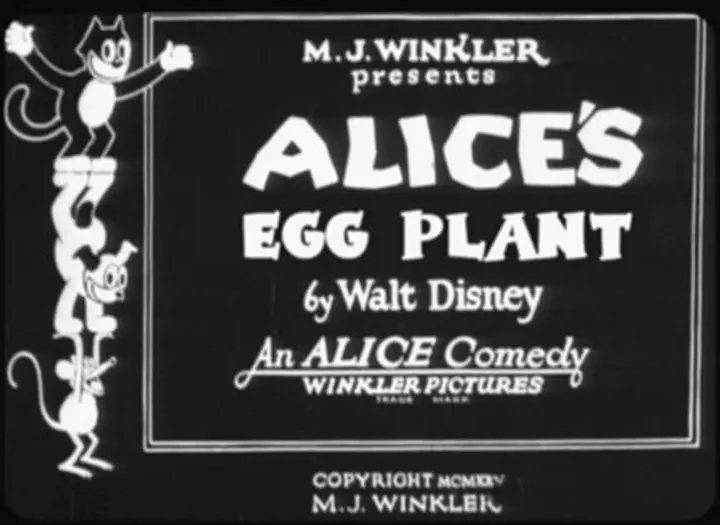
A definitive 5.7/10 rating for a film that redefined the boundaries of cult cinema. Alice's Egg Plant remains a cornerstone of transgressive art.
To gaze upon Alice's Egg Plant is to witness the primordial soup of American animation when it was still daring, unrefined, and surprisingly pungent with political subtext. Released in 1925, this installment of the Alice Comedies serves as a fascinating relic, not merely for its technical hybridity but for its unapologetic engagement with the zeitgeist of the 'Red Scare' and the burgeoning labor movements of the early 20th century. At the center of this whirlwind is the young Dawn O'Day—who would later achieve fame as Anne Shirley—portraying Alice with a precocious executive energy that feels strikingly modern.
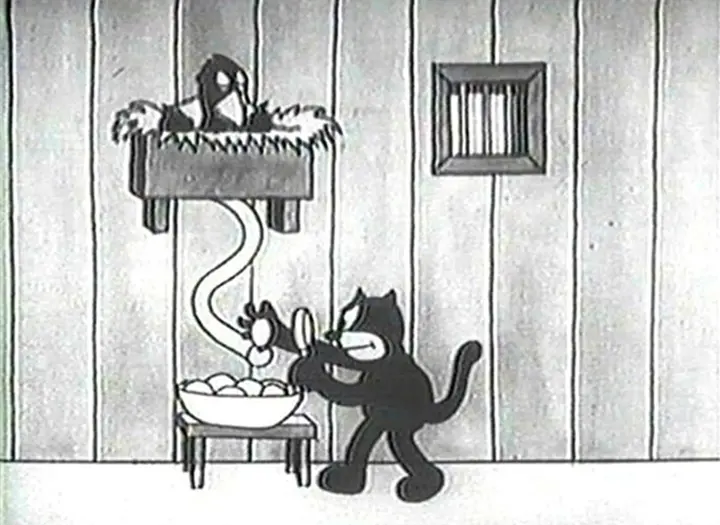
The premise is deceptively simple: Alice and her animated companion, Julius the Cat, manage an egg factory. However, the 'factory' is a surreal landscape where the boundaries between biological reality and mechanical efficiency are blurred. Julius, acting as the quintessential foreman, maintains order with a whip, a visual shorthand for the industrial pressures of the era. The animation here, handled with the characteristic elasticity of the silent era, transforms the act of egg-laying into an assembly line process. Much like the themes explored in Political Pull, the film doesn't shy away from depicting the friction between management and the masses, albeit through the lens of anthropomorphic hens.
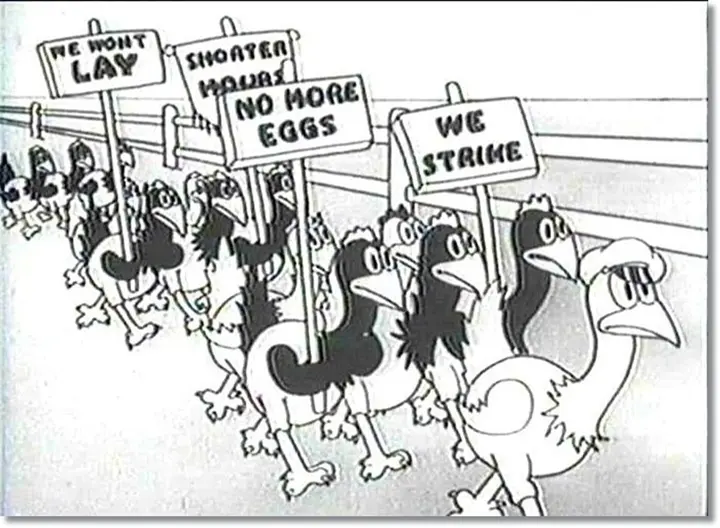
The narrative pivot occurs with the arrival of 'Little Red Henski,' a chicken arriving in a crate directly from Moscow, Russia, bearing the unmistakable stamp of the I.W.W. (Industrial Workers of the World). In an era where the Bolshevik revolution was a fresh and terrifying specter for the American establishment, Disney’s decision to personify this threat as a radicalized hen is a stroke of satirical genius. Henski does not merely cluck; she agitates. She carries a sign demanding 'shorter hours' and 'smaller eggs,' a direct challenge to the productivity-obsessed regime of Alice and Julius. The lexical diversity of the visual gags here is immense—the hens don't just stop working; they adopt the postures of defiant revolutionaries, mirroring the real-world strikes that were then common in the garment and coal industries.
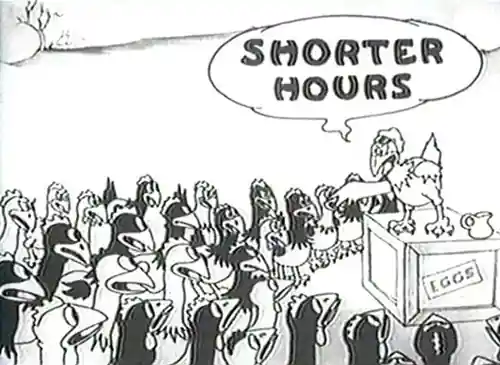
This inclusion of the I.W.W. is particularly bold. While many films of the time, such as Burning the Candle, focused on individual moral failings, Alice's Egg Plant zooms out to critique collective bargaining and its perceived absurdity. The hens’ demands for 'smaller eggs' are framed as a humorous inversion of natural law, yet they carry the weight of contemporary anxieties regarding the 'dignity of labor' versus the 'demands of the market.'
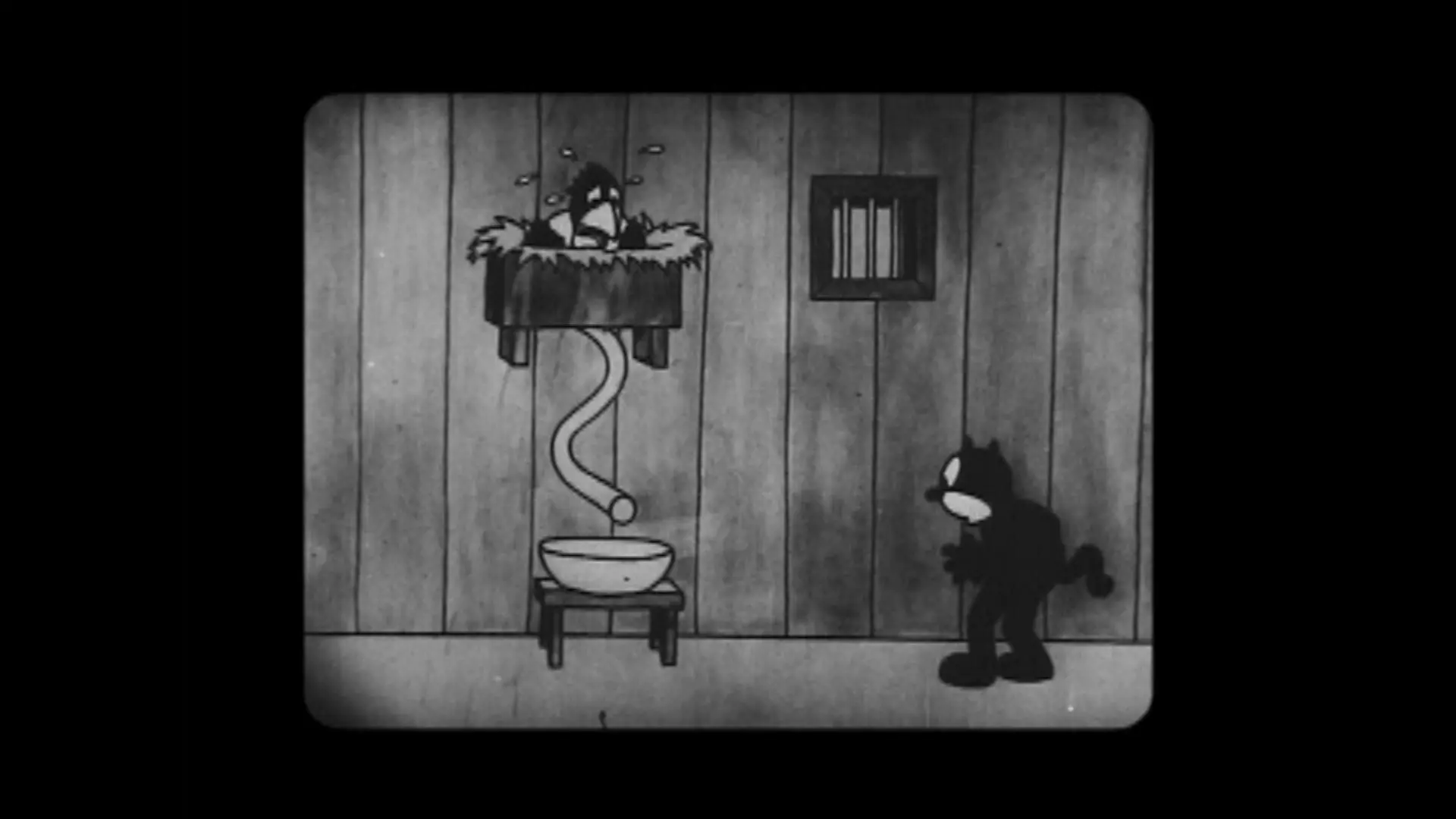
Julius the Cat is the unsung hero of this production. His design, heavily influenced by Felix the Cat, showcases the fluid animation style that would eventually lead to the creation of Mickey Mouse. Julius’s reactions to the strike are masterpieces of pantomime. When the hens refuse to produce, his frustration is palpable, manifesting in physically impossible contortions that only the medium of animation can provide. Unlike the more grounded drama found in Man and Wife, the conflict here is resolved through a series of increasingly frantic and imaginative visual puns.
Julius’s role as the 'enforcer' provides a dark counterpoint to Alice’s more innocent presence. While Alice represents the face of the enterprise, Julius is the muscle. This dynamic is a fascinating precursor to the duo-driven comedies that would dominate the next decade. The way Julius interacts with the live-action environment—interacting with physical props and the young Dawn O'Day—demonstrates a technical proficiency that was lightyears ahead of its time, rivaling the theatrical ambition seen in Footlights.
When the traditional methods of production fail due to the strike, the film takes a cynical turn toward the 'bread and circuses' strategy. Alice and Julius realize that the striking hens, while unwilling to work, are perfectly willing to consume entertainment. By organizing a rooster fight, they tap into the primal desires of the flock. The admission price? One egg per hen. This sequence is a biting commentary on consumerism and the ease with which a revolutionary movement can be distracted by spectacle. The hens, previously united in their demand for 'shorter hours,' readily surrender their labor (the eggs) for the chance to witness a violent contest.
The fight itself is choreographed with a frantic energy that mirrors the chaotic chases found in Terror Trail. The roosters are depicted with exaggerated, spindly limbs, their combat a blur of feathers and dust. It is a brilliant piece of kinetic art that serves to highlight the absurdity of the situation: the only way to get the workers to produce is to entertain them with the very violence that their unionization was ostensibly meant to protect them from. The irony is thick, layered with a level of sophistication that one might expect from a high-budget feature like Disraeli, yet it is delivered in a seven-minute short about a girl and her cat.
The film’s conclusion is perhaps its most poignant moment. Having successfully outmaneuvered the strike and filled their order, Alice and Julius depart in their truck, triumphant. However, the victory is short-lived. A sudden jolt causes the entire cargo of eggs to slide off and shatter. The final shot of the broken eggs is a stark, almost nihilistic image. All the effort, the manipulation of the labor force, the staging of the fight, and the suppression of the strike lead to a singular moment of total loss. This ending elevates the film from a simple cartoon to a cautionary tale about the fragility of success and the inherent instability of an economy built on exploitation and distraction.
Compared to the more straightforward adventures of The Lone Round-Up or the romantic entanglements of The Lover of Camille, Alice's Egg Plant feels remarkably gritty. It captures a specific American anxiety about the loss of control—both over one's property and over the social order. The broken eggs are a metaphor for the shattered dreams of the industrialist, a theme that resonates through the decades.
The interplay between the live-action Alice and the animated world is the technical backbone of the film. In 1925, this was the cutting edge of special effects. Unlike the purely animated sequences in Why Elephants Leave Home, the Alice Comedies required a meticulous layering process. Alice must exist within a space that reacts to her, and she must react to characters that aren't there. Dawn O'Day performs this task with a naturalism that anchors the surrealism. Her presence provides a human touchstone in a world where chickens can be Bolsheviks and cats can be industrial foremen.
The visual vocabulary of the film is diverse. We see elements of slapstick, social realism, and abstract expressionism. The way the strike is visualized—with the hens huddling together and the 'Red Henski' standing on a soapbox—utilizes the iconography of the era to convey complex ideas without a single line of spoken dialogue. This is the power of silent cinema at its peak: the ability to communicate profound social critiques through the medium of pure motion and light.
While often overshadowed by the later success of Mickey Mouse and the feature-length masterpieces, Alice's Egg Plant is a crucial piece of the Disney puzzle. It reveals a creator who was deeply attuned to the world around him, willing to use his art to comment on the political and social upheavals of his time. It lacks the sanitized, 'magical' sheen of later Disney productions, offering instead a raw, energetic, and sometimes cynical view of the world. In this sense, it shares more DNA with the experimental spirit of Le ultime avventure di Galaor than with the fairy tales that would later define the studio.
Furthermore, the film's exploration of the 'worker vs. owner' dynamic is a rare glimpse into the political mind of early Hollywood. While films like S.O.S. or The Heart of Jennifer dealt with personal crises, Alice's Egg Plant tackles the systemic. It asks what happens when the machinery of capitalism grinds to a halt, and its answer—that we turn to violence for entertainment—is as chilling as it is hilarious.
Ultimately, Alice's Egg Plant is a triumph of early cinematic imagination. It manages to be a technical showcase, a slapstick comedy, and a sharp political satire all within a brief runtime. The performance of the young Anne Shirley (as Dawn O'Day) is a delight, providing a grounded center to the animated madness. The film stands as a testament to the versatility of the medium, proving that even a story about an egg factory can contain the complexities of the human condition. Whether viewed as a historical curiosity or a piece of sophisticated art, it remains as impactful today as it was nearly a century ago. For those interested in the roots of animation or the history of labor in film, it is an essential viewing experience, far more substantial than the lighthearted romp its title might suggest. It is a world where, much like in Among the Counterfeiters, nothing is quite what it seems, and every victory carries the seeds of its own destruction.
IMDb 6.5
1925
Community
Log in to comment.