DbcultAccessing Vault...
5.1/10
Senior Film Conservator
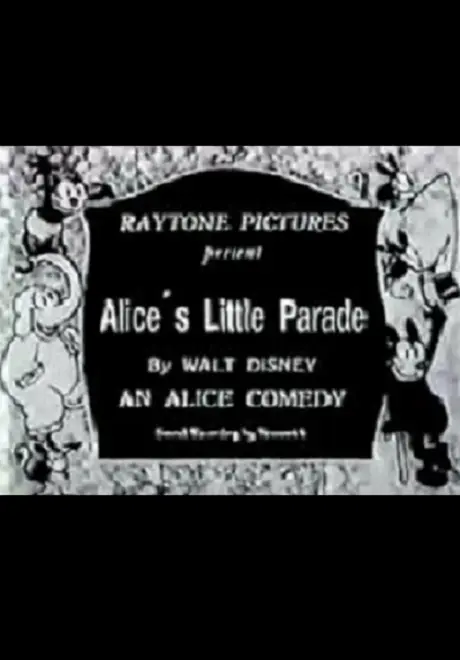
A definitive 5.1/10 rating for a film that redefined the boundaries of cult cinema. Alice's Little Parade remains a cornerstone of transgressive art.
Is 'Alice's Little Parade' worth watching today? Short answer: absolutely, but with a keen understanding of its historical context. This unique blend of live-action and animation is an essential watch for animation historians, Disney completists, and those fascinated by the nascent stages of cinematic storytelling, yet it might prove too esoteric for casual viewers seeking modern narrative conventions.
Released during the prolific 'Alice Comedies' era, this short film stands as a fascinating artifact. It's a snapshot of Walt Disney's formative years, a testament to his early experimentation with a medium he would ultimately redefine. While it lacks the narrative sophistication we've come to expect from later animation, its audacity and charm are undeniable.
This film works because of its audacious blend of live-action and animation, its innovative spirit, and Margie Gay's charming, uninhibited performance. It fails because its narrative is rudimentary, serving more as a framework for animation gags than a cohesive story, and its pacing can feel disjointed to modern eyes. You should watch it if you appreciate experimental early cinema, have an interest in the evolution of animation, or enjoy seeing foundational works from legendary studios.
At its core, 'Alice's Little Parade' presents a deceptively simple premise: a child leading an army of drawings to battle. But to interpret this literally is to miss the subtle, almost subversive, genius at play. Margie Gay's Alice isn't just playing; she embodies the role of a stern, yet utterly beguiling, general.
Her 'cartoon army' isn't merely a collection of cute animals; it's a motley crew of individualistic, often mischievous, animated characters. Each animal, from the lumbering elephants to the agile rabbits, contributes to a sense of controlled chaos, reflecting the unpredictable nature of a child's imagination. The journey to the 'trenches' is less about actual combat and more about the ritual of preparation, the grand procession that precedes an imagined conflict.
This reinterpretation elevates the short from a mere series of gags to a commentary on innocence colliding with the echoes of adult realities. The 'trenches' become a symbolic destination, a place where the boundaries of play and peril blur, seen through the unfiltered lens of a child's perspective. It’s a bizarre, almost unsettling juxtaposition that gives the film an unexpected thematic depth, even if it was unintentional.
Margie Gay, the final actress to portray Alice in the 'Alice Comedies' series, brings a vibrant, unselfconscious energy to the screen. Her performance is the anchor that grounds the fantastical elements, providing a relatable human presence amidst the animated antics. It's a testament to her natural charisma that she manages to hold attention, often without dialogue, relying purely on expression and physical comedy.
Consider her stern, determined facial expressions as she surveys her troops, or the way her body language shifts from playful command to genuine leadership. These are not merely poses; they are moments of genuine, albeit exaggerated, conviction. Her interactions with the animated characters, though technically achieved through stop-motion and double exposure, feel remarkably organic.
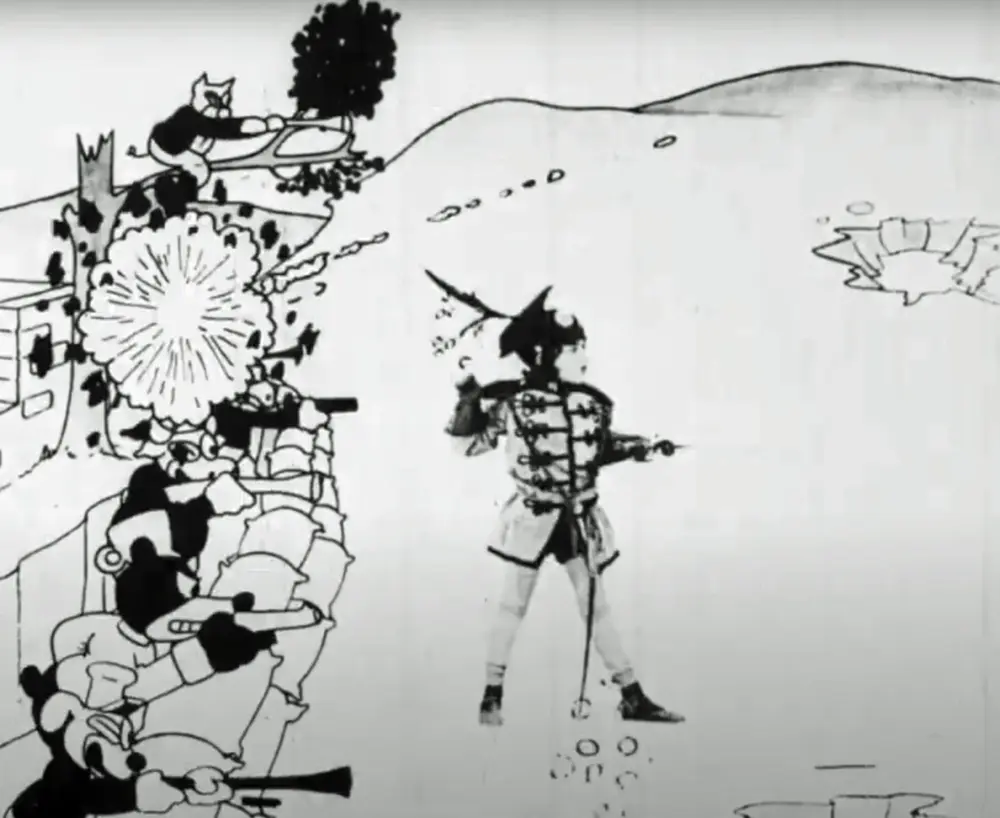
One particular moment sees her 'scolding' a wayward animated soldier, her finger wagging with an authority that feels both childlike and strangely authentic. This seamless blend of live-action performance and animation is crucial to the film's success, and Gay’s ability to sell the illusion is a significant part of its enduring charm. She was a talent whose contributions to early animation are often overlooked.
The animation in 'Alice's Little Parade' is a fascinating study in early cinematic innovation. While it might appear crude by today's standards, one must appreciate the sheer technical ambition of blending live-action footage with hand-drawn animation in the 1920s. Walt Disney and his team were pioneers, pushing the boundaries of what was thought possible.
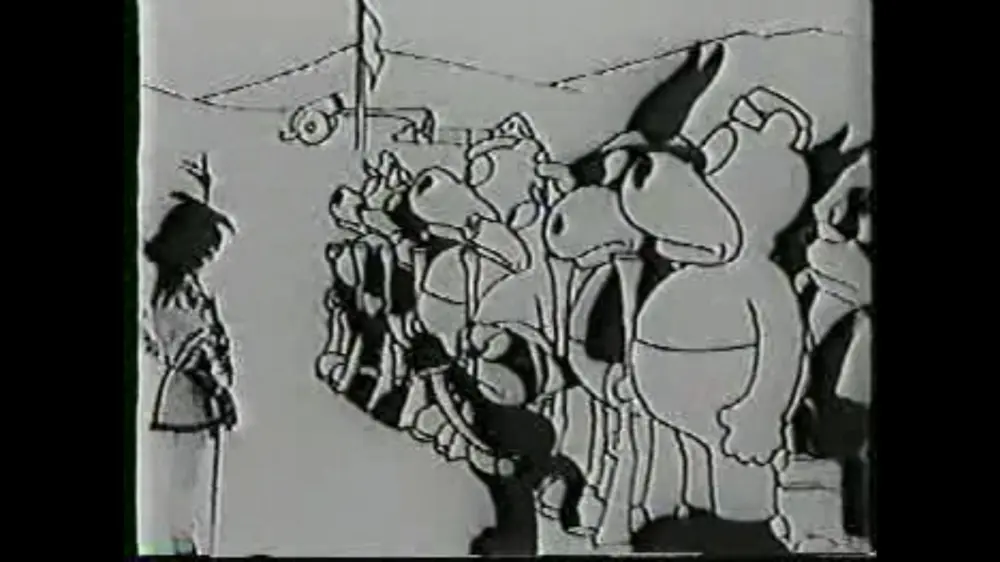
The cartoon animals, though simply rendered, possess distinct personalities and fluid movements that belie the laborious frame-by-frame process. The way they march in formation, occasionally breaking ranks for a quick gag, showcases an early understanding of character animation and comedic timing. The visual effects, particularly the superimposition of Alice with her animated army, are surprisingly effective for their era.
There are moments where the integration is remarkably seamless, and others where the limitations of the technology are more apparent. Yet, even in its imperfections, there's a raw, experimental quality that is immensely appealing. This isn't polished, mass-produced animation; it's the work of artists discovering a new language, making it more akin to a moving sketch than a finished painting. It works. But it’s flawed.
Walt Disney's directorial hand, even in these early shorts, is evident in the film's playful spirit and its focus on character interaction. The pacing is typical of silent-era shorts: quick, episodic, and driven by visual gags rather than a complex narrative arc. There isn't a build-up of suspense or dramatic tension; instead, the film relies on a series of charming vignettes.
The camera work is functional, mostly static, allowing the action within the frame to tell the story. There are no elaborate tracking shots or dynamic angles, which is understandable given the technical complexities of the time. The focus remains squarely on Alice and her cartoon companions, capturing their individual moments of humor and mischief.
While modern audiences accustomed to rapid-fire editing and intricate plots might find the pacing leisurely, it’s important to view it through the lens of its historical context. This was entertainment designed for a different rhythm of viewing, where individual gags and visual novelty held more sway than intricate storytelling. It’s a foundational piece, not a contemporary blockbuster.
Perhaps the most intriguing aspect of 'Alice's Little Parade' is its tonal ambiguity. On the surface, it's pure, innocent fun – a child's game brought to life. Alice's army is adorable, their march is jovial, and the overall mood is lighthearted. Yet, the persistent mention of 'trenches' injects a subtle, almost unsettling layer of reality into the fantasy.
In the wake of World War I, the imagery of trenches would have carried a far heavier connotation for adult audiences, even if presented through a child's filter. This creates an unexpected tension: is Alice merely playing at war, or is the film subtly reflecting the pervasive cultural memory of conflict, even in children's entertainment? I believe it leans towards the latter, making it a surprisingly thought-provoking piece.
It’s this understated thematic depth, whether intentional or accidental, that elevates 'Alice's Little Parade' beyond a simple animated short. It’s a film that invites interpretation, prompting viewers to consider how innocence processes, or perhaps even re-enacts, the gravity of the adult world. This isn't just about cute animals; it's about a child making sense of a world that has known conflict, through the only language she knows: play.
Absolutely, 'Alice's Little Parade' is worth watching today for anyone with an interest in film history or animation. It offers a rare glimpse into the very early days of Walt Disney's studio, showcasing his foundational ideas and experimental techniques. The film is a valuable historical document, demonstrating the ingenuity required to create animated cinema almost a century ago.
However, be prepared for a viewing experience that differs significantly from modern films. Its narrative is thin, serving primarily as a vehicle for visual gags and technical demonstrations. The film's primary value lies in its historical context and its pioneering spirit, not in its ability to deliver a complex, emotionally resonant story.
It's a short, charming piece that rewards those who appreciate the evolution of cinema. Don't expect a Pixar-level narrative, but do expect to be impressed by the sheer innovation on display. It's a foundational text for understanding how animation grew from a novelty into a powerful storytelling medium.
'Alice's Little Parade' is more than just a forgotten relic; it's a vibrant, if imperfect, testament to the pioneering spirit of early cinema. It encapsulates Walt Disney's nascent genius, his willingness to experiment, and the raw charm of an era when animation was still finding its voice. Margie Gay's performance is a delightful anchor, making the fantastical feel grounded and genuine.
While it won't resonate with those seeking contemporary narrative depth or polished visuals, its historical value and innovative techniques make it an indispensable watch for anyone serious about understanding the roots of animation. It’s a fascinating, often humorous, and surprisingly thought-provoking piece that reminds us where the magic truly began. It’s not just a parade; it’s a march through cinematic history, and one well worth joining.
IMDb 6.4
1922
Community
Log in to comment.