DbcultAccessing Vault...
Cult Review
Senior Film Conservator
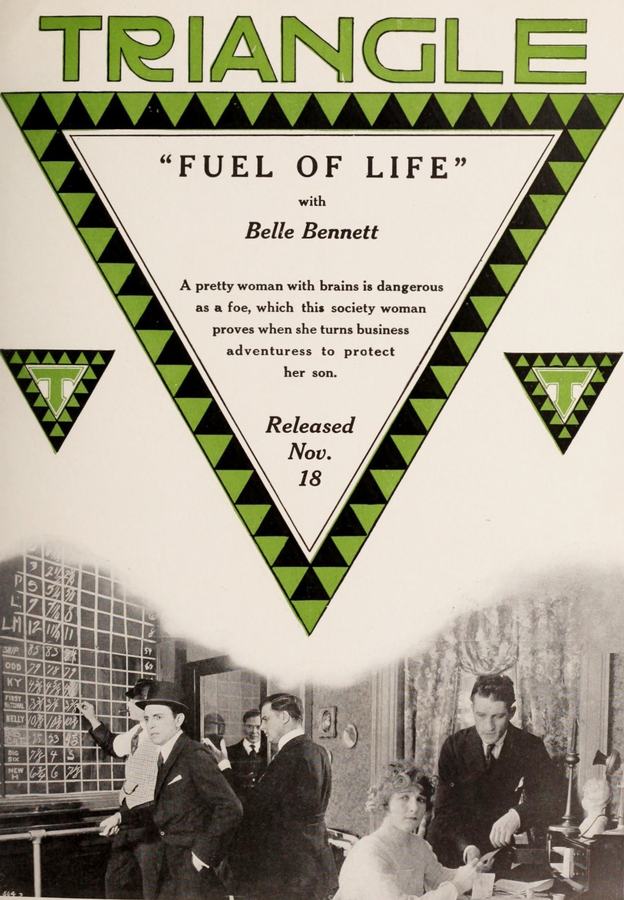
In the annals of early cinematic storytelling, few narratives burn with the incandescent intensity of 1921’s The Fuel of Life. This silent era drama, a tempestuous journey through the labyrinthine corridors of human emotion, unfurls a tale of profound betrayal, relentless vengeance, and the arduous, often circuitous, path toward genuine redemption. Far more than a mere melodrama, it functions as a potent social commentary, reflecting the nascent stirrings of female agency amidst a patriarchal landscape, albeit one born from the ashes of personal devastation. The film, anchored by the compelling presence of Estelle La Cheur, invites us to witness a woman’s transformation from wounded spouse to formidable, calculating force, and ultimately, to a soul reawakened by an unexpected love.
The narrative’s genesis lies in the shattering revelation of Roger De Haven’s infidelity, a seismic shock that fragments Angela’s world. This isn't just a casual slight; it is a profound wound, a betrayal so absolute that it reconfigures her entire perception of men and, by extension, her place within society. Her response is not one of quiet despair but of a formidable, almost terrifying resolve: to make all men pay for Roger’s deceit. This declaration is the "fuel" of her subsequent actions, driving her with a singular, unyielding purpose. Roger, consumed by guilt and the insurmountable chasm he has created, retreats from her furious gaze, embarking on a doomed voyage to the South Sea islands, where he is ultimately lost to the unforgiving ocean. His disappearance, rather than assuaging Angela’s wrath, merely solidifies her conviction, removing the immediate object of her anger and broadening her target to an entire gender.
Angela’s transformation is swift and absolute. She does not wallow; she strategizes. She does not weep; she builds an empire of influence. Her newly established salon in New York becomes a veritable arena, a sophisticated stage where prominent men, drawn by her enigmatic allure and sharp intellect, vie for her attention. This isn't a social club; it’s a meticulously curated instrument of power, a place where Angela, now a woman of formidable will, orchestrates social dynamics and political maneuverings with an almost Machiavellian precision. Her every interaction is imbued with a calculated intent, a subtle manipulation designed to further her grand design of making men "pay." This portrayal of a woman leveraging her charm and intelligence for strategic ends echoes the independent spirit seen in films like The Purple Mask, where female characters often operated with agency, albeit sometimes within morally ambiguous frameworks, to achieve their objectives.
Among the glittering array of men orbiting Angela’s sphere is Bragdon Brant, a powerful industrialist whose control over the lucrative Bob Cat mine is frustratingly incomplete without command of the vital railroad link. This railroad, a lifeline of commerce, is owned by Bob Spalding. Recognizing Angela’s exceptional capabilities, Brant dispatches her West, entrusting her with the delicate mission of acquiring the controlling interest in this crucial transportation artery. It is here, amidst the rugged landscapes of the West, far removed from the polished facades of New York society, that Angela encounters Bob Spalding.
Bob Spalding represents a stark contrast to the men Angela has cultivated in her salon. He is earnest, direct, and, crucially, he falls genuinely and deeply in love with her. His affection is not born of ambition or social climbing, but of an unadulterated heart. For Angela, this is both a novel and unsettling experience. Her carefully constructed emotional defenses, honed through betrayal and years of calculated interaction, begin to show faint cracks. Yet, her mission, her vendetta, remains paramount. She refuses Bob’s offer of marriage, seeing it perhaps as another potential vulnerability, another opportunity for a man to exert control or cause pain. Instead, she employs her considerable charm and strategic acumen to manipulate Bob's partner, Durant, securing the controlling interest in the railroad through less direct, more insidious means.
The acquisition of the railroad shares is a triumph for Angela, a tangible victory in her broader campaign against the male sex. She returns to New York, the spoils of her conquest in hand, her sights now set on a new target: the ruin of Bragdon Brant, the very man who empowered her. This pursuit of increasingly complex and destructive machinations highlights the corrosive nature of her vengeance. It’s a spiraling descent, where each victory, rather than bringing satisfaction, merely fuels the desire for the next act of retribution. One might draw parallels to the plight of characters in films like Saving the Family Name, where personal honor and social standing often drove characters to extreme measures, though Angela’s motivations here are far more rooted in personal injury and a broader, almost philosophical, disillusionment.
Just as Angela’s elaborate plans for Brant’s downfall are poised to reach fruition, an unexpected force intervenes: Bob Spalding. His appearance in New York is a potent disruption, a stark reminder of a world beyond her carefully constructed web of deceit and manipulation. Bob’s steadfastness, his unwavering love despite her previous rejection and strategic maneuvering, pierces through Angela’s cynicism. He doesn't come to condemn her but to offer a different path, to force her to confront the destructive trajectory her life has taken. This confrontation is the emotional fulcrum of the entire film, a moment of profound introspection where the "fuel of life" shifts from the bitter acid of revenge to the purifying flame of self-awareness.
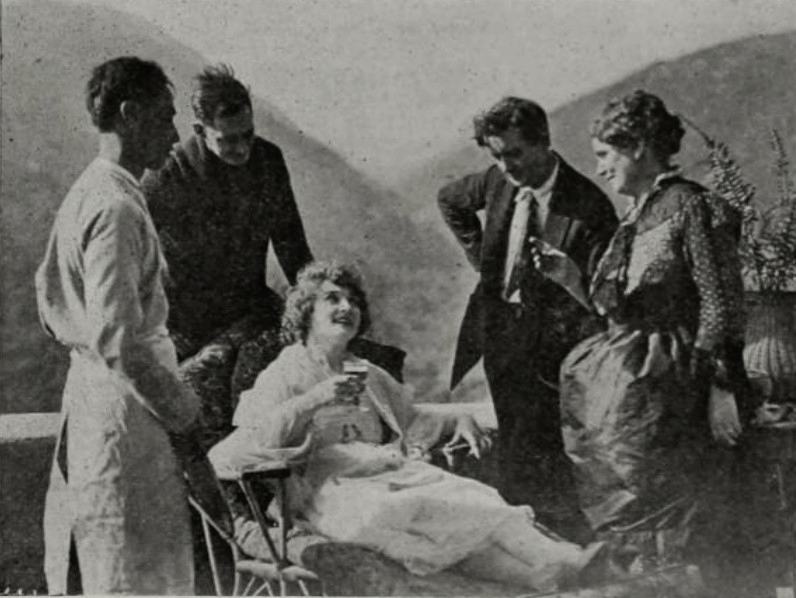
Bob’s presence acts as a mirror, reflecting back to Angela the true cost of her vendetta. She sees not a triumphant avenger, but a woman isolated by her own bitterness, trapped in a cycle of retribution that offers no genuine solace. The realization is agonizing, yet ultimately liberating. It is a moment of profound awakening, where the hardened shell she has built around her heart finally cracks, allowing vulnerability and genuine emotion to resurface. This pivotal scene, conveyed through the masterful visual storytelling of the silent era, relies heavily on Estelle La Cheur’s nuanced performance, her facial expressions and body language conveying the internal struggle and eventual capitulation to a more compassionate self.
In a powerful act of contrition and newfound clarity, Angela restores the railroad shares to Bob. This isn't merely a business transaction; it’s a symbolic act of relinquishing the instruments of her destructive power, a dismantling of the empire built on resentment. The gesture signifies her embrace of a future free from the shackles of the past. Reconciled and reborn, Angela and Bob embark on a journey West, a symbolic migration towards a new beginning, a life together founded on mutual respect, genuine affection, and the promise of a future unburdened by past grievances. This resolution, while perhaps fitting for the era, also speaks to a timeless desire for peace after conflict, for healing after profound injury. The journey West, a classic American trope, here represents not just geographical movement but an internal pilgrimage towards personal peace and shared destiny. It echoes the hopeful, albeit often challenging, new starts depicted in films like Mayblossom, where love and perseverance ultimately pave the way for a brighter future.
The Fuel of Life stands as a testament to the evocative power of silent cinema. Without spoken dialogue, the burden of conveying complex emotions, intricate plot points, and profound character transformations falls squarely on the shoulders of visual storytelling. Director and cinematographer must work in concert, utilizing close-ups to capture the subtle shifts in an actor's expression, employing dramatic lighting to underscore mood, and crafting compelling mise-en-scène to communicate narrative progression. Estelle La Cheur’s performance as Angela is particularly noteworthy in this regard. Her ability to convey Angela's initial heartbreak, her subsequent steely resolve, her strategic cunning, and ultimately, her profound realization and tender vulnerability, all through gesture, gaze, and posture, is a masterclass in silent acting.
Beyond the compelling plot, The Fuel of Life delves into several resonant themes. It is, at its core, a meditation on the nature of revenge: its initial allure, its intoxicating power, and its ultimate emptiness. Angela's journey vividly illustrates how the pursuit of retribution can consume the avenger, distorting their moral compass and leading them down a path of self-destruction. The film also explores the societal constraints placed upon women in the early 20th century. Angela’s choice to embark on a vendetta, rather than succumb to societal expectations of quiet suffering, can be seen as an act of rebellion, albeit one born of pain. Her ability to navigate and manipulate male-dominated spaces – the salon, the business world of mines and railroads – speaks to an emerging, albeit still challenging, landscape for female agency. In this sense, Angela’s strength, even in its destructive phase, anticipates the independent spirit seen in characters from films like The Nightingale, where women often defied conventional roles to forge their own destinies.
While La Cheur rightly commands the screen, the supporting cast, including Frank Newburg as Roger and Edward Hayden as Bob Spalding, contributes significantly to the film’s emotional weight. Newburg, though briefly seen, effectively conveys Roger’s despair and guilt, providing the catalyst for Angela’s transformation. Hayden, as Bob, radiates an earnest sincerity that makes his character a believable counterpoint to Angela’s cynicism, making his eventual triumph all the more impactful. The production design, characteristic of the era, effectively delineates the contrasting worlds of opulent New York society and the rugged Western frontier, using set pieces and locations to underscore the narrative’s geographical and emotional shifts.
Ultimately, The Fuel of Life transcends its silent film origins to offer a timeless exploration of human flaws, the corrosive nature of unbridled anger, and the transformative power of forgiveness and genuine connection. It is a narrative that resonates because it grapples with universal themes: the pain of betrayal, the allure of vengeance, and the arduous journey toward self-discovery and redemption. The film, like many compelling dramas of its period such as The Foundling (1916), showcases the depth of emotional storytelling possible even without spoken words, relying instead on the raw power of visual expression and the profound impact of character-driven arcs.
For contemporary audiences, The Fuel of Life offers more than just a historical curiosity; it provides a window into the cinematic techniques and narrative preoccupations of a bygone era, while simultaneously presenting a story that remains deeply relevant. It reminds us that the human heart, capable of immense pain and destructive rage, is also capable of profound healing and enduring love. It is a poignant reminder that while the "fuel" of life can indeed be the burning desire for revenge, true sustenance comes from the warmth of understanding, empathy, and the courage to choose a path of reconciliation. This film is not merely a relic; it is a vibrant, emotionally charged experience that continues to speak to the enduring complexities of the human condition.
IMDb 6
1930
Community
Log in to comment.