DbcultAccessing Vault...
Cult Review
Senior Film Conservator
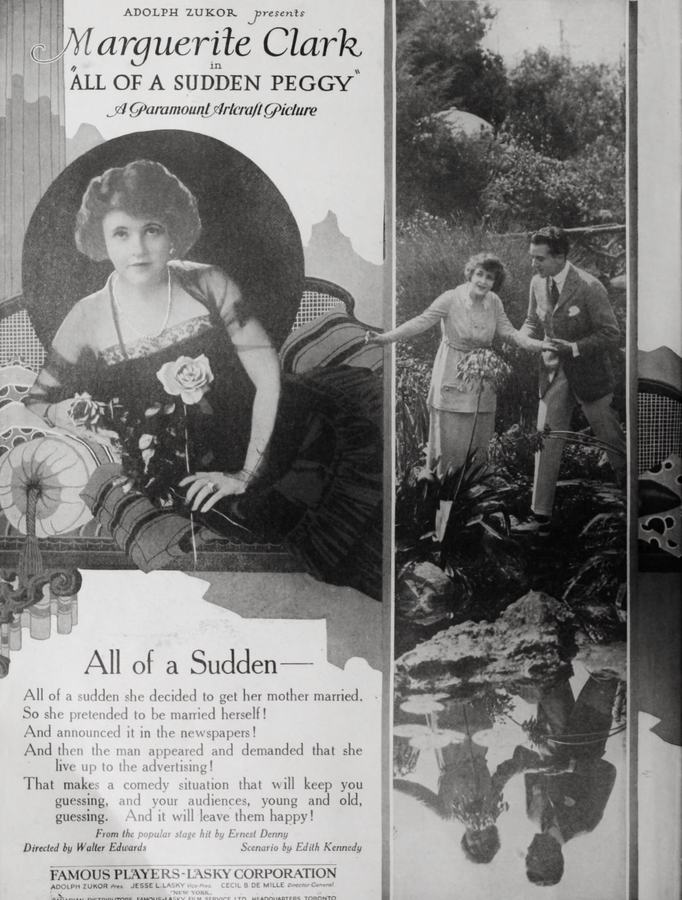
There are films you watch; then there are films that watch you back, eight eyes unblinking. All of a Sudden Peggy belongs to the latter taxonomy.
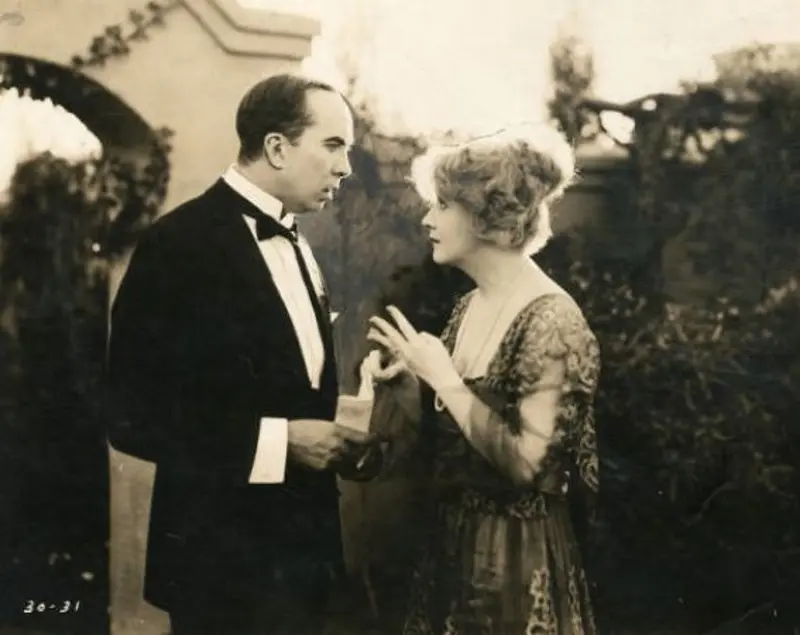
Shot through with the vinegar tang of post-war disillusionment yet sugar-dusted with the whimsy of a bedtime fable, this 1921 one-reel expansion of a Broadway trifle is nitrate proof that the silent era could weaponize plot like a thrown silk slipper. Director A. Edward Sutherland—barely out of his teens and already drunk on spatial jokes—turns every mahogany corridor into a comic diorama where desire scuttles sideways.
Notice how the Crackenthorpe mansion is introduced: a low-angle iris shot that balloons the doorway into a gaping burrow. We half expect Lord Anthony to scuttle out on jointed limbs rather than stroll in immaculate spats. His declared passion for spiders is not mere eccentrics’ wallpaper; it is the film’s sly confession that every character here is a predator trapped in shimmering webs of protocol. The screenplay—by Edith M. Kennedy and Ernest Denny—threads scientific Latin into lovers’ quarrels, so that “Lycosa tarantula” becomes an endearment and “Araneus diadematus” a curse.
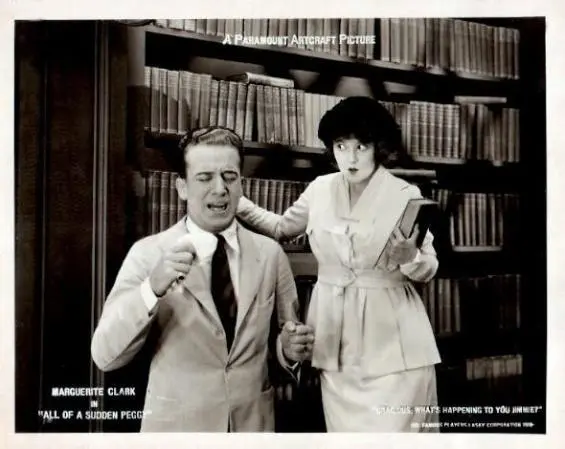
At four-foot-ten, Clark was 1921’s answer to a champagne bubble: effervescent, indestructible, liable to burst spectacularly if shaken. Her Peggy is no cloying ingénue; she is a coup d’état in a sailor collar. Watch the micro-moment when she learns of her mother’s self-denial: a blink-and-you-miss-it flutter of lashes, then the smile calcifies into porcelain resolve. Without spoken syllables she stages a rebellion that would make later screwball heroines take notes.
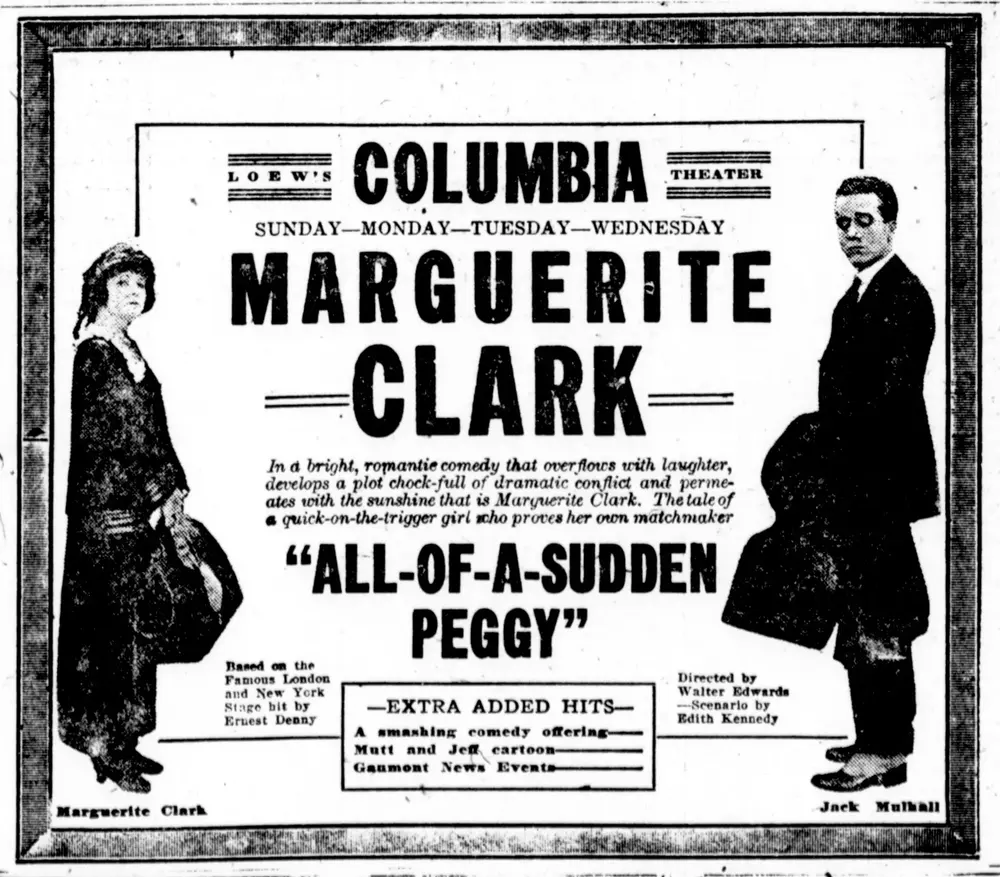
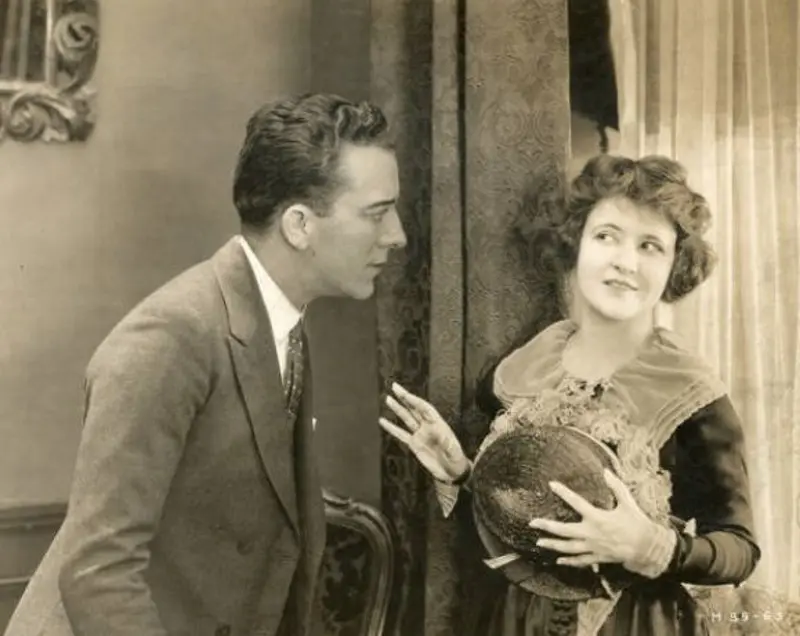
Jimmy enters as a frivolous second son—cravat askew, cigarette forever half-lit, the human equivalent of a skipped stone. Mulhall lets uncertainty live in the corners of his eyes, so that when Peggy’s deceit lands him in Fleet Street’s crosshairs, the transformation from gadabout to determined groom feels earned rather than expedient. Their final clinch, framed against a stained-glass window whose cobalt saints seem to blush, is a triumph of negotiated consent in an era when hijinks too often doubled as assault.
Sylvia Jocelyn’s matriarch vibrates with parlor-Mannerist menace; she wrings a handkerchief as though throttling an imaginary peasant. Compare her to the maternal gargoyles in The Children in the House or the operatic dragon in Anne of Green Gables: Kennedy’s script grants her a sliver of sympathy—she fears entropy, not love. That distinction humanizes what could have been a stock villainess.
Cinematographer Virginia Foltz (one of the few women behind silent cameras) employs a handheld flourish during Peggy’s escape through London fog: the frame jitters like a heartbeat, gaslights smearing into comets. It predates German strasse-films by a full year and deserves a footnote in any survey of urban expressionism. Meanwhile, interior scenes favor candle-pool chiaroscuro, faces emerging from umber gloom as if painted by Georges de La Tour with a fountain pen.
Surviving prints circulate with a 2005 chamber score—pizzicato strings mimicking skittering legs, a lone accordion wheezing like an overfed aristocrat. Synced correctly, the moment Peggy forges her marriage letter lands on a dissonant stinger that would make Hitchcock grin in his grave. The absence of spoken dialogue amplifies ambient textures: the scratch of quill on parchment becomes thunder; a spider’s drop onto a balustrade is a gunshot.
Costume designer Lillian Leighton drapes Peggy in a succession of metaphors: sailor suit for delinquent freedom, mourning veil for manipulative grief, finally a wedding gown whose train unfurls like a web. Each change is filmed in a single match-cut—Peggy tosses a garment at the camera, it smothers the lens, and presto, new persona. The gag recycles but never repeats; the film understands that identity in 1921 was already a montage.
Spiders here are not Hitchcockian avatars of dread; they are matchmakers. Observe Anthony’s prized orb-weaver suspended between two book spines: its silk forms a catenary that mirrors the romantic triangle below. When Jimmy finally proposes, the camera tilts up to reveal the spider has vanished—its web now occupied by a wedding ring dangling from thread. A visual pun? Perhaps. But also a laconic thesis: desire engineers its own architecture, then abandons it.
If Tillie’s Tomato Surprise reveled in anarchic slapstick and The Great London Mystery in Gothic convolution, Peggy splits the difference—its mayhem is emotional, its mystery erotic. The film’s DNA also splices into later works: the runaway bride trope resurfaces in Midnight Madness, while the proto-screwball DNA mutates into the fluorescent farce of Molly of the Follies.
Modern viewers may balk at the midpoint lull—an entire reel devoted to the reading of legal documents. Yet that bureaucratic hush is the calm before the climax, a daredevil decrescendo that makes the finale’s foot-chase across Hyde Park feel like Keystone on amphetamines. Consider it narrative taffy: stretch, snap, sweet.
The film’s comedic engine runs on 1921’s terror of reputational ruin. A forged marriage notice could fell dynasties; today it trends for six hours on Twitter. The comedy survives because stakes feel simultaneously antique and eerily contemporary—cancel culture in white gloves.
Note the recurring motif of handwritten text: letters, ledgers, the unpublished spider treatise. Each inscription is filmed in extreme close-up—ink bleeding into paper fibers like black veins. The message: words create reality; forgery is just another genre of authorship. Peggy, the supposed airhead, becomes the film’s true scriptor, rewriting her destiny with fountain-pen strokes.
Legend claims an alternate ending—shelved after test audiences rioted—showed Peggy jilting Jimmy at the altar to study entomology in Geneva. Fragments linger in a continuity script archived at UCLA. Would this have elevated the film from delightful bauble to proto-feminist manifesto? Possibly. But the released version, which seals matrimony with a spider-shaped confetti shower, satisfies the era’s appetite for restoration rather than revolution.
The 4K restoration by EYE Filmmuseum removes the chemical fog that once veiled Foltz’s street scenes; you can now count Peggy’s freckles and the stitches on Jimmy’s waistcoat. Streaming platforms serving the 480p ghost deserve a plague of actual tarantulas. Seek the Blu, dim the lights, and let the flicker transport you.
All of a Sudden Peggy is a champagne cocktail laced with arsenic: effervescent going down, but it leaves a tremor in your marrow. It lampoons the insectile rituals of class while acknowledging that love, like spider silk, is both trap and lifeline. Ninety years later, its jokes still sting, its romance still aches, and its heroine—tiny, implacable, glorious—reminds us that rebellion can arrive wearing a sailor bow and a grin sharp enough to cut glass.
Rating: 9/10 — Masterpiece of mischief, a silken web worth every minute of entanglement.
IMDb 6.3
1931
Community
Log in to comment.