DbcultAccessing Vault...
Cult Review
Senior Film Conservator
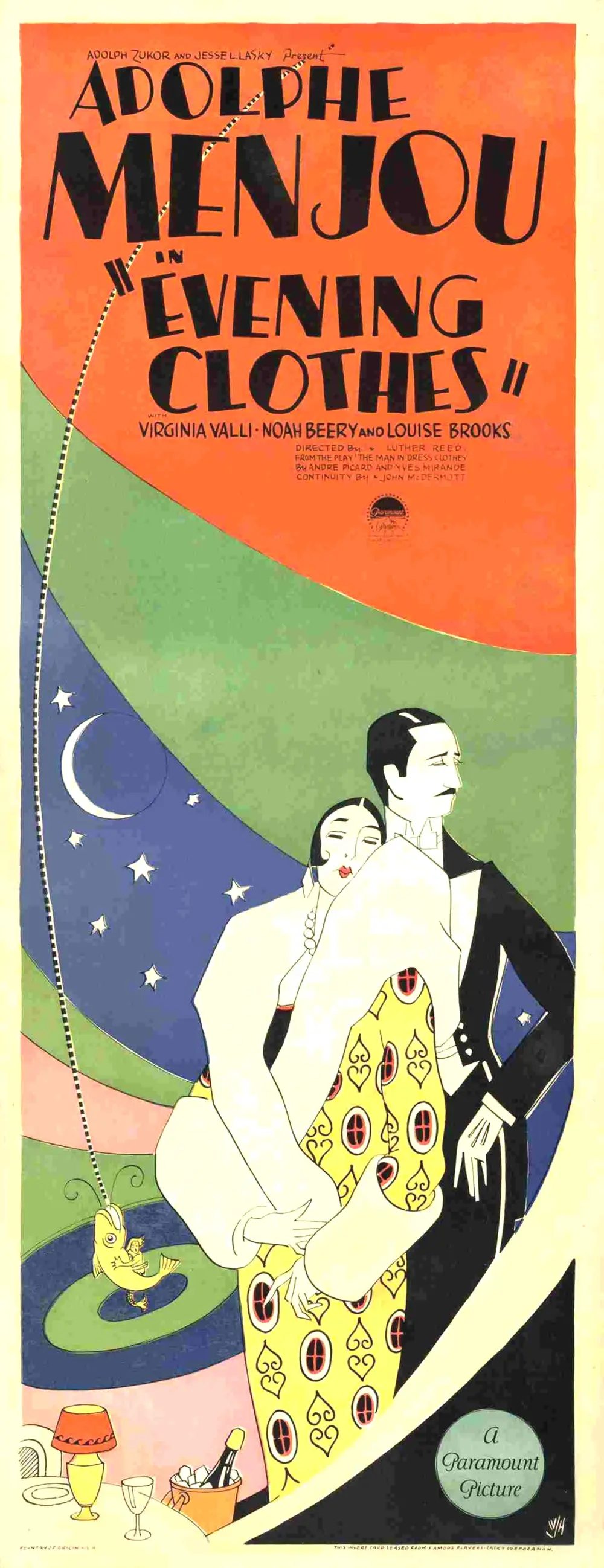
Is Evening Clothes a film worth watching in the modern era? Short answer: absolutely, but with a clear understanding of its particular charms and limitations. This 1927 silent drama will resonate deeply with cinephiles, students of silent film, and those fascinated by the cultural shifts of the Roaring Twenties, though it may prove a challenging watch for viewers unaccustomed to the pacing and narrative conventions of the era.
It demands patience, rewarding it with nuanced character work and a fascinating historical lens on societal aspirations. This is a film for those who appreciate the artistry of early cinema and character studies over plot-driven thrillers.
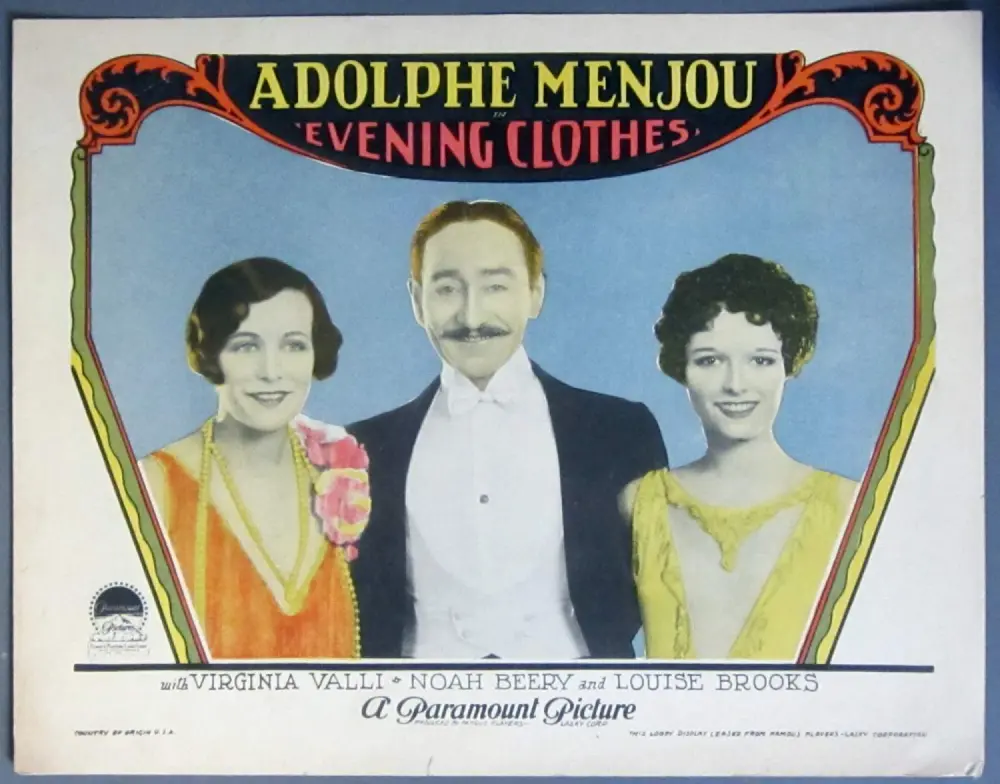
For those who thrive on rapid-fire narratives and constant dialogue, Evening Clothes might test their endurance, but for anyone willing to slow down and immerse themselves in a different cinematic language, it offers a rich, if sometimes frustrating, experience.
Directed by Luther Reed, Evening Clothes plunges us into the world of Lucien D'Artois, played with magnetic charisma by Adolphe Menjou. Lucien is a wealthy French farmer, ostensibly content with his rustic life, but bound by a marriage contract to Germaine (Virginia Valli), a woman who finds his provincial existence unbearable. Her subsequent departure for the glittering promises of Parisian society sets Lucien on a path of desperate reinvention.
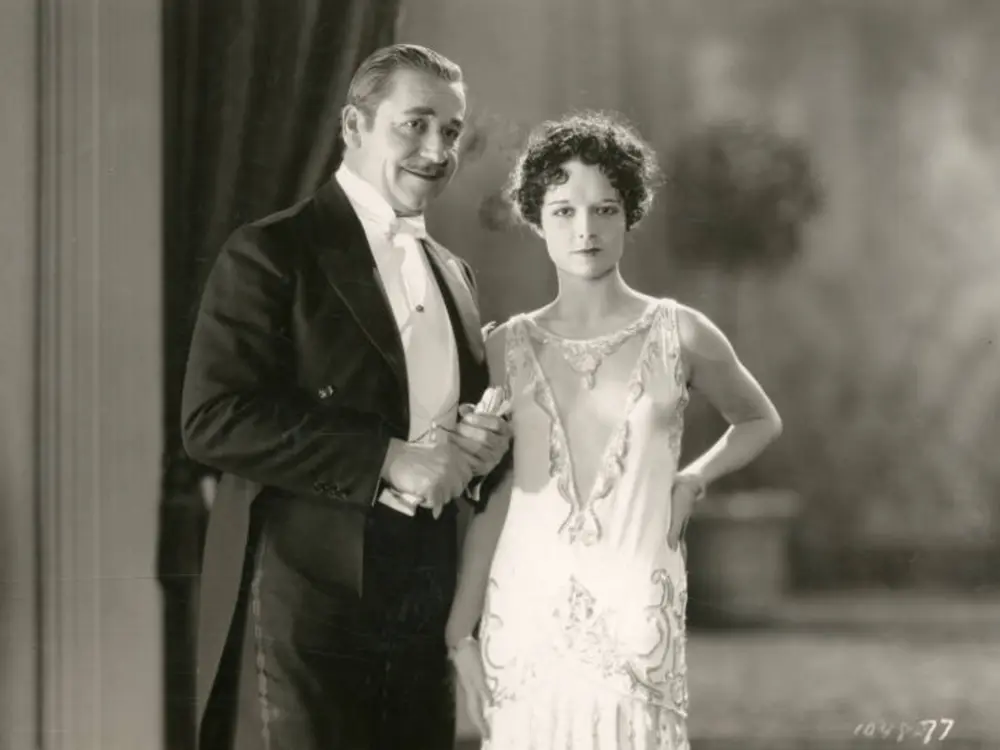
His initial attempts to win her back are earnest, if misguided, involving diligent studies in fencing and dancing – the very epitome of urban sophistication. When these efforts yield no favor, he plunges headlong into a life of conspicuous consumption and manufactured charm, culminating in a calculated seduction of nightclub dancer Fox Trot (Louise Brooks) from the formidable Lazarre (Noah Beery), merely to demonstrate his supposed prowess.
This lavish, self-destructive trajectory inevitably drains his fortune, leaving him with nothing but the clothes on his back – specifically, his evening attire. Reduced to living in a bare flat, clinging to the illusion of his former grandeur, Lucien's journey is one of a man losing everything to gain... what exactly? It is in this state of complete destitution that Germaine unexpectedly returns, providing a resolution that is both convenient and surprisingly resonant.
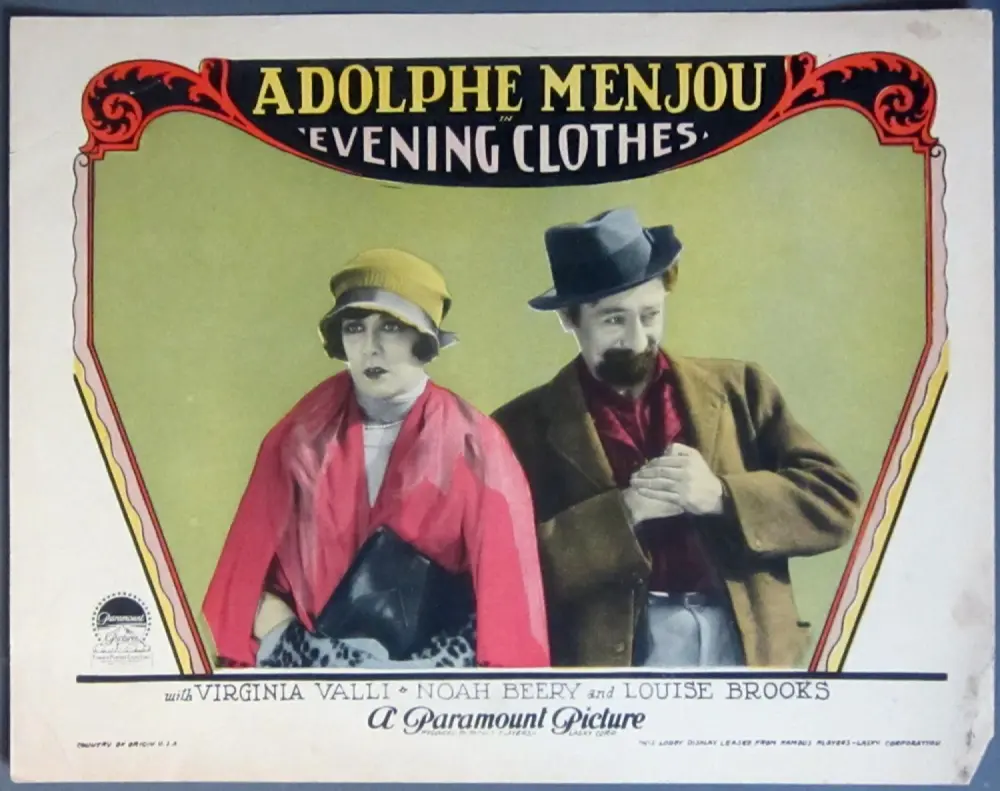
Early in its runtime, Evening Clothes makes a series of distinct impressions, both positive and negative.
The undeniable anchor of Evening Clothes is Adolphe Menjou. His portrayal of Lucien D'Artois is a triumph of silent screen acting, a nuanced study in vanity, desperation, and ultimate humility. Menjou doesn't just play a character; he embodies a societal archetype – the man attempting to buy his way into sophistication, only to find true value lies elsewhere.
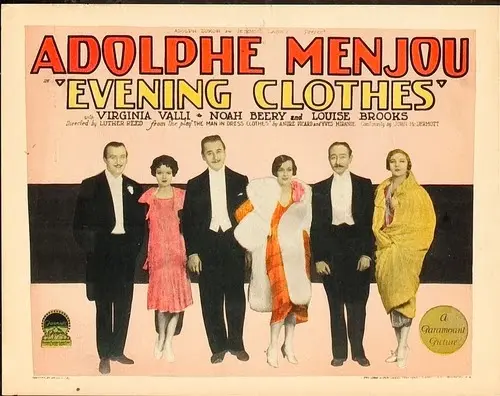
Consider the scene where Lucien, having diligently studied fencing and dancing, attempts to impress Germaine. Menjou's posture, his carefully practiced movements, and the hopeful yet ultimately deflated expression in his eyes convey the profound disappointment of his efforts. It’s a moment of quiet pathos, a stark contrast to the boisterous displays of wealth that follow.
Later, as his fortune wanes, Menjou's performance shifts. The swagger diminishes, replaced by a forced gaiety that barely masks his growing despair. His interactions with Noah Beery's Lazarre, particularly in the nightclub sequence where he 'steals' Fox Trot, are electric. Menjou’s Lucien isn't truly seeking love; he's performing, desperately trying to prove his relevance, and Menjou communicates this internal struggle with remarkable clarity.
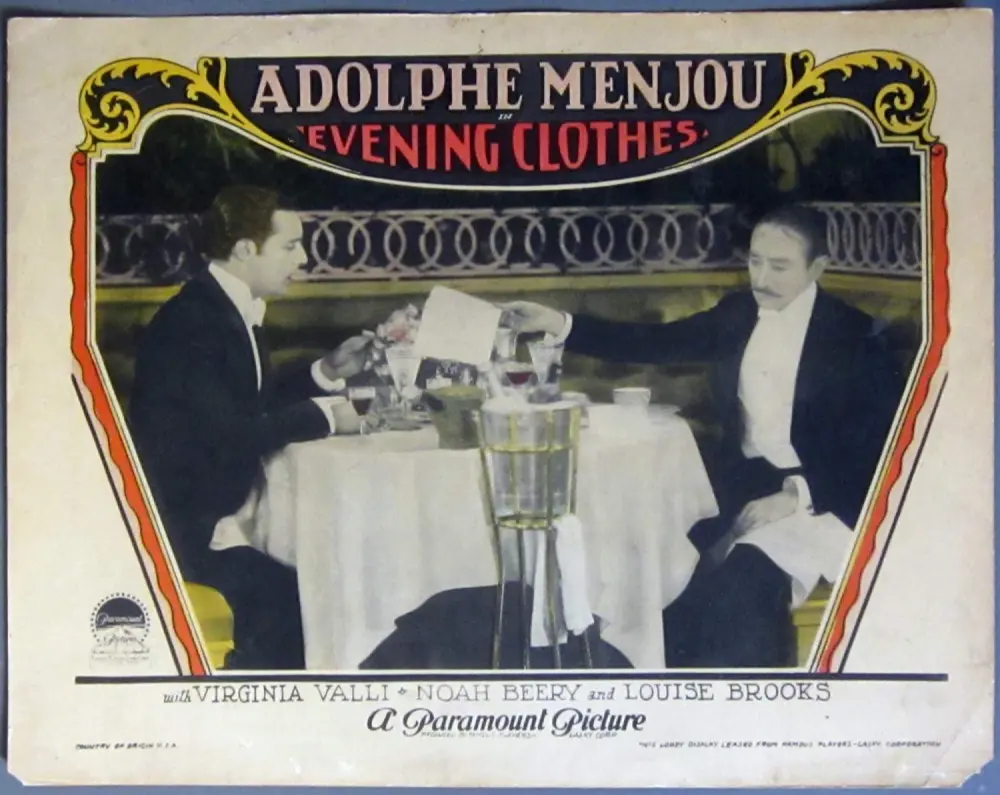
His ability to command the screen, often through subtle shifts in his gaze or the slight curl of a lip, ensures that even when the narrative occasionally falters, the audience remains invested in Lucien's fate. It’s a performance that transcends the limitations of the silent medium, speaking volumes without a single uttered word.
Luther Reed's direction, while not always groundbreaking, effectively captures the contrasting worlds of Evening Clothes. The early scenes on Lucien's farm are shot with a certain bucolic simplicity, emphasizing his 'rustic' nature. This quickly gives way to the frenetic energy of Parisian nightlife, depicted through bustling crowds, opulent sets, and the dizzying movements of dancers.
The cinematography skillfully uses lighting to underscore Lucien's changing fortunes. Bright, almost garish lights illuminate his early Parisian escapades, reflecting his superficial 'success.' As his wealth dissipates, the visuals grow dimmer, the shadows deepen, mirroring his descent into destitution. The bareness of his final apartment, stripped of all its finery, is particularly stark, a powerful visual metaphor for his internal emptiness.
One of the film's most intriguing aspects is its portrayal of the Roaring Twenties social scene. While not as overtly scandalous as some films of the era, it implicitly critiques the superficiality of high society and the obsession with appearances. The very title, Evening Clothes, becomes a symbol of Lucien's clinging to a facade even as his reality crumbles.
And then there's Louise Brooks. Her appearance as Fox Trot, while brief, is undeniably captivating. Even in these early roles, her unique screen presence is palpable. Her flapper charm and distinctive bob cut are instantly recognizable, hinting at the iconic status she would later achieve. It's a small but significant moment, offering a glimpse of a star in the making.
For contemporary viewers, the pacing of Evening Clothes might feel like a significant hurdle. Silent films, by their nature, often employ a different rhythm, allowing scenes to unfold with a deliberate, sometimes extended, quality. This is not necessarily a flaw, but a characteristic of the era that requires a recalibration of expectations.
There are moments, particularly in the sequences detailing Lucien's frivolous spending, where the narrative meanders slightly, dwelling on details that modern cinema might condense into a montage. However, these extended moments serve a purpose: they immerse the viewer in Lucien's self-indulgent world, making his eventual

IMDb 4.5
1932
Community
Log in to comment.