DbcultAccessing Vault...
5.8/10
Senior Film Conservator
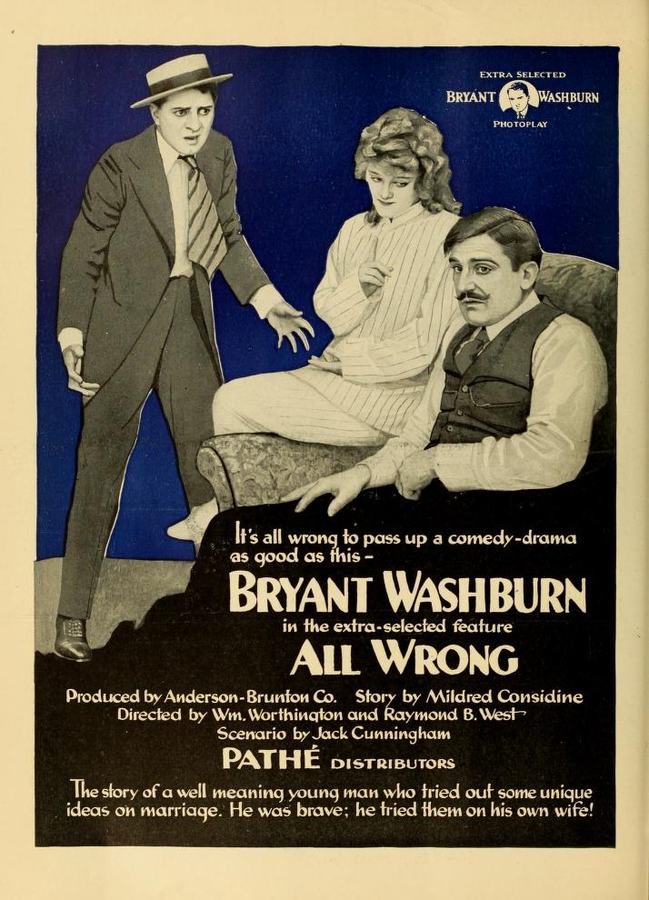
A definitive 5.8/10 rating for a film that redefined the boundaries of cult cinema. All Wrong remains a cornerstone of transgressive art.
Bryant Washburn's Warren Kent emerges not as a traditional villain but as a tragically myopic architect of his own unraveling—a man who mistakes emotional cowardice for intellectual innovation. His creation, 'The Unending Courtship,' is less romantic philosophy than elaborate avoidance mechanism, preserving the safety of distance while denying marriage's messy, glorious intimacy. Mildred Davis as Betty delivers a masterclass in subtle repression; watch how her fingers flutter like caged birds when Warren explains his theory, how her smile hardens into rictus during Wednesday dinners at their designated 'neutral ground' tearoom. Director James Cruze frames these encounters with stifling symmetry—centered tables, equidistant chairs, precisely placed teacups—visualizing Warren's pathological need for control.
Warren's professional downfall becomes the fissure that cracks his meticulously constructed fantasy world. When manufacturing tycoon Mr. Hollingsworth (Fred Montague, exuding contemptuous stillness) terminates Warren after the botched Patterson account, the humiliation metastasizes into domestic terror. Cruze stages the firing scene with excruciating stillness—Hollingsworth's office dwarfing Warren's crumpling form, the mahogany desk a fortress between them, the ticking clock amplifying Warren's silent panic. This spatial language echoes later in Warren's cramped bachelor apartment, where he paces like a cornered animal upon suspecting Betty's 'condition.'
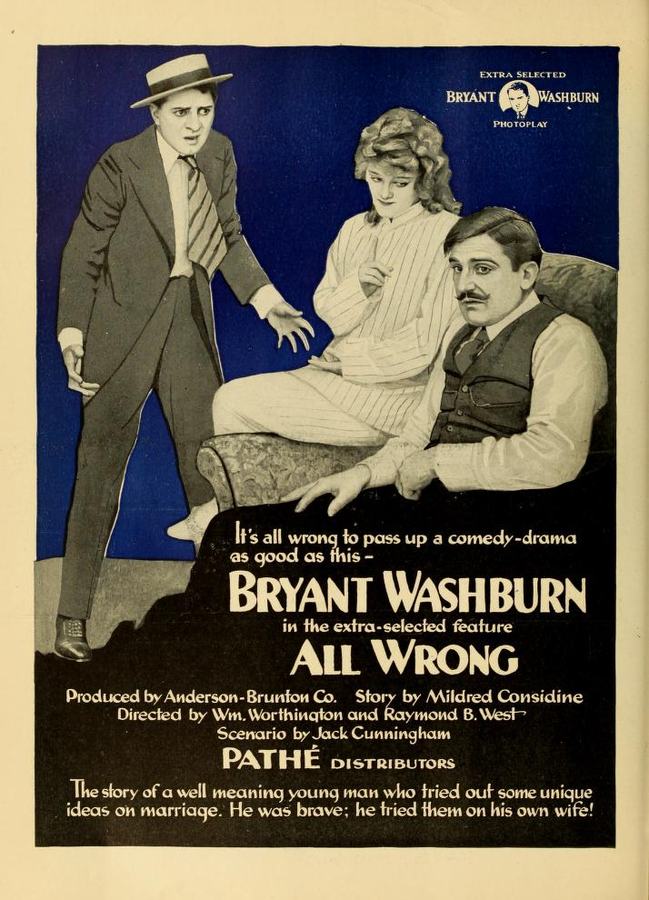
"Davis’ Betty embodies the quiet revolution simmering beneath 1920s domesticity—her eventual refusal to participate in Warren’s emotional quarantine feels less like plot convenience than seismic cultural shift."
The film’s genius lies in weaving parallel misunderstandings with Chekhovian precision. Warren misinterpreting Betty’s indigestion (courtesy of undercooked mackerel at their wretched Wednesday supper) as pregnancy becomes a savage parody of masculine projection. Simultaneously, Helen Dunbar’s magnificently meddlesome Mrs. Caldwell—observing Warren whispering with Margaret Livingston’s delightfully flapperesque Ethel—constructs an entire adultery narrative from fragmented glances. Livingston steals every scene with her beaded dresses and conspiratorial winks, her Ethel functioning as both comic relief and unwitting destroyer of Warren’s facade.
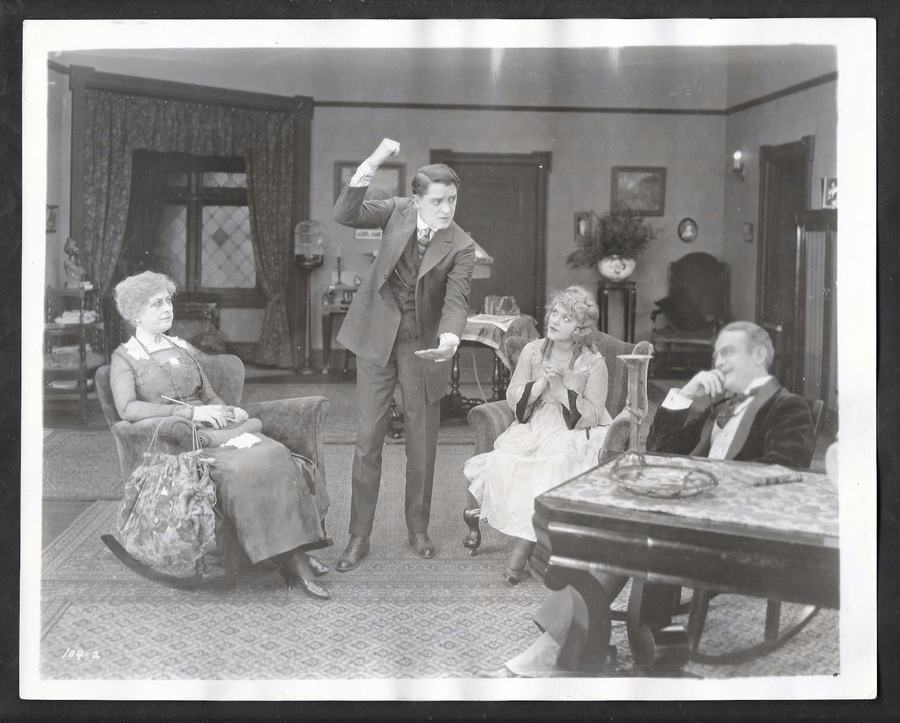
Cruze employs German Expressionist shadows not for gothic horror but psychological claustrophobia. When Warren searches for Ethel in a speakeasy, angular beams carve the space into prison bars, trapping him in his own paranoia. The climactic confrontation at Betty’s childhood home uses staircases as hierarchical battlegrounds—Warren literally diminished beneath his mother-in-law’s accusatory descent. Silent film’s inherent reliance on physicality finds perfect expression in Washburn’s deteriorating composure: his salesman charm curdles into twitchy desperation, shoulders collapsing inward as life dismantles his theories.
Amidst the chaos, Davis delivers devastating emotional clarity without intertitles. The moment Warren blurts his pregnancy assumption, her face cycles through shock, dark amusement, and profound sorrow—all within seven seconds. This economy of expression contrasts beautifully with Charles Bennett’s turn as Warren’s perpetually soused colleague, whose exaggerated gestures provide burlesque counterpoint to the central tragedy. Cinematographer Karl Brown’s close-ups during Betty’s final monologue (conveyed via intertitle but amplified by Davis’ trembling lips and tear-brightened eyes) achieve devastating intimacy.
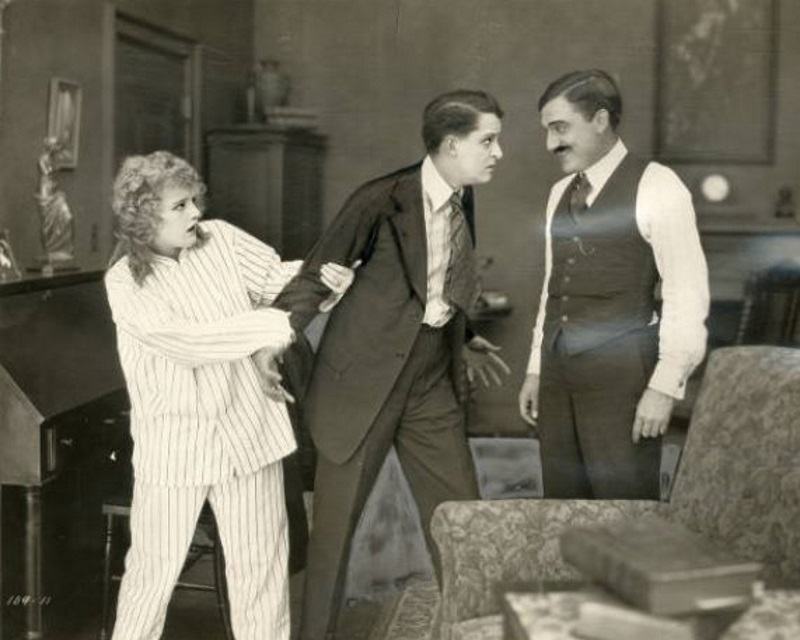
Within the constellation of marital disillusionment stories, All Wrong anticipates Vincente Minnelli's The Clock in exploring how external pressures fracture relationships. Yet where Minnelli finds romantic resilience, Cruze exposes transactional fragility. Warren’s 'Unending Courtship' theory shares DNA with the self-deceptive philosophies in Fires of Conscience, though played for savage comedy rather than melodrama. The escalating misunderstandings evoke Cross Currents’ intricate plotting, while Betty’s quiet reclamation of agency foreshadows Joan Fontaine’s journey in Jane Eyre.
Warren’s downfall stems not merely from bad luck but patriarchal entitlement—the assumption that Betty (and by extension, the universe) will conform to his intellectual whims. His theory reveals itself as emotional sequestration disguised as romance. Contemporary parallels with Unprotected’s exploration of institutional betrayal emerge when Warren’s boss discards him without remorse, exposing capitalism’s fickleness. Yet the film’s true target remains Warren’s toxic naiveté, crystallized when he whines, "But the theory was flawless!" to Ethel—who responds by tossing her cocktail in his face, a moment of cathartic justice met with audience cheers in 1920 screenings.
Released amid shifting marital norms (the U.S. divorce rate doubled between 1910-1920), All Wrong channels societal whiplash. Warren embodies traditional masculinity struggling against modernity—his courtship theory a desperate bid to freeze time. Betty’s eventual rejection of compartmentalized love mirrors flapper-era assertions of female autonomy. Even the setting—smoke-choked sales offices, chrome-and-linoleum diners, Betty’s cluttered familial home—pits industrial anonymity against residual Victorian domesticity. Screenwriters Mildred Considine and Jack Cunningham lace the script with zeitgeist signifiers: Warren’s disastrous Patterson account involves 'modern' aluminum cookware, while Ethel’s bobbed hair and cigarette holder scream 1920s liberation.
Despite third-act pacing issues (the volcanic eruption subplot in Kilauea Volcano demonstrates superior climax construction), All Wrong remains startlingly prescient. Modern viewers will recognize Warren in today’s self-help gurus peddling emotional bypassing as enlightenment. Davis’ performance transcends era—her silent plea when Warren misdiagnoses her pregnancy vibrates with timeless exasperation. The film’s restoration reveals Cruze’s visual wit: a recurring motif of caged songbirds in Warren’s apartment mirrors Betty’s stifled voice, while multiple door-slamming gags foreshadow slamming marital doors.
Ultimately, All Wrong dissects the hubris of designing love like an engineering project. Warren’s tragedy isn’t that his theory fails, but that he never considers consulting Betty in its creation. As marriages fractured by postwar disillusionment and roaring modernity, the film offered catharsis—proof that sometimes, dismantling flawed structures allows truer connections to emerge from the wreckage. In an era obsessed with The Glory of Yolanda’s grand romances, this bruised, wise comedy dared to ask: What if love thrives not through perfected systems, but through messy, vulnerable togetherness? The answer resonates a century later.
IMDb 7.3
1922
Community
Log in to comment.