DbcultAccessing Vault...
Cult Review
Senior Film Conservator
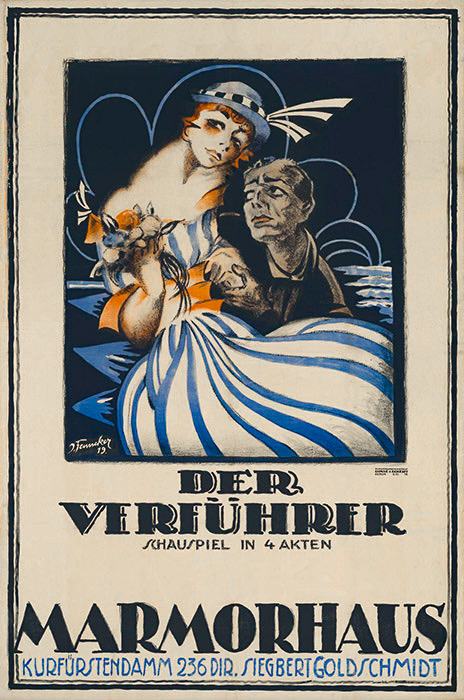
József Pakots' 'A csábító,' a cinematic relic from an era often romanticized yet rarely scrutinized with the depth it deserves, stands as a testament to the potent storytelling capabilities of early Hungarian cinema. This silent drama, a profound exploration of human vulnerability and calculated malevolence, transcends its temporal confines to deliver a narrative that is as unsettling as it is tragically beautiful. It is a film that, through its meticulous characterizations and evocative visual language, delves into the very core of what it means to be seduced, not merely by a person, but by the illusions of a promised life, only to confront the stark desolation of its reality. The film’s power lies not in grand gestures or hyperbolic melodrama, but in the insidious creep of its central conflict, a slow-burn descent into disillusionment that resonates with an almost uncomfortable contemporary relevance.
Richard Kornay, as Count István Károlyi, delivers a performance that is nothing short of magnetic, a portrayal of the titular 'Seducer' that is nuanced in its villainy. His Károlyi is not a caricature of evil, but a man whose charm is his deadliest weapon, a predator cloaked in the finest silks and societal graces. Kornay’s subtle shifts in expression, the almost imperceptible narrowing of his eyes, or the fleeting, self-satisfied curl of his lip, communicate volumes without uttering a single word. He embodies the aristocratic deceiver with a chilling authenticity, making his machinations feel less like plot devices and more like the inevitable unfolding of a deeply flawed, self-serving character. This portrayal invites comparison with the morally ambiguous figures in films like The Deserter, where characters grapple with choices that define their ethical landscape, though Károlyi's moral compass is clearly skewed from the outset.
The narrative arc is deceptively simple, yet rich in its psychological undercurrents. We are introduced to Éva (Camilla von Hollay), a young woman whose rural innocence is palpable, a canvas awaiting the indelible strokes of experience. Von Hollay imbues Éva with a delicate purity that makes her eventual entanglement with Károlyi all the more heartbreaking. Her initial awe and burgeoning affection are conveyed with a touching sincerity, allowing the audience to witness her transformation from a hopeful dreamer to a woman burdened by the weight of betrayal. The film masterfully builds the tension, presenting Károlyi’s courtship not as an abrupt conquest, but as a meticulously crafted campaign of flattery and false promises. He isolates Éva, gradually eroding her ties to her family and her simple life, painting a picture of an opulent future that is as alluring as it is illusory. This slow, methodical unraveling of Éva's world is a narrative triumph, demonstrating Pakots' profound understanding of human psychology.
Norbert Dán, as János, Éva’s brother, provides a crucial counterpoint to Károlyi’s insidious influence. János represents the grounded reality, the moral anchor that Éva increasingly drifts away from. Dán's performance is characterized by a quiet intensity, his concern for his sister escalating from gentle apprehension to desperate urgency. His physical presence, often framed in stark contrast to Károlyi’s languid elegance, underscores the class divide and the clash of values central to the film. János's struggle to protect Éva, to pull her back from the precipice, adds a layer of fraternal devotion that heightens the emotional stakes. His journey is one of increasing frustration and a profound sense of helplessness, a mirror to the societal forces that often render the virtuous powerless against the manipulative elite. One might draw parallels to the familial devotion seen in films like Ingeborg Holm, where the bonds of kinship are tested by external pressures, though the nature of the threat here is distinctly personal and moral.
The cinematography, though of its time, is remarkably expressive. The contrast between the sun-drenched pastoral scenes of Éva’s village and the shadowed, opulent interiors of Károlyi’s urban domain is not merely aesthetic; it is deeply symbolic. The village represents purity, honesty, and a sense of belonging, while the city, with its grand balls and secret liaisons, embodies superficiality, moral decay, and isolation. The use of light and shadow is particularly effective in emphasizing character states and narrative shifts. Károlyi is often framed in flattering, yet subtly sinister, light, while Éva, as her illusions shatter, finds herself increasingly cast into emotional darkness. The film's visual grammar speaks volumes, allowing the audience to infer complex emotional states and societal critiques without the aid of dialogue.
József Pakots, as the writer, demonstrates a keen understanding of the dramatic potential inherent in societal stratification and the timeless theme of the predator and the prey. His script, executed through compelling visual narration, avoids simplistic moralizing, instead presenting a nuanced view of the consequences of actions and the ripple effects of betrayal. The story probes the societal pressures on women in that era, where a compromised reputation could mean utter ruin, highlighting the precariousness of their social standing. This thematic depth elevates 'A csábító' beyond mere melodrama, situating it as a significant piece of social commentary, akin to the societal critiques embedded within A Soul Enslaved or even the stark realities depicted in Humanidad, albeit with a focus on personal rather than systemic oppression.
Camilla von Hollay's portrayal of Éva is a masterclass in silent film acting. Her face, a canvas for shifting emotions, conveys everything from naive wonder to crushing despair. The audience witnesses Éva’s transformation in minute detail, her posture sagging, her eyes losing their youthful sparkle, reflecting the profound toll of Károlyi’s deception. It’s a performance that is both fragile and ultimately resilient, showing the internal strength that emerges from the crucible of suffering. Her journey from hopeful ingenue to a woman scarred but not broken is deeply affecting, making her character a symbol of both vulnerability and the enduring human spirit.
Péter Andorffy, in a role that defies easy categorization, plays the enigmatic Baroness Helga. Andorffy’s performance is a study in controlled power and veiled emotions. Helga is not merely a bystander; she is a woman who understands Károlyi’s machinations perhaps better than anyone, having likely experienced similar deceptions in her past. Her cynical observations and occasional, almost imperceptible, gestures of sympathy suggest a complex inner world, adding another layer of intrigue to the narrative. The Baroness serves as a mirror, reflecting the potential futures for women who navigate the treacherous social landscapes of the time, and her presence adds a sophisticated, world-weary dimension to the film. Her interactions with Károlyi are charged with a history that is never explicitly stated but always felt, a testament to the actors' ability to convey unspoken narratives. This kind of complex female character, observing and influencing from the periphery, adds a richness that one might find in the more intricate character studies of the era, such as those within The Bronze Bride, where female agency, however constrained, is a potent force.
'A csábító' is more than just a historical curiosity; it is a powerful piece of cinema that speaks to universal themes of ambition, innocence, betrayal, and the often-brutal realities of social structures. It reminds us that the allure of the forbidden, the promise of a life beyond one's station, can be a dangerous siren song. The film’s lasting impact lies in its ability to evoke profound empathy for its characters, particularly Éva, whose plight feels timeless. The subtle nuances in performance, the thoughtful cinematography, and the compelling script by Pakots all coalesce to create a work that is both emotionally resonant and intellectually stimulating. It stands shoulder to shoulder with other profound silent dramas of its era, such as Die Hochzeit im Excentricclub in its exploration of societal eccentricities, or even The Combat in its portrayal of internal and external struggles.
The film’s conclusion, while offering a semblance of resolution, does not shy away from the enduring scars left by Károlyi’s actions. It’s a sober reflection on the fact that some wounds, once inflicted, can never truly heal, only be endured. This lack of a saccharine, entirely happy ending is another strength, lending the film an air of realism and tragic dignity. It challenges the audience to consider the true cost of moral transgressions and the resilience required to rebuild a life shattered by deceit. The quiet power of Éva's final choices, whether towards defiant independence or a resigned acceptance, is left to resonate, a testament to the film's nuanced approach to human agency.
In an age saturated with digital spectacle, 'A csábító' serves as a poignant reminder of the enduring power of narrative simplicity and emotional depth. It is a film that demands attention, rewarding the viewer with a rich tapestry of human experience, meticulously woven through the silent language of cinema. Its exploration of seduction, betrayal, and the quest for dignity remains as compelling today as it must have been upon its initial release. For enthusiasts of early cinema, particularly those interested in the often-overlooked contributions of Hungarian filmmakers, 'A csábító' is an essential viewing experience, a film that not only entertains but also provokes thought and stirs the soul. Its influence, while perhaps subtle, can be seen in the thematic echoes found in diverse films, from the romantic entanglements of The Ghosts of Yesterday to the stark choices presented in Tavasz a télben (Spring in Winter), demonstrating the universal appeal of its core themes. The film’s ability to evoke such a spectrum of emotions and philosophical questions through the absence of spoken dialogue is a feat of artistic brilliance.
The meticulous attention to detail in the set design, the period costumes, and the overall mise-en-scène further immerse the audience in the world of pre-war Hungary. Every element contributes to the film's atmosphere, from the grandeur of the Count's estate, subtly hinting at his power and decadence, to the humble simplicity of Éva's home, symbolizing her rootedness before the seducer's intervention. This rich visual texture ensures that the film is not just a story, but an experience, transporting the viewer to a bygone era while simultaneously addressing themes that are eternally relevant. The silent era, often underestimated, here proves its capacity for profound psychological drama, a genre 'A csábító' navigates with remarkable grace and impact.
Ultimately, 'A csábító' is a cautionary tale, but one told with an artist's sensitivity and a keen understanding of the human condition. It is a film that lingers long after the final frame, prompting reflection on the nature of desire, the fragility of innocence, and the enduring strength required to reclaim one's narrative in the face of profound adversity. It is a cinematic gem, deserving of its place in the pantheon of significant silent films, not just for its historical value, but for its timeless emotional power and narrative sophistication. Its silent eloquence speaks volumes, echoing the struggles and triumphs that define the human spirit, making it a compelling watch for any connoisseur of classic cinema.
IMDb 6.1
1932
Community
Log in to comment.