DbcultAccessing Vault...
Cult Review
Senior Film Conservator
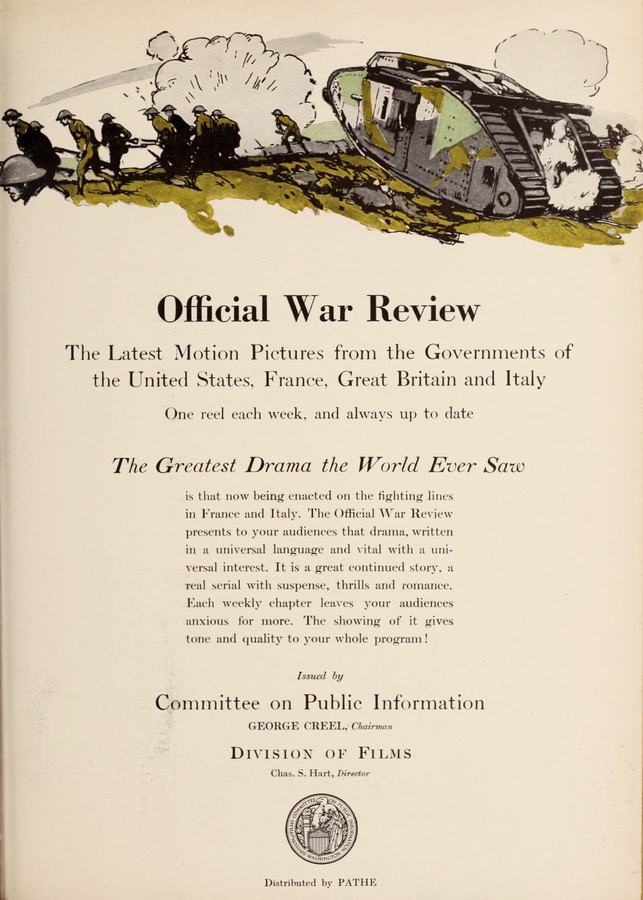
Stepping back into the annals of cinematic history often means confronting works that transcend mere entertainment, becoming vital cultural documents. Such is the case with Allies' Official War Review, No. 1, a film that, despite its seemingly utilitarian title, offers a profound glimpse into the nascent power of moving images as tools of national persuasion during the First World War. This isn't a story-driven drama like The Impostor, nor a lighthearted romp akin to Get-Rich-Quick Wallingford. Instead, it’s a meticulously assembled montage, a visual manifesto designed to shape public perception and bolster morale at a time when the world was gripped by unprecedented conflict. It's a testament to the early understanding of cinema's potential to inform, inspire, and, indeed, propagandize.
The very nature of an 'official war review' from this era dictates its form and function. Lacking a traditional plot or character arc, the film instead weaves together disparate fragments of reality, captured on battlefields, on the home front, and in the logistical arteries of the war machine. Its primary objective was not to entertain in the manner of a narrative feature, but to educate and uplift, demonstrating the Allied commitment, showcasing military prowess, and subtly, yet effectively, demonizing the enemy. This was a crucial role for cinema during a period when direct access to the front lines was impossible for most civilians, and news dissemination was far slower and less immediate than today. The silver screen thus became a window, albeit a carefully curated one, into the grand, terrifying spectacle of global warfare.
The aesthetic of Allies' Official War Review, No. 1 is one of raw, unpolished authenticity, a stark contrast to the studio-bound productions of the time. The cinematography, often handheld and reactive, captures moments with a startling immediacy that belies its age. We witness the grim determination of soldiers slogging through muddy trenches, their uniforms caked in the mire of Flanders fields. The camera, sometimes static and observational, at other times dynamically following troop movements, grants a sense of being present, an almost voyeuristic glimpse into the daily grind of combat. There are no elaborate sets or costumed extras; these are real men, real landscapes, scarred by the relentless artillery barrage. The visual palette, though monochrome, is rich in texture and contrast, emphasizing the starkness of wartime existence. Shadows deepen the furrows on weary faces, and the vast, open skies above the devastated landscapes speak volumes of the conflict's scale.
One cannot help but draw parallels to the early documentary efforts that sought to capture reality, even if filtered through a specific agenda. The film's 'narrative' is constructed through juxtaposition: a scene of troops marching resolutely is followed by images of devastating artillery fire, then perhaps by a segment depicting the care of the wounded. This rhythmic editing, rudimentary by modern standards, was nonetheless powerful in its day, guiding the viewer's emotional response. It aimed to instill pride, foster empathy for the soldiers, and reinforce the necessity of the war effort. Unlike the more nuanced, character-driven exploration of an individual's struggle in Draft 258, this film focuses on the collective, the vast machinery of nations at war, presenting individual acts as part of a larger, unified cause.
At its core, Allies' Official War Review, No. 1 is a masterful piece of early propaganda. Its purpose was not merely to record, but to shape public opinion, to rally support, and to justify the immense sacrifices being made. The film meticulously selects and arranges its footage to present a coherent, compelling argument for the righteousness of the Allied cause. Scenes of soldiers receiving warm meals or enjoying a moment of respite are carefully balanced with images of their bravery under fire, painting a picture of resilient, well-cared-for heroes. The enemy, when depicted, is often seen in a less flattering light – perhaps as bedraggled prisoners or as the architects of wanton destruction, reinforcing the 'good versus evil' dichotomy so prevalent in wartime rhetoric. This approach is far less subtle than the psychological complexities explored in later films like Lolita, but for its time and purpose, it was remarkably effective.
The film also highlights the technological advancements brought forth by the war. We see gargantuan artillery pieces being transported, primitive aircraft soaring overhead on reconnaissance missions, and the intricate workings of naval vessels. These segments served not only to demonstrate military might but also to instill a sense of awe and confidence in the industrial capacity of the Allied nations. The home front is depicted as a bustling hive of activity, with women taking on roles previously dominated by men, contributing directly to the war effort. This portrayal of national unity and shared purpose was vital for maintaining morale and ensuring continued public support, echoing the patriotic fervor that films like I'm Glad My Boy Grew Up to Be a Soldier aimed to capture in song.
Despite its overarching propagandistic aims, the film occasionally offers poignant glimpses of individual humanity amidst the vast, impersonal machinery of war. A fleeting shot of a soldier writing a letter home, the shared laughter over a meager meal, or the tender care given to a wounded comrade reveals the enduring human spirit. These moments, perhaps included to foster empathy and connection with the fighting men, resonate deeply even today. They remind us that behind the grand strategies and statistical casualties were millions of individual lives, each grappling with the unimaginable realities of conflict. This human element, though not central to the film's primary objective, provides a valuable counterpoint to the more clinical depictions of military operations.
One might compare these fleeting human moments to the more focused narratives of films like A Maid of Belgium, which, though fictional, sought to personalize the impact of the war on individuals and communities. While Allies' Official War Review, No. 1 doesn't delve into specific character arcs, its compilation of raw footage, however brief, occasionally captures expressions or gestures that speak volumes. It’s in these unscripted moments that the film transcends its official mandate, offering a more nuanced, if accidental, portrayal of the human condition under duress.
To fully appreciate Allies' Official War Review, No. 1, one must place it firmly within its historical context. Released during the height of the First World War, it served a crucial function in shaping public discourse and maintaining national resolve. Cinema was still a relatively new medium, and its power to influence mass audiences was only just beginning to be understood. This film, along with others of its kind, helped lay the groundwork for future documentary filmmaking and the use of visual media in political communication. It stands as a testament to the era's technological capabilities and its understanding of psychological warfare through the lens.
The film's legacy extends beyond its immediate impact. It provides invaluable primary source material for historians, offering a visual record of a conflict that profoundly reshaped the 20th century. While it presents a highly curated version of events, it nonetheless captures the physical realities of the war: the uniforms, the equipment, the landscapes, and the faces of those who endured it. It allows contemporary viewers to glimpse the world as it was presented to audiences a century ago, offering insights not only into the war itself but also into the media consumption habits and propaganda techniques of the period. In this sense, it is as much a historical document about filmmaking as it is about warfare.
Comparing it to a film that perhaps offers a more critical or introspective look at the human cost, such as ...der Übel größtes aber ist die Schuld, highlights the distinct purposes these films served. While the latter might delve into moral complexities, Allies' Official War Review, No. 1 remains steadfast in its mission to present a singular, unifying narrative of national effort and righteous struggle. Its strength lies in its directness, its unblinking gaze at the surface of events, and its unwavering commitment to its strategic objective. It’s a powerful artifact that reminds us of cinema's enduring capacity to reflect, and indeed, to shape the course of history.
The technical aspects of Allies' Official War Review, No. 1, while rudimentary by today's standards, were cutting-edge for its time. The use of intertitles, often bold and declarative, serves to provide context, identify locations, and reinforce the film's message. These textual interruptions act as a narrator, guiding the viewer through the montage of images, ensuring that the intended message is clearly conveyed. The pacing, though occasionally uneven, often builds to moments of dramatic intensity, such as the firing of heavy artillery or the launching of a naval vessel, designed to evoke awe and a sense of national power. The film's very existence speaks to the burgeoning understanding of mass media and its potential for widespread influence.
The sheer scale of the undertaking—filming in active war zones, transporting and developing the footage, and then editing it into a cohesive narrative—was a monumental effort. The logistical challenges alone highlight the dedication to leveraging this new medium for national purposes. It’s a stark contrast to the escapist fantasies like There Goes the Bride, showcasing cinema's versatility even in its early years. The film's impact on audiences, particularly those far removed from the front lines, would have been profound, offering a tangible connection to the war effort and reinforcing a sense of collective participation and sacrifice. It was a powerful shared experience, projected in darkened halls across Allied nations, uniting disparate communities under a common banner.
While Allies' Official War Review, No. 1 presents a carefully constructed vision of the war, a critical modern eye can discern the narratives that lie between the frames, the stories untold or deliberately omitted. The sheer brutality of trench warfare, the psychological toll on soldiers, or the full extent of the devastation inflicted upon civilian populations are largely understated or absent, reflecting the film's primary objective of maintaining morale rather than exposing grim realities. This selective portrayal is characteristic of wartime media from all sides, and understanding this lens is crucial for interpreting the film today.
Yet, even in its omissions, the film offers insight. The very act of choosing what to show and what to hide reveals the anxieties and aspirations of the time. The emphasis on logistical efficiency, military might, and national unity speaks to a desire for control, order, and ultimate victory in a chaotic world. It's a fascinating study in how a nascent art form was immediately pressed into service as a potent instrument of statecraft, forever intertwining cinema with propaganda and the shaping of public consciousness. This film is more than just a historical artifact; it is a profound lesson in the power of the moving image and its capacity to both inform and influence, a legacy that continues to resonate in contemporary media landscapes.
IMDb 5.8
1934
Community
Log in to comment.