DbcultAccessing Vault...
Cult Review
Senior Film Conservator
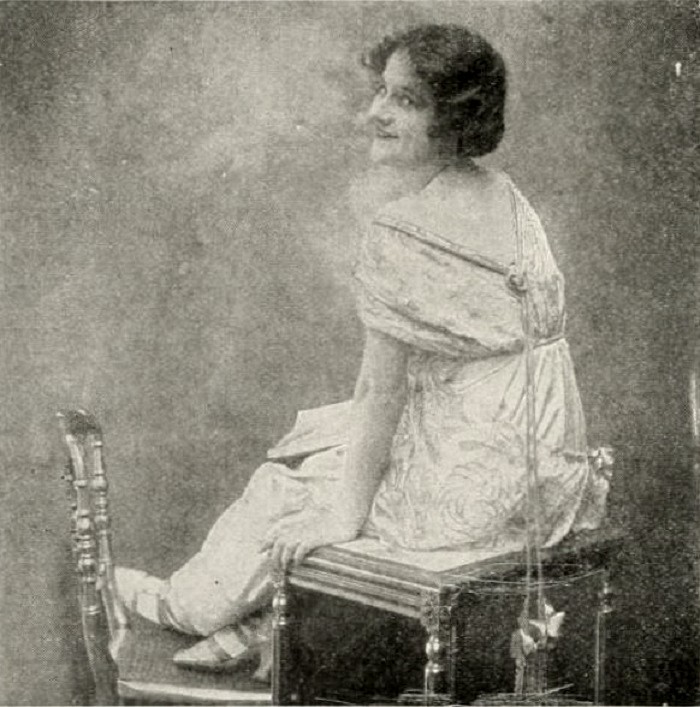
A velvet-robed aristocrat slumming it in a candle-scented attic should feel like cosplay, yet Liberty Hall makes the ruse throb with genuine jeopardy. The film is a cracked mirror held up to 1914 London: money is perfume, debt is sulfur, and women’s bodies are the ledger on which men keep score.
Director Bannister Merwin—best remembered today for early American one-reelers—here stretches to four reels, luxuriating in sidelong glances and the hush before a gag. The camera glides past docklands smoke, lingers on a pair of ungloved hands closing a book too gently to be casual. Every frame feels like a what-if: what if Hoodman Blind’s grime met the drawing-room sparkle of After the Ball? The answer is a tonal mongrel—part social tract, part bedroom farce—that somehow gallops instead of limping.
We open on Jack Beverley (Douglas Munro) reclining in a mahogany sarcophagus of a bathtub, steam curling like bored ghosts. Reporters outside bellow news of yet another miners’ strike; Jack yawns, tosses a gold sovereign into the soap dish, and decides—mid-foam—to vanish. Cut to Limehouse, where the stink of tallow and river rot slaps him awake. He answers a handwritten advert: “Lodger wanted, quiet habits, must love books.” The bookseller, Mr. Quilp (O.B. Clarence, all tweed and tremor), owes three months’ rent to Griggs the ironmonger (Ben Webster, eyes like greasy pennies). Griggs will accept payment in kind: the elder Quilp daughter, Christabel (Edna Flugrath), whose profile could launch not merely a thousand ships but a fleet of suffragette pamphlets.
Jack’s masquerade is paper-thin—he forgets to roughen his vowels, can’t scrub the Windsor-knot crease from his collar—yet the family is too hungry for suspicion. Flugrath plays Christabel with a darting intelligence: she clocks the false modesty in Jack’s “Awfully obliged, miss,” yet chooses to hope. Hope, in 1914, is currency more volatile than pound sterling. Their flirtation unfolds in slivers: a synchronized reach for the same cracked teacup; a shared smirk when Griggs mispronounces “chiaroscuro.” The film’s erotics lie in restraint—no clinches, just the promise of pages yet unturned.
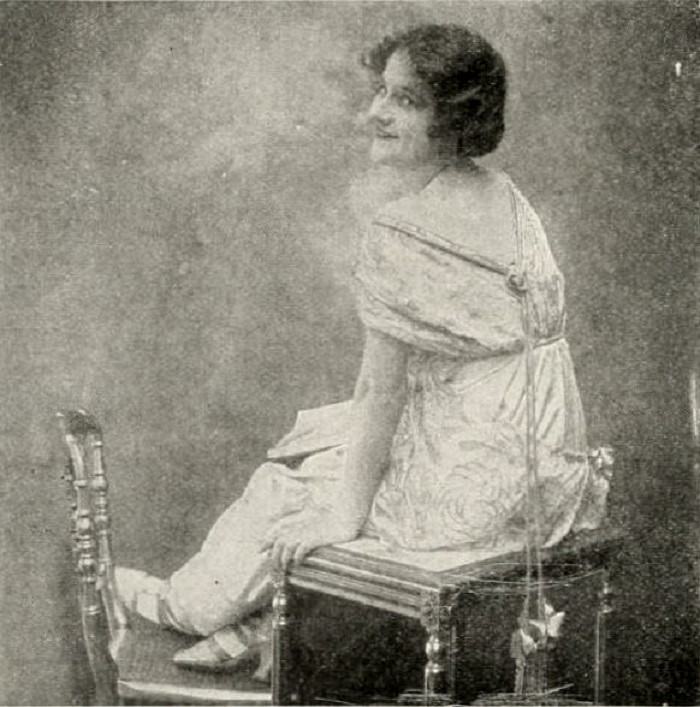
Munro’s Jack could have been a fop’s holiday, yet he threads a whisper of self-disgust through every grin. Watch how he practices “common” slang in a cracked hand-mirror, the reflection catching a soot-streaked angel who doesn’t believe his own act. Flugrath answers with eyes that seem to dilate between 18 and 35 frames per second—an impossibility, but there it is. Their chemistry combusts not in clinches but in recoil: when Jack finally confesses his lineage, Christabel steps back as though struck by lightening that chose to wear a top hat.
Ben Webster’s Griggs is the stuff of Edwardian nightmares: a man who smells of rendered fat and keeps his accounts in greasy pencil on cuffs. In one chilling aside he fingers a lock of Christabel’s hair left on a cloak, then pockets it like loose change. Hubert Willis, as the younger sister Dorrie, supplies comic oxygen: she misreads Jack’s aristocratic ennui as poetical consumption and keeps offering him rhubarb tonic.
Merwin shot almost entirely on a single soundstage, yet drapes each corner in contradictory textures: burlap against brocade, fish-market crates stacked beneath a stained-glass transom. The palette—hand-tinted amber for lamplight, sea-green for the Thames at dawn—anticipates the mood-coding later exploited by The Life and Passion of Jesus Christ. Notice the repeated motif of shutters: whenever a character decides to lie, a window slams in near foreground, fracturing the face with shadow-bars. The device is simple, cheap, devastatingly eloquent.
Intertitles, often a weakness in silents, here crackle with Wildean snap. My favorite: “He offered her a ring—she preferred the one that binds a library volume, for it yields without complaint.” The card appears over a close-up of Christabel’s thumb rubbing the gold leaf of a Spenser folio—an image that synapses literature, sex, and class in a single heartbeat.
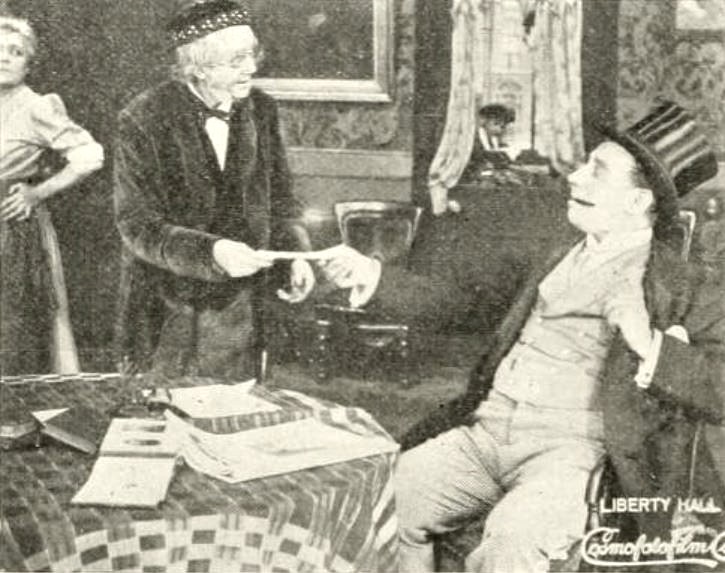
Surviving prints are accompanied by a modern score—piano, discreet violin, brushed snare—that avoids the usual “chase-y” brio. Instead, composer Maude Marsh interpolates Tipperary fragments into a minor key, letting patriotism rot from within. During the climactic warehouse brawl, the music drops to heartbeat thumps synchronized to projector flicker, so that each punch lands on the downbeat of blackness. You half-breathe with the characters, afraid the next frame simply won’t arrive.
Merwin and writer R.C. Carton adapted a West-End farce, yet the screen version keeps stumbling into documentary candor. When Christabel bargains for credit at the grocer, the camera lingers on her removed glove—palm raw from needlework—long enough to make the audience complicit. Compare this to Lucille Love’s plucky heiress who never met a problem her daddy’s revolver couldn’t solve; here, heroineism is measured in ounces of swallowed pride.
Still, the film can’t resist last-minute restoration of aristocratic order: Jack’s fortune saves the bookstore, Griggs is paid off, the marriage bell looms. Yet the final shot—Jack burning the IOU while Christabel turns away to shelve a book—leaves a sliver of unease. The revolution will not be intertitled.
Currently streaming in 2K restoration via BFI Player’s “Edwardians in Eden” collection. Pair it with With the Army of France for a double-bill on vanished empires, or counter-program with Niños en la Alameda to see how childhood innocence was staged differently across borders. For physical media, Edition Filmmuseum offers a region-free Blu with a 20-page insert on tinting techniques—worth it for the macro photos of Flugrath’s eyelashes alone.
Liberty Hall is neither the first nor the finest silent comedy, yet it haunts like cheap perfume on vintage wool—impossible to launder out. Ninety-odd years before Downton fetishized the upstairs-downstairs waltz, this modest Brit curiosity asked whether a title could ever be traded for a soul, and answered with a shrug, a kiss, and the soft thud of a book closing on its own weight. That sound, faint as it is, reverberates louder than gunfire.
IMDb —
1928
Community
Log in to comment.