DbcultAccessing Vault...
Cult Review
Senior Film Conservator
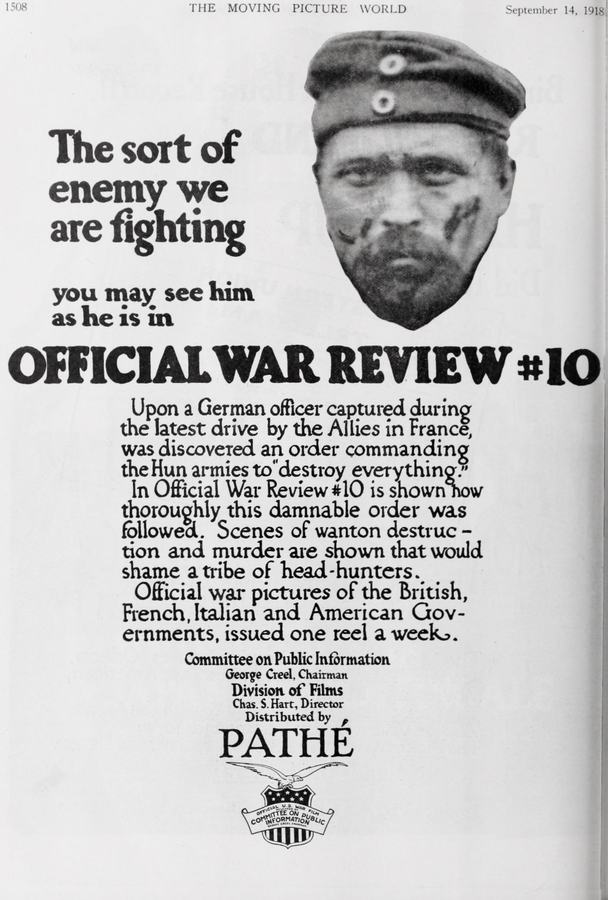
Stepping into the cinematic experience of 'Allies' Official War Review, No. 10' is akin to unearthing a time capsule, a raw, unvarnished dispatch from the crucible of the First World War. This isn't entertainment in the conventional sense; it is a meticulously assembled document, a fragment of history rendered in flickering celluloid, designed to both inform and galvanize a populace grappling with a conflict of unprecedented scale and savagery. Far from the dramatic contrivances of narrative features like The Adventures of Kathlyn or the psychological complexities of Hypocrites, this review offers a stark, often disquieting, reality. It’s a testament to the nascent power of moving images to shape public perception and chronicle epochal events, predating the sophisticated propaganda machines of later conflicts yet brimming with an undeniable, if sometimes crude, efficacy.
The film opens with a sequence of trench warfare, not as a romanticized tableau, but as a gritty, mud-caked reality. We witness the visceral immediacy of artillery bombardments, the earth erupting in geysers of soil and smoke, soldiers silhouetted against the chaos. The camera, often static, becomes an impassive observer, allowing the sheer scale of destruction to speak for itself. There's a palpable sense of the interminable waiting, interspersed with moments of explosive violence. This is a far cry from the stylized action sequences that would define later war cinema; instead, it is an authentic, if curated, record of the relentless grind. The visual language, though constrained by early cinematography, manages to convey the oppressive atmosphere of the front lines, a world utterly alien to the domestic sphere.
What strikes a contemporary viewer is the raw, almost accidental artistry in some of these shots. The play of light on barbed wire, the desolate expanse of no-man's-land under a leaden sky, the stoic faces of men hardened by unimaginable experiences – these aren't meticulously framed compositions but rather captured moments of profound human drama. The absence of a strong narrative arc, typical of newsreels of the era, paradoxically enhances its power. We are not told what to feel, but rather presented with fragments of a brutal reality and left to construct our own emotional response. In this, it shares a certain observational quality with early actualités like Panama and the Canal from an Aeroplane, albeit with a far more somber subject matter, showcasing the world as it was, not as it could be imagined.
Beyond the front lines, the review meticulously details the logistical backbone of the Allied war effort. We see colossal convoys of trucks navigating shell-pocked roads, laden with supplies, munitions, and reinforcements. The sheer scale of coordination required to sustain millions of men in the field is subtly underscored through these sequences. Horse-drawn artillery, still a prominent feature of early 20th-century warfare, rumbles across the landscape, a stark reminder of the transitional nature of military technology during this period. The film highlights the burgeoning role of aviation, with biplanes soaring overhead, conducting reconnaissance missions that were vital for strategic planning. These glimpses into the mechanical and organizational aspects of the war are crucial, providing context to the human struggle depicted elsewhere.
One particularly compelling segment focuses on the deployment of new weaponry. While the specific innovation isn't explicitly named, the visual depiction of a rudimentary tank, lumbering across obstacles, offers a fascinating insight into the technological arms race that characterized the Great War. The clunky, almost absurd appearance of these early behemoths belies their revolutionary impact on the battlefield. This emphasis on technological advancement serves a dual purpose: it informs the home front about the ongoing efforts to gain an advantage and subtly reassures them of the Allies' ingenuity and capability. It’s a stark contrast to the escapist fantasies of films like The Tiger Woman, instead grounding its narrative in the pragmatic realities of military innovation.
Amidst the vast canvases of destruction and machinery, 'Allies' Official War Review, No. 10' does not neglect the human face of the conflict. Though individual stories are not developed, the camera frequently lingers on the soldiers themselves – their weary but determined expressions, their camaraderie in the trenches, their moments of respite, however brief. We see them sharing rations, mending equipment, and even engaging in rudimentary forms of recreation. These are not heroes in the classical sense, but rather ordinary men thrust into extraordinary circumstances, displaying an astonishing resilience. The review captures the quiet dignity of their suffering and their unwavering resolve.
The pervasive sense of collective effort is palpable. There are no star turns, no individual protagonists, only a vast, unified force. This approach stands in stark opposition to the emerging star system of Hollywood, where figures like Pearl White in The Perils of Pauline (though not on the provided list, it's a relevant contemporary example of serials) captivated audiences with individual heroics. Here, the heroism is distributed, a shared burden and a shared purpose. The focus remains on the broader Allied endeavor, a tapestry woven from countless individual threads of sacrifice. Even without explicit dialogue or dramatic arcs, the raw emotion conveyed through facial expressions and body language is profoundly affecting, reminding us that behind every statistic and every strategic maneuver were human beings.
It is crucial to view 'Allies' Official War Review, No. 10' not merely as a historical record, but as an instrument of public information and, by extension, a form of propaganda. In an era before widespread radio and television, newsreels were a primary source of visual information about the war. This review, like its predecessors and successors, was carefully constructed to maintain morale, justify the war effort, and demonize the enemy. While the footage itself appears largely unmanipulated, the editing, sequencing, and accompanying intertitles would have guided the audience's interpretation. The emphasis on Allied strength, technological superiority, and the resilience of its soldiers was undoubtedly designed to foster confidence and bolster support for the war.
Compared to overtly satirical or morale-boosting shorts like The Kaiser's New Dentist, which employed humor to lampoon the enemy, this review takes a more serious, factual approach. Its persuasive power lies in its perceived authenticity and its ability to bring the distant horrors of the front directly into the local picture house. The very act of showing the war, even in censored and curated form, served as a powerful reminder of the stakes involved. The inclusion of footage from various fronts, hinting at a global struggle, would have reinforced the idea of a united Allied front against a common foe. This strategic dissemination of information was vital for maintaining civilian resolve during a protracted and devastating conflict.
The enduring significance of 'Allies' Official War Review, No. 10' lies not only in its historical content but also in its place within the broader evolution of cinema. It represents an early, foundational effort in documentary filmmaking, demonstrating the power of the medium to capture and convey reality, even if that reality is carefully framed. These war reviews laid the groundwork for future journalistic and documentary practices, establishing conventions for presenting factual information through moving images. They proved that cinema could be more than mere entertainment; it could be a vital tool for communication, education, and persuasion.
One cannot help but draw parallels with other contemporaneous historical documentations, such as Velikiye dni Rossiiskoi revolutsii s 28/II po 4/III 1917 goda, which similarly captured a monumental historical upheaval through the lens of early cinema. Both films, despite their differing political contexts, share a common ambition: to immortalize significant events for posterity and immediate public consumption. While the Russian film captures the tumultuous birth of a new political order, the Allied review documents the grinding realities of an existing global conflict. They both serve as invaluable primary sources, offering direct, if mediated, windows into the past.
Furthermore, the influence of such reviews extended beyond the newsreel format. The stark realism, the focus on the mundane yet profound aspects of military life, and the visual vocabulary developed in these films would subtly inform fictional narratives set against the backdrop of war. While films like The More Excellent Way or Lost in Darkness explored personal dramas, the war reviews provided the inescapable, often grim, context that shaped the lives of their characters and their audiences. This interrelationship between factual reporting and fictional storytelling highlights the pervasive impact of the war on all forms of media.
Ultimately, 'Allies' Official War Review, No. 10' stands as a poignant and powerful artifact. It is a reminder of the colossal human cost of war, the technological leaps it spurred, and the nascent efforts to document and disseminate information in a rapidly changing world. While its primary purpose was to inform and rally a wartime populace, today it serves as an invaluable historical document, offering a direct, if filtered, conduit to the realities of a century-old conflict. It invites us to contemplate not just the events depicted, but also the very act of their recording and presentation, revealing much about the era's understanding of truth, propaganda, and the burgeoning power of the cinematic image. It’s a foundational piece, essential for anyone seeking to understand the visual history of the Great War and the early evolution of documentary cinema, far removed from the sensationalism of melodramas like The Curse of Iku or the intricate plots of The Pawn of Fortune, offering instead a stark, compelling slice of historical actuality.

IMDb 6.6
1932
Community
Log in to comment.