DbcultAccessing Vault...
Cult Review
Senior Film Conservator
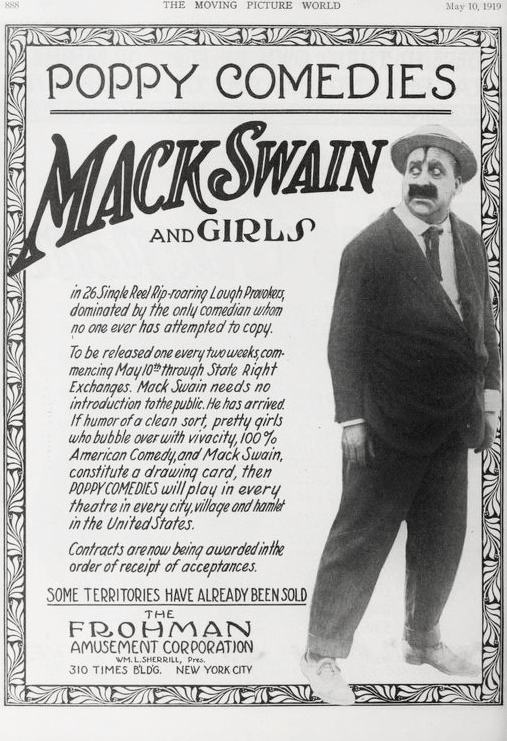
Ah, the silent era! A time when the grand gestures, the exaggerated emotions, and the sheer physicality of performance reigned supreme. It was an epoch where narrative often took a backseat to spectacle, where the universal language of laughter transcended spoken words. And within this vibrant tapestry, figures like Mack Swain carved out indelible niches, often through the sheer force of their comedic presence. 'Ambrose's Vacation,' a delightful romp starring the inimitable Swain, offers a fascinating glimpse into this bygone cinematic world, a world where a simple trip to a resort could become an epic saga of blunders and belly laughs.
There’s something eternally resonant about the figure of the bumbling everyman, or perhaps in Ambrose’s case, the bumbling *some*man, given his considerable stature and even more considerable self-regard. Mack Swain, with his distinctive walrus mustache and imposing physique, was a master of this archetype. His Ambrose character, familiar from numerous Keystone comedies, is not merely a fool but a man convinced of his own sagacity, a conviction that makes his inevitable downfall all the more uproarious. In 'Ambrose's Vacation,' this core characteristic is exploited to its fullest, painting a vivid portrait of a man utterly out of sync with his surroundings, yet stubbornly oblivious to his own comedic plight.
The film opens with Ambrose's grand vision of a tranquil retreat to the Whispering Pines Resort. One can almost hear the triumphant, slightly self-satisfied orchestral swells accompanying his meticulous, if utterly unnecessary, packing. The contrast between his lofty aspirations for peace and quiet and the immediate chaos that greets him is the film's foundational comedic engine. It’s a classic setup, one that echoes through countless comedies, from the early antics of Charlie Chaplin (though Chaplin's tramp often faced external forces, Ambrose's mishaps are largely self-generated) to the later, more sophisticated situational comedies. The sheer earnestness with which Ambrose approaches his leisure, only for it to backfire spectacularly, is a testament to Swain's ability to imbue even the simplest actions with comedic potential.
The genius of 'Ambrose's Vacation' lies in its masterful deployment of physical comedy and escalating misunderstandings. The initial encounter with the clumsy bellhop is a microcosm of the entire film: a simple task rendered catastrophically complex by a confluence of unfortunate timing and Ambrose's own inability to adapt. It's a dance of errors, a ballet of blunders that sets the stage for everything that follows. The visual gag of Ambrose tangled in his own luggage, a prized fishing rod jutting out at an absurd angle, is pure silent film gold, relying entirely on visual storytelling to elicit laughter.
Consider the fishing expedition: a quintessential vacation activity. For Ambrose, it's not merely a pastime but an opportunity to demonstrate his prowess. Yet, his attempts lead not to a glorious catch, but to him hooking his own trousers and an undignified plunge into the lake. This scene, rendered with a delightful lack of subtlety, showcases the film's reliance on broad physical humor. It’s reminiscent of the kind of exaggerated mishaps seen in other contemporary comedies, perhaps even more overtly physical than some of the more character-driven humor in films like The Social Leper, which often leaned on social commentary alongside its comedic elements.
The aquatic misadventures continue with Ambrose's attempt at rowing. What begins as a romantic gesture for his long-suffering wife, Mildred, quickly devolves into a farcical chase involving a flock of indignant geese. The image of Ambrose, oars flailing, boat listing precariously, pursued by a phalanx of honking waterfowl, is a triumph of visual comedy. It's an absurdity that only the silent screen could truly capture, where the lack of dialogue forces the viewer to focus entirely on the kinetic energy and the performers' expressions. This kind of escalating chaos, where one small mishap begets a larger one, is a hallmark of the era, a technique also expertly employed in films like Secret Service, albeit in a more dramatic context where misdirection drives the plot.
Perhaps the most sustained comedic thread in 'Ambrose's Vacation' is the accidental luggage swap. This simple premise provides a fertile ground for a wealth of sight gags and escalating confusion. Ambrose, in his characteristic haste and self-absorption, mistakes his oversized valise for that of the diminutive, mild-mannered Professor Finch. The ensuing scenes, where Ambrose attempts to don the professor's absurdly small, floral-patterned bathing suit and spectacles, while the professor struggles with Ambrose's gargantuan formal wear, are pure comedic gold. It's a masterclass in visual juxtaposition and character contrast. The repeated, bewildered encounters between the two men, each convinced the other is a lunatic, build a delightful crescendo of comedic tension.
This particular plot device, the mistaken identity or object, is a venerable one in comedy, proving its enduring appeal across different eras. One can see echoes of it even in films with more serious undertones, like His Wife's Good Name, where identity plays a crucial role, though there, the stakes are far higher than a mere fashion faux pas. In 'Ambrose's Vacation,' the humor is derived from the sheer incongruity and the characters' inability to grasp the obvious solution, a testament to the film's commitment to lighthearted escapism.
The film culminates in the resort's annual Talent Soiree, a setting ripe for Ambrose's particular brand of comedic disaster. Convinced of his hidden vocal talents, Ambrose bravely (or perhaps foolishly) takes to the stage. This scene is a brilliant showcase for Swain's physical comedy and his ability to convey mounting panic through exaggerated expressions. His stage fright, exacerbated by the accidental consumption of a spicy hors d'oeuvre, manifests in an uncontrollable hiccuping fit. The performance devolves into a cacophony of choked notes, spasmodic movements, and frantic attempts to regain composure. It’s a symphony of discomfort, played for maximum comedic effect.
The climax, where Ambrose trips over the microphone stand and tumbles headfirst into the grand piano, effectively bringing the evening's entertainment to a spectacular, if unintended, end, is the perfect capstone to his disastrous vacation. It’s a moment of pure, unadulterated slapstick, the kind that defined the Keystone era. This sort of grand, destructive finale is a common trope, designed to leave the audience roaring with laughter. It contrasts sharply with the more subtle, psychological unraveling sometimes seen in dramas of the period, such as Isterzannye dushi, where internal turmoil takes precedence over external chaos.
Mack Swain's performance as Ambrose is, without doubt, the beating heart of this film. His ability to convey a vast range of emotions – from indignant pride to bewildered frustration to outright panic – without uttering a single word is truly remarkable. He understands the mechanics of silent comedy, utilizing his imposing physical presence to great effect. His broad gestures, his expressive face, and his perfectly timed reactions are all meticulously crafted to elicit laughter. He is not merely a character but a force of nature, a magnet for comedic misfortune.
Swain's particular brand of humor often involved a certain self-inflicted pain, a man who, despite his best intentions, was his own worst enemy. This contrasts with the more externally driven conflicts often found in contemporary adventure films like Wanted for Murder, where the protagonist faces clear antagonists. Ambrose's antagonists are often inanimate objects, his own clumsiness, or the sheer randomness of fate. His comedic genius lay in making these internal and minor external struggles universally relatable and endlessly funny.
While 'Ambrose's Vacation' might not boast the groundbreaking cinematography or complex narratives of later films, it excels in its technical simplicity and effectiveness. The camera work, though largely static by modern standards, is perfectly suited to capturing the broad physical comedy. The editing is crisp, allowing the gags to land with precision. There's an economy of storytelling, where every shot and every scene serves the singular purpose of advancing the comedic plot. The use of intertitles, though minimal, is effective in setting the scene or conveying crucial bits of information, acting as signposts in the comedic journey.
The resort setting itself, with its picturesque lake and genteel atmosphere, provides an excellent foil for Ambrose's disruptive presence. The contrast between the intended tranquility and the actual chaos is a recurring visual motif. The costumes, particularly the mismatched outfits resulting from the luggage swap, are integral to the humor, highlighting the visual absurdity of the situations. It’s a testament to the filmmakers' understanding of how to maximize comedic impact with the tools available to them, creating a world where every element contributes to the overall mirth, much like the meticulously designed sets in historical epics such as Pyotr Velikiy, though with vastly different aims.
Even a century later, 'Ambrose's Vacation' retains a surprising amount of its charm and comedic power. The humor, rooted in universal human foibles – vanity, clumsiness, the desire for an escape that never quite materializes – transcends the specific era in which it was made. It's a reminder of a simpler, more innocent form of comedy, one that relied on the sheer talent of its performers and the ingenuity of its gags rather than complex dialogue or special effects. It's a pure, unadulterated dose of joy, a cinematic palate cleanser in an often-overwhelmed world.
The film's legacy, while perhaps not as widely celebrated as some of the more iconic silent features, is significant. It represents a crucial chapter in the development of screen comedy, showcasing the evolution of character-driven humor and the refinement of slapstick techniques. For anyone interested in the roots of cinematic laughter, 'Ambrose's Vacation' is an invaluable artifact, a delightful journey back to a time when a well-timed pratfall and an expressive grimace were all that was needed to bring down the house. It stands alongside other character studies of the era, though with a distinctly comedic lens, offering a different perspective than, say, the more dramatic explorations of human nature found in films like Man and Beast or Conquered Hearts.
In an era where films like A Long, Long Way to Tipperary captured the pathos of war, and Germania explored national identity, 'Ambrose's Vacation' offered a much-needed respite, a reminder of the simple pleasure of laughter. It’s a film that doesn't pretend to be more than it is: a delightful, unpretentious comedy designed to entertain. And in that, it succeeds magnificently.
Ultimately, 'Ambrose's Vacation' is a charming, often uproarious example of early silent comedy. Mack Swain's portrayal of Ambrose is a masterclass in physical humor, bringing to life a character who is both exasperating and endearing. The film's simple yet effective plot, its reliance on escalating mishaps, and its timeless comedic tropes make it a joy to watch even today. It reminds us that laughter, in its purest form, often comes from witnessing the absurdities of life, particularly when they befall a character as delightfully oblivious as Ambrose. It's not a film that attempts to plumb the depths of human emotion like The Lie, or capture the grand sweep of history like Sam Davis, the Hero of Tennessee; its ambitions are purely comedic, and in that, it excels.
So, if you're ever in need of a good chuckle, a reminder of the foundational artistry of silent film, or simply a delightful escape from the everyday, 'Ambrose's Vacation' comes highly recommended. It's a cinematic journey that proves even the most disastrous of vacations can provide endless amusement, especially when guided by the inimitable Mack Swain. The film's lighthearted spirit and expertly executed gags ensure its place as a memorable, if understated, gem in the silent comedy canon. It offers a stark contrast to the dramatic intensity of films like Dust or the regal splendor of Gloriana, choosing instead to revel in the joyous chaos of human folly. A true classic, awaiting rediscovery by new generations of film lovers.
IMDb —
1920
Community
Log in to comment.