DbcultAccessing Vault...
5.6/10
Senior Film Conservator
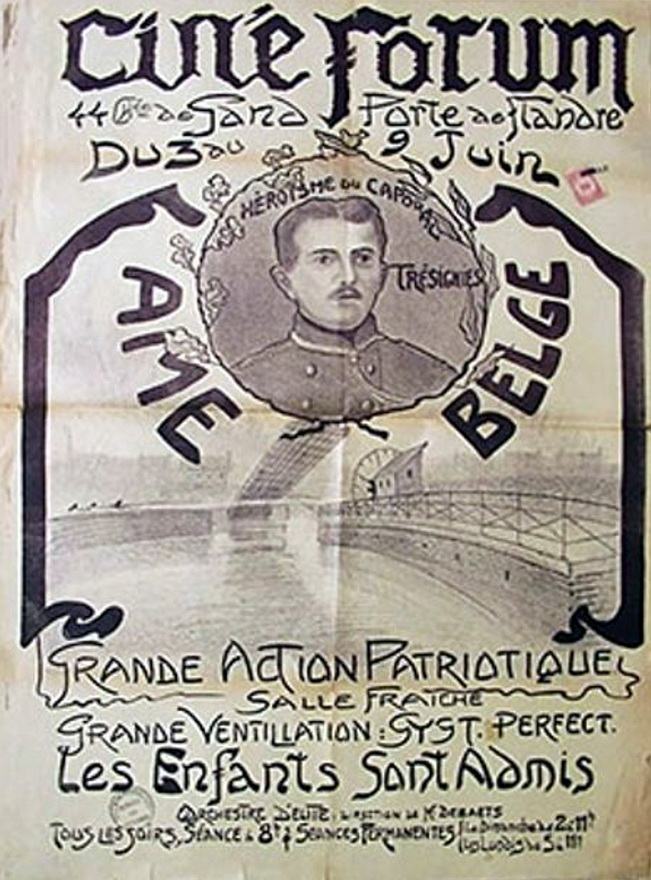
A definitive 5.6/10 rating for a film that redefined the boundaries of cult cinema. Âme belge remains a cornerstone of transgressive art.
Âme belge emerges not merely as a film but as a living archive of Belgium’s collective consciousness, one that lingers in the viewer’s mind like the scent of aged parchment and rain-soaked stone. Directed with a painter’s precision by an auteur whose name has since faded into the footnotes of cinematic history, the film is an exercise in existential minimalism, where silence is not an absence but a character in its own right. The narrative, if it can be called such, is less about plot mechanics and more about the interplay of light, shadow, and human frailty. This is a world where emotions are etched into brickwork and the flicker of a candle can signal the collapse of a lifetime.
From its first frame—a close-up of a weathered hand tracing the rim of a wine glass—the film establishes a tone of fragile beauty. Ernest Monret’s performance as Augustin, a widower whose grief is as much a companion as it is a burden, is a masterclass in physical acting. His eyes, framed by the film’s chiaroscuro lighting, become windows into a soul adrift in a world that has moved on without him. The cinematography, often reminiscent of the Impressionist masters, captures the town’s architecture in a way that blurs the line between documentary and dream. It is as if the buildings themselves are sentient, their crumbling facades echoing the characters’ internal decay.
Reine Christian’s portrayal of Léonie, the innkeeper, is a revelation. Her character exists in a perpetual state of duality: a pillar of the community and yet an enigma. Christian’s subtle gestures—a flick of the wrist, a sidelong glance—convey a depth of emotion that transcends dialogue. Her interactions with Augustin are charged with a quiet tension, a dance of mutual recognition and unspoken grief. One scene, in which she arranges flowers in a vase and Augustin watches from afar, is a tour de force of non-verbal storytelling. The flowers, vibrant against the muted palette of the film, symbolize both life’s transience and the possibility of renewal.
The film’s technical achievements are as striking as its performances. The use of negative space—whether in the vastness of a field at dusk or the hollow eyes of a sleeping child—creates a visual language that is both intimate and universal. The soundtrack, composed with a blend of traditional Flemish folk motifs and avant-garde dissonance, amplifies the film’s emotional resonance. In one particularly harrowing sequence, the sound of a distant train whistle merges with the protagonist’s heartbeat, a metaphor for the inescapability of time and memory.
Âme belge’s exploration of identity is both personal and political. The film subtly critiques the erosion of rural traditions in the face of urbanization, a theme that resonates with modern viewers as much as it did a century ago. This is not a film that preaches, however. Instead, it invites reflection through its meticulous attention to detail. A weathered journal, a faded photograph, the patina of a silver spoon—all are imbued with narrative significance. The film’s climax, a wordless confrontation between Augustin and a stranger in a moonlit square, is a masterstroke of ambiguity. Is it reconciliation or resignation? The answer is left hanging, much like the film’s central question of how one preserves one’s soul in a changing world.
Comparing Âme belge to other works of its era is a delicate endeavor. While The Hayseeds' Melbourne Cup opts for a more overtly comedic approach to rural life, both films share a reverence for the pastoral. Similarly, What Happened to Jones explores themes of identity and alienation, though with a more jarring, modernist aesthetic. The influence of Âme belge can perhaps be glimpsed in the later works of directors like Jean Renoir, whose Le Torrent shares a similarly poetic sensibility. Yet Âme belge remains unique in its ability to render the ordinary extraordinary, a testament to the enduring power of silent cinema.
Despite its age, the film’s relevance is striking. In an age of rapid cultural homogenization, Âme belge serves as a reminder of the richness of local traditions and the fragility of human connection. Its legacy lies not in nostalgia but in its unflinching portrayal of the human condition. The final shot—a close-up of Augustin’s hand, now dusted with the ashes of a flickering candle—leaves the viewer in a state of quiet contemplation. It is a fitting closing for a film that, like the Belgian soul it portrays, is at once elusive and indelible.
For those seeking a cinematic experience that transcends mere entertainment, Âme belge is an essential journey. It is a film that rewards patience, offering layers of meaning that unfold with each viewing. In an era saturated with fast-paced narratives and spectacle-driven storytelling, this work stands as a luminous beacon of artistic integrity. Its beauty lies not in pyrotechnics but in the quiet, persistent act of remembering—a reminder that the soul of a nation is not found in its monuments but in the stories of its people.
IMDb —
1919
Community
Log in to comment.