DbcultAccessing Vault...
Cult Review
Senior Film Conservator

Stepping back into the flickering glow of the early 20th century, Her Better Self (1917) emerges not merely as a relic of silent cinema but as a profound exploration of societal constraints, moral awakening, and the arduous path to redemption. Directed with a keen eye for dramatic tension and featuring a tour-de-force performance by the luminous Pauline Frederick, this film, penned by Margaret Turnbull, transcends its melodrama to offer a surprisingly nuanced commentary on class, justice, and personal integrity. It’s a narrative that, even without spoken dialogue, resonates with a timeless emotionality, challenging its audience to confront the difficult choices that define our humanity.
At the heart of this compelling drama is Vivian Tyler, portrayed with captivating intensity by Frederick. Vivian is introduced as a paragon of high society, ensconced in privilege and bound by the expectations of her station. Her engagement to the sophisticated Count Belloto signifies a life meticulously mapped out, devoid of genuine struggle or profound purpose. Yet, beneath this veneer of decorum, a nascent yearning for something more substantial stirs within her. This internal conflict is exquisitely conveyed by Frederick, whose expressive face and elegant gestures articulate a world of unspoken desires. Her initial attraction to Dr. Robert Keith, a character embodying altruism and unwavering dedication to the marginalized, is not merely a romantic impulse but a profound recognition of a life lived with meaning, a stark contrast to her own gilded cage. Dr. Keith, whose work in uplifting the city's poor has garnered widespread admiration, represents an ideal that challenges Vivian's preconceived notions of worth and contribution. His sanitarium, a haven offering free treatment to the indigent, becomes a crucible for Vivian’s burgeoning conscience.

Vivian’s decision to volunteer at the sanitarium marks a pivotal shift, a conscious step away from the superficiality of her former existence. It is here, amidst the stark realities of poverty and suffering, that her sheltered worldview begins to unravel. The film masterfully juxtaposes her privileged background with the raw, unfiltered experiences of those Dr. Keith serves, creating a powerful visual and thematic contrast. This environment, however, also serves as the stage for a tragic misunderstanding that propels the narrative into its most harrowing chapters. The introduction of Aggie May, a woman ostracized by society and arrested as a streetwalker, is handled with a delicate yet impactful hand. Aggie, a victim of circumstance and systemic neglect, carries a locket bearing Dr. Keith's picture. This seemingly innocuous detail becomes a potent symbol of Vivian’s flawed perception, leading her to a devastating, erroneous conclusion: that the benevolent doctor is somehow complicit in Aggie’s downfall. Frederick's portrayal of Vivian's shock and revulsion, her swift judgment colored by societal prejudice, is a testament to her acting prowess, conveying a complex emotional landscape without uttering a single word. This misinterpretation, born of inexperience and a lack of true understanding of the world beyond her elite circles, sets in motion a chain of events with dire consequences.
The tragedy deepens with Aggie’s suicide, a stark and brutal moment that underscores the film’s unflinching engagement with social injustice. Vivian, a terrified witness to this desperate act, finds herself caught in an agonizing moral quandary. The instinct for self-preservation, the ingrained fear of scandal that dictates her class, compels her to flee the scene before the arrival of the police. This decision, born of panic and a lifetime of conditioning, is a profound moral failing, a moment where her 'better self' is eclipsed by fear. It's a choice that highlights the insidious nature of societal pressure, where reputation can outweigh compassion and truth. The film here delves into the complexities of human nature, demonstrating how even well-intentioned individuals can falter under extreme duress. This sequence is particularly effective in building suspense and illustrating the weighty consequences of Vivian's actions, or rather, her inaction. Her hasty departure leaves Dr. Keith vulnerable, leading to his wrongful arrest for Aggie’s death, with the ill-fated locket serving as the primary, yet misleading, evidence of his supposed guilt.
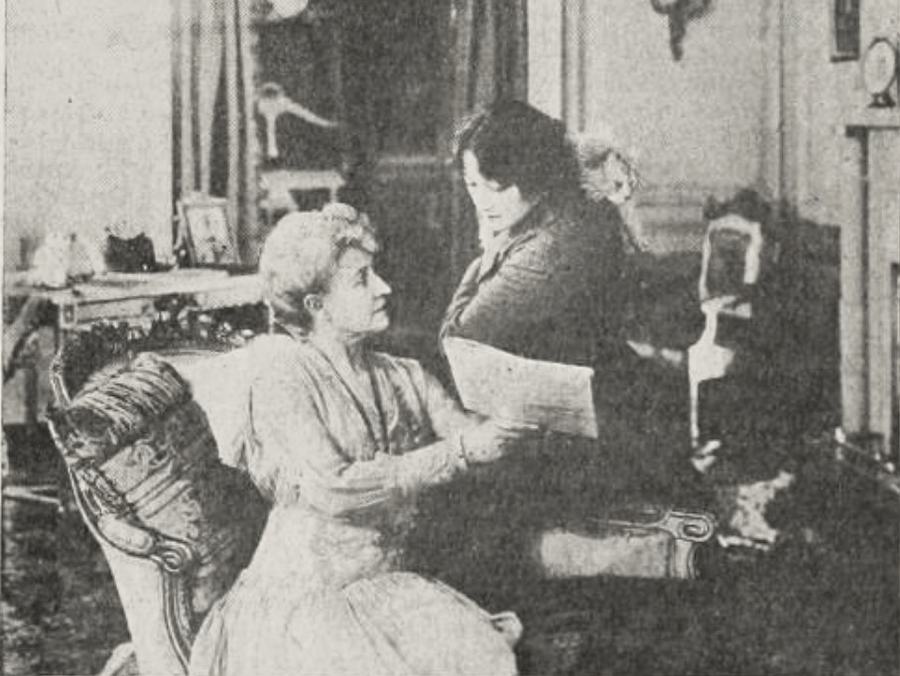
As the narrative pivots to the courtroom drama, the tension becomes palpable. Dr. Keith, a man of unimpeachable character, faces the grim prospect of conviction, his noble work and reputation hanging by a thread. The film, in this phase, becomes a powerful indictment of circumstantial evidence and the fragility of justice in the face of societal biases. The audience is left to grapple with the profound injustice of the situation, knowing the truth that Vivian holds. Frederick, as Vivian, conveys the escalating torment of guilt and moral conflict. Her internal struggle is palpable; the weight of her silence presses down, threatening to condemn an innocent man. This dramatic arc is where Her Better Self truly distinguishes itself, moving beyond a simple romance to a tale of profound moral reckoning. Vivian’s journey from a naive debutante to a woman capable of immense courage is fully realized in these climactic scenes. The film does not shy away from portraying the agonizing process of self-discovery and the immense personal cost of upholding truth.
The climax, with Vivian’s dramatic rush into the courtroom to deliver her exonerating testimony, is a classic silent film trope, yet it feels earned and impactful here. It is the culmination of her arduous internal battle, a moment of profound personal sacrifice and redemption. Her testimony not only clears Dr. Keith’s name but also represents her complete transformation, a shedding of her former, superficial self for a newfound integrity. This act, while perhaps melodramatic by modern standards, resonates deeply within the context of early cinema, serving as a powerful affirmation of justice and the triumph of conscience. It's a moment that, despite its theatricality, feels deeply human, a testament to the power of truth to cut through layers of misunderstanding and prejudice. The film's resolution, while providing a satisfying narrative closure, also leaves the audience pondering the broader implications of social responsibility and the constant struggle between personal comfort and moral courage. This theme of a protagonist finding their moral compass through adversity can be seen in other silent era dramas, though perhaps not always with the same stark social commentary. For instance, while The Fatal Card might offer thrills, it lacks the depth of character transformation seen in Vivian Tyler's journey.
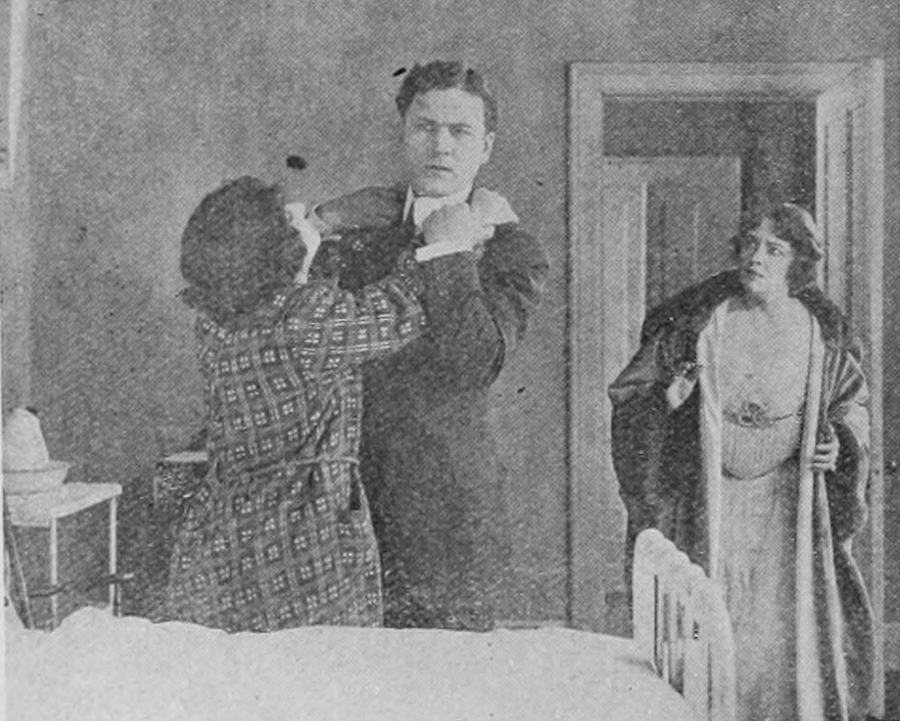
Pauline Frederick’s performance is, without a doubt, the anchor of Her Better Self. Her ability to convey complex emotions – innocence, attraction, shock, misjudgment, fear, guilt, and ultimately, courageous resolve – through gesture, gaze, and posture is nothing short of masterful. She embodies the silent film star's unique capacity to tell an entire story through physical expression, making Vivian’s internal world vividly accessible to the audience. Frederick’s intensity and refined elegance lend a particular gravitas to the role, elevating the material beyond mere melodrama. Her portrayal of Vivian's initial naive judgment of Aggie May, followed by her agonizing realization of the consequences of her flight, showcases a range that few actors of her time could match. The visual language of the film, though constrained by the technical limitations of its era, is effectively employed to enhance the narrative. Close-ups on Frederick’s face during moments of crisis amplify the emotional stakes, while the stark contrasts between the opulence of Vivian's world and the squalor of the sanitarium provide a compelling backdrop for the unfolding drama. The direction ensures that the audience remains deeply invested in Vivian’s plight, rooting for her eventual moral triumph.
The thematic undercurrents of Her Better Self are particularly resonant. The film critiques the superficiality of high society, where appearances and social standing often overshadow genuine compassion and justice. Vivian’s initial engagement to Count Belloto symbolizes this adherence to convention, a life dictated by external expectations rather than internal conviction. Dr. Keith, in contrast, represents a moral compass, a beacon of selfless service that ultimately guides Vivian towards her own spiritual awakening. The film also explores the insidious nature of class prejudice, as evidenced by Vivian’s hasty judgment of Aggie May based on circumstantial evidence and societal stigma. Aggie’s tragic fate serves as a stark reminder of the vulnerability of the marginalized and the profound impact of societal indifference. The locket, initially a symbol of misunderstanding, transforms into an instrument of justice, ironically sealing Dr. Keith’s fate until Vivian intervenes. This narrative device is skillfully used to highlight the dangers of relying on superficial evidence and the importance of seeking deeper truths. While films like Wrath might tackle moral failings, Her Better Self focuses more acutely on the transformative power of personal responsibility.
Furthermore, the film champions the idea of personal agency and the courage required to defy societal norms for a greater good. Vivian’s ultimate act of testifying is not merely about clearing Dr. Keith's name; it is about her own liberation from the constraints of fear and societal expectation. It is an assertion of her individual moral authority, a declaration that her conscience holds more sway than her social standing. This journey of self-discovery, from a passive participant in her own life to an active agent of justice, is what gives Her Better Self its enduring power. It speaks to the universal human struggle to reconcile personal desires with ethical imperatives, to find one's true purpose amidst the clamor of external pressures. The film's title itself becomes a profound statement, encapsulating Vivian's evolution and the narrative's central message: that true fulfillment lies in aligning oneself with a higher moral calling, even when it demands immense sacrifice. The dramatic tension of the courtroom scene, where Vivian must overcome her own fears and the potential for public ostracization, is a powerful testament to this theme. She doesn't just speak; she reclaims her narrative and, in doing so, allows the truth to prevail. The quiet strength she displays in this moment, a stark contrast to her earlier panic, signifies the profound change she has undergone.
The supporting cast, while overshadowed by Frederick's commanding presence, provides solid performances that ground the narrative. Frank De Rheim as Dr. Robert Keith conveys a quiet dignity and unwavering moral fortitude, making his character genuinely sympathetic and his unjust predicament all the more poignant. Armand Cortes as Count Belloto effectively portrays the societal expectations and pressures that Vivian initially navigates, serving as a foil to Dr. Keith's idealism. Maude Turner Gordon, Charles Wellesley, and Alice Hollister contribute to the film’s rich tapestry, each playing their part in the intricate web of relationships and societal dynamics. The collective effort under Margaret Turnbull’s thoughtful script creates a world that, despite its silent nature, feels remarkably vibrant and emotionally charged. The pacing, a common challenge in silent films, is handled adeptly, ensuring that the narrative builds steadily towards its dramatic crescendo without feeling rushed or unduly drawn out. This careful construction allows for the gradual development of Vivian's character, making her eventual transformation feel authentic and earned. It avoids the episodic feel of some contemporary films, offering a cohesive and emotionally satisfying journey.
In conclusion, Her Better Self stands as a compelling example of early American cinema's capacity for social commentary and psychological depth. It is a film that, through its powerful performances, particularly that of Pauline Frederick, and its resonant thematic concerns, continues to speak to audiences today. It reminds us that the pursuit of justice and the embrace of one's moral conscience are timeless struggles, often requiring immense courage in the face of adversity. The journey of Vivian Tyler, from a privileged but unfulfilled socialite to a woman of profound moral conviction, is a testament to the transformative power of empathy and truth. It's a reminder that our 'better self' is not found in societal accolades or material wealth, but in the difficult, often solitary, choices we make when confronted with the imperative to do what is right. This film, though a product of its time, offers insights into human nature that remain perpetually relevant, urging viewers to look beyond superficial judgments and embrace a more profound understanding of compassion and justice.
IMDb 3.9
1916
Community
Log in to comment.