DbcultAccessing Vault...
Cult Review
Senior Film Conservator

The silent era, often romanticized for its grand gestures and overt emotionality, truly excelled in crafting narratives of profound human drama, where the absence of spoken dialogue only amplified the visual storytelling and the raw power of performance. Among these cinematic relics, 'Forget-Me-Not' (1917) emerges as a particularly potent example, a sprawling melodrama that delves into the darkest corners of ambition, betrayal, and the relentless pursuit of retribution. It's a film that, even a century after its release, resonates with a certain primal energy, a testament to the enduring appeal of stories where human passions clash with unforgiving societal strictures. This is not merely a historical curiosity; it is a masterclass in silent film narrative, demanding our attention not just for its period charm but for its surprisingly complex portrayal of character and consequence.
At its heart lies Stefanie Paoli, a character brought to life with captivating intensity by the luminous Kitty Gordon. Gordon, a star of considerable magnetism during her time, imbues Stefanie with a fascinating duality: she is both a victim of circumstance and a ruthless architect of her own destiny. Her initial abandonment of Gabriel Barrato, a humble fisherman, for the gilded cage offered by the Marquis de Mohrivart, is presented not merely as a flight of fancy but as a calculated, if ultimately tragic, bid for a life beyond the mundane. One might draw parallels to the tragic choices made by protagonists in films like Carmen, where passionate, often self-destructive, decisions dictate a character's fate. Stefanie's ambition is palpable, a driving force that propels her from the simple life to the opulent, yet morally compromised, world of Parisian high society and clandestine gambling. This upward trajectory, however, is built on a foundation of heartbreak, setting in motion a chain of events that will inevitably ensnare her.
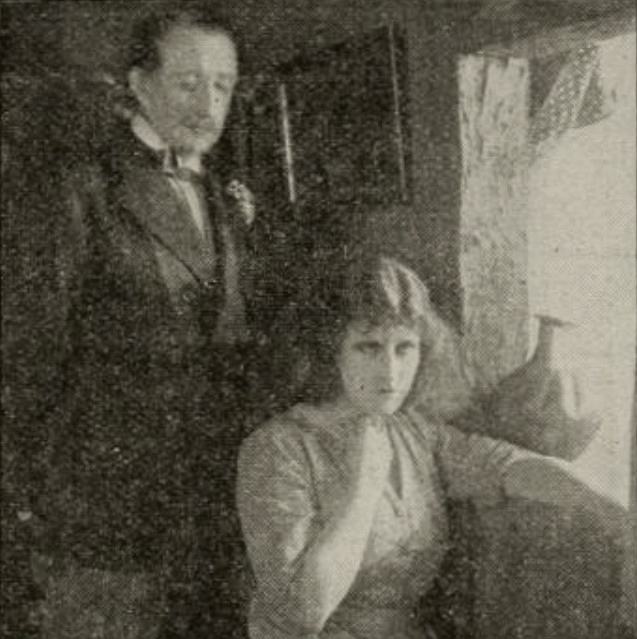
The emotional fallout of Stefanie's initial choice is immediate and devastating. Gabriel's suicide, a stark and brutal consequence, serves as the catalyst for Benedetto's lifelong quest for vengeance. Montagu Love, as Benedetto, delivers a performance of simmering intensity, his eyes conveying a depth of pain and a chilling resolve that transcends the need for dialogue. His transformation from a grieving brother to a man consumed by a singular, destructive purpose is meticulously charted, a slow-burning fuse that promises an explosive confrontation. This kind of unwavering commitment to revenge, a staple of many melodramas, is executed here with a conviction that feels almost mythological. Benedetto's journey from a man of modest means to one of wealth, acquired solely to gain access to Stefanie's new world, speaks volumes about the corrosive power of his obsession. It’s a narrative thread that could easily become one-dimensional, but Love's portrayal keeps Benedetto grounded in a relatable, if terrifying, humanity.
As Stefanie and the Marquis establish their exclusive gambling club in France, a veneer of sophistication barely masks the illicit nature of their enterprise. Their son, Charles, is deliberately shielded from this reality, sent to England for an education befitting a gentleman. This deliberate act of parental deception, an attempt to carve out a 'respectable' future for their progeny, is a poignant commentary on the societal pressures of the era and the lengths to which individuals would go to maintain appearances. Charles's subsequent marriage to Rose Verney, a daughter of the British upper class, further highlights this stark contrast between his idyllic, if fabricated, existence and the morally ambiguous world of his parents. The film masterfully builds this tension, creating an expectation that these two disparate worlds are destined to collide, much like the intricate class dynamics explored in The Country That God Forgot, albeit with a more personal, familial focus.
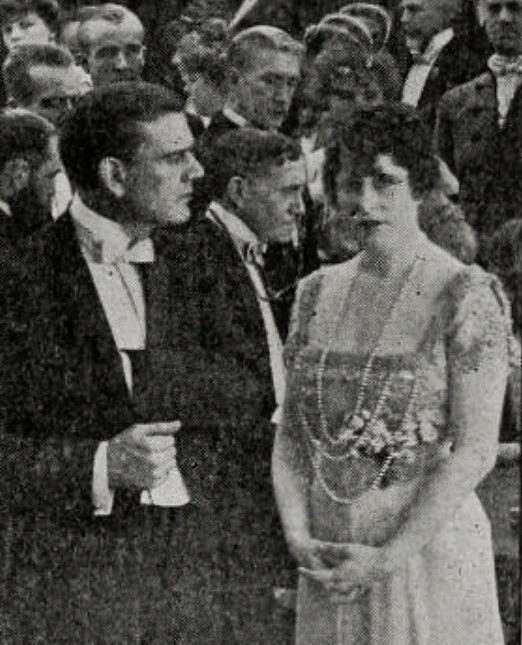
The inevitable collision occurs when Benedetto, now a man of considerable means, infiltrates the Mohrivart tables. The scene of their reunion is fraught with a palpable tension, a silent dance between past grievances and a strange, undeniable allure. Despite his sworn oath of vengeance, Benedetto finds himself momentarily captivated by Stefanie's enduring beauty, a testament to Kitty Gordon's powerful screen presence. This moment of hesitation, however brief, adds a layer of complexity to Benedetto's character, suggesting that even the most hardened hearts can be swayed by an unexpected flicker of admiration. But the promise of retribution is too strong to be denied. The attack, the Marquis's desperate attempt to protect his wife, and his subsequent death, are rendered with a dramatic flair typical of the era, yet they carry a profound emotional weight. Benedetto's sentencing to life in prison feels like a grim, yet perhaps fitting, closure to this chapter of his relentless vendetta, even as it opens a new, darker one for Stefanie.
The narrative takes a sharp, almost jarring turn following the Marquis's death and Benedetto's imprisonment. Stefanie, now seemingly stripped of her two anchors, is confronted with the news of her son Charles's terminal illness. This twist introduces a different facet of her character: a maternal instinct, however warped by her own self-interest, that compels her to visit his family in England. One might expect a moment of genuine repentance or softening, but Stefanie, ever the pragmatist and survivor, quickly reveals her true colors. After Charles's death, her refusal to leave the Verney household, and her audacious threat to invoke an obscure French law to declare her own granddaughter's birth illegitimate unless the family supports her, is a shocking display of her unyielding avarice and moral bankruptcy. This act of calculated cruelty elevates her beyond a mere adventuress; she becomes a truly formidable, almost villainous, figure, whose capacity for manipulation knows no bounds. This dramatic pivot, from a woman of desire to one of calculated legal extortion, highlights the film's willingness to explore the darker aspects of human nature, making it far more compelling than simpler tales of woe like Little Miss Happiness, which often leaned into more saccharine sentimentality.
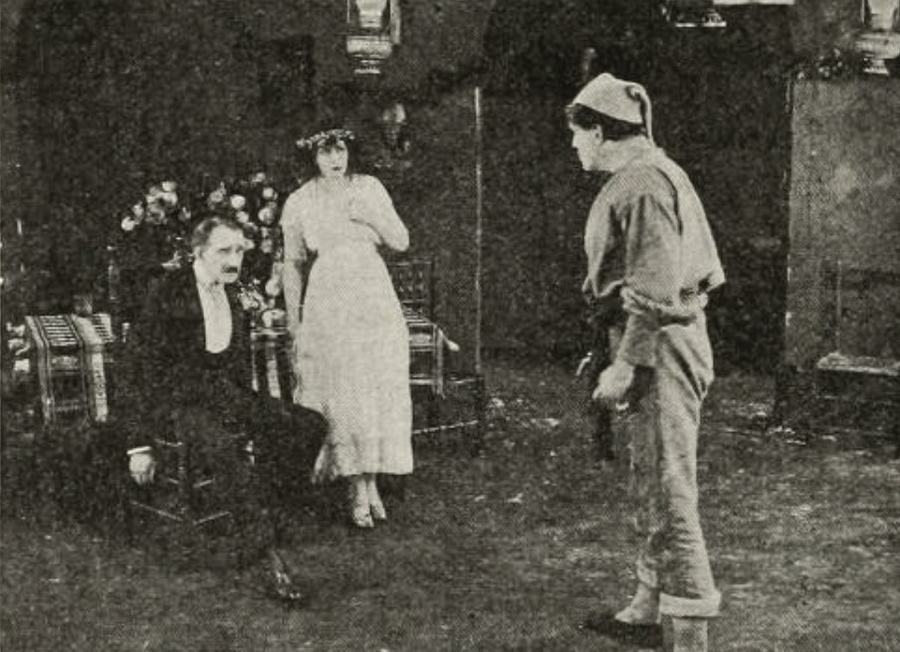
The brilliance of this final act lies in its resolution, orchestrated by Sir Horace Welby, a former lover of Stefanie's. His intervention, a fabricated tale of Benedetto's escape and renewed pursuit, serves as the ultimate deterrent. The irony is delicious: Stefanie, who has fearlessly navigated the treacherous waters of high society and criminal enterprise, is ultimately undone not by justice, but by the very specter of the revenge she herself ignited. Her terrified disappearance leaves the Verneys, and the audience, with a sense of relief, a quiet triumph of decency over the relentless machinations of a truly amoral character. This clever use of psychological manipulation to achieve a just outcome is a sophisticated narrative device, elevating 'Forget-Me-Not' beyond a mere sequence of events into a thoughtful examination of fear, consequence, and the unexpected ways in which justice can be served.
The film's direction, credited to F.C. Grove, Herman Merivale, and Frances Marion (who also contributed to the screenplay), demonstrates a keen understanding of silent film aesthetics. The use of intertitles is effective, providing necessary exposition without bogging down the visual flow. The cinematography, while perhaps not groundbreaking for its era, is competent and serves the story well, with close-ups effectively conveying the intense emotions of the characters. Kitty Gordon's performance, in particular, is a masterclass in silent acting, relying on subtle facial expressions, body language, and dramatic pauses to communicate Stefanie's complex inner world. She avoids the over-the-top histrionics that sometimes plague silent melodramas, instead opting for a more nuanced, yet undeniably powerful, portrayal. Her presence alone is enough to anchor the film, drawing the viewer into Stefanie's morally ambiguous journey.
The supporting cast, including Alec B. Francis as Gabriel, Norma Phillips as Rose Verney, and Henrietta Simpson, all contribute solid performances that flesh out the narrative's intricate tapestry. Montagu Love's Benedetto, as previously noted, is a standout, his brooding intensity providing a perfect foil to Gordon's calculating charm. The collaborative effort of the writers, F.C. Grove, Herman Merivale, and Frances Marion, is evident in the tightly plotted narrative, which, despite its melodramatic flourishes, maintains a logical progression of cause and effect. The screenplay navigates multiple character arcs and emotional beats with remarkable dexterity, preventing the story from devolving into mere sensationalism. While films like The Sex Lure might have focused more squarely on the scandalous aspects of a woman's choices, 'Forget-Me-Not' weaves a broader tapestry of consequences that extend across generations and social strata.
In its thematic explorations, 'Forget-Me-Not' touches upon universal concerns: the corrupting influence of ambition, the enduring power of revenge, the complexities of familial duty, and the elusive nature of redemption. It's a film that asks profound questions about the choices we make and the indelible marks they leave on our lives and the lives of others. The legal threat Stefanie wields against the Verneys, for instance, speaks to the societal vulnerabilities of the time, where archaic laws could be weaponized to devastating effect against the innocent. This element provides a fascinating glimpse into the legal and social landscape of the early 20th century, adding another layer of depth to the melodrama. It's a far cry from the simpler, more innocent narratives seen in films like Rebecca of Sunnybrook Farm, which often presented a more optimistic, less morally ambiguous view of human nature and societal interactions. Instead, 'Forget-Me-Not' plunges headfirst into the darker, more uncomfortable truths of human experience.
Ultimately, 'Forget-Me-Not' stands as a compelling testament to the power of silent cinema. It is a film that, despite its age, continues to captivate with its intricate plot, memorable characters, and timeless themes. Kitty Gordon's Stefanie Paoli remains a truly unforgettable figure, a woman whose journey from adventuress to would-be extortionist is both morally reprehensible and undeniably fascinating. The film's ability to maintain suspense and emotional intensity without a single spoken word is a remarkable achievement, showcasing the artistry and ingenuity of its creators. For those interested in the rich history of film and the enduring allure of melodrama, 'Forget-Me-Not' is not just a film to remember, but one to be actively sought out and appreciated. Its intricate web of passion, deceit, and comeuppance forms a profound cinematic experience that transcends its historical context, speaking to the universal human condition with striking clarity and dramatic force.

IMDb —
1919
Community
Log in to comment.