DbcultAccessing Vault...
Cult Review
Senior Film Conservator
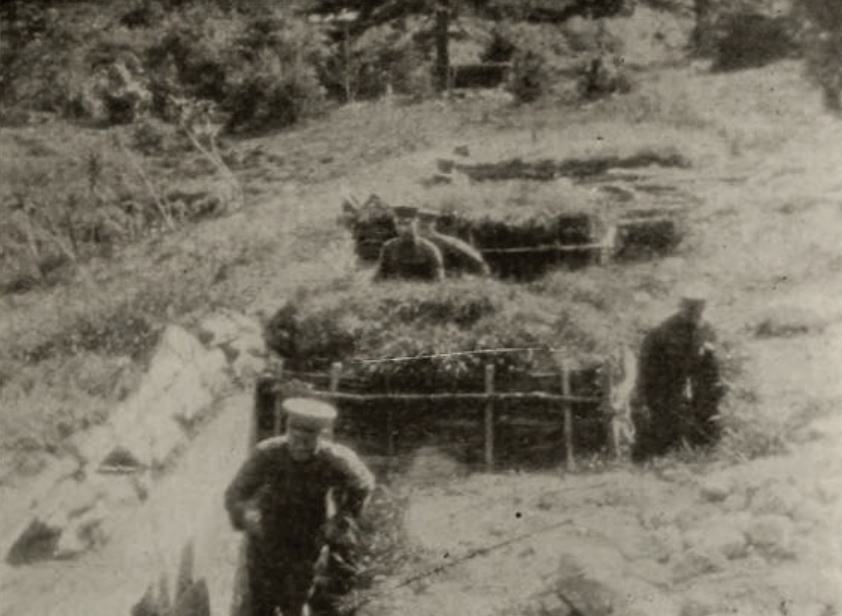
In the annals of early 20th-century cinema, certain films transcend mere entertainment, becoming vital historical documents, cultural artifacts that illuminate the very zeitgeist of their creation. Among these, America Preparing stands as a stark, compelling testament to a nation on the precipice of profound change. Released at a critical juncture, with Europe already engulfed in the inferno of the First World War and American neutrality increasingly untenable, this documentary wasn't merely a reflection of public sentiment; it was a deliberate, potent instrument designed to forge it. Its purpose was unequivocal: to awaken a largely isolationist populace to the stark realities of global conflict and to advocate, with unwavering conviction, for military preparedness.
To view America Preparing today is to peer through a cinematic window into a bygone era, witnessing the birth pangs of modern propaganda and the nascent power of the moving image to shape national destiny. It’s a film that demands contextualization, not just as a piece of early non-fiction filmmaking, but as a direct participant in a monumental historical shift. The world of 1916 was one of escalating tensions, where the distant thunder of European cannons was slowly but surely drawing closer to American shores. This film, therefore, wasn't just a newsreel; it was a call to arms, a visual sermon delivered at the altar of national security.
The genius – or perhaps, the chilling effectiveness – of America Preparing lies in its masterful, albeit rudimentary, deployment of propagandistic techniques. Before the sophisticated psychological operations of later conflicts, this film relied on direct, often simplistic, visual rhetoric. It aimed not for intellectual debate but for emotional resonance, a gut-level understanding of threat and the urgent necessity of response. The narrative, if one can call it that, is less a story and more a series of declarative statements, each designed to chip away at complacency and build a collective sense of duty.
One can imagine the visual impact on contemporary audiences: scenes depicting nascent military drills, the flexing of industrial might, perhaps even dramatized scenarios of potential invasion or vulnerability. The film likely employed a stark contrast between images of peaceful American life and the implied chaos abroad, subtly suggesting that only through robust defense could the former be preserved. This duality, a common trope in wartime messaging, would have resonated deeply with a public grappling with abstract threats and tangible desires for peace. The film's power wasn't in its subtlety, but in its unflinching directness, its ability to translate complex geopolitical anxieties into comprehensible, actionable imperatives.
While specific details of its production are scarce, the inclusion of William H. Kemble in the cast list suggests a prominent figure, perhaps a narrator whose authoritative voice would have lent gravity and legitimacy to the film's message. In an era before pervasive mass media, a recognizable public figure could imbue a documentary with immense persuasive power. Kemble, through his presence, likely served as a conduit for the film's message, personifying the call for vigilance and national unity. His perceived gravitas would have amplified the film's impact, transforming abstract warnings into personal admonitions, delivered with the weight of an esteemed individual.
The role of such figures in early documentaries cannot be overstated. They were not merely presenters; they were moral authorities, guiding the audience through complex issues with a steady hand. One might draw a parallel to the way figures in later educational or newsreel segments would lend credence to their subjects. Kemble's presence in America Preparing thus wasn't incidental; it was a strategic choice, designed to enhance the film's credibility and ensure its message landed with maximum force.
Understanding America Preparing necessitates a deep dive into the unique socio-political climate of the United States in the mid-1910s. The nation, historically wary of European entanglements, found itself increasingly isolated as the Great War raged. President Woodrow Wilson had won re-election on a platform of neutrality, yet the sinking of the Lusitania and German unrestricted submarine warfare were systematically eroding public support for non-intervention. The film, therefore, arrived at a pivotal moment, poised to capitalize on growing anxieties and to steer public opinion towards a necessary, albeit reluctant, shift.
It wasn't merely about showing military exercises; it was about shaping a national narrative. The film aimed to cultivate a sense of shared vulnerability and collective responsibility, portraying preparedness not as an aggressive act, but as a defensive imperative. This was a sophisticated rhetorical strategy, framing potential conflict as a regrettable but unavoidable consequence of global instability, and American involvement as a moral duty. The film, in essence, was contributing to the psychological groundwork that would eventually allow Wilson to lead the country into war, transforming a nation of farmers and industrialists into a formidable fighting force.
Compared to other films of the era, such as the narrative-driven The Jungle Child or the adventure of A Princess of Bagdad, America Preparing occupied a distinct, utilitarian niche. While those films offered escapism and romance, America Preparing plunged its audience directly into the anxieties of their time. Even historical epics like Karadjordje, which sought to inspire national pride through past glories, differed significantly. America Preparing was not about historical reflection but about future action, a direct plea to the present moment. Its immediate relevance and propagandistic intent set it apart from the more entertainment-focused fare, marking it as a significant, albeit politically charged, piece of early cinema.
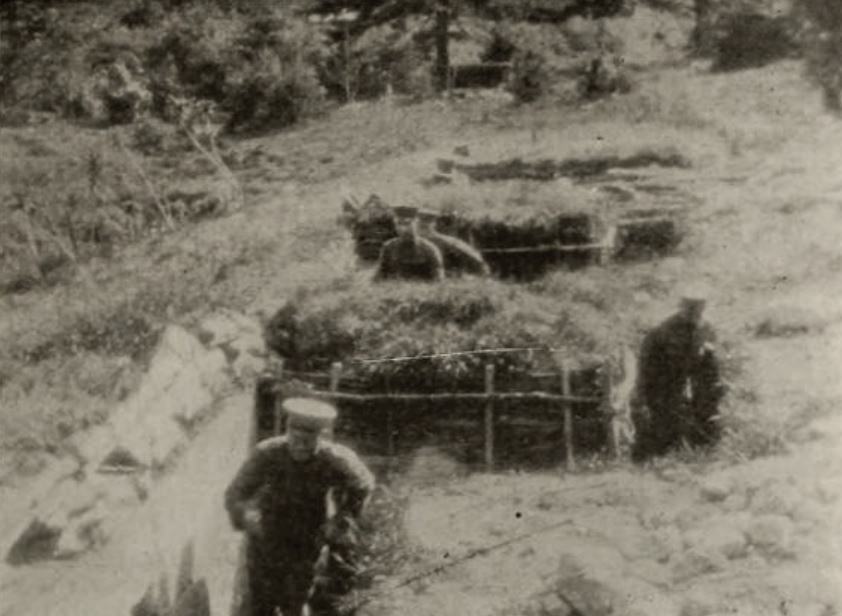
As an early documentary, America Preparing would have been constrained by the technological limitations of its time. Cameras were bulky, film stock expensive, and editing rudimentary compared to modern standards. Yet, within these constraints, the film likely employed innovative techniques to convey its message. One might expect a blend of actual footage – perhaps parades, military exercises, or industrial output – interwoven with staged scenes designed to illustrate threats or demonstrate preparedness. This hybrid approach was common in early non-fiction filmmaking, blurring the lines between pure documentation and constructed reality.
The absence of synchronized sound meant that the film relied entirely on visual storytelling, intertitles, and potentially, a live narrator or accompanying musical score. The intertitles, likely bold and declarative, would have carried much of the film's explicit message, guiding the audience's interpretation of the visuals. This reliance on text and imagery demanded a certain clarity and simplicity in its presentation, ensuring that its urgent message was not lost in complex visual metaphors. The film's effectiveness, therefore, lay in its ability to communicate directly, bypassing intellectual nuances in favor of unambiguous calls to action.
In comparison to travelogues like Mexico or nature documentaries such as American Game Trails, America Preparing eschewed the observational or exotic for the didactic and urgent. While other films explored foreign lands or celebrated natural beauty, this one turned its lens inward, examining the very fabric of American society and its potential for martial transformation. It was a utilitarian film, a tool rather than a spectacle, but its utility gave it a unique power that many contemporary narrative features lacked in terms of direct societal impact.
More than a century later, America Preparing serves as an invaluable historical artifact. It offers a tangible glimpse into the anxieties and aspirations of a nation on the brink of war. It reminds us of the profound influence of early cinema, not just as an entertainment medium, but as a powerful force for social and political engineering. The film’s existence underscores the fact that propaganda, in various guises, has always been a companion to conflict, evolving in sophistication alongside technological advancements.
For film historians, it provides crucial insights into the development of documentary filmmaking, showcasing the early attempts to utilize the medium for persuasive, non-fictional purposes. For social historians, it is a window into the mechanisms by which public opinion was molded during a critical period of American history. It highlights the delicate balance between national interest and individual liberties, and the ways in which mass media can be employed to sway that balance.
The lessons of America Preparing resonate even today. In an age of ubiquitous digital media and information warfare, understanding the origins of cinematic persuasion becomes ever more critical. The film, in its earnest, almost naive directness, reveals the fundamental principles of propaganda: identify a threat, propose a solution, and galvanize the populace. While the aesthetics and techniques have evolved dramatically since 1916, the underlying psychology remains strikingly similar.
This film, therefore, is not merely a relic of a bygone era; it is a timeless case study in the power of visual communication to shape perceptions, mobilize populations, and ultimately, influence the course of history. Its unvarnished message, delivered with the urgency of a nation facing an uncertain future, continues to provoke thought about the responsibilities of media and the enduring vulnerability of public discourse to intentional manipulation.
To conclude, America Preparing is far more than a simple documentary; it is a historical document etched in celluloid, a powerful artifact from a pivotal moment in global history. Its very existence speaks volumes about the burgeoning influence of cinema and the desperate need of nations to control narratives during wartime. It might not possess the narrative complexity of a feature film like The Ring and the Man, nor the dramatic tension of In the Hour of Temptation, but its impact, in its own sphere, was arguably far greater. It was a direct address to the American people, a visual argument for a future that, by the time of its release, was rapidly becoming inevitable.
Its historical significance is undeniable, offering invaluable insights into the pre-WWI American psyche and the rudimentary yet effective techniques of early cinematic propaganda. It stands as a stark reminder of how quickly public opinion can be swayed, how readily a nation can be prepared for conflict, and how profoundly a relatively new medium like film could contribute to such a monumental shift. As we reflect on its legacy, America Preparing remains a compelling, if unsettling, testament to the enduring power of images to shape our world, then and now.
IMDb 5.8
1927
Community
Log in to comment.