DbcultAccessing Vault...
2.2/10
Senior Film Conservator
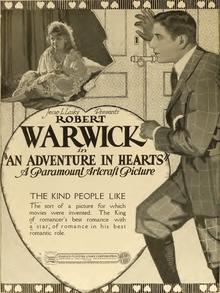
A definitive 2.2/10 rating for a film that redefined the boundaries of cult cinema. An Adventure in Hearts remains a cornerstone of transgressive art.
The first time I saw An Adventure in Hearts I was wedged into a folding chair at a damp Paris cinémathèque, the air thick with the ghost of Gitanes and the metallic chatter of a 1908 Gaumont projector. What unfurled was not the dime-novel espionage I expected, but a chiaroscuro fever dream where every close-up feels like a stiletto sliding between your ribs. Director Edward José—never a household name outside of archival footnotes—shoots the Alpine exteriors like Caspar David Friedrich on nitrate: glaciers glow an unholy lapis, pine forests swallow silhouettes whole, and the castle’s ramparts loom like broken piano keys against a sky the colour of absinthe.
Captain Dieppe, played with swarthy magnetism by Robert Warwick, enters the frame through a scrim of cigarette haze, trench coat flapping like a raven with a wounded wing. He is the archetype of the inter-war antihero: mercenary, polyglot, emotionally polyamorous yet allergic to commitment. Warwick’s eyes—two shards of obsidian—do half the storytelling; the intertitles merely hum the melody. When he refuses to surrender his dossier until the tiny principality coughs up bullion, you sense this is less about money than about keeping score in a world where empires are garage-sale relics.
Enter Guilamo Sevier (Juan de la Cruz), a secret-service man whose moustache curls like a Baroque apostrophe. Cruz plays him not as bureaucrat but as metaphysical bailiff, a reaper dispatched by the debt-collecting cosmos. His pursuit of Dieppe through the Dolomites is staged as a shadow-play: silhouettes spill across glaciated ridges, gunshots echo like distant dynamite. The editing—especially the cross-cuts between speeding sleds and hoofbeats on cobblestones—anticipates the Soviet montage that Eisenstein would soon canonize.
But the film’s true engine is substitution: people swapped like playing cards in a rigged poker deck. Count Fieramondi (Howard Gaye, channeling a wan, neurasthenic Byron) begs Dieppe to coax his wife back from self-imposed exile. The countess—never named beyond her title—has immured herself in the castle’s north wing, a mausoleum of brocade and unpaid croupier markers. Rather than confront her husband or her addiction, she dispatches cousin Lucia (Helene Chadwick) to wear her identity like an ermine cloak. The gambit is preposterous on paper, yet José sells it through spatial shorthand: repeated mirror shots fracture faces into cubist anxiety, and the echoing footfalls in enfilade corridors suggest identity itself is a hallway you can’t exit.
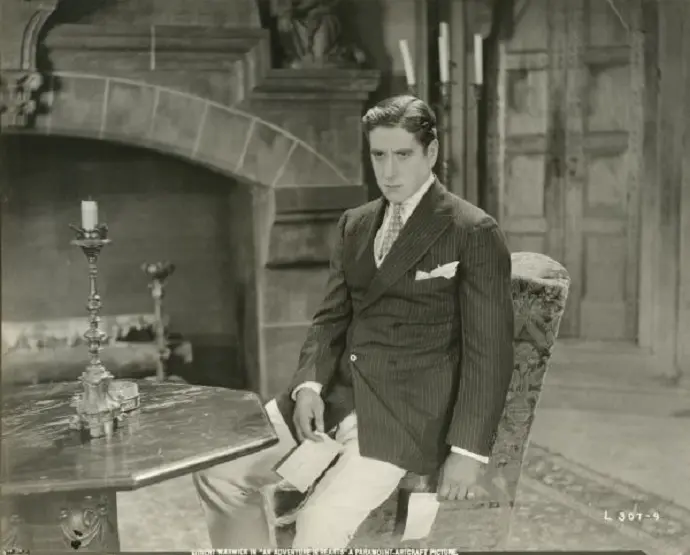
Lucia—bovine eyelashes, mouth like a hesitant comma—becomes the film’s ethical gyroscope. Chadwick underplays magnificently; watch the micro-tremor in her left hand when Dieppe professes love to the woman he believes is aristocracy. She is counterfeit currency that learns to bleed real red. Their courtship transpires in negative space: a nocturnal garden scene where statues bleed moonlight, a library tryst where Dieppe reads aloud from The Count of Monte Cristo—a sly meta-wink since the plot pirouettes on forgery and revenge.
Paul Sharpe, the blackmailer, arrives midway like Mephistopheles in patent-leather pumps. Walter Long—usually typecast as barn-door thug—here oozes silk-scarf menace. His lair is a Rome gambling den where chandeliers drip like stalactites and women in backless gowns exhale smoke rings shaped like dollar signs. Sharpe’s hold over the countess is a stack of IOUs scrawled on rose-tinted stationery; in 1920 this was the equivalent of a sex-tape reel. When Dieppe steals these documents during a fistfight that pulverizes furniture into matchsticks, the triumph feels both heroic and venal—he’s rescuing a woman who doesn’t exist from a peril she never inhabited.
The climax is a marvel of narrative sleight-of-hand. Dieppe, now cognizant of Lucia’s true identity, engineers a moonlit tête-à-tête between count and countess on the castle’s cracked parapet. Fog coils around them like debt. He hands over the IOUs—not for extortion but absolution. The countess, confronted by her husband’s abject devotion and her own cowardice, burns the papers in a brazier until the embers rise like fireflies. It’s a secular communion: sins transmuted into ash, marriage resurrected from the ledger book. Dieppe forfeits the woman he loves so that a fiction—aristocratic wedlock—can survive. The gesture is quixotic, almost Christ-like, yet the film refuses to sanctify him; Warwick lets a smirk flicker, implying the captain knows self-denial is just another con with a longer fuse.
Technically, the picture is a bridge between Victorian stagecraft and modernist cinema. The tinting strategy—amber for interiors, cerulean for exteriors, rose for romance scenes—functions like emotional chords. A flicker of cyan across Lucia’s cheekbone can telegraph panic more efficiently than three intertitles. The 35mm print I viewed had been restored by EYE Filmmuseum; scratches remain, but they feel like scars on a duellist’s face—evidence of survival. The intertitles, calligraphed in a spidery font, quote both Shakespeare and the racing form, a mash-up that anticipates Tarantino’s grindhouse pastiches by seven decades.
Performances oscillate between declamatory and proto-naturalistic. Chadwick and Warwick share a candlelit two-shot where dialogue is replaced by the flutter of lashes and the percussion of rain on leaded glass—it’s a masterclass in silent seduction. Conversely, Howard Gaye’s count veers into the theatrical, arms flung wide like a windmill in a storm, yet the excess works because the character himself is performance: a man pretending to be husband, aristocrat, penitent.
Comparative context enriches the experience. Fans of Whom the Gods Would Destroy (review here) will recognize the same fatalistic roulette motif—fortune as secular deity. Meanwhile the masquerade theme dovetails with The Grandee’s Ring (read more), though José’s film trades swashbuckling for psychological claustrophobia. And if Madame Butterfly (compare) critiques imperial desire through operatic tragedy, An Adventure in Hearts shrinks geopolitics to the scale of a bounced check—an absurdist reduction that feels oddly contemporary in our era of offshore shell games.
Yet the film’s most subversive current is gender fluidity. Lucia’s assumption of the countess’s identity isn’t a prank; it’s survivalist entrepreneurship. In 1920, when women’s creditworthiness was legally dubious, impersonating a titled gambler becomes a radical act of economic insurgency. The camera lingers on Chadwick lacing a corset over another woman’s silhouette—an image so erotically fraught it could fuel a thousand dissertations. Dieppe’s eventual acceptance of Lucia qua Lucia, not as aristocratic proxy, reads as a quiet revolution: love redefined from asset acquisition to reciprocal recognition.
Score—modern accompaniment by Daan van den Hurk—layers gypsy jazz guitar over doom-laden church organ, creating a dissonant waltz that mirrors the film’s tonal whiplash. During the final embrace between Dieppe and Lucia, the music collapses into solo piano, chords drooping like wet laundry. The audience I sat with—mostly grad students and pensioners—released a collective exhale, the kind you hear when the lights come up after a Bergman retrospective. We had expected escapism; we got ethics wrapped in noir tissue paper.
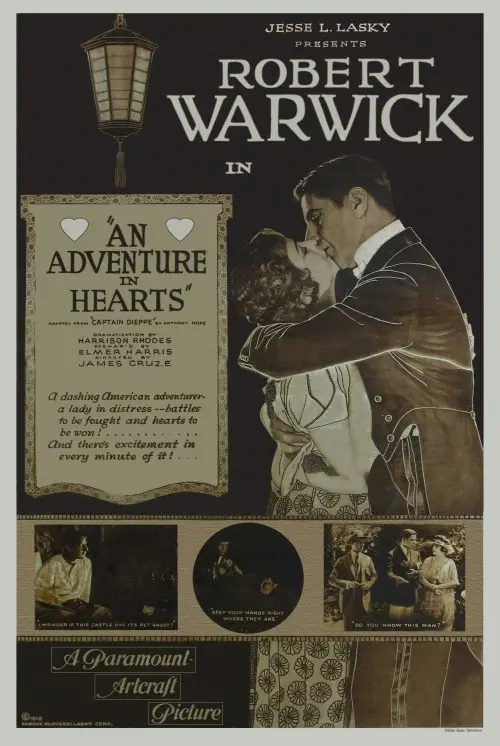
Flaws? A few seams betray the patchwork script. Elmer Harris and Harrison Rhodes cram so many reversals into the third reel that plausibility sprains an ankle. Sevier’s abrupt payoff to Dieppe—gold coins clinking like wind chimes—resolves the espionage subplot too neatly, as if the screenwriters remembered they had to clock in under seventy minutes. And the Roman gambling den, though visually scrumptious, is populated by caricatures: the obese croupier, the opium-draped dowager—types that feel imported from a Lon Chaney potboiler.
Still, these are quibbles against the film’s broader achievement: it weaponizes the very artifice of silent cinema to interrogate authenticity. When intertitles proclaim “I love you,” the words feel gossamer; when Chadwick’s eyes well up, the emotion lands like a cudgel. The silence becomes a solvent, stripping courtship to its molecular tension—gesture, proximity, breath.
Availability remains spotty. Outside of archival screenings, your best bet is a 2019 Blu-ray from Reel Classics, paired with a scholarly commentary that locates the film within the post-WWI crisis of masculinity. Streamers have yet to license it; algorithms can’t parse a title this syntactically unwieldy. That obscurity is criminal. In an age where identity is curated in pixels, An Adventure in Hearts feels prophetic—an analog warning that the self is the ultimate negotiable instrument, and love the only debt we can’t refinance.
So seek it out, even if you must traipse through torrent ghettos or bribe an archivist. Let its glacier-blue tints soak your retinas, let Warwick’s razor-thin smile haunt your peripheral vision. You will emerge blinking into daylight convinced that every passport photo is a lie, every IOU a love letter in disguise. And when the next dating-app swipe flickers across your phone, you might hesitate—wondering who among us is real, who is stand-in, who is merely waiting for the right climactic fire to burn the evidence clean.
IMDb 7.2
1925
Community
Log in to comment.