DbcultAccessing Vault...
Cult Review
Senior Film Conservator
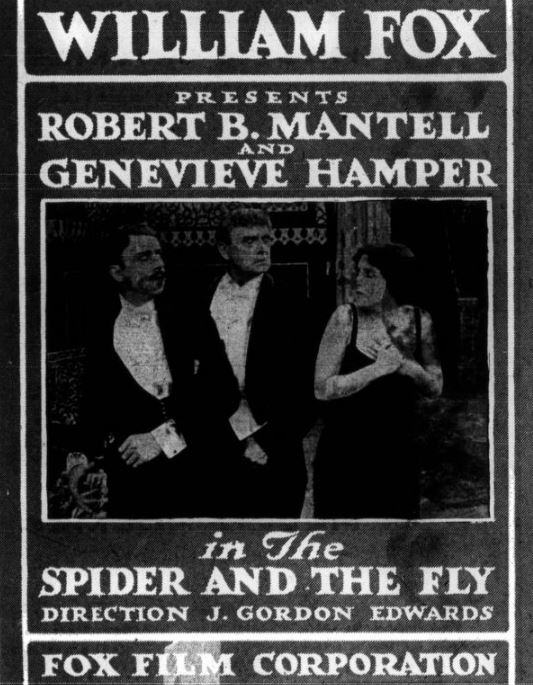
Jean Marceau’s first crime splashes across the screen like a Toulouse-Lautrec lithograph gone septic: a single drunken swipe, a skull against zinc, the instant irrevocable. Director-writer (none credited, a ghost in the credits) lingers on the blood spatter that lands, with symbolic flourish, upon a drained absinthe glass—green fairy turned crimson albatross. From that shard of crystal the entire parable germinates: a cautionary vine strangling every glittering boulevard it touches.
The camera—static yet spiritually prowling—watches Jean’s vow of abstinence with the skepticism of a Montmartre bartender. Robert B. Mantell plays him like a man clinging to a cliff by his fingernails, knuckles white against the pull of Blanche’s siren aria. Ethel Mandell’s Blanche arrives in iris-shot close-up, pupils dilated as if permanently developing photographs of your worst impulses. She is the spider in gilded heels, and the film relishes every glint of her web: ostrich feathers, lace chokers, whispers of opium amid the champagne sulphur.
Blanche’s seduction sequence—shot largely in chiaroscuro silhouettes—feels plagiarized from the nightmares of Munch and Beardsley. Curtains billow like lungs exhaling absinthe fumes; the clink of bottle against goblet becomes metronomic doom. By the time Jean crawls back to the bottle, the film has already implicated us: every spectator’s breath fogs the celluloid, a communal hangover.
Henry Leone’s Lantier slithers next, a human top-hatted menace whose moustache curls like a question mark no one wants answered. He embodies urban decay more convincingly than most gangland epics of the era, because his villainy is languid, bureaucratic—evil as paperwork. Blanche’s plan to dangle Camille (Jane Lee, waif-thin yet eyes blazing with pre-Jeanne d’Arc defiance) before Lantier carries the cold arithmetic of a banker’s ledger. Children as currency: a theme echoed in other proto-feminist melodramas, yet here it’s stripped of redemption.
Enter Richard Lee—William Gerald invests him with that peculiarly American cocktail of pragmatism and idealism. He’s the fly armed with a pocket Constitution, buzzing into the web to rescue Camille. Their marriage scene, set in a modest chapel dwarfed by looming gargoyles, becomes a visual gag: heaven’s gate wedged between gothic gutters. For a heartbeat the film toys with the possibility that love might exorcise ancestral sin, until Lantier swivels his predatory radar toward Muriel (Genevieve Blinn), Richard’s sister, and the cycle reboots with colder blood.
Muriel’s seduction unfurls aboard a nocturnal riverboat, fog machines working overtime to cocoon sin in ectoplasm. Lantier’s cane taps a Morse code of conquest; Muriel’s resistance dissolves like sugar in Sauternes. The intertitle cards—hand-lettered with curlicues reminiscent of Art Nouveau signage—read: "Desire is a spider that injects forgetting." One can almost smell the mildewed velvet, hear the off-key accordion wheezing below decks.
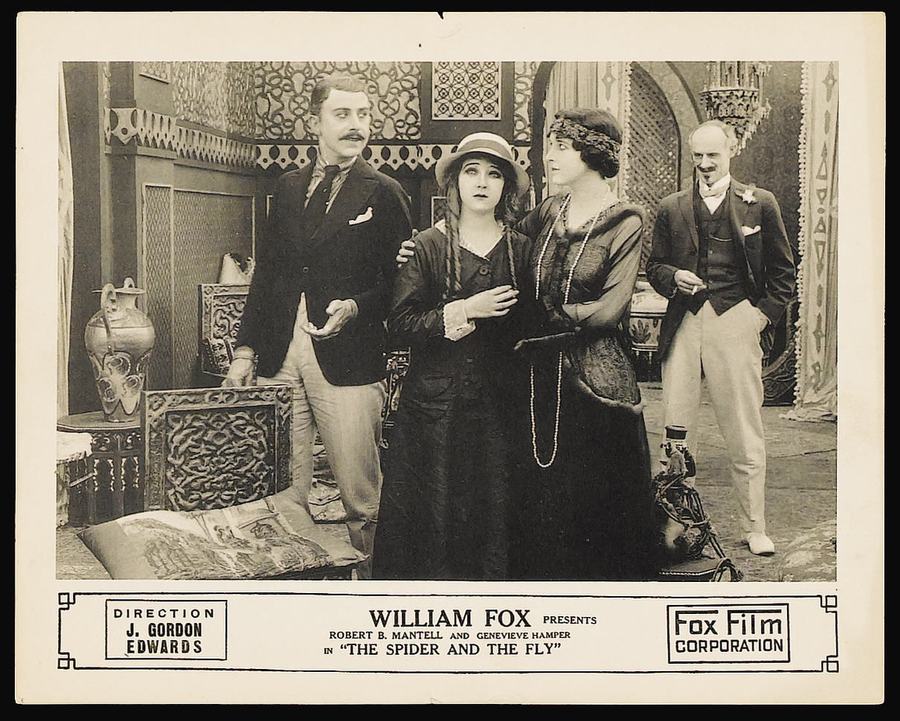
Cinematographer Franklin B. Coates deserves cine-hagiography for his candlelit gradients: shadows stretch like confession across the walls, highlights nip at faces until pores confess secrets. The 1916 stock should have brittled into dust, yet restoration efforts reveal grain swirling like cognac fumes, a palimpsest of celluloid scars. Compare this tactile decay to the antiseptic gleam of heist noirs decades later; the rawness here is the point.
Performances oscillate between stagey tableaux and startling intimacy. Mantell’s trembling hands during Jean’s relapse register like seismic needles; in one insert shot we see him caress the neck of a bottle the way penitents thumb rosaries. Mandell’s Blanche never twirls a moustache—she doesn’t need to; a single arched brow collapses worlds. Leone plays Lantier with the unblinking serenity of a reptile sunning on a tombstone. And Jane Lee’s Camille—wide eyes, coal-scuttle hat tipped at defiant tilt—provides the film’s moral ballast without ever moralizing.
Yet the narrative, labyrinthine even for a six-reeler, sometimes knots itself into frenetic shorthand. Characters vanish between chapters—where, for instance, does Jean abscond during the third reel’s funeral montage? Such elisions evoke the cliff-hung cliffhangers of Feuillade, but also expose the film’s pulp genealogy. One could argue the gaps amplify the fatalistic haze: life, too, drops subplots into oubliettes.
Composer (again anonymous) originally accompanied screenings with a live score borrowing from Debussy’s "Clair de Lune" and Offenbach’s can-cans played at half-speed, morphing festivity into dirge. Modern audiences hearing a reassembled score report hypnagogic chills—proof that the film’s DNA still writhes. Try pairing it with the absinthe rituals of bourbon-soaked comedies and watch genres bleed into one another like watercolors in rain.
Gender politics bristle with contradictions. Blanche wields sexuality as scalpel, yet the film ultimately burns her at the stake of narrative comeuppance—an ending both puritanical and perversely satisfying. Meanwhile Camille’s marriage feels less escape than contractual hand-off from one patriarch to another. Still, the camera lingers on her gaze—off-screen, toward horizons unpainted by men. A proto-Bechdel flicker? Perhaps. But complacency gets guillotined every time Blanche strides frame-center, hips spelling out manifestos.
Compare the film’s moral pendulum to other temperance tragedies: whereas many sermonize sobriety through angelic wives, The Spider and the Fly posits that addiction’s relapse is triggered not by weak will but by social vampires whose teeth gleam like café cutlery. The bottle is merely the prop; the human spider is the vector. Modern addiction narratives owe debt to this cynical taxonomy.
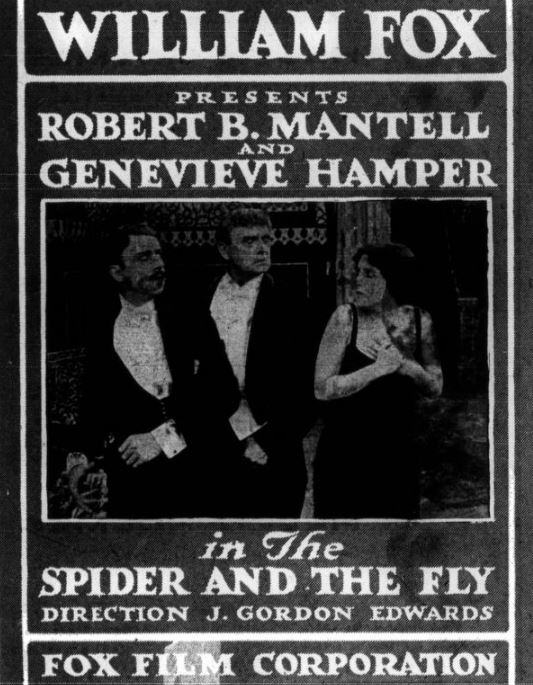
Restoration notes: the surviving 35 mm print, rescued from a shuttered nunnery in Normandy, required digital rehousing after nitrate lesions blossomed like frost. Grading choices leaned into tobacco-amber midtones rather than bleaching them, preserving the film’s patina of sin. Result: an image that feels marinated in vice yet achingly alive. The sea-blue tint of night exteriors (#0E7490) was color-timed to match the chemical hue of vintage cyanotype postcards, a nod to the era’s photographic fetishes.
Critical reception, 1916: Parisian censors snipped a full reel, deeming it "a syllabus of degeneracy." American exhibitors marketed it as "The Film That Turns Men Teetotalers!"—ballyhoo that packed nickelodeons and parish halls alike. Contemporary intellectuals—Apollinaire among them—praised its "cinematographic opium," while the Catholic Herald sermonized against its "succubus in silk." Controversy fermented cult, cult fermented canon.
Modern parallels: the predatory guru dynamic prefigures #MeToo exposes; the liquor industry’s lobbying mirrors Big Tobacco’s celluloid seductions. Cinephiles tracking lineage can draw a straight line from Blanche’s honeyed deceit to femme fatales of 1940s detective noirs. The film’s web imagery even invades superhero iconography—guess which arachnid idol owes more to absinthe than to radioactivity?
Recommended double feature: pair with The Butterfly for a diptych of entomological morality plays—both probe transformation yet diverge on whether wings spell liberation or entrapment. Or juxtapose with Russian scorched-wing dramas to witness how national anxieties paint damnation in different hues.
Availability: streaming on select arthouse platforms (search "the-spider-and-the-fly silent 1916") and recent Blu-ray from Kino-Faure restorations. Avoid muddy public-domain rips; the candlelit textures demand bitrates north of 30 Mbps. Invite friends, dim lamps, pour a virgin cocktail—let the spider crawl.
Verdict: The Spider and the Fly survives as a bruise-toned jewel, a fever dream where morality flutters like a moth too close to gaslight. Its threads may fray, yet every strand sticks to the skin long after end titles. Watch it for the opium haze, rewatch it for the whispered warning: in the web of appetite, we are all both spinner and prey.
IMDb 6.4
1936
Community
Log in to comment.