DbcultAccessing Vault...
6.2/10
Senior Film Conservator
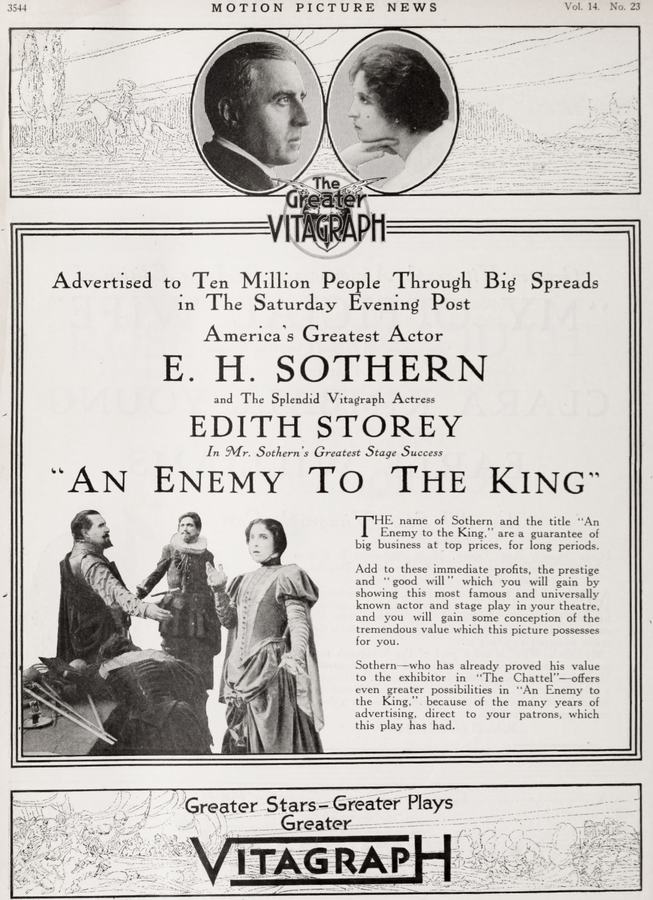
A definitive 6.2/10 rating for a film that redefined the boundaries of cult cinema. An Enemy to the King remains a cornerstone of transgressive art.
Stepping back into the annals of cinematic history, one encounters a gem like An Enemy to the King (1916), a silent film that, even a century later, retains a remarkable capacity to enthrall. This isn't merely a period piece; it's a vibrant tapestry of moral quandaries, burgeoning romance, and high-stakes political intrigue, all unfolding against the tumultuous backdrop of 17th-century France. The sheer audaciousness of its narrative, coupled with the compelling performances of its cast, renders it a noteworthy artifact of early filmmaking, a testament to the power of storytelling even without spoken dialogue.
At the heart of this historical drama lies Julie De Varion, portrayed with an arresting intensity by Edith Storey. Her world is abruptly upended when her elderly father, a man of profound compassion, finds himself unjustly imprisoned. His crime? Extending succor to fugitive Huguenots, a humanitarian act deemed treasonous by the reigning authorities. The opening scenes immediately plunge us into a maelstrom of desperation, as Julie, her heart heavy with anguish, confronts the stern face of officialdom. Her impassioned pleas for clemency, articulated through the expressive pantomime characteristic of the silent era, underscore a daughter's unwavering devotion. The authorities, however, are unmoved by her fervent declarations of her father's good intentions. Their refusal to release him, unless she undertakes a perilous mission, sets the stage for a narrative fraught with moral compromise and unforeseen consequences.
The proposition laid before Julie is nothing short of a devil's bargain: locate and deliver Ernanton De Launay, the elusive and formidable 'enemy of the king,' a figure who has successfully evaded capture for years, disappearing into the remote sylvan wilderness. This demand casts a long shadow over Julie's conscience. She understands, implicitly, that her father, a man of integrity, would recoil from such a method of liberation. Yet, the specter of his continued confinement, perhaps even worse, compels her to accept. It's a decision born of profound love, yet steeped in an ethical ambiguity that will define her journey. This initial dilemma resonates with the difficult choices faced by protagonists in other historical narratives, where personal loyalty clashes with the demands of the state, much like the intricate moral landscapes explored in When Fate Leads Trump, where characters are often forced into uncomfortable alliances by circumstances beyond their control.
Thus begins Julie’s treacherous expedition, accompanied by her faithful lady-in-waiting, Jeanette. Her strategy is audacious: to leverage her 'womanly beauty' as a snare, believing she can charm the formidable rebel into her custody. The narrative deftly navigates the inherent risks of this endeavor, highlighting the vulnerabilities of women traveling alone in a turbulent era. A pivotal scene unfolds at a rustic inn, a common trope in historical adventures, but here imbued with a fresh urgency. Julie finds herself accosted by a menacing figure, a clear indication that her mission has not gone unnoticed by shadowy forces. It is here that destiny intervenes, in the form of a mysterious stranger who gallantly comes to her rescue. This act of unexpected chivalry, rendered with the dramatic flair characteristic of silent film, immediately establishes a bond between them.
The stranger, portrayed by the formidable E.H. Sothern as Ernanton De Launay himself, offers Julie his protection for the remainder of her arduous journey. Julie, grateful and perhaps a touch beguiled, readily accepts. The irony is palpable and deliciously cinematic: the very man she is sworn to capture becomes her unwitting protector and guide. He, believing her intentions to be innocuous – merely a desire to meet the famed Ernanton De Launay – promises to lead her to him. This narrative conceit, where the hunter and hunted unknowingly travel together, creates a simmering tension that permeates every subsequent scene. It's a masterstroke of dramatic irony, reminiscent of the intricate deceptions and mistaken identities that often drive the plots of compelling thrillers. The subtle glances, the unspoken thoughts, the burgeoning mutual admiration – all are conveyed through the nuanced facial expressions and gestures that were the lingua franca of silent cinema.
Impulsivity, born of a desperate hope, leads Julie to a premature act. Convinced she has successfully located her target, she dispatches her servant back to the authorities, declaring her mission accomplished and demanding her father’s immediate release. This action, taken in haste, foreshadows the complex web of consequences that will soon ensnare her. Meanwhile, Ernanton’s own servant, a keen observer, detects the subtle signs of espionage surrounding them. He conveys his suspicions to his master, daring to cast aspersions upon Julie’s character. What follows is a moment of raw, unbridled passion and tragic misjudgment. Ernanton, utterly captivated by Julie’s perceived innocence and beauty, and now deeply in love, reacts with a swift, violent outburst, killing his loyal servant for daring to sully the image of the woman he adores. This scene, though shocking, powerfully illustrates the depth of Ernanton's burgeoning affection and his fiercely protective nature.
When Julie, shaken by the abrupt violence, questions Ernanton about his actions, he responds with brutal honesty, revealing his reasons. It is in this moment of stark truth that Julie’s world shatters. She comprehends the chasm between the noble, idealized woman Ernanton believes her to be and the deceptive agent she truly is. The realization that she has fallen so far below his estimation, that her subterfuge has been exposed, even if not fully understood by him, ignites a profound internal conflict. This isn't just about her father's freedom anymore; it's about her own honor, her self-worth, and the integrity of her womanhood. In a decisive act, she dispatches another servant, racing against time to intercept the first message and prevent it from reaching the officials. The narrative here pivots dramatically, showcasing Julie's evolution from a desperate daughter to a woman fiercely guarding her intrinsic value, even at immense personal cost. This struggle, where one's moral compass is recalibrated amidst a storm of external pressures, is a recurring motif in cinema, often explored with similar intensity in films like The Climbers, where characters wrestle with their ambitions versus their conscience.
The tension escalates as Julie returns to the city, Ernanton shadowing her, his heart now burdened by doubt. The earlier suspicions of his servant, once dismissed, now begin to coalesce into a painful truth. He is forced to confront the possibility that the woman he loves might indeed be the spy his loyal retainer had accused her of being. This internal torment, conveyed through Sothern’s masterful use of expressive gestures and anguished facial contortions, adds a profound layer of pathos to his character. Julie, meanwhile, gains admittance to the officials’ chamber, once again pleading for her father’s freedom. Her request, however, is met with an unyielding refusal; the condition for his release was the physical presentation of the 'enemy,' a task she has, by her own choice, failed to fulfill. In a moment of defiant integrity, Julie unequivocally states that she will not betray the man who has won her love, even if it means sacrificing her father's immediate liberty. This declaration is a powerful testament to her moral growth, a woman who has chosen love and honor over a transactional freedom.
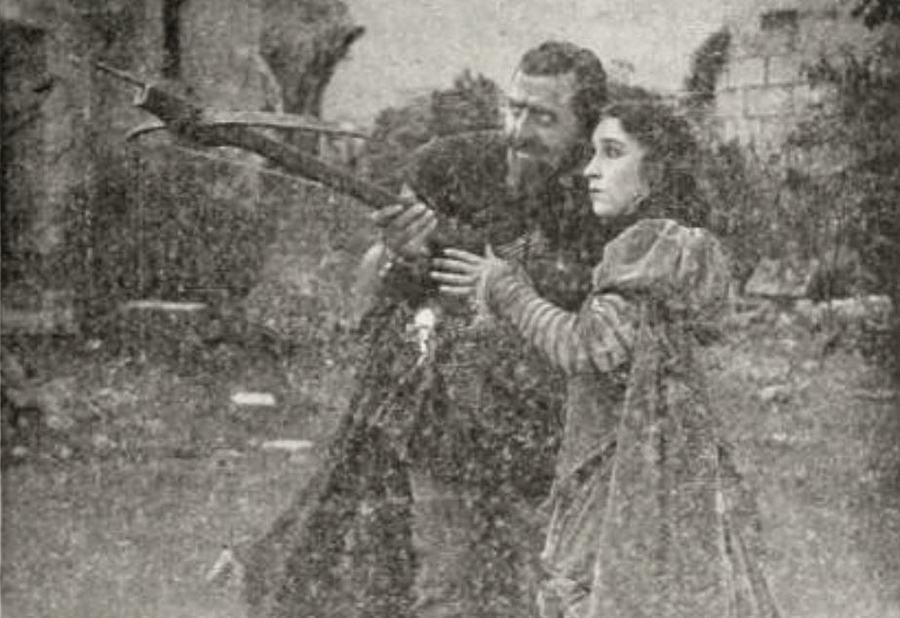
The dramatic climax arrives with breathtaking force. Ernanton, who has been lurking behind a curtain, a silent witness to Julie's unwavering loyalty, steps forward. In a gesture of supreme self-sacrifice, he reveals his identity to the stunned officials, declaring, “You see the enemy before you.” He demands her aged father’s release, offering himself as ransom. This heroic act, a grand romantic gesture that transcends political animosity, is the emotional zenith of the film. Julie’s reaction is one of profound distraction and inconsolable grief. The sudden, overwhelming turn of events, the realization of Ernanton’s sacrifice for her and her father, leaves her emotionally shattered. It’s a moment of devastating beauty, where love and duty intertwine with tragic grace, reminiscent of the powerful, self-sacrificing love depicted in Pesn torzhestvuyushchey lyubvi, where love conquers all, even the gravest of dangers.
Yet, the narrative still holds one final, triumphant twist. The tide of the ongoing conflict shifts decisively. The Huguenot forces, having achieved significant victories, sweep into the city, surrounding the palace. Their demand is clear and non-negotiable: the immediate release of their leader, Ernanton. The officials, caught between a rock and a hard place, are compelled to surrender. Thus, Ernanton is not only freed but emerges as a victor. In the aftermath of this political upheaval, he seeks out Julie. The film culminates in a tender, heartfelt declaration of love and a proposal of marriage, a powerful affirmation that their bond, forged in the crucible of deception, danger, and sacrifice, is destined to endure. It’s a resolution that feels earned, a testament to the enduring power of love to overcome adversity, even when that adversity is self-inflicted by well-meaning but misguided actions.
The strength of An Enemy to the King lies not only in its intricate plot but also in the compelling performances of its lead actors. E.H. Sothern, a titan of the stage who transitioned gracefully to the nascent film industry, imbues Ernanton De Launay with a captivating blend of nobility, passion, and vulnerability. His heroic persona is palpable, yet he allows glimpses of the man beneath the legend, particularly in his reactions to Julie's perceived betrayal and his ultimate sacrifice. His physicality and nuanced facial expressions convey a depth of emotion that transcends the limitations of silent cinema, making his character genuinely sympathetic despite his violent outbursts.
Edith Storey, as Julie De Varion, delivers an equally powerful performance. She navigates Julie's complex emotional arc with remarkable skill – from desperate daughter to calculating agent, from conflicted woman to an individual prioritizing her honor, and finally, to a woman overwhelmed by love and sacrifice. Her expressive eyes and gestures communicate the turmoil within, allowing the audience to empathize with her difficult choices and her journey of self-discovery. The chemistry between Sothern and Storey is undeniable, providing the emotional anchor for the entire narrative. Their unspoken romance, built on a foundation of both deception and genuine affection, is central to the film's enduring appeal. One can draw parallels to the powerful, often wordless emotional exchanges seen in other silent era dramas, where the sheer force of an actor's presence and their ability to convey internal states through externalized performance were paramount.
While specific directorial credits are sometimes obscured by the collaborative nature of early filmmaking, the overall craftsmanship of An Enemy to the King is commendable. The pacing, crucial for maintaining audience engagement in a silent film, is well-judged, allowing moments of quiet introspection to breathe amidst the thrilling action sequences. The use of intertitles is effective, providing necessary exposition without bogging down the visual storytelling. The production design, though perhaps not as lavish as later epics, effectively evokes the period, immersing the viewer in a world of political tension and aristocratic intrigue. The film also makes clever use of dramatic close-ups to emphasize key emotional beats, a technique that was still evolving at the time but is employed here with considerable skill.
Thematically, the film explores several profound ideas. The tension between personal honor and utilitarian outcomes is central to Julie's journey. Her initial willingness to betray for her father's freedom, followed by her refusal to sacrifice her integrity for the same goal, presents a compelling character arc. The concept of mistaken identity and the tragic consequences of misjudgment (Ernanton killing his servant) add layers of complexity. Furthermore, the film subtly touches upon the religious conflicts of the era, though it wisely prioritizes the human drama over detailed historical exposition. The love story itself, blooming under such adverse and deceptive circumstances, speaks to the idea that genuine connection can emerge from the most unlikely of encounters. It’s a narrative that, in its exploration of human fallibility and redemption, echoes the grand romantic sweep of a novel, meticulously translated to the burgeoning cinematic language.
In a landscape dotted with countless silent films, An Enemy to the King distinguishes itself through its robust storytelling and emotionally charged performances. It's a film that understands the power of a compelling plot, where every twist and turn serves to deepen the characters' dilemmas and heighten the stakes. The journey of Julie De Varion, from a desperate daughter to a woman of unwavering principle, and Ernanton De Launay's transformation from formidable rebel to self-sacrificing lover, forms the bedrock of a truly memorable cinematic experience. The film’s ability to weave together political machinations with a deeply personal love story, all while maintaining a consistent emotional intensity, is a testament to the skill of its creators. Its exploration of themes like loyalty, sacrifice, and the often-blurry lines between love and deception makes it a timeless narrative, capable of captivating audiences even today. For those interested in the evolution of romantic drama and historical adventure in cinema, this film offers a rich and rewarding viewing experience, standing proudly alongside other early narrative achievements in its genre.
One cannot help but admire how effectively An Enemy to the King manages to convey such a complex narrative without the benefit of sound. The reliance on visual storytelling, exaggerated expressions, and carefully crafted intertitles forces a particular kind of engagement from the viewer, one that invites deeper interpretation and emotional investment. It’s a fascinating contrast to the rapid-fire dialogue and intricate soundscapes of modern cinema, reminding us of the foundational artistry that shaped the medium. This film, with its potent mix of danger, romance, and moral struggle, truly exemplifies the capabilities of silent film to tell a grand, sweeping story, leaving an indelible mark on the viewer long after the final frame.
IMDb 5.7
1928
Community
Log in to comment.