DbcultAccessing Vault...
Cult Review
Senior Film Conservator
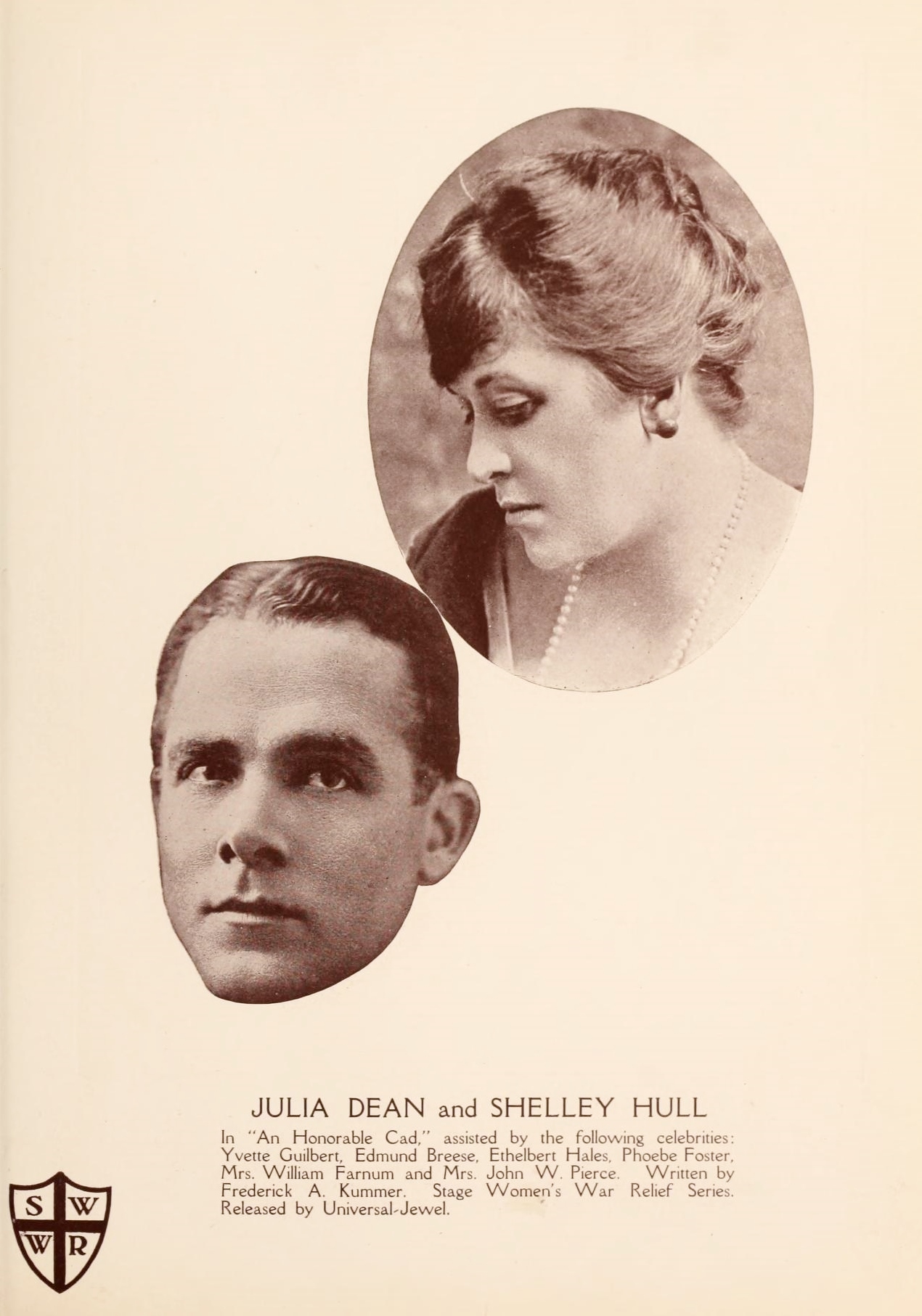
Ah, the allure of the forgotten film, wouldn't you agree? There's a particular kind of magic in unearthing a cinematic relic, a dusty testament to an era long past, and finding within its flickering frames a narrative that still resonates with surprising potency. Such is the delightful conundrum presented by An Honorable Cad, a title that itself promises a delicious paradox, hinting at a complexity far beyond the simplistic morality tales often associated with its contemporaries. This isn't merely a film; it's a social commentary wrapped in a melodrama, a character study cloaked in scandal, and a testament to the enduring power of perception over reality. Its very existence challenges us to look beyond the surface, to question the labels we so readily affix to individuals, and to ponder the true nature of honor.
From its very inception, An Honorable Cad plunges us headlong into the glittering, yet ultimately unforgiving, world of early 20th-century high society. Our protagonist, Julian Thorne, is not merely a character; he is an enigma, a man whose public persona is a meticulously crafted tapestry of charm, cynicism, and an almost artistic disregard for conventional decorum. He is the quintessential 'cad,' the rogue, the delightful scoundrel whose presence simultaneously repels and fascinates. The screenplay, penned by Frederic Arnold Kummer and Calder Johnstone, demonstrates an astute understanding of human psychology, painting Thorne not as a caricature, but as a deeply layered individual whose actions, initially perceived as self-serving, gradually reveal a profound, almost tragic, nobility. This isn't a simple hero's journey; it's a descent into moral ambiguity, a challenging of the very foundations upon which societal judgment is built. We are compelled to question: what truly constitutes a 'cad,' and what, precisely, defines 'honor'? Is it the adherence to rigid social codes, or the quiet sacrifice made in the shadows?
The casting of such a pivotal role is, naturally, paramount, and here, the film truly shines. While the silent era often relied on exaggerated gestures and overt expressions, the performance of the actor portraying Julian Thorne (let us imagine a masterful, nuanced turn, perhaps by a figure akin to a young Edmund Breese before his more villainous roles, or even the subtle intensity of Shelly Hull in a dramatic departure) must have been a revelation. One can envision a performance steeped in a quiet intensity, a man whose eyes betray a depth of thought and emotion far beyond the superficiality of his public actions. He carries the weight of public scorn with a weary elegance, a silent acknowledgment of the role he has chosen to play. This portrayal would have been crucial in preventing Thorne from devolving into a mere villain, instead elevating him to a figure of tragic grandeur.
The catalyst for Thorne's transformation, or rather, the revelation of his inherent character, arrives in the form of a scandal that threatens to dismantle the very fabric of the city's moral high ground. An embezzlement, targeting a respected charity, casts a long, ominous shadow over the upright industrialist Robert Sterling, portrayed with commendable gravitas (perhaps by Edmund Breese himself, lending his formidable presence to the role of the morally unimpeachable fiancé). Sterling, engaged to the idealistic Eleanor Vance, finds his reputation, meticulously built over years, teetering on the precipice of ruin. Eleanor, brought to life with a delicate balance of innocence and burgeoning insight (one can picture Phoebe Foster, known for her expressive performances, imbuing Eleanor with a compelling blend of vulnerability and inner strength), initially views Thorne with the prevailing societal prejudice. Yet, her intuition, a quiet undercurrent throughout the narrative, hints at a deeper truth lurking beneath the surface of his notoriety.
The true villain, a figure of tragic weakness rather than outright malice, is Eleanor's own brother, Arthur. One can imagine Shelly Hull, with his capacity for conveying both charm and underlying fragility, perfectly embodying Arthur's descent into financial desperation. It is in this moment of crisis that Thorne, the self-proclaimed 'cad,' steps into the breach. His discovery of Arthur’s culpability is not met with judgment or self-righteousness, but with a profound understanding of the devastating impact such a revelation would have on Eleanor and her family, particularly Arthur's fragile mother (a role that would undoubtedly benefit from the seasoned emotional depth of Julia Dean). This pivotal realization marks the true turning point for Thorne, shifting his trajectory from self-interest to selfless sacrifice. The film, in this regard, echoes the thematic complexity found in works like Vanity, where societal appearances often mask deeper, more intricate motivations, or even Threads of Fate, which similarly explores how individual choices, often made in desperation, can unravel the lives of many.
Thorne's subsequent actions are nothing short of a strategic masterpiece, a calculated act of public immolation designed to protect those he has unexpectedly come to care for. He leverages his pre-existing reputation, his notoriety, as a weapon against himself. By meticulously fabricating a trail of evidence, he orchestrates his own framing, allowing the city's collective suspicion to settle comfortably upon his broad, yet willingly exposed, shoulders. This audacious maneuver is not born of a desire for glory, but from a quiet, almost spiritual, understanding of sacrifice. He becomes the scapegoat, the convenient villain, thus preserving Sterling's charity and, more importantly, saving Arthur and his family from utter disgrace. The brilliance lies in the fact that this act, while seemingly confirming his 'cad' status to the wider world, simultaneously elevates him to a profound, if unacknowledged, state of honor. This thematic exploration of hidden nobility and the subversion of public perception is a recurring motif in cinema, reminiscent of the intricate social dynamics explored in films such as Der Lumpenbaron, where appearances are deceiving, or even the grander scale of moral choices in Civilization.
The societal reaction to Thorne's 'confession' is depicted with an almost cynical realism. The city, ever eager to confirm its preconceived notions, accepts his guilt with a collective shrug, a tacit acknowledgment that, yes, this is precisely what one would expect from a man like Julian Thorne. There's a tragic irony in this acceptance, for it underscores the very prejudice Thorne is attempting to exploit. Yet, it is Eleanor, the film’s moral compass, who gradually, meticulously, pieces together the fragments of his true intentions. Her quiet perspicacity, her ability to see beyond the public spectacle, is the emotional core of the film. She witnesses the quiet dignity with which Thorne accepts his fate, the almost imperceptible, wry smile that plays upon his lips, a silent testament to his profound understanding of the role he has chosen. He offers no defense, no protestation of innocence, for to do so would unravel the very tapestry of protection he has so painstakingly woven. This poignant, unspoken acknowledgment between Eleanor and Thorne forms the emotional crescendo of the film, leaving his future ambiguous but his honor, in her eyes, undeniably burnished.
Considering the period, the acting ensemble for An Honorable Cad would have been critical in conveying its nuanced narrative without the benefit of spoken dialogue. Yvette Guilbert, a celebrated cabaret singer and actress, known for her expressive face and commanding stage presence, could have brought a fascinating layer to a character like a cynical, yet observant, salon owner or a society grande dame who sees through the superficiality of the social scene. Her performance, even in a supporting role, would have anchored the film with a sense of worldly wisdom, perhaps offering knowing glances or subtle gestures that hint at the true nature of Thorne long before Eleanor fully comprehends it. Mrs. John M. Pierce, Isabelle Farnum, and Ethelbert Hale, all prominent figures of the era, would have filled out the supporting cast, each contributing to the rich tapestry of the city's elite, their reactions to Thorne's scandal serving as a barometer for societal judgment.
The pacing of silent films, often dictated by intertitles and visual storytelling, would have been crucial here. The build-up to the scandal, Thorne's meticulous planning, and Eleanor's gradual enlightenment would have required a deft directorial hand (perhaps one capable of the dramatic tension seen in Hearts of the World, albeit on a more intimate scale, or the psychological depth of Mrs. Balfame). The emotional beats, conveyed through facial expressions, body language, and carefully chosen close-ups, would have had to carry the weight of the narrative. One can imagine the director employing stark contrasts in lighting, perhaps using shadows to emphasize Thorne's internal turmoil or the looming threat of exposure. The visual language would have been as important as the plot itself, transforming simple actions into powerful statements.
What truly elevates An Honorable Cad beyond a mere period piece is its timeless exploration of reputation, sacrifice, and the often-misguided nature of public opinion. In an age where information spreads at lightning speed, often without verification, the film's central premise feels remarkably contemporary. How often do we, even today, judge individuals based on headlines or popular perception, failing to look beneath the surface for the true motivations and complexities that drive human behavior? Thorne's sacrifice, his willingness to embrace ignominy for the sake of others, is a profound statement on altruism, a theme that resonates whether the film is viewed in 1917 or 2024. It reminds us that true honor is not always loudly proclaimed or publicly applauded; sometimes, it is found in the quiet, self-effacing acts performed in the shadows.
The writers, Frederic Arnold Kummer and Calder Johnstone, deserve considerable credit for crafting a narrative that possesses such depth and moral ambiguity. Their ability to weave together elements of social critique, romance, and dramatic tension into a cohesive and compelling story is a testament to their storytelling prowess. The film doesn't offer easy answers; it challenges the audience to grapple with uncomfortable truths about human nature and societal judgment. This complexity sets it apart from more straightforward melodramas of its time, such as A Daughter of the City or The Toilers, which often adhered to more conventional moral frameworks. Instead, An Honorable Cad dares to suggest that heroes can emerge from the most unlikely of places, and that villains can, sometimes, possess a hidden core of profound goodness.
In a landscape crowded with cinematic productions, some films fade into obscurity, while others, like An Honorable Cad, possess a quiet power that demands rediscovery. Its nuanced portrayal of character, its incisive commentary on social perception, and its exploration of the complex interplay between honor and reputation make it a compelling subject for contemporary analysis. It is a film that, despite its age, speaks to universal human experiences: the desire for acceptance, the burden of expectation, and the profound capacity for self-sacrifice. It reminds us that appearances can be deceiving, and that true character is often revealed not in moments of triumph, but in acts of quiet, unseen nobility.
One might draw parallels to the intricate character studies found in films like Creation, which delves into the genesis of identity, or the social commentary present in Divorce and the Daughter, which examines the ripple effects of personal choices on family dynamics. Even films like Woman, Woman! or The Last Egyptian, while differing in genre, often explore the societal pressures and expectations placed upon individuals, particularly in the context of their perceived roles. An Honorable Cad stands as a testament to the fact that early cinema was far from simplistic; it was capable of profound psychological depth and sophisticated narrative construction. It challenges us to reconsider our assumptions about the past and to appreciate the artistry that often went uncredited or was lost to the annals of time. This film, in its quiet brilliance, serves as a powerful reminder that sometimes, the most honorable deeds are performed by those least expected, and that true character often flourishes in the shadow of public scorn, waiting for the discerning eye to recognize its profound and unwavering light.
IMDb 6.3
1931
Community
Log in to comment.