DbcultAccessing Vault...
4.9/10
Senior Film Conservator
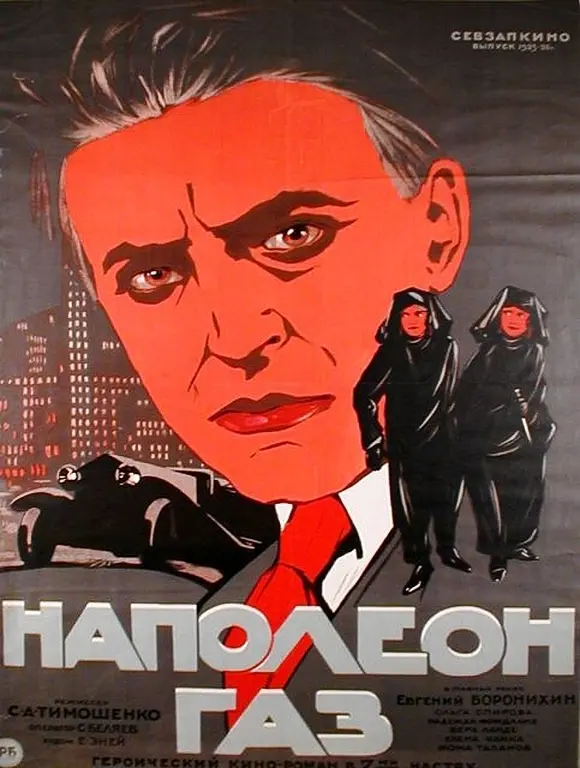
A definitive 4.9/10 rating for a film that redefined the boundaries of cult cinema. Napoleon-gaz remains a cornerstone of transgressive art.
In the tumultuous landscape of early Soviet cinema, where art was often a direct extension of political ideology, certain films emerge not just as historical artifacts but as potent, if sometimes blunt, instruments of persuasion. Semyon Timoshenko's Napoleon-gaz stands as a fascinating, and perhaps chillingly prescient, example of this phenomenon. Released during a period of intense international suspicion and internal consolidation for the young Soviet state, this film doesn't merely tell a story; it issues a stark warning, a rallying cry, and a vision of global class struggle rendered with an urgency that still resonates. It's a cinematic time capsule, reflecting the anxieties and aspirations of a nation striving to define itself against perceived external threats.
The narrative thrust of Napoleon-gaz is deceptively simple, yet its implications are profound. We are plunged into a world teetering on the brink of an unprecedented catastrophe, orchestrated by the capitalist West. The antagonist, in a sense, isn't a single individual but a system, embodied by American warplanes poised to unleash a devastating chemical weapon—the eponymous "Napoleon Gas." This deadly concoction, attributed to a Corsican chemist named Gannimer, is not merely a plot device; it's a symbolic manifestation of capitalist ingenuity perverted for destructive ends. The choice of Leningrad as the target is equally significant, representing the heart of the Bolshevik revolution, a city that would later endure unimaginable siege but, in this cinematic vision, faces an aerial assault of a different, more insidious kind. The film masterfully builds a sense of impending doom, painting a grim picture of technological prowess weaponized against a nascent socialist society.
What elevates Napoleon-gaz beyond a mere doomsday scenario is its profound belief in international worker solidarity. The film posits that the only bulwark against this imperialist aggression lies not in military might, but in the awakened consciousness of the global proletariat. American factory workers, depicted not as pawns but as active agents of change, become the unlikely heroes. Through clandestine channels, they manage to transmit vital intelligence to their Soviet comrades, alerting them to the impending chemical attack. This act of defiance, of fraternal warning across national and ideological divides, is the beating heart of the film. It's a powerful cinematic articulation of the Marxist principle: "Workers of the world, unite!" The tension isn't just about the gas itself, but about the race against time, the fragile network of communication, and the inherent trust placed in the revolutionary spirit of the working class. This narrative choice brilliantly subverts traditional espionage thrillers, replacing individual heroism with collective action as the ultimate savior.
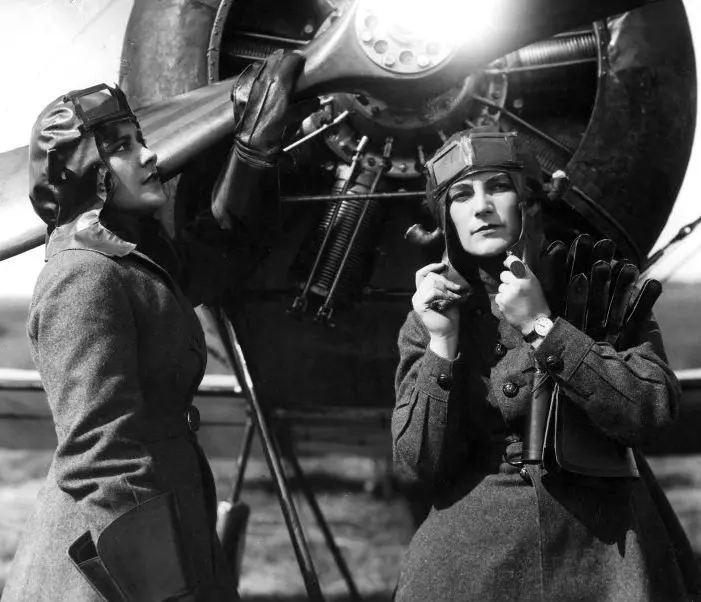
Timoshenko’s direction, characteristic of early Soviet filmmaking, employs a stark, almost journalistic realism, yet infused with a dramatic flair that ensures the political message never overshadows the narrative’s urgency. The portrayal of the American workers, for instance, avoids caricature, presenting them as individuals grappling with moral choices under the yoke of capitalist exploitation. Their decision to aid their Soviet brethren is depicted as an organic outgrowth of their class consciousness, a natural response to the inherent inhumanity of their own government's actions. This nuanced approach, while still serving a propagandistic aim, lends a surprising depth to these characters, making their actions feel genuinely heroic and deeply human. The film thus becomes a testament to the power of shared ideals over national allegiances, a vision of a world united by common struggle rather than divided by borders.
The ensemble cast, featuring names like Iona Talanov, Olga Spirova, Pyotr Kuznetsov, and Konstantin Gibshman, delivers performances that, while constrained by the conventions of silent cinema, are nonetheless impactful. Their expressions, gestures, and physical presence are crucial in conveying the film's emotional and political weight. Talanov, often cast in roles of authority or gravitas, likely brings a commanding presence to his character, whether it be a Soviet official or a key American worker. Spirova and Chaika, representing the female presence, would have contributed to the human element, perhaps embodying the vulnerability of the populace or the resilience of women in the face of adversity. Kuznetsov and Gibshman, alongside Pyotr Podvalnyy, Irina Volodko, Aleksei Goryushin, Roman Rubinshtein, Yakov Gudkin, S. Galich, Nadezhda Fridlyand, V. Lande, and P. Shidlovsky, collectively form the mosaic of characters—from the sinister orchestrators of the plot to the heroic workers—each contributing to the film’s grand tapestry of ideological conflict. The performances, though lacking spoken dialogue, would have relied heavily on exaggerated facial expressions and body language, typical of the era, to communicate complex emotions and allegiances, turning individual actors into archetypal representations of class and conviction.
The stylistic choices of Napoleon-gaz are deeply rooted in the nascent grammar of Soviet montage theory. Timoshenko, alongside his contemporaries, leveraged rapid cuts, juxtaposed images, and symbolic shots to create not just a narrative flow but also an emotional and intellectual impact. The film likely employs stark contrasts: the gleaming machinery of American industry versus the communal spirit of Soviet workers; the sterile, calculating faces of imperialist generals versus the earnest, determined visages of the proletariat. This visual rhetoric is crucial for a silent film aiming to convey complex political messages without the aid of dialogue. The pacing would have been dynamic, accelerating as the threat intensifies, mirroring the ticking clock of the impending aerial attack. This deliberate manipulation of cinematic time and space served to amplify the film's propagandistic goals, making the viewer a participant in the unfolding drama and an adherent to its ideological message.
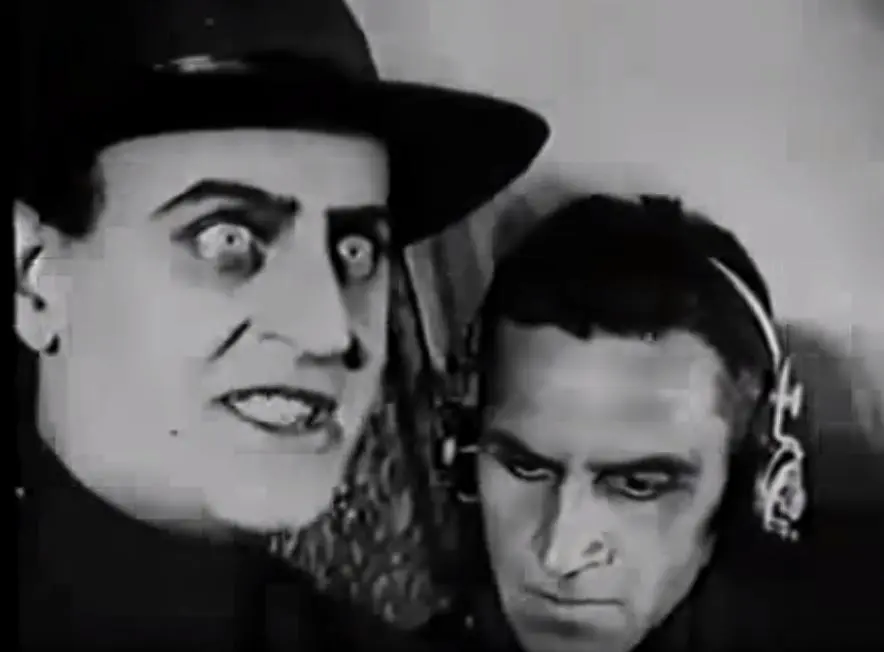
To fully appreciate Napoleon-gaz, one must situate it within its historical milieu. The early Soviet Union was a nation constantly on guard, wary of foreign intervention and capitalist encirclement. Films like this served as vital tools for internal cohesion and external messaging, articulating a clear vision of friend and foe. It's a striking contrast to contemporary Western productions like Phantom Fortunes or The Man in the Moonlight, which, while offering their own insights into societal anxieties, often focused on individualistic struggles, romance, or adventure. Where Western cinema might explore the personal quest of a hero, Napoleon-gaz champions the collective heroism of the working class. Even a film like The Divorcee (1919), dealing with societal shifts, approaches it from a deeply personal, rather than systemic, perspective. This ideological divergence is perhaps the most defining characteristic of Soviet cinema of this period.
The film's didactic nature, while undeniable, does not necessarily detract from its artistic merits. Indeed, its directness is part of its power. It’s not attempting subtlety; it’s attempting to galvanize. In this regard, it shares a certain kinship with other Soviet works of the era, such as Istoriya grazhdanskoy voyny (History of the Civil War), which, though a documentary, similarly aimed to solidify a particular historical narrative and inspire revolutionary fervor. Both films, despite their different forms, operate on the principle that cinema can be a potent force for shaping public consciousness and reinforcing state ideology. However, Napoleon-gaz distinguishes itself by weaving its message into a thrilling, albeit politically charged, fictional narrative, making it perhaps more accessible and emotionally resonant than a purely factual account.
Comparing it to a film like Sir Arne's Treasure, a Swedish film from a similar period, highlights the vast differences in national cinematic concerns. While Sjöström's film delved into folklore, morality, and individual fate with poetic beauty, Napoleon-gaz firmly anchored itself in geopolitical realities and class struggle. The contrast underscores the unique pressures and ambitions shaping early Soviet film production, where the individual narrative often served a larger, collective purpose. Even other Western genre films like The Western Musketeer or The Desert Sheik, though popular, were far removed from the urgent political messaging of Timoshenko's work, prioritizing escapism and romantic adventure over stark warnings about global conflict.
Semyon Timoshenko, as the writer of Napoleon-gaz, crafted a narrative that was both timely and timeless. The fear of chemical warfare, of a silent, invisible enemy delivered from the skies, was a very real post-World War I anxiety that the film expertly taps into. This element of prescience adds another layer to its historical significance. It foresaw a future where technology could be wielded for mass destruction, a theme that would unfortunately become all too real in subsequent conflicts. The film serves as a potent reminder of the destructive potential of unchecked militarism and the vital importance of international cooperation, even if that cooperation is framed through a specific ideological lens.
Ultimately, Napoleon-gaz is more than just a historical curiosity; it is a powerful piece of early cinematic propaganda that, despite its overt political messaging, achieves a gripping narrative intensity. It is a testament to the power of film to mobilize, to warn, and to inspire. Its legacy lies not just in its technical achievements or its place in Soviet film history, but in its audacious attempt to imagine and preempt a global catastrophe through the lens of class struggle and international solidarity. For anyone interested in the intersection of cinema, politics, and the anxieties of the early 20th century, Napoleon-gaz remains an essential, if sometimes unsettling, viewing experience. It forces us to confront not only the historical context in which it was made but also the enduring questions it raises about power, technology, and the collective responsibility to avert catastrophe. It stands as a vibrant, albeit ideologically charged, declaration of intent from a nascent cinematic power, a dark orange beacon (like the bold headlines of this very review) against the storm clouds of global conflict.
IMDb 6.3
1932
Community
Log in to comment.