DbcultAccessing Vault...
4.9/10
Senior Film Conservator
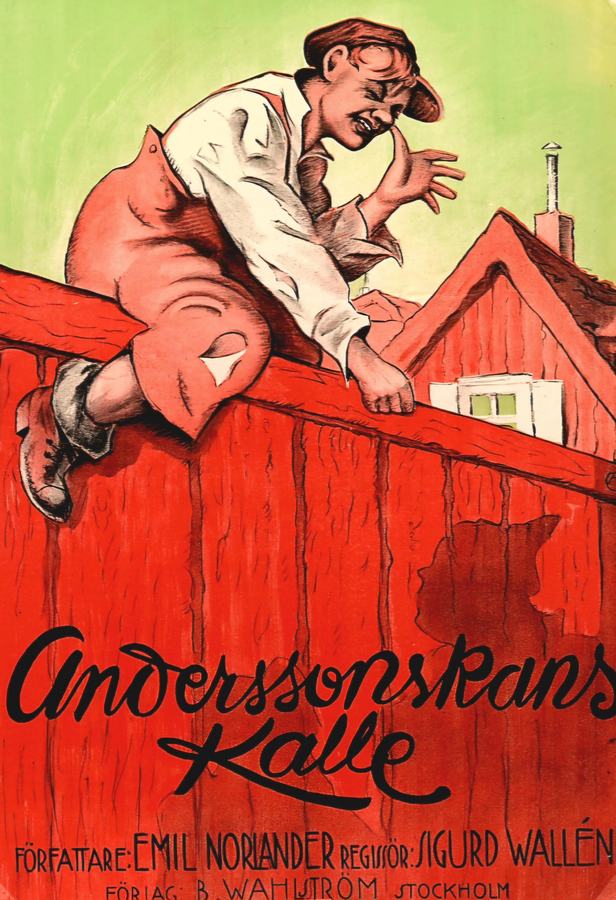
A definitive 4.9/10 rating for a film that redefined the boundaries of cult cinema. Anderssonskans Kalle remains a cornerstone of transgressive art.
There is a moment—quiet as frost forming—when Kalle, having super-glued the priest’s spectacles to the pulpit, watches the congregation titter and suddenly realizes power can be distilled from collective gasp. That micro-epiphany, flickering across Mathilda Caspér’s impish face, is the film’s true birth: anarchy discovering its own reflection.
Emil Norlander’s screenplay, adapted from his own penny-dreadful serials, refuses to flatten the boy into mere scamp. Instead he carves a lügenmarsch of escalating transgressions: swapping sugar cubes for laxative at the orphanage fundraiser, releasing a sackful of dormice during Lucia procession, forging love letters between the miserly baker and the suffragette schoolmarm. Each episode is staged in tableaux that recall The Heart of a Girl’s diorama melancholy yet buzz with the kinetic sting of a Tom & Jerry cartoon.
Director Gösta Alexandersson (who also plays the bumbling constable) shoots Stockholm’s slushy alleys through a distorting lens: façades bend like wet cardboard, gaslamps flare into solar eclipses, snowflakes resemble ash from an unseen inferno. The result is a Nordic Gothic suburbia, halfway between Dickensian soot and Bergmanesque spiritual frostbite. Cinematographer Helmer Larsson employs deep-focus monochrome so that background faces—gossiping matrons, a one-legged war veteran—become silent choruses commenting on Kalle’s morality play.

Maja Cassel’s Kalle is a livewire study in cognitive dissonance: eyes sparkling with Puckish glee one instant, then clouding like a fjord storm when he eavesdrops on his mother calling him "Guds vandöma misstag"—God’s misbegotten mistake. The transition is so fluid you can’t spot the seam. Compare this to Hollywood’s contemporaneous Bonnie May where child actors telegraph emotions like semaphore flags; Cassel internalizes torment until it leaks out as delinquent sunbeams.
Julia Cæsar, as the widowed mother drifting between laudanum haze and religious mania, provides the film’s tragic ballast. Listen to the tremor in her voice when she recounts the angel-visitation that stole her baby: it’s half Bibical ecstasy, half confession-booth whisper. She and Cassel share a wordless breakfast scene—porridge grows cold while they trade stares sharp enough to slice rye—that could teach modern Scandinavian directors volumes about restraint.
The adult ensemble operates in commedia dell’arte broad strokes: Carl-Gunnar Wingård’s constable swaggers like a rooster with a badge; Anna Diedrich’s schoolmarm clutches her ruler like a crusader’s sword. Yet each caricature is porous enough to let pathos seep in. Witness the constable’s solitary midnight vigil, oiling handcuffs he never uses, humming a lullaby to no one. It’s a blink-and-miss beat that retroactively colors every prior pratfall with existential blush.
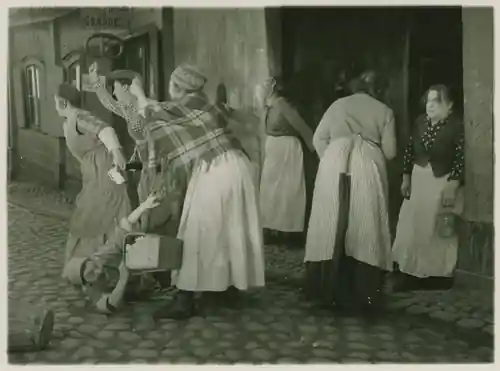
Though marketed as a talkie, large swaths unfold in sculpted silence, punctuated by diegetic noise: the pneumatic hiss of the tram brakes, the syncopated clack of clogs on cobblestones, the ominous click of Kalle’s slingshot being cocked. Composer Albin Lindahl’s score enters only when moral wounds gape widest—a solo cello motif that descends like a lullaby pitched into minor purgatory. The restraint feels radical beside the wall-to-wall orchestral syrup of Enchantment or Eva.
One audacious sequence follows Kalle through a Lutheran mass: we hear only the rustle of hymnals, the faint wheeze of an elderly cantor’s accordion lungs, and—when Kalle flicks a beetle into the organ pipes—a discordant wheeze that blooms into cacophonous hymn. The sacred desecrated by the profane, yet the audience is implicated via point-of-view shots: we become his accomplices, our popcorn suddenly tastes of communion wafer.
Post-war Swedish cinema often bifurcated childhood into angelic innocence (L’orpheline) or moral exemplar. Norlander refuses both. Kalle’s mischief is never justified by trauma shorthand; nor is he condemned as innately wicked. Instead the film suggests that cruelty and creativity are conjoined twins, birthed from the same womb of adult neglect. When he finally locks the sawmill doors and ignites the ghost-train ride—paper ghosts daubed with neighbors’ stolen linens—the conflagration is both spectacle and self-portrait: he literally burns the village’s false façades, exposing the rot beneath.

Yet the camera lingers on the aftermath: a scorched rag-doll arm, a singed cat trembling under debris. The film withholds catharsis; punishment is hinted, not administered. Compare this to the tidy moral closures of Counterfeit or The Coming of the Law where order is restored by final reel. Here, disorder merely mutates, like soot settling unseen into lungs.
Beneath the pranks runs a vein of class resentment. Kalle’s targets are invariably the bourgeois pillars: the baker who adulterates bread with sawdust, the banker who evicts widows for late rent, the priest who preifies poverty while dining on roast goose. The boy’s vandalism becomes primitive-class warfare, a juvenile Stockholm Spring. Meanwhile, female characters navigate suffocating corset of expectations. Aino Schärlund-Gille’s maid, mocked for reading Strindberg in secret, ultimately supplies Kalle with matches for his arson—her revolutionary spark passed through the hands of a child. It’s a proto-feminist footnote that feels revolutionary in 1950, predating second-wave feminism by two decades.
Yet Norlander complicates the gender ledger: Kalle’s sister resents playing second fiddle to male mischief and retaliates by feeding his precious kite to the stove. The act is framed not as sororal betrayal but as inevitable assertion within a patriarchal hierarchy that grants boys latitude and girls leftovers. The ember that glows on her cheeks mirrors the sawmill blaze—a private rebellion braided into the public spectacle.
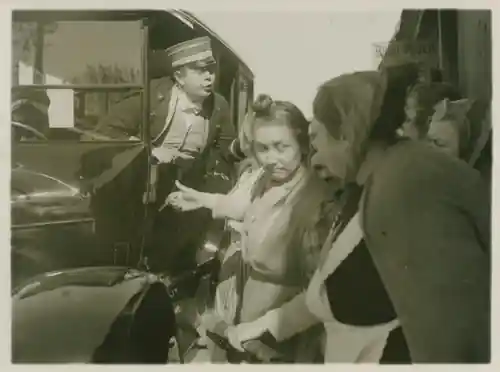
Modern viewers raised on Home Alone slapstick may flinch at the rawness here. Where Macaulay Culkin’s traps are cartoon Rube Goldberg machines, Kalle’s pranks draw blood—both literal (the sexton’s hand pierced by nail) and psychological (a girl publicly exposed as incontinent during class recital). The tonal midpoint lies closer to The Story of the Wolf’s feral solitude than to The Gay Lord Waring’s urbane froth.
Yet Anderssonskans Kalle predates the juvenile-delinquent cycle of the mid-’50s, making it a missing-link between Victorian cautionary tale and Rebel Without a Cause. Its DNA can be traced in Truffaut’s 400 Blows, in Sweden’s own My Life as a Dog, even in the chaotic sincerity of We Need to Talk About Kevin. But unlike those descendants, this film never succumbs to pop-psychology scaffolding; it presents the chaos, then dares you to interpret.
For decades the negative languished in Svensk Filmindustri’s basement, mislabeled as instructional hygiene short. A 2018 4K restoration by the Swedish Film Institute—funded partly by a Kickstarter campaign fronted by Nordic noir enthusiasts—reveals textures previously smothered: the glint of frost on Kalle’s eyelashes, the calico patch on the mother’s mourning dress, the chalk-dust galaxies swirling when the schoolmarm slams her ruler. The DTS surround track preserves the fragile silence, amplifying ambient subtleties like the hiss of a kerosene lamp being extinguished—an auditory metaphor for childhood hope snuffed.
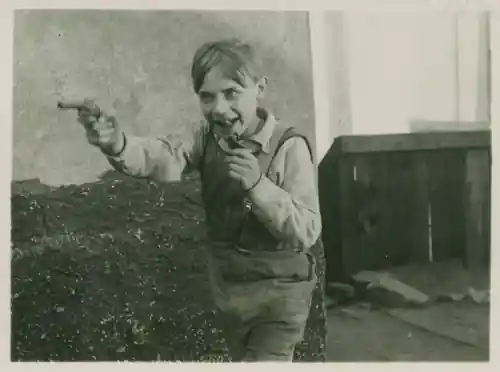
Streaming rights remain tangled:Criterion has expressed interest, but the estate of Norlander demands a percentage earmarked for children’s mental-health charities—an ironic footnote given the film’s own skepticism about adult benevolence. Meanwhile, boutique Blu-ray label Garden of Nordic Shadows released a region-free edition replete with a 60-page booklet containing Emil Norlander’s original serials, translated into English for the first time. The booklet’s textured cover—sandpaper-grit to mimic Kalle’s scraped knees—feels like a prank in itself.
Because childhood is not a Disneyfied storybook but a battlefield of competing mythologies—some sung as lullabies, others whispered as threats. Because every prank in this film is a love-letter returned unopened, every firecracker a substitute for affection. And because in an age where algorithms flatten nuance into binge-watchable paste, Anderssonskans Kalle dares to leave its morality scabbed, not scarred; it invites you to pick at the wound, to taste the iron under the tongue, to acknowledge the tiny criminal lurking inside every youngster who ever screamed "I wish you were dead!" and meant it for three whole seconds.
Watch it on a frozen night when the radiator clanks like distant tram wheels. Pour something strong—glögg spiked with vodka, perhaps—and let the film gnaw at your certainties. You may find yourself side-eyeing the neighborhood kids building snow forts, wondering whether those smiles conceal blueprints for social arson. And if, by chance, you spot a carrot-topped imp grinning beneath a streetlamp, doff your hat. He might be the ghost of Kalle, still auditioning for accomplices.
IMDb 5.7
1930
Community
Log in to comment.