DbcultAccessing Vault...
6.2/10
Senior Film Conservator
A definitive 6.2/10 rating for a film that redefined the boundaries of cult cinema. Mod lyset remains a cornerstone of transgressive art.
There are films that merely narrate a story, and then there are those that etch themselves onto the soul, challenging preconceived notions and illuminating the human condition with an almost spiritual intensity. Holger-Madsen’s 1919 Danish silent drama, Mod lyset (translated as Towards the Light), unequivocally belongs to the latter category. It is not just a film; it is a profound journey, a cinematic sermon on redemption, betrayal, and the transformative power of faith, all rendered with an artistry that belies its early 20th-century origins. To engage with Mod lyset today is to step into a time capsule, not merely to observe historical filmmaking techniques, but to wrestle with timeless dilemmas through the expressive visages of a bygone era.
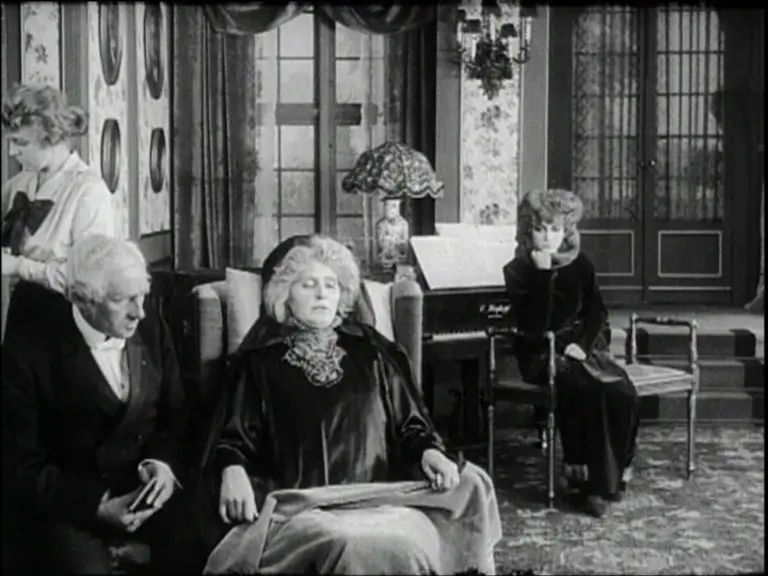
At its core, the narrative revolves around Ysabel, portrayed with a compelling blend of fragility and burgeoning strength by Astrid Holm. Ysabel begins her arc as a creature of comfort, perhaps even a touch spoiled, accustomed to the gilded cage of privilege. Her world, however, is dramatically upended when she makes what she believes to be a respectable match. The man she chooses, initially appearing as an embodiment of societal propriety, soon reveals a darker, more insidious nature, his public persona a mere façade for a life of criminality. This revelation, delivered with the stark, unvarnished emotionality characteristic of silent cinema, sends ripples of devastation through Ysabel's life, most acutely affecting her mother, whose fragile health succumbs to the shock and heartbreak. It is at her mother's deathbed, a scene imbued with palpable grief and solemnity, that Ysabel undergoes a profound spiritual reckoning, vowing to abandon her former existence and dedicate herself to evangelism. This isn't merely a plot point; it's the genesis of a spiritual odyssey, a radical renunciation of the material for the transcendent.
Holger-Madsen, a name synonymous with early Danish cinematic ambition, directs Mod lyset with an assured hand, demonstrating an acute understanding of visual storytelling. In an age where spoken dialogue was absent, every gesture, every facial contortion, every meticulously crafted set piece had to convey volumes. Astrid Holm, as Ysabel, delivers a performance that is nothing short of mesmerizing. Her transformation from an innocent, somewhat sheltered young woman to a woman scarred by betrayal yet fortified by spiritual resolve is depicted with remarkable nuance. One can trace the emotional arc solely through the subtle shifts in her posture, the intensity in her eyes, and the way she carries herself. This is acting that transcends the limitations of the medium, speaking directly to the viewer's empathy. Comparisons could be drawn to the raw emotionality found in films like Deti veka, where the intense struggles of the protagonist are similarly conveyed through powerful, non-verbal expression.
The supporting cast, including the formidable Augusta Blad as Ysabel's mother and Alf Blütecher as the deceptive husband, provides a robust framework for Holm's central performance. Blütecher’s portrayal of the charming yet morally bankrupt criminal is particularly chilling, a testament to the power of suggestion in silent film. He embodies the insidious nature of hidden vice, making his betrayal all the more impactful. The ensemble's collective ability to communicate complex emotions and motivations without a single uttered word is a stark reminder of the unique artistry inherent in this period of filmmaking.
Cinematically, Mod lyset is a feast for the eyes, showcasing the sophisticated visual language that Danish cinema was developing. Holger-Madsen employs a variety of techniques to enhance the narrative and thematic impact. The use of lighting, in particular, is masterful – contrasting the opulent, yet ultimately corrupt, world Ysabel initially inhabits with the stark, almost ascetic, environment of her spiritual awakening. Shadows and light are not just aesthetic choices; they are symbolic representations of moral clarity and obfuscation. The film's title itself, Towards the Light, is deeply embedded in its visual grammar.
Thematically, the film grapples with profound questions of morality, class, and the search for authentic meaning. Ysabel’s initial state of being, a product of her privileged upbringing, is subtly critiqued. Her marriage, ostensibly a step towards societal affirmation, becomes her undoing, exposing the hollowness of superficial respectability. This exploration of societal hypocrisy and the dangers of material obsession resonates even today. The film suggests that true light, true purpose, is found not in accumulating wealth or status, but in a spiritual journey, often catalyzed by profound suffering. This spiritual quest mirrors, in a more intense fashion, the internal struggles against societal pressures seen in films like A Girl of Yesterday, though Mod lyset pushes the protagonist into a much more radical transformation.
The choice of evangelism as Ysabel’s path to redemption is significant. It’s a complete rejection of her former life, a commitment to service and spiritual dissemination that stands in stark contrast to the self-serving criminality of her husband. This radical transformation is not presented as an easy escape, but as a hard-won peace, a path fraught with its own challenges but ultimately leading to an inner illumination. This journey of self-discovery through hardship and moral clarity sets it apart from more ambiguous narratives of the era, such as Sündige Liebe, which often explored the darker, more complex facets of human desire without necessarily offering a clear redemptive arc.
Danish silent cinema, often overshadowed by its German and American counterparts, produced a wealth of innovative and artistically significant works, and Mod lyset stands as a shining example. Holger-Madsen, along with directors like Benjamin Christensen and Carl Theodor Dreyer (who was active later in the silent era), pushed the boundaries of the medium, exploring psychological depth and spiritual themes with a boldness that was ahead of its time. The film’s intricate narrative, its compelling character development, and its sophisticated visual aesthetic contribute to its status as a vital piece of cinematic heritage.
The film’s pacing, while deliberate by modern standards, is perfectly attuned to the storytelling rhythms of its era. Each scene is allowed to breathe, allowing the audience to fully absorb the emotional weight and thematic implications. The intertitles, rather than merely advancing the plot, often serve as poetic commentaries, adding another layer of depth to the experience. This measured approach contrasts sharply with the often frenetic pacing of certain American serials of the time, such as The Crimson Stain Mystery, highlighting the distinct artistic priorities of different national cinemas.
Birger von Cotta-Schønberg, Alf Blütecher, Carl Schenstrøm, and the rest of the ensemble cast contribute significantly to the film's rich tapestry. Their performances, while adhering to the broader, more gestural style of silent acting, are imbued with a sincerity that makes their characters feel remarkably real. The nuanced reactions of Augusta Blad as the mother, for instance, are particularly heartbreaking, illustrating the devastating ripple effect of Ysabel's husband's treachery. The film manages to evoke a powerful sense of community and familial bonds, only to shatter them, making Ysabel's eventual spiritual journey feel all the more solitary and courageous.
What truly elevates Mod lyset beyond a mere historical curiosity is its enduring resonance. The themes of disillusionment, the search for meaning in a world rife with superficiality, and the profound journey of personal transformation are universal. Ysabel's story is a powerful reminder that even in the face of profound adversity and betrayal, the human spirit possesses an extraordinary capacity for renewal and self-discovery. Her decision to become an evangelist is not presented as a simplistic escape, but rather as a deliberate, arduous commitment to a higher purpose, a shedding of the old self to embrace a new, more authentic existence. This echoes the profound shifts in identity explored in films like The Heritage, but with a distinctly spiritual dimension.
The film serves as an important document of early 20th-century societal values and moral anxieties, yet it transcends its specific historical context to speak to contemporary audiences about the perennial human quest for truth and redemption. In an age saturated with cynicism, Ysabel’s unwavering commitment to her newfound faith, born out of the ashes of her shattered illusions, offers a compelling, if challenging, vision of hope. It's a film that asks us to look beyond the surface, to question what truly constitutes 'respectability,' and to consider the profound impact of our choices not just on ourselves, but on those around us.
In conclusion, Mod lyset is a cinematic gem that richly deserves rediscovery. It is a testament to the power of silent film to convey complex narratives and deep emotional truths with an elegance and intensity that remains captivating. Holger-Madsen, Astrid Holm, and the entire cast and crew crafted a work that is both a historical artifact and a timeless piece of art, inviting viewers to reflect on their own journeys towards the light. Its exploration of moral decay, personal tragedy, and ultimate spiritual triumph makes it a profoundly moving and thought-provoking experience, cementing its place as an essential watch for any serious student or admirer of early cinema.
IMDb —
1928
Community
Log in to comment.