DbcultAccessing Vault...
Cult Review
Senior Film Conservator
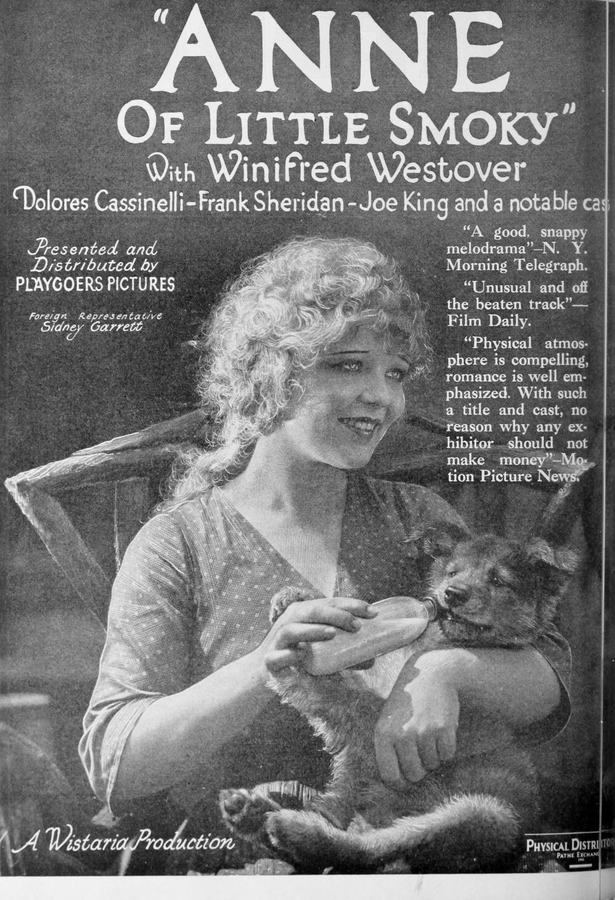
The first time I saw Anne of Little Smoky—a 35 mm print flecked like a peregrine’s breast—I understood why the mountains of Kentucky once carried the nickname “the bloody Appalachians.” Frank S. Beresford’s 1921 silent, long buried in the Library of Congress’s backlog, is less a pastoral idyll than a powder-keg with wildflowers growing out of the fuse. Every tableau feels soaked in turpentine: the moment federal proclamation turns ancestral hunting grounds into a “forest and game preserve,” the screen’s iris-in seems to tighten like a noose.
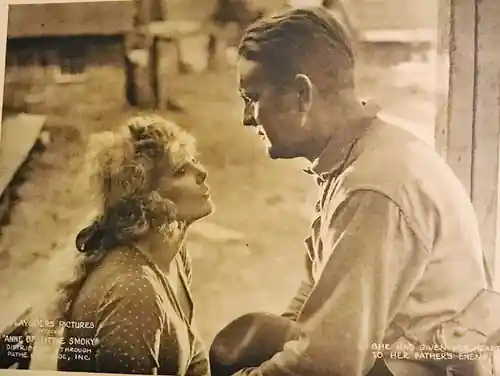
Ralph Faulkner, usually typecast as hawk-nosed villains, here embodies ranger Bob Hayne with the laconic eroticism of a man who sleeps with his Winchester loaded and his conscience half-cocked. Watch how he fingers the brim of his Stetson when Anne (Winifred Westover) strides from moonshadow, her calico skirt slapping against thigh-high fringed moccasins. The intertitle reads: “The law has one face—the wilderness has many.” That line, half Thoreau, half dime-novel, ricochets through the film like a mis-aimed slug.
What elevates Anne of Little Smoky above the raft of hillbilly melodramas cluttering the early ’20s—see The Tamer, the Wilder for contrast—is its refusal to paint morality in the black-and-white of mustache-twirling capitalists versus noble rustics. The Brocktons are no saints: they dynamite fish, bait bears with honeyed glass, and treat federal agents like trespassing raccoons. Yet cinematographer Edward Connor lenses their torch-lit stills with Caravaggio reverence, all umber shadows and molten amber, so you feel the visceral righteousness of their claim: this land was ours before your parchment maps.
Into this tinderbox saunters Gita, played by Dolores Cassinelli with the feral poise of a circus trapeze artist who knows every eye is a balancing pole. Her gold-coin necklaces chime whenever she moves, a sonic motif the intertitles translate as “the jingle of freedom.” When Anne spies Bob bandaging Gita’s panther-gashed shoulder, Westover’s glare could pickle timber; the jealous cutaway to Anne’s clenched fist rivals any Soviet montage for kinesthetic punch.
Mid-film, the narrative pivots to a clapboard courthouse where Bob, now armed with confiscated ledgers, seeks to indict patriarch Ed Brockton (Edward Roseman, whose brows resemble ravines carved by Manifest Destiny). The trial sequence—half screwball, half Brechtian agit-prop—features a chorus of moonshiners heckling from peanut gallery. Anne’s theft of the evidence, tucked beneath her corset, plays as a gendered inversion of the classical deus ex machina: instead of godly intervention, we get erotic sabotage.
Note Connor’s camera as Anne slinks through the jury room: he undercranks slightly so the oil-lamp flames flutter like moth wings, matching her pulse. The missing ledgers reappear later, sodden and illegible, floating down the Little Smoky River—a visual confession that written law dissolves in mountain water.
The film’s crescendo arrives when Ed, shot during a melee, is presumed dead; trackers loose their red-bone hounds after Bob. What follows is a fever-dream reversal of damsel tropes: Anne strips to her shimmy, dons Bob’s khaki shirt, and sprints across ridge-lines as lightning forks like divine retribution. The hounds, confused by the olfactory bait, split into polyphonic bays—an aural maze only silent cinema could imply so vividly.
During a deluge worthy of King Lear, Anne crashes into Bob’s cabin and discovers Ed alive, delirious, reciting psalms. The resurrection is absurd on paper, yet Westover sells it with a single tear sliding into the corner of her smile, a gesture that compresses relief, guilt, and erotic gratitude into one micro-expression.
Parallel runs Tom Brockton’s subplot—Harold Callahan channels battle fatigue with eerie restraint: palms that tremble when thunder mimics artillery, vacant stares into campfire. His rescue of Gita from a knife-wielding “renegade Indian” (Frank Hagney, face painted like a Kandinsky) skirts racial caricature, but Beresford complicates the scene: the assailant is revealed to be a dispossessed Cherokee guide paid by logging barons, hinting that colonial capitalism, not racial essence, breeds violence.
The double wedding finale—shot at golden hour along a sandstone bluff—avoids saccharine aftertaste because the camera keeps finding scars: Tom’s twitching eyelid, Gita’s wrist still bruised from shackles, Anne’s involuntary glance toward the forest as if legality might gallop back with more paper warrants. These fissures remind us that reconciliation is provisional, a fragile treaty under constant renegotiation.
Connor’s palette is technically grayscale, yet he conjures chromatic ghosts: lamplight pools evoke dark-orange whiskey; dawn mists suggest sea-blue gauze; the gilt embroidery on Gita’s bodice flashes like yellow hazard flares. This synesthetic trick primes modern viewers—conditioned by digital color grading—to sense hues that aren’t there, a sleight-of-hand that rivals Soviet silversmiths.
Faulkner’s Bob is laconic until passion ruptures the dam—watch his pupils dilate when Anne confesses evidence theft; the iris nearly eclipses the cornea, a proto-Close-Up that forecasts 1950s Method intimacy. Westover, meanwhile, weaponizes stillness; her final medium shot, staring past the camera toward an unpromised future, rivals Falconetti’s stoic grace. Cassinelli’s Gita oscillates between panther and prey, each swivel of her hip a silent rebuke to Hays Code morality that would soon corset such raw sensuality.
Archivists have unearthed no original cue sheets; I recommend pairing screenings with Colin Stetson’s bass saxophone drones—those guttural overtones echo hound bays—or Rhiannon Giddens’s claw-hammer banjo, whose pluck patterns mirror the film’s tension between folk authenticity and bureaucratic intrusion.
Unlike Die Geierwally’s Alpine misandry or urban hoofers pirouetting through Jazz Age scandals, Anne of Little Smoky roots its gender politics in terra firma, literally the soil under logging boots. Its DNA shares strands with post-war redemption tales, yet anticipates eco-noirs like Wind River by a century.
The 4K restoration by University of Kentucky’s Appalachian Film Archive premiered at the 2023 Boone Film Orphanage Festival; streaming rights remain tangled in estate limbo. Bootlegs circulate on rare-silent torrents, but a pristine DCP occasionally tours cinematheques—catch it if it alights within 500 miles; the gasoline amortizes against the visceral dividend.
As the curtain falls, the marriage procession crosses a footbridge; the camera tilts up to reveal clear-cut hillsides in the background—stumps like amputated limbs. It’s a parting wound, a reminder that every love story in America is footnoted by conquest. That Beresford sneaks this elegy into the final 12 seconds proves silents could roar truths our talkies still stutter over.
Verdict: A rediscovered hillbilly Wuthering Heights, blazing with sexual defiance and proto-environmental fury. Let its howl echo beyond the archive’s vault.
IMDb —
1927
Community
Log in to comment.