DbcultAccessing Vault...
6.5/10
Senior Film Conservator
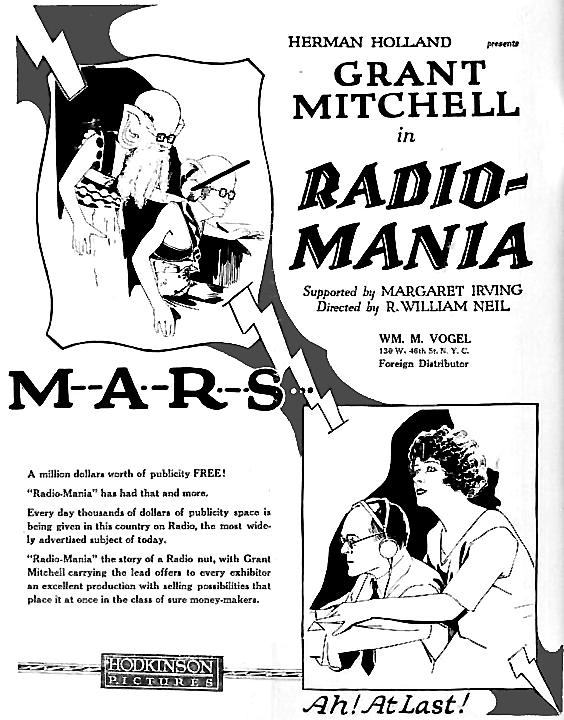
A definitive 6.5/10 rating for a film that redefined the boundaries of cult cinema. Radio-Mania remains a cornerstone of transgressive art.
In the pantheon of silent-era speculative fiction, few artifacts shimmer with as much idiosyncratic brilliance as Radio-Mania (1923). Emerging at a time when the very concept of television was a whispered impossibility among the scientific avant-garde, this film—also known by the evocative title The Man from Mars—functions as a bridge between the mechanical clatter of the Victorian age and the sleek, electronic future that lay just beyond the horizon. It is a work of startling ambition, utilizing the short-lived Teleview 3D process to immerse its audience in a dreamscape that feels both ancient and prophetic.
Grant Mitchell delivers a performance of twitchy, caffeinated sincerity as Arthur Wyman. Unlike the brooding, gothic scientists found in Alraune und der Golem, Mitchell’s Wyman is a characteristically American archetype: the optimistic tinkerer. He is surrounded by a cast that provides a grounded, almost domestic friction to his celestial aspirations. Margaret Irving and Gertrude Hillman offer performances that anchor the film’s more outlandish sequences, providing a necessary counterweight to the protagonist's obsession. The domestic drama, involving characters played by Alice Effinger and J. Burke, mirrors the social complexities often found in contemporary works like The Servant Question, yet here, the stakes are elevated from the parlor to the stars.
The screenplay, penned by Joseph Farnham and Lewis Allen Browne, exhibits a sophisticated understanding of the zeitgeist. In 1923, the 'radio craze' was sweeping the nation, a phenomenon that Radio-Mania weaponizes to explore deeper existential anxieties. The writers move beyond the simple mechanics of invention to ask what it means for humanity to no longer be alone in the universe. While the film lacks the gothic dread of The Circular Staircase, it compensates with a sense of wonder that is almost religious in its intensity.
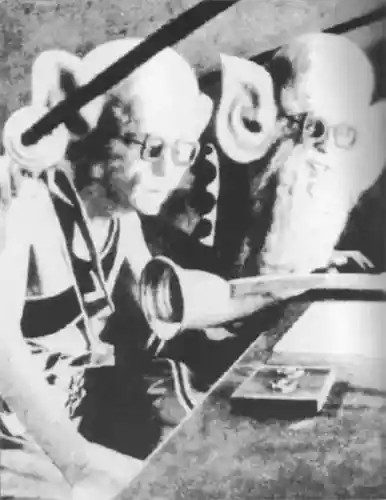
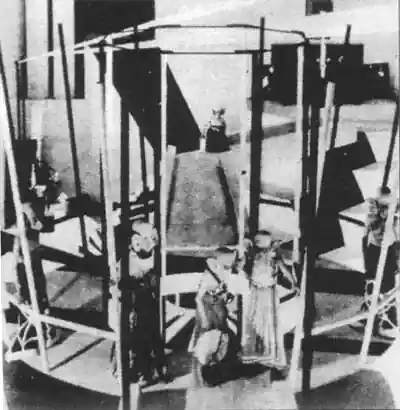
When Wyman finally establishes visual contact with Mars, the film shifts gears into a realm of pure aesthetic indulgence. The Martian city is a marvel of art deco influence and geometric abstraction, populated by beings that represent the pinnacle of evolutionary achievement. These sequences, featuring Peggy Smith and Peggy Williams, are not mere special effects showcases; they are philosophical inquiries into the nature of progress. The contrast between the cluttered, dusty reality of Wyman’s lab and the luminous, orderly world of Mars is stark. It reminds one of the dramatic shifts in social station explored in Sangre y arena, though translated here into a cosmic register.
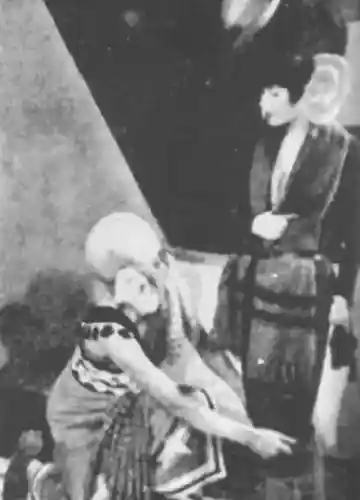
The inclusion of the Teleview process is more than a gimmick. By requiring the audience to view the film through a specialized shutter system, the production forced a physical engagement with the medium. This level of immersion was revolutionary, predating the 3D booms of the 1950s and 2000s by decades. It suggests a vision of cinema that is not merely passive, but participatory—a theme that resonates with the energetic protagonists of Molly Go Get 'Em or the relentless drive seen in A Lass of the Lumberlands.
One cannot discuss Radio-Mania without addressing its controversial framing device. The revelation that the Martian odyssey is a dream induced by Wyman’s exhaustion is often cited as a weakness by modern critics. However, when viewed through the lens of early 20th-century psychological theory, this choice becomes far more interesting. The dream is not a dismissal of the scientific premise, but an exploration of the subconscious desire for connection. It reflects a world reeling from the trauma of the Great War, seeking solace in the possibility of a more advanced, peaceful civilization. In this regard, it shares a thematic DNA with L'empreinte de la patrie, which also grappled with the scars of conflict through a stylized narrative lens.
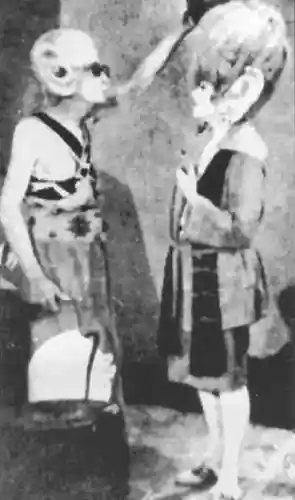
The pacing of the film, while occasionally languid in its middle act, builds to a crescendo that rivals the suspense of Seven Keys to Baldpate. Farnham’s title cards are particularly noteworthy; they are not merely expository but are imbued with a poetic sensibility that enhances the ethereal atmosphere. The film manages to balance the slapstick elements of Wyman’s domestic life—featuring the delightful W.H. Burton and Betty Borders—with the high-concept sci-fi of the Martian contact. This tonal dexterity is reminiscent of In and Out, where the shift between humor and pathos is handled with surprising grace.
Visually, the film is a masterclass in lighting and set design. The cinematography captures the shimmering quality of the vacuum tubes and the metallic sheen of the Martian robes with a clarity that is rare for 1923. The use of shadow in Wyman’s laboratory creates a sense of claustrophobia that makes the subsequent 'expansion' into the Martian landscape feel even more cathartic. This visual storytelling is as potent as the emotional core found in Gyermekszív or the stark realism of The Firing Line.
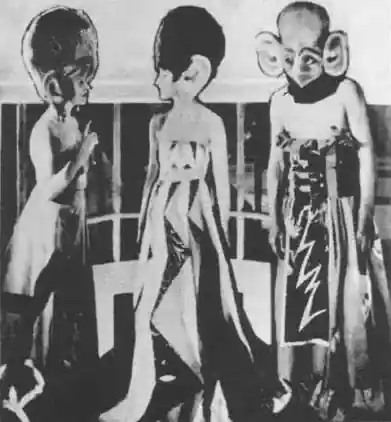
The supporting cast deserves further mention. Isabel Vernon brings a nuanced frustration to her role, representing the practical world that Wyman has all but abandoned. Her performance provides the necessary friction that keeps the film from floating away into pure abstraction. Similarly, the work of John D. Walsh and Peggy Smith adds layers of humanity to a story that could have easily become a cold technical exercise. They remind us that behind every great invention—and every great obsession—is a network of human relationships, a theme explored with equal fervor in The Staff of Life.
Ultimately, Radio-Mania is a film about the act of looking. It is about the human urge to peer through the telescope, the microscope, and the cinema lens to find something larger than ourselves. While its technology may seem archaic to a modern viewer, its spirit is remarkably contemporary. We still live in an age of 'radio-mania,' though our signals now travel through fiber optics and silicon rather than vacuum tubes and ether. The film’s exploration of the thin line between genius and madness, between reality and projection, remains as relevant as ever.
Even in its quieter moments, such as those featuring Angel Child-like innocence or the domestic struggles seen in Ann's Finish, Radio-Mania never loses sight of its central question: What do we do when we finally reach the other side? The struggle for existence, so poignantly captured in Küzdelem a Létért, is here transposed to a cosmic scale. It is a testament to the power of early cinema that a film from 1923 can still provoke such profound wonder. Radio-Mania is not just a relic; it is a transmission from the past that continues to resonate, a flickering beacon from a Martian dream that refuses to fade.
Rating: A Visionary 8.5/10
A must-watch for historians of the genre and those who appreciate the audacity of early cinematic pioneers.

IMDb —
1918
Community
Log in to comment.