DbcultAccessing Vault...
6.3/10
Senior Film Conservator
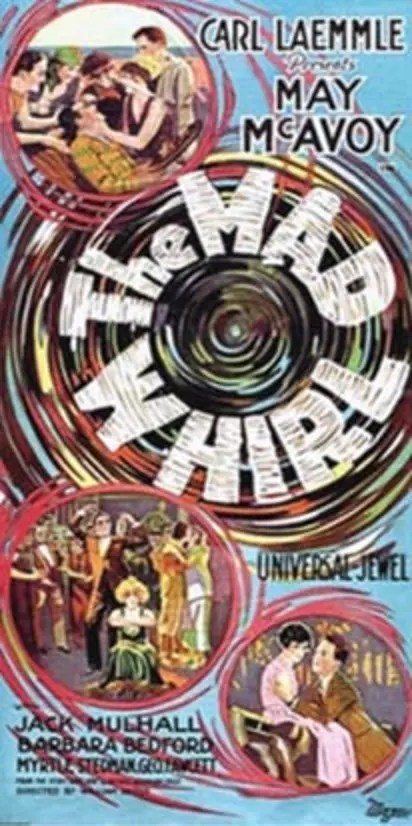
A definitive 6.3/10 rating for a film that redefined the boundaries of cult cinema. The Mad Whirl remains a cornerstone of transgressive art.
The Mad Whirl, a cinematic concoction from the silent era, presents a kaleidoscopic view of youthful abandon, filtered through the lens of 1920s America. This film, while not as widely recognized today, offers a fascinating glimpse into the societal norms and moral ambiguities of its time, much like its contemporaries One of the Finest and The Jail Bird.
The narrative pivots on the life of a teenager, played by Jack Mulhall, whose existence is a testament to the proclivity for permissiveness exhibited by his parents. This laissez-faire approach to parenting sets the stage for a tumultuous exploration of the protagonist's foray into the unfettered world of parties and hedonism. The film, co-written by luminaries such as Lewis Milestone, Harvey F. Thew, Frederic Hatton, Edward T. Lowe Jr., Richard Washburn Child, and Fanny Hatton, deftly navigates the thin line between liberation and debauchery.
As the protagonist becomes increasingly enmeshed in the fast life, the film provides a scathing critique of the excesses that defined the Roaring Twenties. Through its portrayal of raucous parties, ephemeral relationships, and the pursuit of momentary pleasures, The Mad Whirl poses profound questions about the sustainability of such a lifestyle and its impact on the human psyche. This thematic exploration is reminiscent of films like The Midnight Girl and The Delicious Little Devil, which also probe the complexities of youth culture during this period.
The cast, featuring Rolfe Sedan, George Fawcett, Ward Crane, Ellison Manners, Barbara Bedford, Joseph Singleton, Grady Sutton, William H. O'Brien, Alec B. Francis, Myrtle Stedman, Marie Astaire, Charles King, May McAvoy, Kasha Haroldi, and Betty Allen, brings to life the vibrant tapestry of characters that populate this cinematic universe. Each actor contributes to the rich texture of the narrative, imbuing their roles with a depth and nuance that underscores the film's thematic concerns.
In comparison to its contemporaries, such as The Volcano, Jack O'Clubs, and The U.P. Trail, The Mad Whirl distinguishes itself through its unflinching portrayal of youthful excess and the societal implications thereof. While films like Kino-pravda no. 7 and My Dog, Pal offer differing perspectives on the human condition, The Mad Whirl's focus on the travails of youth provides a poignant commentary on the universal themes of identity, morality, and the quest for meaning.
The direction, spearheaded by Lewis Milestone, is masterful, weaving together a narrative that is at once engaging, thought-provoking, and visually stunning. Milestone's expertise in capturing the essence of the era is complemented by the cinematic techniques that were innovative for its time, making The Mad Whirl a landmark film in the history of cinema.
In conclusion, The Mad Whirl is a compelling exploration of the human condition, set against the vibrant backdrop of the Roaring Twenties. Through its poignant portrayal of youthful excess and its thought-provoking themes, this film offers a cinematic experience that is both entertaining and enriching. As a testament to the enduring power of cinema, The Mad Whirl remains a relevant and engaging work, inviting audiences to reflect on the universal themes that underpin the human experience.
Films like Solen der dræbte, The New Adventures of J. Rufus Wallingford, Trapped in the Air, For Those We Love, The Stranglers of Paris, and Die Brillantenmieze, 2. Teil further illustrate the diverse cinematic landscape of the era, each offering unique perspectives on the human condition.
IMDb 5.9
1920
Community
Log in to comment.