DbcultAccessing Vault...
Cult Review
Senior Film Conservator
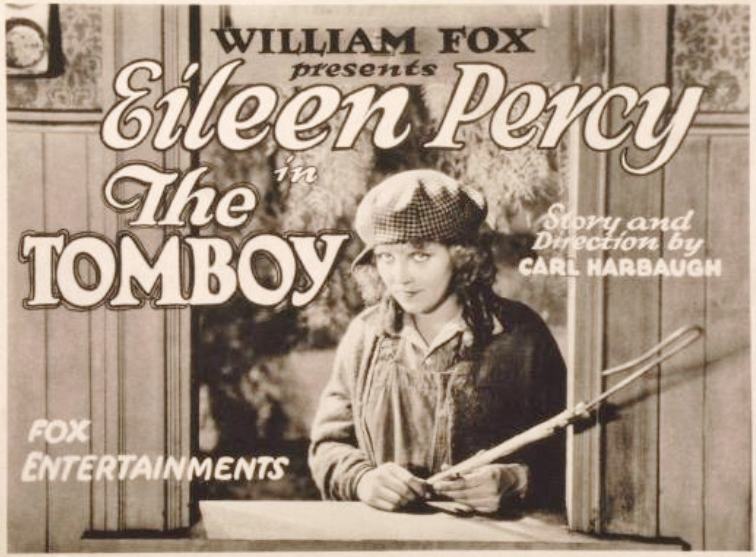
The Tomboy
1932 | Black & White | 68 Minutes
Starring James McElhern, Walter Wilkinson, Eileen Percy
In the shadow of a crumbling bridge model—both literal and metaphorical—The Tomboy emerges as a film that defies its era’s gendered expectations while embracing its noir-ish tenor. Minnie, the titular protagonist, is not merely a character but a cultural artifact: a girl who kicks a football with the vigor of a field general, yet is shackled by her father’s alcohol-fueled failures. The narrative hinges on a collision of personal and political—the destruction of the bridge model by her father, a man whose genius is drowned in self-loathing, and the bootleggers who exploit the town’s apathy. Harbaugh’s script, terse and taut, never indulges in sentimentality. Instead, it treats Minnie’s vow of vengeance not as a feminist rallying cry but as a pragmatic response to systemic rot.
James McElhern’s portrayal of the Stranger is a masterclass in understatement. His presence is a constant low-frequency hum, a reminder that justice in this world is not a moral crusade but a transaction of favors. When he aids Minnie in discrediting Pike’s scandal, his actions are less heroic than strategic—a contrast to the romanticized savior tropes in The Tenderfoot or Moon Madness. Meanwhile, Pike, played with slimy relish by Walter Wilkinson, embodies the banality of evil. His smear campaign against Minnie is not a grandiose power play but a bureaucratic annoyance, a detail that grounds the film in the mundane horrors of small-town corruption.
The film’s visual language is equally telling. The bridge model, repeatedly shown in close-up, is a recurring motif of fragility. Its destruction is not just a catalyst for Minnie’s quest but a metaphor for the collapse of patriarchal authority. Her father’s inability to protect his creation mirrors the town’s inability to resist the bootleggers. Yet, Minnie’s solution—becoming a sportswriter—is a stroke of narrative genius. By leveraging the male-dominated world of journalism, she weaponizes the very gender norms that once confined her. This inversion of roles is reminiscent of Her Better Self, though Harbaugh’s approach is less overtly radical.
The climax, set in a courtroom where truth is a commodity, feels less like a resolution and more like a negotiation. Pike’s redemption, though abrupt, is not a cop-out but a commentary on the cyclical nature of power. The film never suggests that corruption is eradicated, only that it is managed—a nuanced stance absent in the more idealistic His Father’s Son. The Stranger’s final exit, unceremonious and silent, underscores the film’s existential core: justice is not a destination but a series of transactions.
Technically, The Tomboy is a film of striking contradictions. The black-and-white cinematography emphasizes stark contrasts, particularly in scenes where Minnie’s white attire becomes a beacon against the murky backgrounds of corrupt offices. The score, minimal yet effective, uses a single piano motif to punctuate moments of tension. These choices elevate the film from a B-movie thriller to a meditative study of moral ambiguity.
For modern audiences, the film’s gender politics are a double-edged sword. Minnie’s defiance of femininity is refreshing, yet her reliance on a male ally—the Stranger—tempers the film’s subversive potential. This duality is not unique to The Tomboy; it echoes in The Joan of Arc of Loos, where female agency is often contingent on male validation. Nonetheless, Harbaugh’s script avoids the pitfalls of its contemporaries by focusing on Minnie’s internal logic over external validation. Her motivations are rooted in personal loss, not abstract morality.
Comparisons to other pre-Code films are inevitable. Like He Who Hesitates, The Tomboy uses crime as a narrative vehicle to explore character. Yet while He Who Hesitates leans into melodrama, Harbaugh’s film is a model of restraint. The absence of overt romantic subplots allows the central conflict to breathe, a choice that distinguishes it from the more formulaic Venus in the East.
In the pantheon of 1930s cinema, The Tomboy occupies a peculiar niche. It is neither a social drama in the mold of The Seven Sisters nor a pure crime thriller like Lyudi gibnut za metall. Instead, it bridges genres with a precision that feels ahead of its time. The film’s legacy lies in its ability to frame a woman’s journey within a narrative of systemic critique, a feat that resonates with contemporary discourse on gender and power.
In conclusion, The Tomboy is a film that rewards repeat viewing. Its surface simplicity belies a complex interplay of themes that remain relevant. For cinephiles, it is a window into the pre-Code era’s narrative experimentation; for feminists, a reminder of early cinema’s ambivalence toward female agency. And for historians, a document of how 1930s Hollywood grappled with the tension between individual morality and institutional corruption.
See also: His Father’s Son, The Joan of Arc of Loos.
IMDb —
1935
Community
Log in to comment.