DbcultAccessing Vault...
Cult Review
Senior Film Conservator
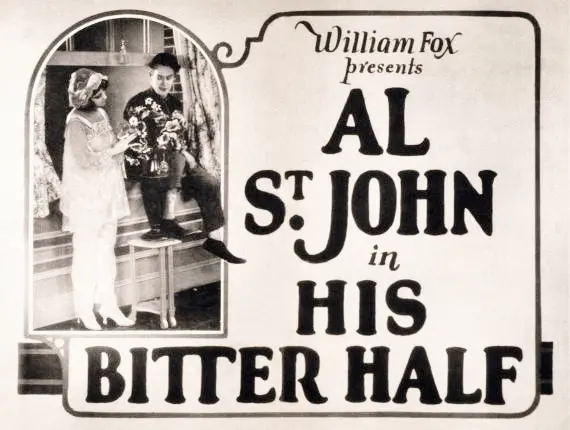
In the annals of silent cinema, where slapstick reigned supreme and character actors often carved out indelible niches with their unique personas, Al St. John stands as a particularly intriguing figure. While perhaps not as universally recognized as a Keaton or Chaplin, St. John possessed a distinctive comedic style that blended physical agility with a certain everyman charm, often tinged with a dash of the absurd. His 1929 offering, His Bitter Half, is a fascinating artifact from the twilight of the silent era, a film that, despite its brevity and seemingly straightforward plot, offers a surprisingly rich tapestry for analysis. It’s a testament to the ingenuity of early filmmakers who could conjure entire worlds and compelling conflicts from the simplest premises.
The film immediately establishes a profoundly surreal atmosphere, painting a vivid picture of a town so utterly devoid of vitality that its residents exist in a state of perpetual, upright slumber. This isn't merely a quaint detail; it's a foundational element of the film’s comedic and thematic landscape. Imagine a community where life itself has paused, where the very act of existing is a passive, almost comatose affair, only to be jolted into artificial animation by the unseen hand of the director. This meta-narrative layer, implying the inhabitants are mere puppets awaiting their cues, is an audacious stroke for a film of its time, hinting at a playful self-awareness that transcends simple farce. It elevates the setting beyond a mere backdrop, transforming it into a character in itself – a character defined by its profound inertia and peculiar susceptibility to external command. This bizarre premise sets the stage for a world where conventional logic is suspended, allowing for the kind of exaggerated reactions and improbable resolutions that define silent comedy.
Such an environment is ripe for disruption, and into this inert tableau steps Al, the film's protagonist, whose very presence promises to stir the stagnant waters. His claim to the local hotel, a beacon of potential activity in an otherwise dormant locale, becomes the central pivot around which the narrative, however slight, begins to revolve. The hotel, in this context, is more than just a building; it's a symbol of potential awakening, a place where commerce, interaction, and perhaps even genuine human activity might once again flourish. The contrast between the somnolent town and the hotel's inherent purpose creates an immediate dramatic tension, albeit one filtered through a comedic lens. It forces us to ponder the nature of agency in such a setting, and whether Al's quest for his inheritance is not just a personal struggle, but a symbolic battle against the pervasive lethargy that grips the entire community. This concept of a town in suspended animation bears a faint, spiritual kinship to the meticulously choreographed chaos of a Buster Keaton short like Cops, where the individual is often pitted against an overwhelming, almost inanimate, societal force, though Keaton's world is one of relentless motion rather than stasis.
Al St. John, in his dual role as writer and star, crafts a character that is both sympathetic and inherently comedic. His portrayal of Al is not that of a grand hero, but rather a resilient figure caught in circumstances beyond his immediate control, yet determined to reclaim what is rightfully his. St. John's comedic genius often lay in his ability to convey a sense of exasperation and determination simultaneously, a quality that endeared him to audiences. He was a master of the double-take, the exaggerated stumble, and the perfectly timed reaction shot, all essential tools in the silent comedian's arsenal. In His Bitter Half, he uses these skills to navigate a world that seems actively designed to thwart him, from the lethargic townspeople to the machinations of the unscrupulous lawyer.
His physical comedy, a hallmark of his career, is subtly deployed here, often in reaction to the bizarre inertia around him. Unlike the more acrobatic feats of a Keaton or the sentimental pantomime of a Chaplin, St. John’s humor often stemmed from a more grounded, almost bewildered response to absurdity. He was the everyman who found himself in extraordinary situations, and his reactions were often a mirror to the audience's own incredulity. This relatable quality made his characters accessible, even when the scenarios they faced were anything but. One can see echoes of this grounded, yet resilient, comedic spirit in other contemporary performances, perhaps a less frantic version of the chaotic energy seen in films like Love and Doughnuts, where St. John's presence likewise anchors the comedic proceedings with a sense of determined effort against overwhelming odds.
The antagonist of the piece, the 'dastardly hotel keeper,' is quickly joined by an even more insidious force: the 'rascally lawyer.' This character, a quintessential silent film villain, embodies the avarice and moral flexibility that often drove comedic conflict. His scheme—to extort a half-share of the hotel in exchange for his silence regarding some untold secret—is a classic trope of legal chicanery, yet it gains a particular potency within the film's peculiar setting. In a town where even the inhabitants are half-asleep, the lawyer represents an active, malevolent intelligence, a stark contrast to the passive resistance Al might otherwise face. His machinations introduce a genuine sense of threat, albeit one filtered through the exaggerated lens of silent comedy. The tension between the overt villainy of the lawyer and the understated comedic reactions of Al forms the backbone of the film's dramatic arc.
The lawyer's role is crucial in propelling the narrative forward, providing the active opposition that Al must overcome. Without his underhanded dealings, Al's journey would lack the necessary obstacles to make his eventual triumph meaningful. The secrecy surrounding the lawyer's leverage adds an element of intrigue, allowing the audience to speculate about the nature of the information he holds. This ambiguity is a clever narrative device, enabling the plot to hinge on an unrevealed detail, thereby keeping the focus squarely on the characters' reactions and Al's resourcefulness. This kind of plot, driven by hidden secrets and legal wrangling, while comedic here, draws from a wellspring of dramatic narratives common in the era, where issues of inheritance and justice were frequently explored, as seen in more serious fare like By Divine Right or The Faithful Heart, albeit without the comedic flourishes.
The plot synopsis tantalizingly concludes with the phrase, "in some untold way the rightful heir comes into his own." This deliberate vagueness is not a flaw, but rather an invitation to appreciate the ingenuity of silent storytelling. Often, the means by which justice was served or a resolution achieved in these films was less about intricate logical plotting and more about a sudden, often improbable, turn of events, a deus ex machina that served the comedic purpose. The triumph of the underdog, the unexpected twist of fate, or a moment of ingenious improvisation by the protagonist were common paths to victory. In Al's case, his reclaiming of his patrimony is less about a meticulously detailed legal battle and more about the symbolic victory of honesty and perseverance over deceit. The audience is left to imagine the precise comedic circumstances that lead to this outcome, a testament to the film's ability to engage the viewer's imagination even with minimal exposition.
This narrative economy, a characteristic of many short silent films, prioritizes effect over exhaustive explanation. The focus remains on the visual gags, the character reactions, and the overall comedic momentum. The 'untold way' becomes a canvas for St. John's physical comedy, allowing for a grand, satisfying conclusion where the villain is thwarted and the hero vindicated, often in a spectacularly humiliating fashion for the former. It reinforces the era's prevalent theme of moral clarity, where good ultimately triumphs over evil, even if the path to that triumph is paved with banana peels and pratfalls. The joy of these films lies not in their intricate plot twists but in the journey of watching the protagonist navigate and ultimately overcome the absurdities thrown their way, a sentiment echoed in the simple, yet effective, narratives of films like The Quitter or Golden Rule Kate, where character resolve is key.
Released in 1929, His Bitter Half arrived at a pivotal moment in cinematic history. The advent of synchronized sound was rapidly transforming the industry, rendering purely visual storytelling increasingly obsolete. Many silent film stars struggled to adapt to the demands of the talkies, their voices either unsuitable or their acting styles too broad for the new medium. Al St. John, like many of his contemporaries, would transition to sound films, often finding success in supporting roles in B-westerns, but the golden age of his particular brand of silent comedy was drawing to a close. This film, therefore, can be viewed as a poignant reminder of a fading art form, a final flourish of visual wit before the auditory revolution fully took hold.
The production values, typical of short comedies of the era, would have been modest, focusing on practical sets and clear comedic staging. The effectiveness of the film would have relied heavily on the performers' ability to convey emotion and humor through gesture, facial expression, and physical action. The pacing, likely brisk, would have been designed to keep the audience engaged through a rapid succession of gags and escalating predicaments. It’s a testament to the skill of St. John and his crew that they could still deliver compelling entertainment in a medium on the verge of radical transformation. Comparing it to international silent films of the era, such as Het geheim van het slot arco or Il Fauno, highlights the universal appeal of visual storytelling, even as national styles diverged. These films, regardless of origin, shared a common language of expression before the Tower of Babel of sound arrived.
While His Bitter Half might not be a widely known masterpiece, it offers invaluable insights into the enduring appeal of silent comedy and the specific talents of Al St. John. It's a delightful example of how a simple premise, when infused with imaginative absurdity and skillful performance, can create lasting entertainment. The film's unique setting—a town literally asleep at the wheel—provides a memorable backdrop for a classic tale of inheritance and comeuppance. It's a reminder that even in the most peculiar circumstances, the human (or cinematic) spirit finds a way to awaken, to fight for what's right, and to deliver a good laugh along the way.
For modern audiences, watching His Bitter Half is more than just a historical exercise; it’s an opportunity to connect with a different rhythm of storytelling, one that relied on universal gestures and visual wit rather than dialogue. It encourages a different kind of engagement, demanding that the viewer actively interpret and fill in the gaps, much like reading a novel. The film, in its quiet absurdity, speaks volumes about the creative freedom and experimental spirit that characterized the early days of cinema. It stands as a charming, if understated, testament to the enduring power of silent film to entertain, provoke thought, and remind us of the often-hilarious struggle for justice in a world that frequently seems intent on napping through it all.
The film's exploration of themes like greed, justice, and the resilience of the individual against an indifferent or actively hostile world, though presented comically, resonates even today. The idea of a 'rightful heir' fighting against a 'dastardly hotel keeper' and a 'rascally lawyer' is a timeless narrative, whether set in a bustling metropolis or a town where people sleep standing up. Al St. John, through his understated yet effective performance, embodies the spirit of perseverance, reminding us that even the most peculiar battles can be won with a bit of wit and determination. It’s a delightful journey into a bygone era, proving that sometimes the most profound statements are made with the quietest, most absurd laughter. This film, though a product of its time, holds a mirror to the enduring human comedy, much like the timeless character studies found in films such as The Life of Reilly or Stephen Steps Out, where the individual's journey through life's quirks becomes the central focus.
Ultimately, His Bitter Half serves as more than just a historical curiosity; it’s a vibrant, if quirky, example of silent comedy’s ability to transcend its technological limitations and deliver genuine entertainment. It's a film that invites us to appreciate the craft of visual storytelling, the power of a well-timed gag, and the enduring charm of a hero like Al St. John who, against all odds, manages to wake up a sleepy town and reclaim his rightful place. Its place in the broader cinematic landscape, particularly alongside other genre-defining works like The Butterfly Man or even more dramatic explorations of human nature such as Die Bestie im Menschen, showcases the incredible range of storytelling that flourished in the silent era. From pure escapism to profound psychological drama, the canvas of silent film was vast, and St. John's contribution to its comedic corners is undeniably significant.
IMDb —
1929
Community
Log in to comment.