DbcultAccessing Vault...
Cult Review
Senior Film Conservator
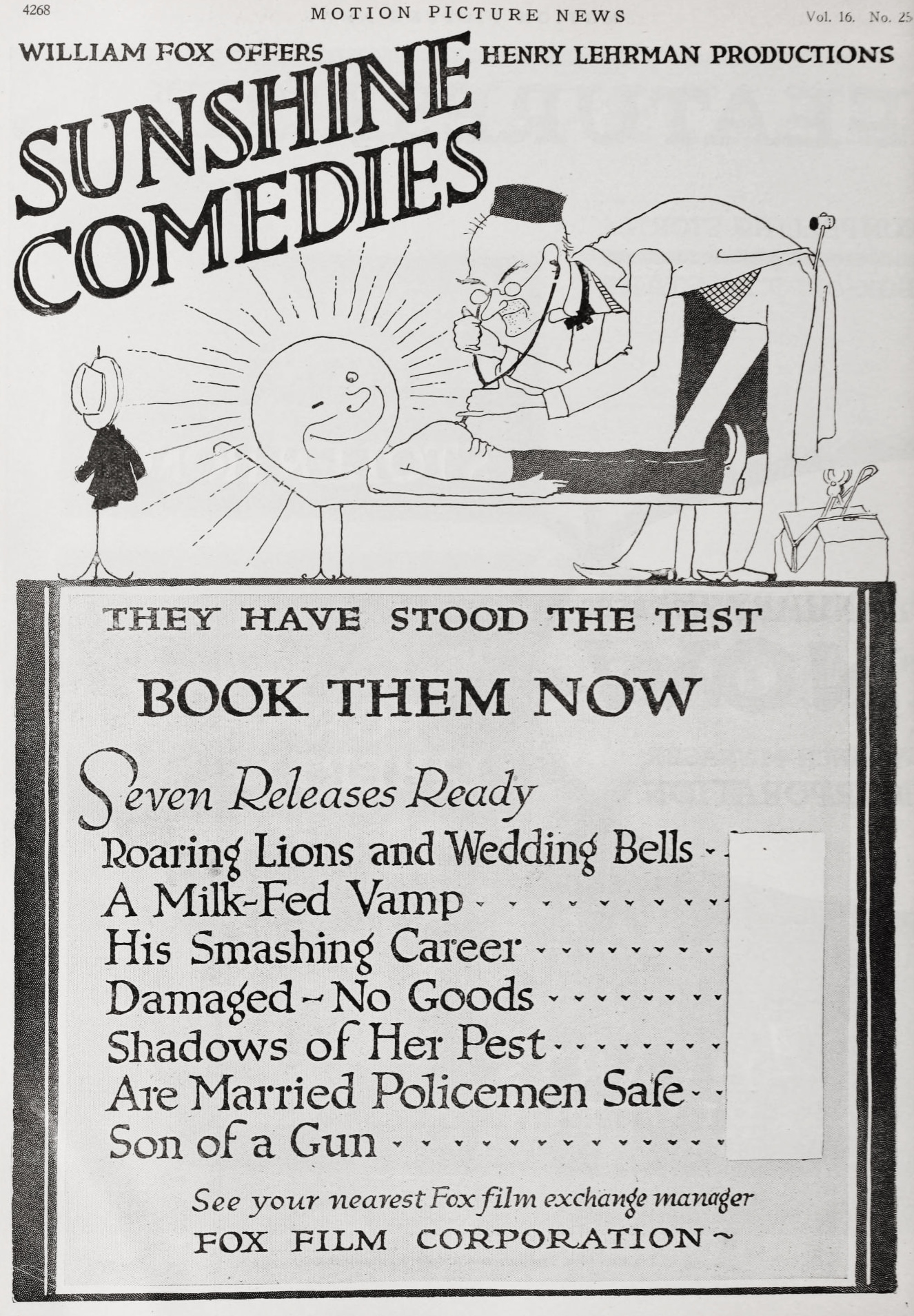
The year 1917 stood as a pivotal juncture in the evolution of the moving image, a time when the crude mechanics of early nickelodeon gags began to coalesce into more sophisticated social critiques. Henry Lehrman, a figure often relegated to the footnotes of Mack Sennett’s shadow, delivers a biting, albeit chaotic, piece of celluloid history with Are Married Policemen Safe?. This isn't merely a romp through the park with a whistle and a billy club; it is a fascinating, if unintentionally profound, look at the fragility of institutional morality during the twilight of the Edwardian mindset.
Henry Lehrman’s directorial style has always been characterized by a certain frantic nihilism. Unlike the meticulously choreographed ballets of Keaton or the sentimental pathos of Chaplin, Lehrman’s work feels like it might fly off the sprockets at any moment. In this film, he utilizes the 'Sunshine Comedy' brand to its fullest potential, weaponizing the absurdity of the legal system. The premise—a crackdown on 'abbreviated' clothing—serves as a perfect vehicle for this energy. While contemporary dramas like The Man from Montana were busy exploring the rugged individualism of the frontier, Lehrman was poking fun at the urban obsession with regulating the female form.
The cinematography, though standard for the period, captures a specific kind of urban anxiety. The frames are packed with movement, reflecting a society that was literally moving faster than its laws could keep up with. The 'abbreviated' clothing in question—likely early bathing suits or hemlines that dared to reveal an ankle—acts as the MacGuffin that exposes the hypocrisy of the patriarchy. When we see the jurists, men who are supposed to be the bedrock of civic virtue, losing their composure, we aren't just seeing a gag; we are seeing the deconstruction of the 'great man' mythos that dominated the era.
Billy Bevan, with his iconic, oversized mustache and expressive physicality, anchors the madness. Bevan’s comedy is rooted in the reaction. He isn't just a clown; he is a witness to the absurdity of his own existence. In Are Married Policemen Safe?, his role as a representative of the law allows him to play with the tension between duty and desire. It’s a performance that mirrors the thematic weight found in more serious works like The Guilt of Silence, albeit through a funhouse mirror. Where a drama might explore the internal torture of a secret, Lehrman and Bevan externalize that conflict through wide-eyed takes and frantic chases.
The supporting cast, including the likes of Billie Ritchie and Winifred Westover, provide the necessary friction. Westover, in particular, carries an onscreen presence that suggests a burgeoning autonomy. The women in this film are not passive victims of the law; they are the catalysts for its dissolution. Their 'crime' is simply existing in a way that the law finds inconveniently attractive. This dynamic creates a comedic loop where the more the police try to enforce 'safety' for married men, the more they expose themselves to the very 'dangers' of the feminine allure they fear.
To understand the impact of this film, one must look at the historical context of 1917. America was on the brink of significant cultural shifts, partially spurred by the mobilization for World War I. The rigid social hierarchies were beginning to fray. While a film like Unconquered might deal with grander themes of human resilience, Lehrman’s comedy deals with the granular reality of social control. The obsession with what women wore was a very real legislative concern of the time, with 'morality squads' patrolling beaches and boardwalks with measuring tapes.
Lehrman turns this measuring tape into a prop for slapstick. By doing so, he trivializes the oppressive nature of the law, making the enforcers look like bumbling fools. This was a radical act in its own way. If the police are not 'safe' from the charms of those they arrest, then the entire moral crusade is revealed as a farce. It’s a theme that resonates even today, as we continue to debate the limits of personal expression versus public 'decency'.
The pacing of Are Married Policemen Safe? is relentless. It lacks the slower, more methodical build-up found in The Piper's Price. Instead, it opts for a percussive rhythm. Every scene is a beat, and every beat leads to a physical punchline. This was the hallmark of the Fox Sunshine style—a brighter, faster, and louder alternative to the more established studios. The editing is surprisingly tight for 1917, using cross-cutting to heighten the sense of a city-wide panic over a few inches of fabric.
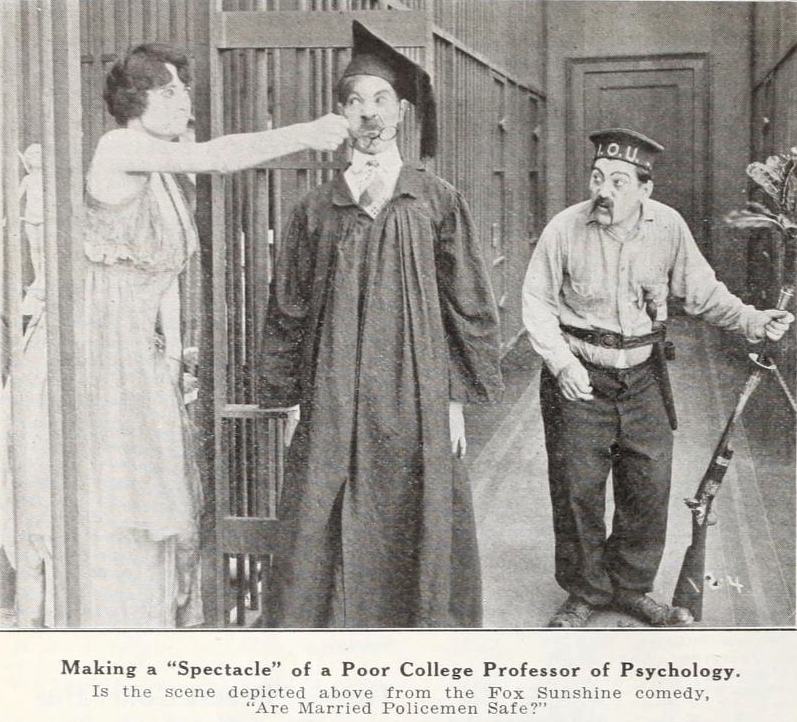
There is a sequence involving a courtroom that stands out as a masterclass in silent ensemble comedy. The transformation of the judge from a stern arbiter of justice to a smitten schoolboy is handled with a series of escalating visual cues—the loosening of a collar, the frantic polishing of spectacles, the subtle lean over the bench. It’s a silent language that speaks volumes about the performative nature of authority. It reminds one of the narrative shifts in The Stolen Triumph, where the mask of respectability is slowly stripped away to reveal the flawed human underneath.
While many silent comedies have faded into the mists of time, the work of Henry Lehrman remains essential for those wishing to understand the 'rough and tumble' roots of the genre. He was a man who understood that the quickest way to a man's heart—or a viewer's funny bone—was through the subversion of his dignity. Are Married Policemen Safe? is a testament to this philosophy. It doesn't ask for your respect; it demands your laughter through a relentless assault on the status quo.
In the broader landscape of 1917 cinema, which included everything from the adventure of Treasure Island to the melodramatic depths of Behind the Scenes, Lehrman’s work provides a necessary levity. It reminds us that even in times of global upheaval and moral panic, there is always room for a well-timed pratfall and a satirical jab at the powers that be. The film’s title itself is a rhetorical question that the narrative answers with a resounding 'No'—and we are all the better for it.
Ultimately, Are Married Policemen Safe? is a vibrant artifact of a lost world. It captures a moment when the screen was a place of wild experimentation and irreverent joy. The cast, led by the incomparable Bevan, delivers a performance that transcends the limitations of the silent medium, communicating a universal truth about the absurdity of moral policing. It is a film that deserves to be revisited, not just as a curiosity of 1917, but as a sharp, funny, and surprisingly relevant critique of the intersection between law, fashion, and human nature.
For those who appreciate the evolution of the comedic form, this film serves as a bridge between the primitive and the profound. It lacks the polish of later decades but possesses a raw, unbridled energy that is sorely missing from much of contemporary cinema. Whether you are a scholar of the silent era or a casual fan of classic comedy, Lehrman's crusade against the 'abbreviated' is a journey well worth taking.
IMDb 6.1
1932
Community
Log in to comment.