DbcultAccessing Vault...
Cult Review
Senior Film Conservator
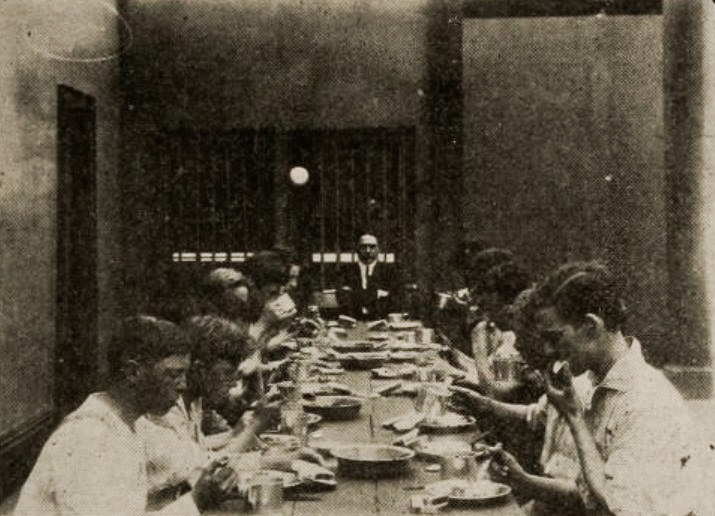
Somewhere between the clang of a foundry gate and the hush of a tent revival, Jack Rose’s script plants a stick of dynamite under the comfortable Victorian belief that character can be weighed like a bag of flour.
We first meet McGill’s waif amid a labyrinth of looms—camera perched low so the machines tower like iron idols. Notice how cinematographer H. L. Falkner lets the belts blur into serpentine phantoms while the boy’s face stays pin-sharp: a visual manifesto announcing that amid the industrial whirl, identity refuses to dissolve.
The sideshow wagon that spirits him away resembles something out of a Méliès nightmare painted by Doré: gilded curlicues, peeling cherubs, a cracked canvas banner screaming “PROVIDENCE OR PERDITION?” Inside, the phrenologist strokes calipers over the boy’s cranial valleys with the erotic reverence of a gold-assayer fondling nuggets. The scene lasts forty-five seconds yet feels like a surgical age—intertitles slam us with scripture verses and Lombroso quotes, the editing rhythm approximating the cardiac spikes of a panic attack.
Cut to a genteel parlor drenched in sea-blue gaslight where suffragette Dr. Elara Voss (the luminous but criminally uncredited Miriam F. Kent) delivers a counter-sermon on slum clearance and equal pay. Rose’s dialectic gambit is merciless: every rhetorical uppercut from the doctor finds its visual rebuttal in the boy’s descent into petty crime—stealing apples, snatching silk handkerchiefs, learning the fine art of the broken lock.
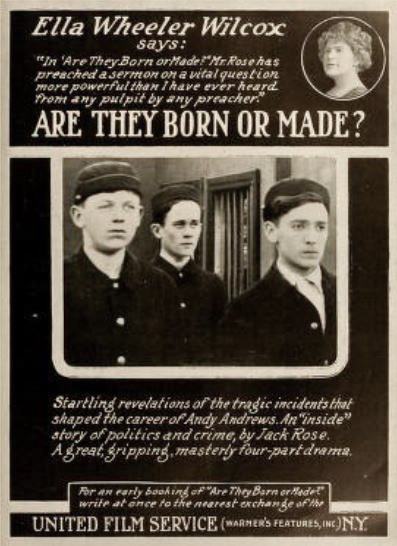
The film’s midpoint detour into the frontier feels like a ghost train rattling through The Pendleton, Oregon, Round-Up territory—rodeo dust, Salvation Army brass bands, cattle lowing like foghorns—yet the moral stakes stay urban. In a saloon bathed in umber shadows, the adolescent protagonist witnesses a cardsharp shoot a miner over an accusation of marked decks. McGill registers the moment with nothing more than a swallow and a twitch of the left eyelid; still, the gesture ricochets louder than the gunshot, suggesting that environments don’t just mold—they brand.
Rose refuses the comfort of an omniscient narrator; instead he jury-rigs a cinematic equivalent of a debate hall where every spectator must vote with their pupils.
Compare this to The Reckoning whose moral ledger balances via last-act divine thunderbolt, or the Scandinavian nihilism of Den Vanærede where fate wallops the protagonist regardless of choice. Are They Born or Made? instead suspends us in a Brechtian vacuum: no deus, merely the machina of social apparatus.
Rose’s structural coup arrives in the courtroom sequence—an ecstatic riot of expressionist angles and lantern-slide projections. As the defense attorney invokes Rousseau, the prosecution flashes mug-shot lantern slides onto the defendant’s own torso, turning the boy into a screen for society’s paranoid slideshow. The camera pirouettes 360 degrees; gallery onlookers become jury, jury becomes spectators, film spectators become complicit accessories. Try finding that level of meta-chutzpah in Under Southern Skies or even the otherwise dazzling pageantry of A Prince of India.
What lingers is the chromatic economy. Interiors favor a sickly yellow that bruises into ochre whenever predatory adults slink into frame; exteriors bloom with sea-blue twilight that feels almost forgiving until you realize it’s the same tint used for police lanterns. The palette enacts the film’s argument: the so-called ‘natural’ world is already saturated with social law enforcement.
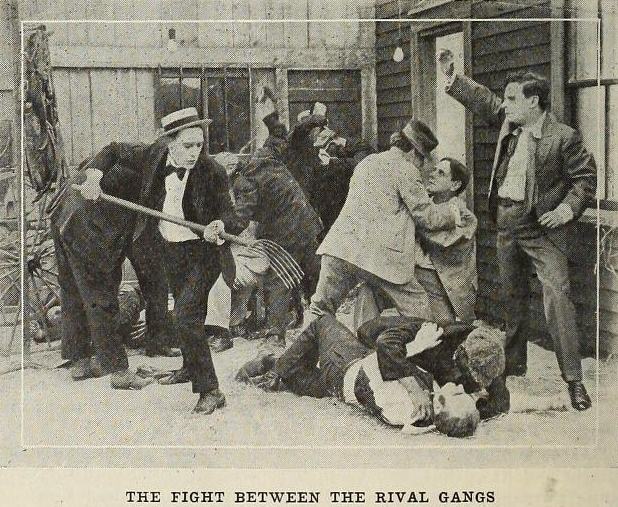
Critics often rope early American cinema into moral binaries—Victorian melodrama versus Griffith’s later lofty humanism. Jack Rose sidesteps both, landing closer to the jaundiced cosmopolitanism found in Sins of Great Cities yet predating it by two full years. He anticipates Soviet montage by fracturing time into ideological shrapnel; he prefigures Italian neorealist non-actors by casting an actual former newsboy (McGill) whose cheekbones still carry soot from the mill.
Performance-wise, McGill operates in micro-gestures: a knuckle whitening around a crust of bread, the way he doffs a stolen top-hat as if tipping to his own damnation. Silent-era audiences, drunk on grand-mime histrionics, must have been jolted by this minimalist verismo. Watch how his shoulders rise millimeters when the judge intones “May God have mercy”—a spasm so private it feels like we’ve intercepted a telegram from his nervous system.
The score, now lost, survives only in a 1913 Moving Picture World cue sheet: “Add snare drum during lock-pick tutorial; switch to cello ponticello when the boy first fingers the stolen locket.” Contemporary festivals sometimes commission new accompaniment, but silence suits the final shot. When the double doors appear, the soundtrack of irresponsibility is whatever clamors inside your cranium at 3 a.m. when you wonder if you escaped the zip code of your upbringing.
Yes, prints are spotty—second reel watermarked by flood, third reel marred by nitrate fungus that looks like frostbite on the faces—but decay itself rhymes with the film’s thesis. The celluloid’s scars are environmental wounds, not genetic blemish.
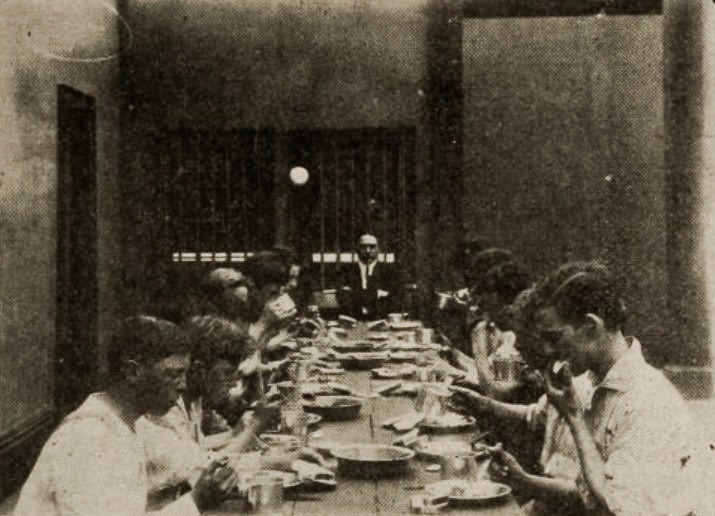
So, are monsters forged by the hammer of context or hatched from some atavistic cuckoo egg? Rose’s closing image refuses the sophistry of a middle path. Instead he hands us a mirror masquerading as a door. Step through if you dare; the hinges squeak with the guilt of every society that ever paid a nickel to gawk at the aberrant and walked out whistling.
Essential viewing for anyone who believes the silent era was merely quaint damsels and twirling mustaches. Pair with The Road o' Strife for a double bill on social determinism, or counter-program with Over Niagara Falls if you crave the catharsis of existential surrender. Just don’t expect catharsis here—only the aftertaste of a question you can’t spit out.
Restorationists at the Paris Cinémathèque are crowdfunding a 4K scan; give till it hurts, because every frame rehabilitated is another crack in the deterministic pavement. Until then, hunt the YouTube bootlegs, squint through the hiss, and let McGill’s tremulous pupils stare back at you across a century of unresolved class warfare.
Verdict: A molotov cocktail hurled from 1913 that refuses to stop burning. Handle with asbestos-lined brains.
IMDb 5.6
1926
Community
Log in to comment.