DbcultAccessing Vault...
Cult Review
Senior Film Conservator
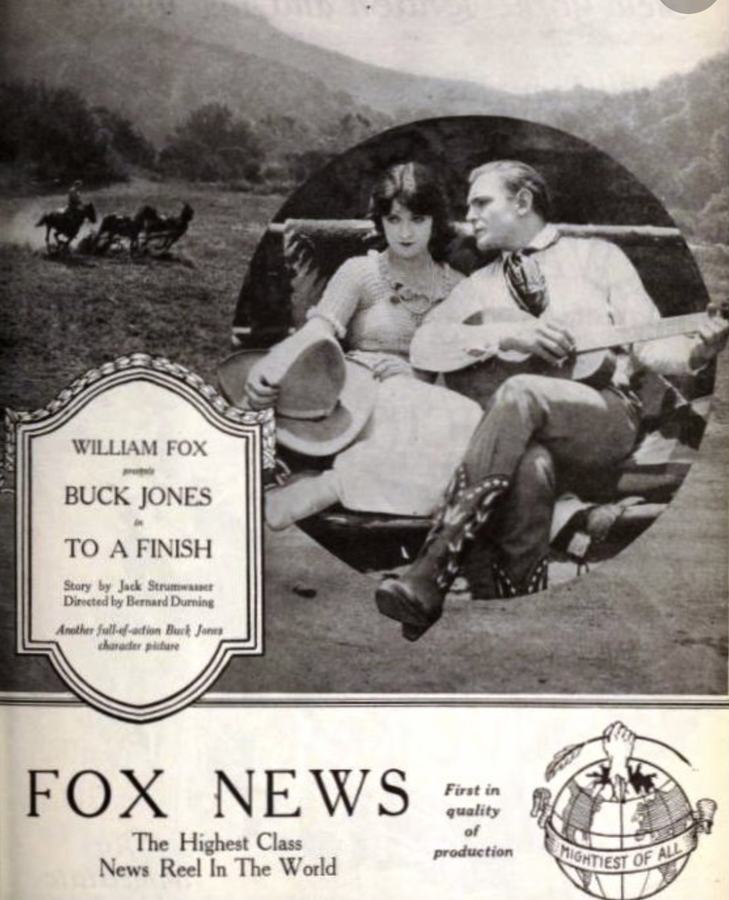
The year 1921 was a crucible for the American Western, a period when the genre was shedding its primitive skin to reveal a more sophisticated, albeit still rugged, skeleton. In the midst of this evolution, To a Finish emerged as a quintessential example of the Fox Film Corporation’s ability to blend high-stakes melodrama with the visceral physicality of the frontier. This isn't merely a tale of cattle and dust; it is a Shakespearean tragedy transposed to the sagebrush, where the ownership of land is synonymous with the ownership of one's soul.
G. Raymond Nye delivers a performance of chilling bureaucratic malice as Bill Terry. Unlike the chaotic outlaws seen in earlier shorts, Terry represents a more modern, insidious threat: the man who owns the law. His control over the town clerk is a terrifyingly relevant commentary on institutional corruption. When he plants those calves, he isn't just stealing livestock; he is rewriting reality itself. This manipulation of truth reminds one of the darker social undertones found in Money Mad, where the pursuit of wealth erodes the very foundations of community trust.
The setting of Half-Way serves as more than a backdrop; it is a psychological landscape. It is a town caught between the civilization of the East and the lawlessness of the deep frontier. This sense of being 'in-between' mirrors the moral state of the characters. Terry is the shadow that looms over this liminal space, ensuring that justice remains as stagnant as a desert pond. His rivalry with Joe Blake (Herschel Mayall) is framed not just as a business dispute, but as a clash of eras—the honest pioneer versus the predatory capitalist.
While the elder Blake provides the moral weight, it is Buck Jones as Jim Blake who provides the film's pulse. Jones, even early in his career, possessed a screen presence that was simultaneously grounded and explosive. He doesn't carry the theatricality of some of his contemporaries; instead, he offers a precursor to the gritty realism of the 1950s Western heroes. His Jim Blake is a man of action who is forced into a corner, and his eventual eruption into violence feels earned rather than gratuitous.
In many ways, Jim’s journey is a classic coming-of-age story, albeit one written in lead and gunpowder. Much like the protagonist’s evolution in A Man's Making, Jim must transcend his father's victimhood to become the architect of his own destiny. The fight sequences, particularly when Jim is wounded, are captured with a frantic, breathless energy that highlights the vulnerability of the human body against the cold steel of the West.
Helen Ferguson’s portrayal of Doris Lane is perhaps the film’s most nuanced element. In an era where female characters were often relegated to being the 'reward' for the hero, Doris exhibits a surprising amount of agency. Her disillusionment with Terry isn't a sudden whim; it is a calculated response to witnessing the rot at his core. When she hears the gang plotting against Jim, her decision to hide the wounded hero is a revolutionary act of defiance against the town’s power structure.
This shift in loyalty is handled with a delicacy that contrasts sharply with the film's broader strokes. It evokes the domestic tensions seen in Bunty Pulls the Strings, where traditional expectations are subverted by individual conscience. Doris is the moral compass of the film; while the men are focused on land and revenge, she is focused on truth and survival. Her abduction by Wolf Gray (Norman Selby) serves as the catalyst for the final confrontation, but it is her initial choice to betray Terry that truly sets the plot in motion.
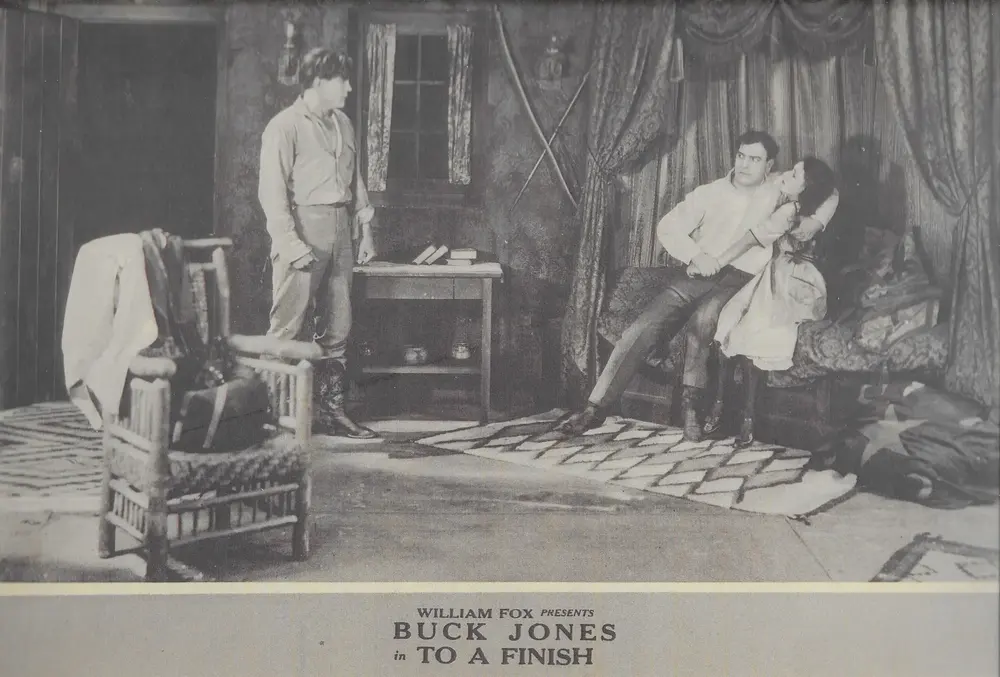
The direction (often attributed to Bernard J. Durning, though John Stone's writing is the backbone here) utilizes the vastness of the American landscape to emphasize the isolation of the characters. The cinematography captures the 'wonderland' quality of the West—reminiscent of the vistas in A Trip to the Wonderland of America—but imbues it with a sense of dread. The shadows in the Terry household are deep and oppressive, while the open range where the Blakes reside is flooded with a harsh, unforgiving light.
The editing during the final gun battle is particularly noteworthy for 1921. There is a rhythmic quality to the shots, building tension through cross-cutting between Doris’s peril and Jim’s desperate advance. It lacks the experimental flourish of European cinema like The Child of Paris, but it masters the American vernacular of action. Every shot fired feels heavy, every movement purposeful.
At its core, To a Finish is an exploration of the 'Struggle Everlasting'. It deals with the fundamental human drive to protect what is ours from those who would take it through deceit. This theme of enduring hardship is a staple of the era, seen in works like The Struggle Everlasting, but here it is localized into the specific mythos of the cowboy. The film also touches upon the concept of destiny—whether Jim and Doris were always meant to be together, or if their union is a byproduct of their shared trauma, a question also explored in The Child of Destiny.
When compared to other Buck Jones vehicles like The Smilin' Kid, To a Finish feels significantly more somber. There is less of the 'gee-whiz' charm and more of a preoccupation with the darkness of men’s hearts. It shares a certain DNA with Uncle Sam and the Bolsheviki - I.W.W. Rat in its anxiety regarding those who would subvert the established order for their own gain, though it keeps its politics strictly within the realm of the local ranching community.
The resolution of the film is as satisfying as it is predictable, but the journey to that 'finish' is paved with genuine tension and excellent character work. The interplay between G. Raymond Nye’s oily villainy and Buck Jones’s stoic heroism creates a friction that carries the film through its slower middle act. It is a work that understands the power of the Western as a moral play. While it may not have the surrealist ambitions of Aus den Memoiren einer Filmschauspielerin or the religious overtones of David and Jonathan, it excels at what it sets out to do: provide a high-octane, emotionally resonant experience.
In the broader context of 1921, To a Finish stands as a testament to the durability of the Western. It proves that even within a rigid genre framework, there is room for complex character arcs and a scathing critique of power. If you are looking for a film that encapsulates the transition from the nickelodeon era to the golden age of Hollywood, this is an essential watch. It is a story of how God made the West, and how men like Jim Blake had to fight to keep it that way, a sentiment echoed in the themes of As God Made Her.
A definitive piece of silent Americana that refuses to ride quietly into the sunset.
IMDb —
1921
Community
Log in to comment.