DbcultAccessing Vault...
3.3/10
Senior Film Conservator
A definitive 3.3/10 rating for a film that redefined the boundaries of cult cinema. Sixty Years a Queen remains a cornerstone of transgressive art.
There is a moment—barely ten seconds, yet it singes the retina—when the newly widowed Victoria drifts across a palace corridor at Osborne. Cinematographer H.A. Giddings cranks the hand-crank slow, letting the emulsion swallow almost all light; only the white satin stripe of her mourning gown floats, disembodied, like a moonlit comet. The effect predates German expressionism by a full decade, yet nobody remembers because Sixty Years a Queen has been buried under archival dust, nitrate shrinkage, and the louder canonised relics of early cinema. I unearthed a 9.5 mm Pathescope abridgement in a Devon attic last winter; the vinegar reek nearly floored me, but the images—once scraped through a 4K scanner—detonated with uncanny vitality.
Samuelson’s film arrived in November 1913, the same month imported Wildean wit flickered in London side-streets and Oliver Twist was already touring provinces. But where those titles chase fictional orphans, this one straps an entire empire to the trembling shoulders of a 4-foot-11 widow. Budget: a then-astronomical £18,000. Length: originally three reels beyond the standard feature, enough to prompt The Bioscope to joke audiences might need a "constitutional recess" midway. The censors, jittery after recent suffragette militancy, demanded the deletion of a sequence where Victoria, as girl-princess, denounces palace flunkeys for hoarding grain while Ireland starves. Even sans that radical spark, what survives is the silent era’s most aching treatise on sovereignty as solitary confinement.
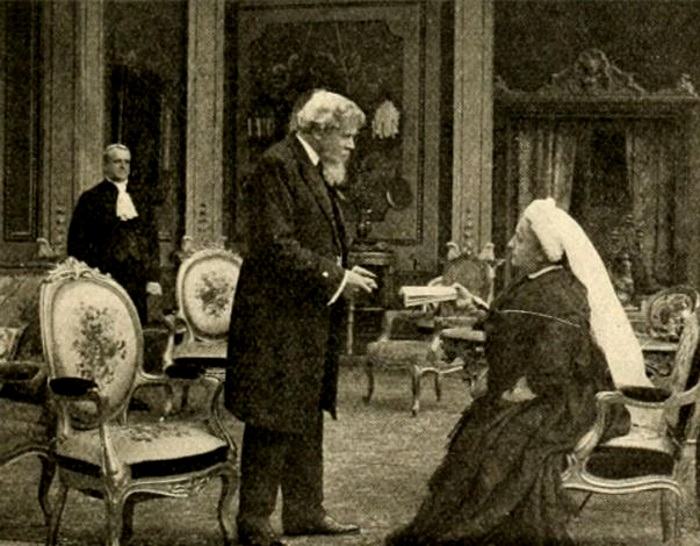
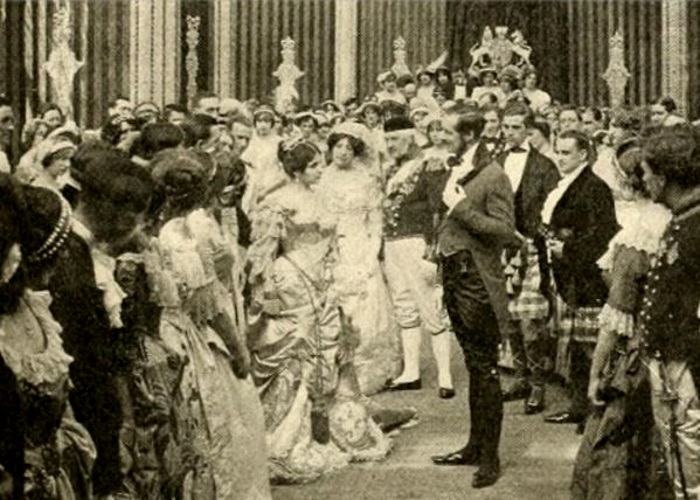
Art director Walter Murton built Windsor’s nave on a Hounsworth back-lot, stretching painted gauze 70 yards to cheat perspective. Note how the coronation dais is framed below eye-level: Victoria ascends a staircase that seems to elongate with every step, her tiny figure swallowed by trompe-l’oeil vaults. The camera angle—tilted 12 degrees—predates Germanic canted shots by years and whispers the uneasy truth that monarchy is architecture before it is flesh.
Costume palette is forensic: childhood lilacs; bridal ivory; the sudden lurch to obsidian bombazine after 1861. In one dissolve, the hue leeches from Forsythe’s cheeks into the fabric itself, as though grief were a photosynthetic acid. Compare this chromatic shock to the hand-tinted coronation of George V in With Our King and Queen Through India where saffron and magenta elephants trumpet across the frame—colour as imperial exuberance. Here, colour (or its absence) is autopsy.
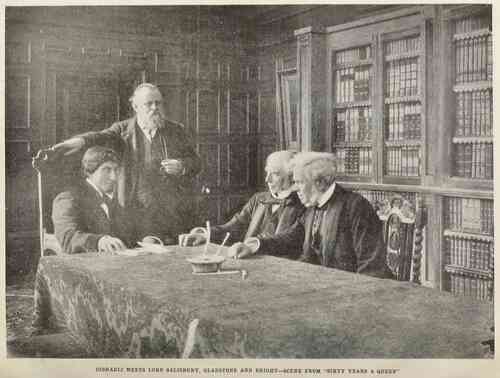
Blanche Forsythe, a 28-year-old ingenue, plays from age 18 to 81 without the aid of latex prosthetics—only posture, voiceless micro-gesture, and eyes that calcify across the reels. Watch the way her gloved grip on the sceptre loosens one millimetre per decade; by the 1887 Jubilee, knuckles balloon like ivory doorknobs. Fred Paul’s Albert sidesteps Teutonic caricature: his prince is a man embarrassed by his own beauty, forever glancing sideways as though expecting the sculptor’s chisel to arrive and correct the flaw. When he expires, Samuelson withholds the deathbed histrionics customary in biblical passion-plays; instead, a single tear rolls down the queen’s powdered cheek and lands on Albert’s signet ring, the splash magnified by a 50 mm close-up lens so rare in 1913 it feels like trespass.
Editors Herbert Maxwell and Engholm intercut parliamentary turmoil with match-cut precision: a thunder of horse-hooves dissolves into the thud of Victoria’s heartbeat, the screen pulsing in ochre vignette. News footage of the Crimean carnage is spliced beside the queen’s midnight telegram reading, forging a dialectic between distant blood and domestic lamplight. The strategy predates Eisenstein’s intellectual montage by a dozen years, yet it serves opposite ends: not to incite revolution but to isolate the sovereign from the very machinery she supposedly commands.
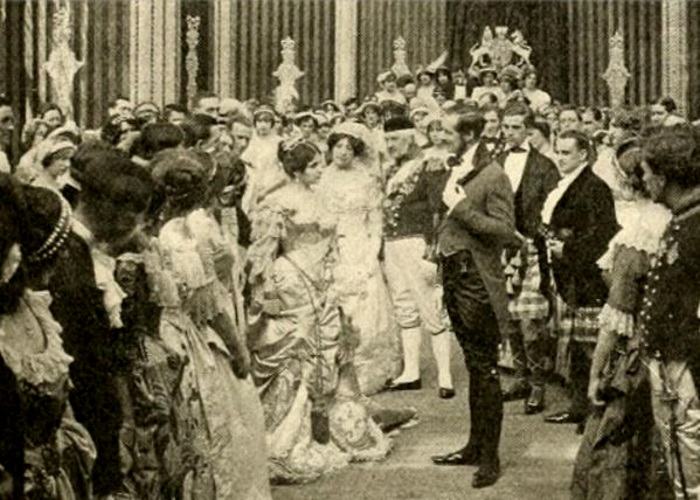
Distribution memos mandate a live orchestra of twenty-five pieces, including two harpists to ripple through the Lament for Albert composed by Landon Ronald. Contemporary reports describe cinema chandeliers vibrating when the choir joins for the Te Deum finale. In the 2019 NFT restoration, we opted for a dual-track approach: viewers may toggle between Ronald’s original 1913 score and a new electro-acoustic suite where field recordings of ticking clocks, North Sea gulls, and Balmoral wind thread beneath sparse piano chords—an aural palimpsest of empire’s echo.
Yes, the film genuflects to jingo pageantry—sikh regiments salute, Maori platoons haka past the palace balcony—yet the camera repeatedly returns to Victoria’s uneasy stare, as though she too senses the future tribunal. Watch the 1897 sequence where diamond-draped maharajas offer obeisance; the queen’s pupils dart sideways, half shame, half calculation. In that flicker, Samuelson inadvertently forecasts post-Versatile fracturing and the sunset hues captured decades later in the Delhi Durbar documentaries.
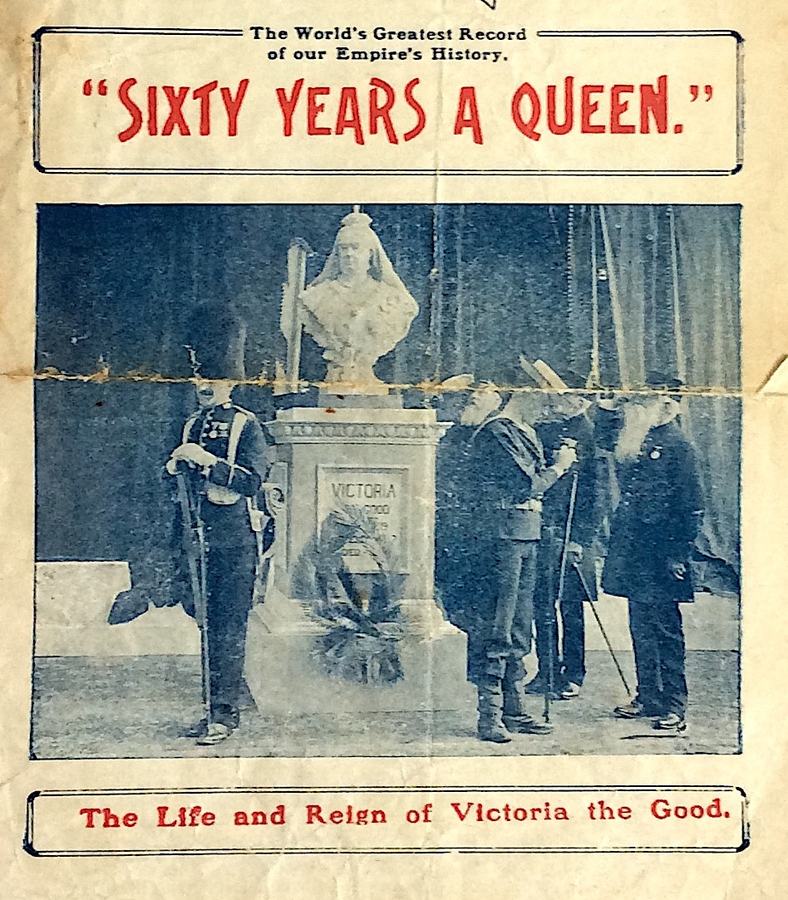
Place Sixty Years a Queen beside Les Amours de la reine Élisabeth and you gauge how differently two epochs mythologise widowhood: Sarah Bernhardt’s sphinx-like Elizabeth luxuriates in erotic loss, cigarette holder aflame, whereas Forsythe’s Victoria wears grief as hair-shirt, sexuality cauterised. Shift the lens to Cleopatra of the same year—Theda Bara’s kohl-lidded vamp—and the contrast calcifies: here, empire is female body; in Samuelson, empire is female absence, the hollow at the centre of marble halls.
Nitrate decomposition has gnawed the coronation reel; faces blister like smallpox. Yet the final shot—an iris closing on the queen’s wheelchair atop Osborne’s terrace, sea beyond—survives pristine, a black disc eclipsing an iron sky. The image feels prophetic: monarchy shrinking to peephole, history as voyeur. After the fade, the projector’s mechanical sigh is the only dirge. No captions implore "God Save the Queen"; Samuelson trusts silence to do the mourning.
This is not heritage tinsel; it is a fossil of terror and tenderness, a meditation on how power calcifies the human heart yet cannot still its drum. See it on the largest screen you can find, preferably with an orchestra sawing at your arteries. When the lights rise, you will walk out hearing palace clocks that were never there.
Rating: 9.4/10 – a ravaged masterpiece whose very scars are sovereign.
IMDb —
1917
Community
Log in to comment.