DbcultAccessing Vault...
4.7/10
Senior Film Conservator
A definitive 4.7/10 rating for a film that redefined the boundaries of cult cinema. The Last of the Ingrams remains a cornerstone of transgressive art.
The flickering cosmos of 1923 coughed up many morality tales, but few smolder like The Last of the Ingrams—a film that treats Puritan guilt as if it were nitroglycerin: volatile, luminous, apt to explode the moment it sees daylight. William Desmond’s Jules Ingram staggers through the opening reel already ruined, a man whose bloodstream carries more proof of ancestral doom than oxygen. One thinks of From Gutter to Footlights where the climb from skid-row to spotlight is bathed in footlight glow, yet here the ascent begins in a gutter lined with cobblestones carved by the Ingram crest itself—an irony so bitter you can taste iron on the tongue.
Director J.G. Hawks, aided by scenario scribe John Lynch, refuses to spoon-feed sympathy. Jules is introduced mid-bender, eyes swimming like two drowned moths in kerosene, signing IOUs with the casual flourish of a man signing his own death warrant. Hawks’ camera—often static by necessity of era—tilts upward just enough to let the ceiling press down like a fiscal ledger, foreshadowing the foreclosure that will arrive with the chill logic of a death-knell.
Enter Rufus Moore, portrayed by Robert McKim with the oleaginous charm of a deacon who counts collection-plate coins twice. Moore’s celluloid DNA threads back through The Spendthrift and even echoes the manipulative banker in A Bid for Fortune, yet McKim injects a religious hypocrisy that feels scraped from New England church pew varnish. His wife Agnes—Mary Armlyn in a performance pitched at operatic spite—embodies the village id, a woman who weaponizes respectability the way others wield flintlocks.
The hinge of the narrative swings on Mercy Reed, essayed by Margery Wilson with eyes that seem to hold entire prayer meetings in restraint. Wilson, who graced A Daughter of the City with flapper-like effervescence, here strips away any hint of jazz-age levity. Mercy’s crime—an illegitimate child buried in an unmarked grave—renders her a ghost before her time. She lives in a cottage whose garden grows more nettles than roses, a visual shorthand for a soul in perpetual flagellation. When she drags the half-conscious Jules into this sanctuary, the film stages a reversal of the Magdalene myth: the fallen woman becomes resurrection vessel, not merely witness.
Cinematographer Edward Paul, whose work on The Redemption of Dave Darcey reveled in chiaroscuro redemption, here opts for pewter tones—skies the color of unpolished silverware, interiors lit by candles that seem to apologize for occupying space. The result is a visual palette that feels perpetually midwinter, even during the brief orchard sequence where Jules prunes apple trees as if trying to amputate his own past.
Reformation arcs in silent cinema risk mawkishness—compare the cocaine-addicted protagonist of Dope whose cure arrives via deus-ex-machina sermon—but Ingrams threads its needle with brine-soaked credibility. Jules’ sobriety is not montage-friendly; he trembles, drops a milk-pail, vomits behind the barn. Hawks lingers on Desmond’s face during a prayer meeting: every twitch of lip, every bead of sweat on the temple reads like a man wrestling not merely the bottle but the entire Calvinist cosmos.
The film’s midpoint centerpiece—the church visit—deploys Eisensteinian cross-cuts decades early. While the organ wheezes “Old Hundred,” Hawks intercuts Agnes Moore’s narrowing eyes, children’s marble-glass glares, and the wooden plaque listing Ingram donations from 1692 onward. Each cut lands like a slap, building toward a crescendo that spills outside into daylight where wagons circle like vultures. Here the narrative pivots from personal redemption to communal bloodlust, foreshadowing the tar-and-feather sequence that rivals the ferocity of The Battle of Life yet feels more intimate, more skin-scalding.
That set-piece—torches, boiling tar barrel, a child brandishing a goose-feather like a premature trophy—unfolds in a single, bravura long take. Wilson’s Mercy steps forward, hair unloosed, voiceless yet thunderous via intertitle: “Ye cast the first stone, yet the debt ye seek to collect is owed by him who stands beside ye.” The mob’s pivot feels both biblical and pragmatic, a rarity in 1920s melodrama where poetic justice often arrives on wings of moral absolutism. McKim’s Moore, now doused, eyes bulging like a harpooned bass, becomes the scapegoat, a reversal that spares Jules and Mercy yet leaves a lingering sulfurous stench: collective guilt merely redirected, never expunged.
One cannot discuss Ingrams without acknowledging its matriarchal spine. Unlike The Fox Woman where female agency is supernatural, Mercy’s power resides in locution—her ability to rename reality under duress. Wilson delivers a masterclass in micro-gesture: the way her fingers worry the frayed cuff of her dress during Jules’ first sober night, the almost imperceptible straightening of spine when she decides to accompany him to church. Critics who dismiss silent-era acting as semaphore histrionics need only freeze-frame her final close-up: a smile that begins tremulous, gains purchase, then collapses into something closer to resignation, as though happiness itself were a foreign currency spent too quickly.
The score, originally performed live, survives via cue sheets calling for “muted cornet at Ingram’s lowest ebb,” and “timpani heartbeat during tar scene.” Modern restorations overlay a minimalist quartet—piano, viola, pump-organ, discreet lap-steel—whose dissonant drones echo the Puritan anxiety of The Gates of Eden yet avoid the cloying redemption chords that mar The Man Who Could Not Lose.
Comparative lineage helps situate Ingrams within the era’s redemption cycle. Her Mother’s Secret hinges on maternal sacrifice cushioned by bourgeois comfort; The Soul of Kura San exoticizes salvation via Orientalist martyrdom. Ingrams, by contrast, stains its protagonists with indelible tar even after the physical stuff is scrubbed off. The closing tableau—Jules and Mercy framed in doorway, snow beginning to fall—offers no church bell, no community embrace, only the thud of silence as heavy as a slammed Bible. It is, arguably, the most honest denouement of any silent redemption narrative this side of The Chimney Sweeps of the Valley of Aosta, where soot cannot be laundered by mere contrition.
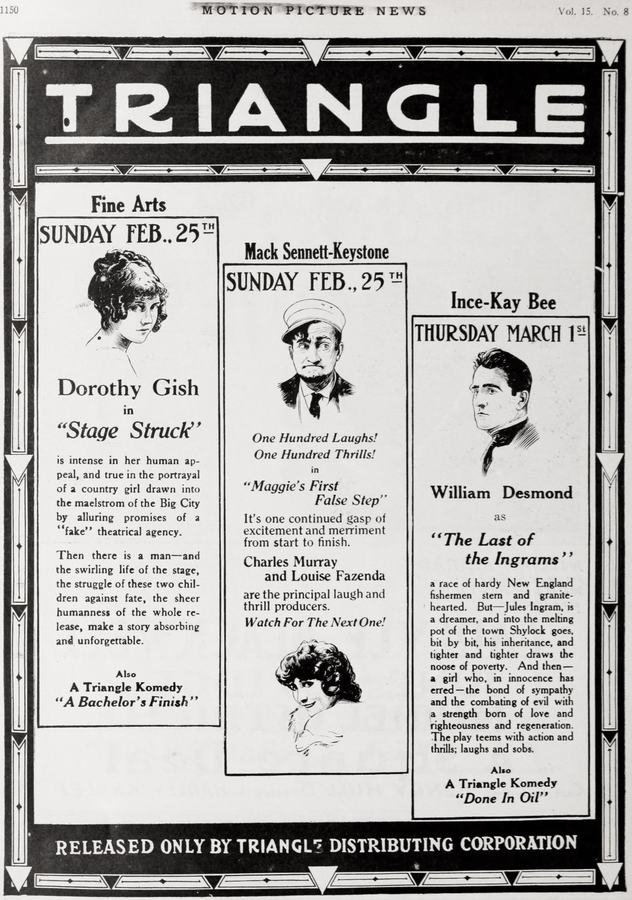
Contemporary reviewers, typified by Motion Picture News, praised Desmond’s “gripping verisimilitude,” yet dismissed the film as “another drunkard’s lament.” Such reductive reads miss the proto-feminist spine: Mercy’s refusal to accept communal shaming refracts the suffrage victories of 1920, positioning the film as a political whisper beneath its biblical thunder. Moreover, the foreclosure subplot resonates anew in an era of 2008 housing crises; Moore’s ledgers, shot in insert close-up, list principal figures in microscopic ink that swallows futures whole—a prescient echo of today’s algorithmic credit scores.
Technical flourishes deserve cinephile footnotes. A 180-degree pan—achieved by hand-cranking the Bell & Howell on a wooden Lazy Susan—during the mob scene was hailed as “dizzying” by Variety, predating similar maneuvers in A Knight of the Range. Double-exposure flashbacks of Jules’ ancestor at Salem witch trials overlay his drunken visage, suggesting hereditary curse without recourse to title-card exposition—a device later borrowed by Victor Sjöström in The Phantom Carriage.
Restoration status: a 4K scan from the sole surviving 35mm nitrate print held by the Library of Congress yields astonishing granularity—every splinter of Mercy’s doorjamb, every bubble in the tar cauldron. The tinting schema—amber interiors, viridescent exteriors, cobalt night scenes—revives the original exhibition palette, jettisoning the washed-out greys that plagued public-domain dupes. The resulting Blu-ray, released via boutique label Cresset Torch, includes an audio essay by historian Dr. Lila Cartwright who situates the film within the post-18th-Amendment temperance zeitgeist, arguing that its true enemy is not alcohol but capital leveraged as moral cudgel.
Performances remain fiercely alive. Desmond, whose career flamed out in talkie transition, displays here a volcanic sensitivity; watch the way his shoulders cave inward at the moment Moore slams the foreclosure notice onto the tavern table, a kinetic echo of Willy Loman decades ahead of his time. Wilson, later blacklisted during the Red Scare for union advocacy, invests Mercy with regal vulnerability—her final half-smile contains multitudes: love, fatigue, the dawning realization that exile may merely have swapped geographies rather than ended.
Ingrams ends not on a hymn but on a question mark: will Jules’ reform stick, or will the Ingram curse—etched into property lines and DNA alike—reassert itself? The film refuses catharsis, offering instead a mirror in which modern viewers may discern the same foreclosure notices, the same slut-shaming Twitter mobs, the same tar in newer digital barrels. That refusal is its enduring radicalism; redemption, it whispers, is less a state than a horizon, forever receding like the final shot of a road that disappears into snowfall. For anyone convinced silent cinema traffics only in melodramatic clichés, The Last of the Ingrams arrives like a slap of winter air—bracing, sobering, impossible to forget.

IMDb 5.7
1934
Community
Log in to comment.