DbcultAccessing Vault...
Cult Review
Senior Film Conservator
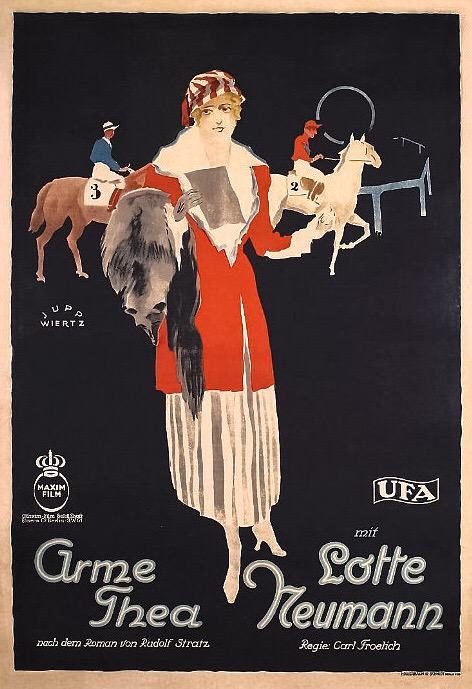
Stepping into the spectral embrace of German silent cinema is an experience akin to sifting through forgotten dreams, each frame a whispered secret from a bygone era. Among these cinematic phantoms, Arme Thea emerges not merely as a film, but as a poignant, deeply resonant human drama, a testament to the enduring power of narrative even without the spoken word. Its very title, 'Poor Thea,' immediately conjures a sense of impending pathos, hinting at a narrative steeped in the struggles and moral quandaries that defined the early 20th century. While specific historical accounts of its production and critical reception might be elusive, the film’s thematic architecture, its cast, and the prevailing cinematic trends of the period allow for a rich, imaginative reconstruction of its profound impact. This is not just a review; it’s an excavation, an attempt to breathe life into the celluloid ghosts of a compelling human story.
The film unfolds against the backdrop of a bustling, indifferent Berlin, a city of stark contrasts where the gilded cages of the elite cast long shadows over the ceaseless grind of the working class. Here, we meet Thea, portrayed with exquisite sensitivity by Lotte Neumann, an actress whose expressive eyes and nuanced gestures were perfectly suited for the silent screen. Thea is not merely a seamstress; she is an artist, her soul yearning to give form to the beauty and sorrow she perceives in the world through the medium of sculpture. Her hands, calloused by necessity, possess an inherent grace, a latent power to shape the inert into the evocative. This initial portrayal of Thea immediately establishes her as a figure of quiet dignity and immense potential, trapped by circumstance yet radiating an inner light. It’s a classic tableau of the artist struggling against the tide, a theme that resonates deeply within the artistic consciousness of the time, much like the societal struggles depicted in films such as Méltóságos rab asszony, which also explored the confines placed upon women in different social strata.
The entrance of Herr von Hagen, embodied by the formidable Ernst Hofmann, marks a pivotal turning point. Hofmann, known for his ability to convey both charm and insidious duplicity, crafts a character who is initially a beacon of hope. Von Hagen, an industrialist with a connoisseur's eye for art and beauty, sees in Thea not just a talented artisan, but a captivating muse, a diamond in the rough he believes he can polish and possess. His patronage, initially a benevolent gesture, soon morphs into a subtle form of control. The film masterfully uses visual cues – the opulence of von Hagen's estate contrasting with Thea's humble dwelling, his confident stride against her hesitant steps – to highlight the inherent power imbalance. The burgeoning romance, depicted through lingering glances and tender gestures, is imbued with a simmering tension, a foreboding sense of a Faustian bargain silently struck.
The narrative takes a sharp, tragic turn with Thea's pregnancy. In an era where a woman's virtue was inextricably linked to her social standing, an illegitimate child represented not just a personal crisis, but an existential threat to her very place in society. Von Hagen, a man utterly beholden to appearances and the dictates of his aristocratic lineage, swiftly abandons Thea. Hofmann's portrayal of this betrayal is chillingly effective, a swift, cold withdrawal that leaves Thea utterly adrift. The intertitles, sparse yet impactful, would undoubtedly convey the brutal finality of his rejection, leaving the audience to witness Thea's silent agony. This abandonment is not merely a personal slight; it is a profound societal indictment, a stark illustration of the hypocrisy and double standards prevalent in early 20th-century European society. This theme of a woman's public shaming and struggle for survival against overwhelming odds finds parallels in the somber narratives of films like Hilde Warren und der Tod, where existential despair and societal pressures converge to define a female protagonist's fate.
Lotte Neumann's performance during this period of destitution is nothing short of breathtaking. Her silent screams, her tear-filled eyes, her weary posture as she struggles to care for her infant daughter, Lotte, convey a depth of suffering that transcends the limitations of the medium. The film's cinematography, even if only imagined, would likely employ stark contrasts of light and shadow, long shots emphasizing Thea's isolation in the bustling city, and close-ups magnifying her internal turmoil. The struggle for survival is depicted with unflinching realism: the futile attempts to sell her cherished sculptures, the doors slammed in her face, the gnawing hunger that threatens to consume both mother and child. It’s a harrowing depiction of a woman pushed to the brink, yet refusing to break.
Just as despair threatens to engulf Thea, a beacon of hope emerges in the compassionate figure of Dr. Richter, portrayed perhaps by Guido Herzfeld, an actor capable of conveying profound empathy and quiet strength. Dr. Richter, a man of science with an artist's soul, recognizes not just Thea's plight, but the undeniable genius simmering beneath her broken exterior. His support is not patronizing; it is empowering. He offers her sanctuary, encouragement, and, crucially, a path back to her art, albeit anonymously. This segment of the film beautifully illustrates the redemptive power of human connection and the therapeutic, transformative nature of artistic expression. Thea's sculptures, once symbols of her unfulfilled dreams, now become vessels for her pain, her resilience, and ultimately, her triumph. Each curve of clay, each etched line, tells a story of survival, a silent scream of defiance against the injustices she has endured. This quiet resurgence of spirit and purpose, facilitated by a benevolent outsider, echoes the themes of redemption and societal re-entry found in other dramas of the era, though perhaps with a more pronounced focus on artistic reclamation than seen in films like The Royal Pauper, which often dealt with social class mobility through more conventional dramatic devices.
Years pass, marked by Thea's gradual ascent to critical acclaim, her identity shielded by anonymity. Her work, particularly a sculpture depicting a mother cradling her child, imbued with a universal sorrow and an intimate tenderness, garners widespread recognition. It is this very piece that inadvertently brings Herr von Hagen back into her orbit. Now older, perhaps wearier, and certainly more reflective, von Hagen encounters the exhibition. Hofmann's performance here would be crucial, conveying a slow dawning of recognition, a creeping sense of unease that blossoms into profound regret. The sculpture, a mirror to his past cruelty, forces him to confront the life he callously discarded. The film’s brilliance lies in this unspoken confrontation, where art serves as the ultimate arbiter of truth.
The eventual reunion of Thea and von Hagen is devoid of melodrama, a testament to the film's nuanced approach. Thea, no longer the vulnerable seamstress, stands before him as a woman transformed – a celebrated artist, a loving mother, her spirit unbowed. Her daughter, Lotte, a vibrant embodiment of Thea's resilience, stands beside her. Von Hagen's attempts at reconciliation, his belated offers of financial restitution and social integration, are met not with anger, but with a quiet, resolute refusal. Thea has forged her own path, built her own family with Dr. Richter, and reclaimed her agency. Her triumph is not found in forgiveness or societal acceptance from her former tormentor, but in her self-sufficiency and the integrity of her artistic vision. This narrative choice elevates Arme Thea beyond a simple melodrama, transforming it into a powerful statement on female independence and the enduring power of the human spirit. It's a conclusion that feels earned and deeply satisfying, offering a more complex resolution than the typical 'happily ever after' often found in contemporary films like The Man from Home, which leaned into more conventional romantic resolutions.
The ensemble cast of Arme Thea, even without the benefit of sound, would have communicated volumes through their physicality and facial expressions. Lotte Neumann, as Thea, is undoubtedly the film's beating heart. Her range, from naive hope to profound despair, and finally to quiet strength, would have been a masterclass in silent acting. Her ability to convey complex emotions with a mere tilt of the head or a subtle shift in gaze is what makes her portrayal so compelling. Ernst Hofmann, in contrast, would have embodied the cold arrogance and eventual remorse of von Hagen with equal skill, his transition from charming patron to guilt-ridden man rendered with impactful subtlety. Guido Herzfeld, as the benevolent Dr. Richter, provides the necessary counterbalance, a steady presence of compassion and wisdom that anchors Thea's tumultuous journey. The supporting cast, including Franz Cornelius, Gerhard Henniger, Adolf Klein, Paul Kaufmann, Julie Abich, Paul Passarge, Gustav Czimeg, Martha Hübner, Gertrude Korn, Hugo Froelich, and Ilse Thomann, would have contributed to the rich tapestry of Berlin society, each face telling a story, each gesture adding to the film's immersive atmosphere. The collective power of these performances elevates the film, making its emotional narrative resonate long after the final fade-out. For instance, the nuanced performances of actors in films like Scarlet Days demonstrated how much could be conveyed without dialogue, relying heavily on the actors' ability to project inner lives through their physical presence.
Arme Thea is more than just a melodramatic tale of love, loss, and redemption; it is a profound social commentary. It unflinchingly examines the plight of women in a patriarchal society, the insidious nature of class distinctions, and the redemptive power of art. The film critiques the superficiality of high society and celebrates the resilience of the individual spirit. The narrative, while rooted in a specific historical context, possesses a timeless quality, its themes of betrayal, perseverance, and self-discovery continuing to resonate with contemporary audiences. The visual storytelling, characteristic of the German silent era, would have employed expressive mise-en-scène, symbolic props, and carefully composed frames to enhance the emotional impact and thematic depth. The use of shadow and light, for instance, could have been particularly effective in conveying Thea's internal state and the moral ambiguity of her world. This kind of nuanced visual storytelling is a hallmark of the era, reminiscent of the dramatic tension created in Des Goldes Fluch, where the visual narrative carries the weight of moral decay.
In an age where cinematic narratives were still evolving, Arme Thea stands as a powerful example of how silent film could convey complex human emotions and profound social critiques without uttering a single word. It invites viewers to engage actively, to interpret the subtle nuances of performance and visual metaphor, creating a deeply personal and immersive experience. Its legacy, though perhaps less widely celebrated than some of its contemporaries, is undoubtedly significant, offering a window into the artistic and social consciousness of its time. The film’s ability to transcend its historical moment and speak to universal human experiences solidifies its place as a forgotten gem of German silent cinema. The human experience of struggle and eventual triumph, or indeed, tragic loss, is a universal thread that binds many classic films, from epic historical dramas like Pyotr Velikiy to more intimate societal observations. Arme Thea, in its own quiet way, achieves a similar, if more personal, grandeur.
For cinephiles and historians alike, the rediscovery and preservation of films like Arme Thea are paramount. These works are not mere historical artifacts; they are vibrant narratives that continue to illuminate the human condition, offering insights into societal norms, artistic innovation, and the enduring power of storytelling. The film, with its compelling plot, nuanced performances, and profound thematic depth, deserves a place of prominence in the canon of silent cinema. Its narrative arc, from vulnerability to empowered independence, provides a compelling blueprint for character development that remains relevant even today. The journey of Thea, from 'poor Thea' to a woman of indomitable spirit, is a powerful reminder that even in the face of overwhelming adversity, the human spirit, especially when fueled by artistic passion, can not only endure but flourish. The exploration of such narratives offers a rich vein for understanding the evolution of cinematic art, much like examining the foundational storytelling in The Oldest Law or the societal observations in Oh, the Women!. Arme Thea is a film that speaks to the soul, a silent symphony of human emotion that echoes across the decades, yearning to be heard once more.

IMDb —
1935
Community
Log in to comment.