DbcultAccessing Vault...
Cult Review
Senior Film Conservator
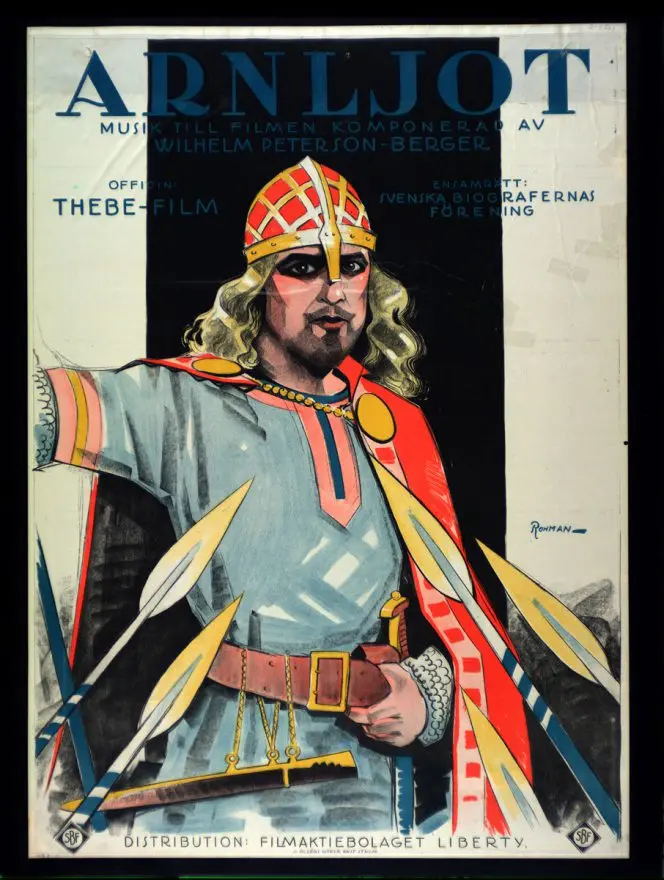
Is Arnljot worth watching today? Short answer: yes, but with significant caveats that demand a specific kind of viewer. This is a film for those who appreciate the austere beauty of early cinema and the unvarnished portrayal of human struggle, particularly within a historical context that feels both distant and deeply resonant.
It is emphatically not for audiences seeking fast-paced action, complex dialogue, or modern narrative conventions. Instead, it offers a meditative, almost stark, journey into the soul of a warrior returning to a changed world.
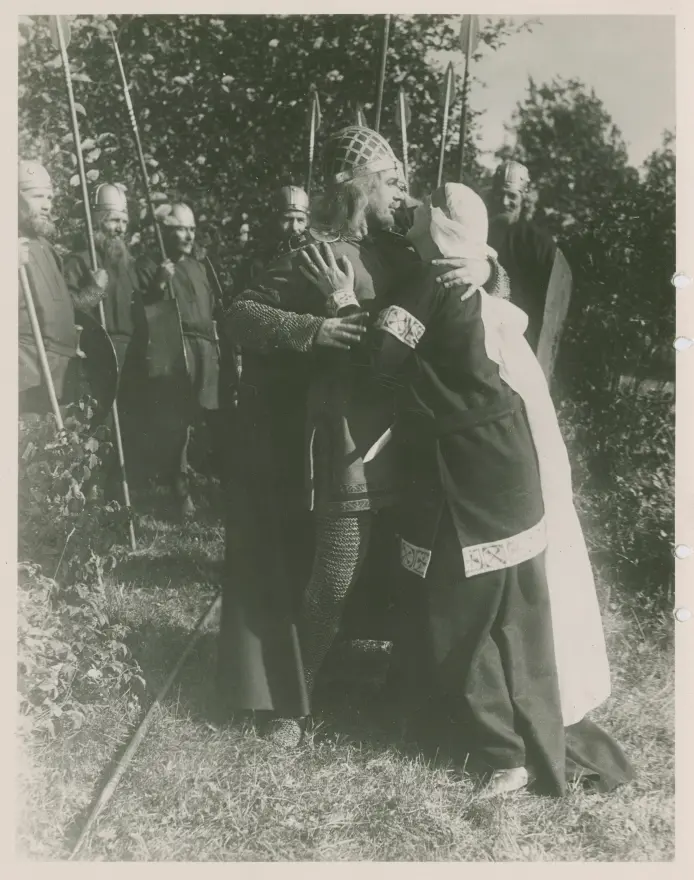
The premise of Arnljot is deceptively simple: a Viking, Arnljot Sunvisson, portrayed with a compelling gravitas by Paul Seelig, returns to his homeland of Jämtland after five years abroad. Yet, within this straightforward setup lies a profound exploration of identity, belonging, and the relentless march of time. The film doesn't just depict a physical journey; it delves into the psychological landscape of a man who has seen too much, fought too hard, and now must reconcile his warrior self with the expectations of his community and the tranquility of his past.
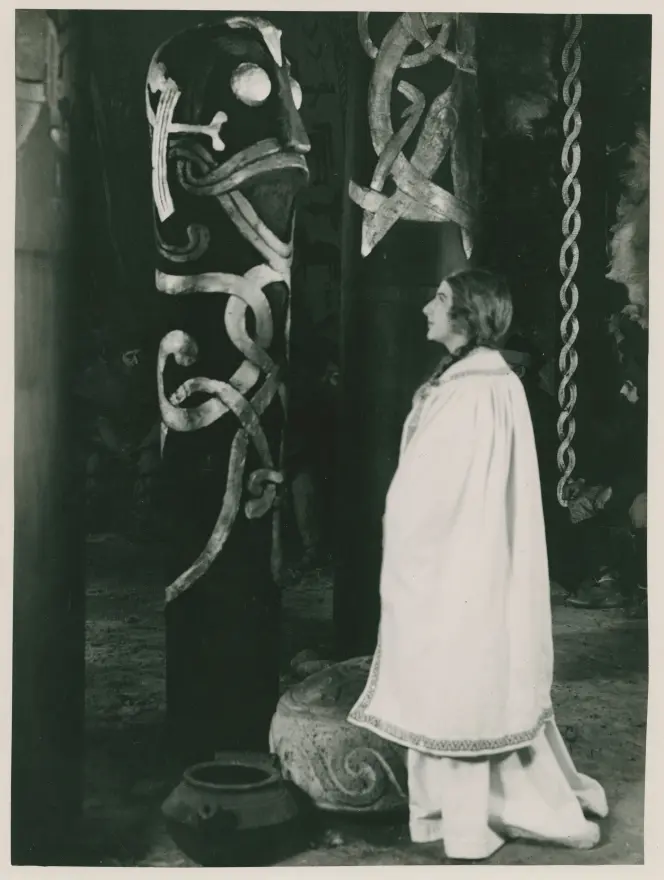
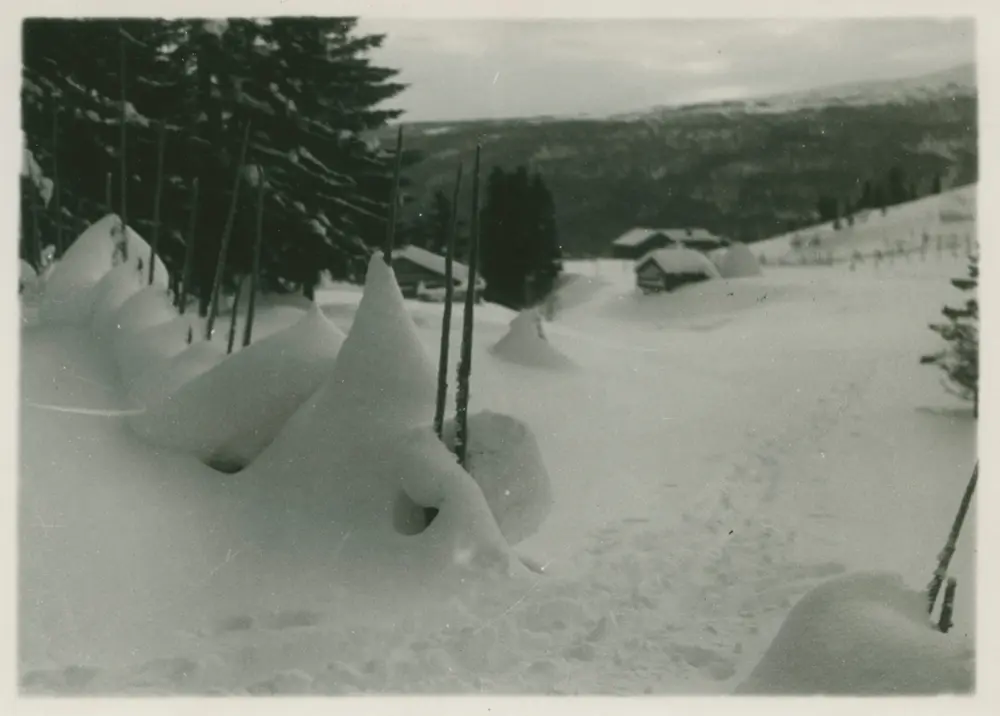
The opening sequences, though sparse in dialogue, are rich in visual storytelling, immediately establishing the harsh, untamed beauty of Jämtland. The cinematography, credited to Greta Berthels' vision as writer and likely a strong influence on the overall aesthetic, captures the rugged terrain with a painterly eye, making the landscape itself a character. We see Arnljot, a solitary figure against vast, imposing backdrops, his posture conveying both weariness and an underlying tension, hinting at the internal battles yet to be fought.
His return is met not with universal jubilation, but with a mix of suspicion, awe, and perhaps resentment. The film subtly suggests that five years is a lifetime in such a community, and Arnljot's absence has left gaps, created new alliances, and possibly stirred old animosities. This immediate sense of unease, rather than a triumphant welcome, sets a somber, realistic tone for the ensuing drama.
The strength of Arnljot lies heavily in its cast, who, despite the stylistic constraints of early cinema, manage to imbue their characters with genuine human emotion. Paul Seelig as Arnljot is a revelation. His stoic demeanor is not a lack of emotion, but a carefully constructed facade, beneath which a storm of memories and anxieties brews. In a pivotal scene, where he silently observes a village gathering, Seelig's eyes convey a complex mix of longing, regret, and a warrior's detached observation. It’s a performance built on nuance, a masterclass in silent acting that speaks volumes more than any dialogue could.
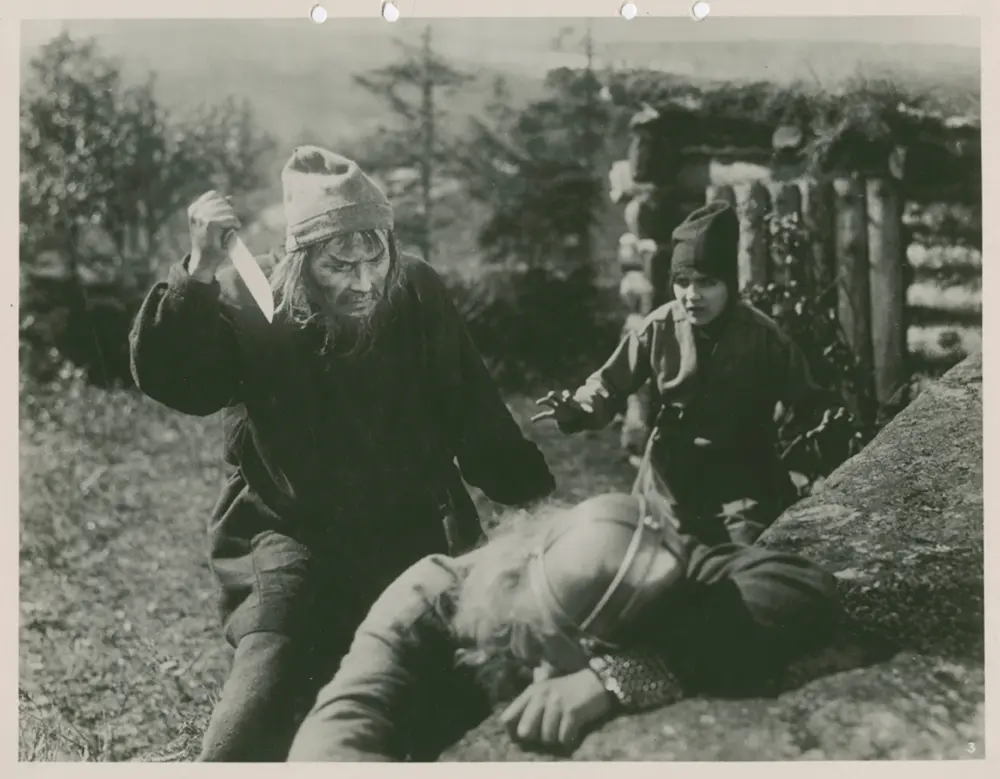
Complementing Seelig’s powerful lead, Valborg Hansson delivers a performance that is both tender and resilient. Her character, perhaps an old flame or a community leader, acts as a foil to Arnljot’s hardened exterior. Her expressions, often subtle shifts of the brow or a gentle hand gesture, communicate the deep-seated worry and hope she holds for him and their community. One particularly poignant moment sees her offering Arnljot a simple meal, her gaze filled with an unspoken plea for him to find peace, highlighting the film's reliance on human connection to ground its epic scope.
The supporting cast, including Henning Ohlsson and Thora Östberg, effectively populate Jämtland with believable figures. Ohlsson, likely playing a rival or an elder, brings a sense of grounded authority, while Östberg’s presence adds a layer of emotional vulnerability. Their interactions with Arnljot are brief but impactful, each glance and gesture contributing to the tapestry of a community grappling with the return of a legend. It’s a testament to the directorial guidance, likely from Greta Berthels herself, that even minor characters feel fully realized within the film's austere framework.
An unconventional observation: the film’s portrayal of Viking life feels less like a historical re-enactment and more like a psychological study veiled in period attire. It strips away the romanticism often associated with the era, focusing instead on the quiet burden of a warrior's soul. This raw authenticity is what truly sets it apart from other films of its time, like perhaps the more overtly dramatic The Illustrious Prince, which leaned into grandeur.
The directorial choices, heavily influenced by Greta Berthels' vision, are the backbone of Arnljot. The film embraces a naturalistic aesthetic, allowing the sweeping vistas of Jämtland to tell much of the story. There are long, lingering shots of mountains, forests, and rivers that not only establish the setting but also reflect Arnljot’s internal state – vast, wild, and often solitary. This approach, while potentially slow for some, creates an immersive atmosphere that draws the viewer into the raw beauty and unforgiving nature of the environment.
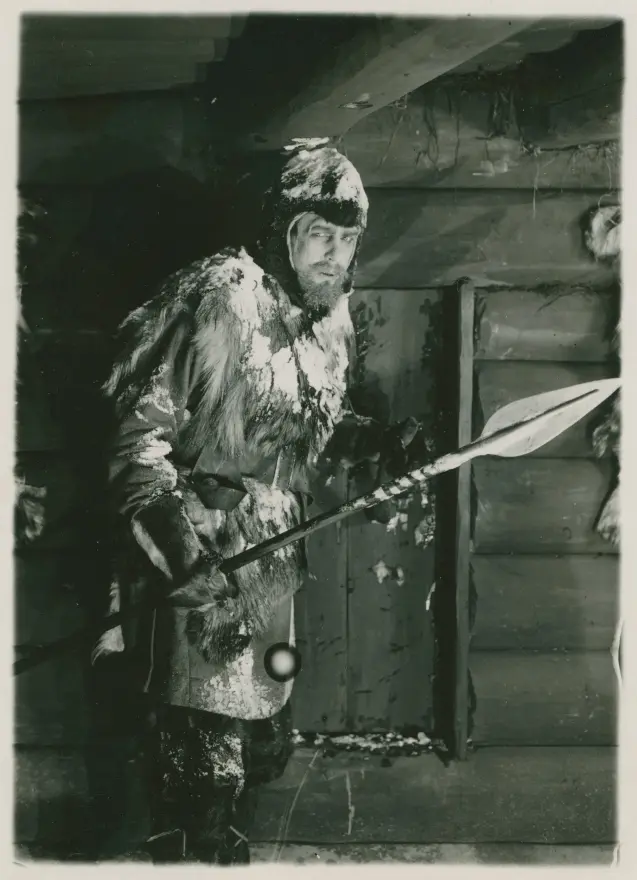
The pacing is deliberate, almost a slow burn, which allows moments of quiet contemplation to resonate deeply. Berthels understands the power of silence and the weight of unspoken words. A scene depicting a tense village council, where Arnljot stands apart, is a masterclass in building tension through body language and careful framing. The camera holds on faces, capturing subtle shifts in expression that convey alliances, suspicions, and fears without a single line of dialogue.
The tone is consistently somber, yet never entirely devoid of hope. There’s a persistent undercurrent of resilience, a Viking spirit that endures despite hardship. The use of natural light, often emphasizing the stark contrasts between light and shadow, adds to this raw, almost documentary-like feel. This isn't a polished epic; it's a gritty, grounded portrayal of life in a challenging era, far removed from the more theatrical stylings seen in some contemporary works like Molly of the Follies, which prioritized spectacle.
Where Arnljot truly excels is in its thematic depth. It explores universal themes of belonging, the difficulty of returning home changed, and the enduring legacy of violence. The film posits that a warrior’s greatest battle is often fought not on the battlefield, but within himself, as he tries to shed the skin of his past. The tension between Arnljot’s desire for peace and his ingrained warrior instincts provides a compelling internal conflict that drives the narrative.
However, the film's greatest strength can also be its biggest stumble. Its reliance on visual storytelling and implied emotions means that some narrative threads feel underdeveloped. While the ambiguity can be powerful, there are moments where a clearer exposition of certain character motivations or historical context would have deepened the viewer's engagement. For instance, the exact nature of the conflicts Arnljot faced abroad, or the specific political landscape of Jämtland upon his return, are left largely to inference, which might leave some viewers craving more concrete details.
The pacing, while intentional, occasionally verges on languid. There are stretches where the narrative momentum wanes, and while this contributes to the meditative tone, it can also test the patience of viewers accustomed to more active storytelling. It works. But it’s flawed. The film’s narrative is a slow burn, a deliberate choice that demands attention and patience, but doesn't always reward it with immediate gratification, unlike perhaps the more direct storytelling of The Forfeit.
My strong opinion: while the film’s narrative sparseness is largely effective in creating an atmosphere of quiet reflection, I believe a slightly more overt exploration of the cultural clash between Arnljot’s 'abroad' experiences and Jämtland’s traditions would have elevated it from a very good film to an undeniably great one. The potential for dramatic tension in that clash feels under-utilized.
Yes, Arnljot is absolutely worth watching, particularly for specific audiences. It is a significant piece of early cinema that offers a unique perspective on historical drama. Its visual poetry and understated performances create a powerful, immersive experience.
You should watch it if you have a deep interest in film history, Viking lore, or character-driven narratives that prioritize internal struggle. It's also ideal for those who appreciate films that challenge modern narrative conventions and allow for personal interpretation.
However, if you're looking for a blockbuster action film, a lighthearted historical romp, or a movie with constant dialogue, this is not it. It demands patience and a willingness to engage with its deliberate pace and visual language.
Arnljot is more than just a historical drama; it's an experience. It’s a quiet epic, a contemplative journey into the heart of a warrior and the soul of a land. While its deliberate pace and reliance on visual storytelling might not appeal to every modern sensibility, its power lies in its ability to evoke profound emotions through understated means. It asks for patience, and in return, it offers a rich, resonant narrative that lingers long after the credits roll.
This film stands as a testament to the evocative power of early cinema, proving that even with limited technical means, a story told with conviction and artistic integrity can transcend time. It's a film that challenges you to slow down, to observe, and to feel. For those willing to accept that challenge, Arnljot offers a deeply rewarding, if somewhat demanding, viewing experience. It's a film I believe deserves a far more prominent place in discussions of early Scandinavian cinema than it currently holds. Its quiet intensity is its greatest triumph.
IMDb 5.8
1935
Community
Log in to comment.