DbcultAccessing Vault...
Cult Review
Senior Film Conservator
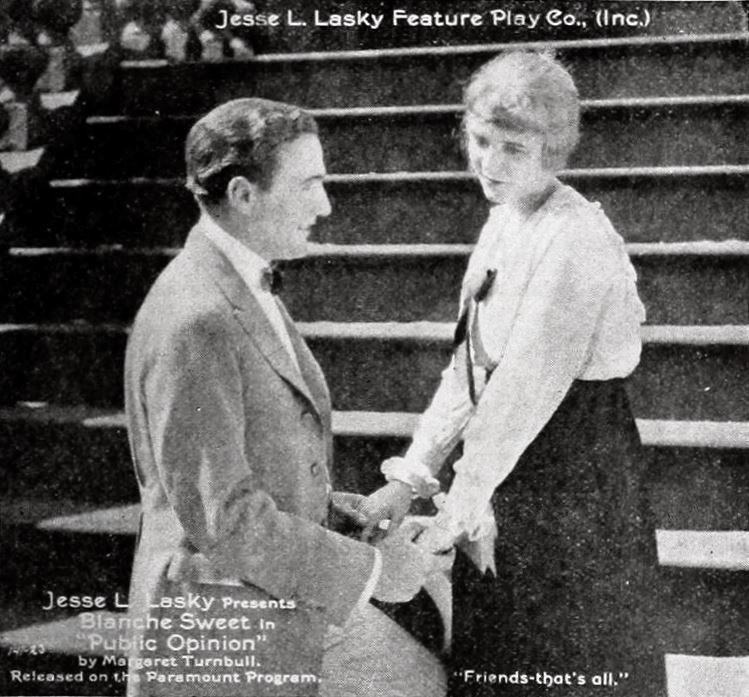
The 1916 production of Public Opinion, directed by Frank Reicher and penned by Margaret Turnbull, stands as a chillingly prescient exploration of the mob mentality and the fragility of a woman’s reputation within the early 20th-century social hierarchy. Starring the luminescent Blanche Sweet, the film navigates the perilous waters of a legal thriller while dipping its toes into the gothic and the supernatural—a combination that distinguishes it from more straightforward melodramas of the era like The Third Degree.
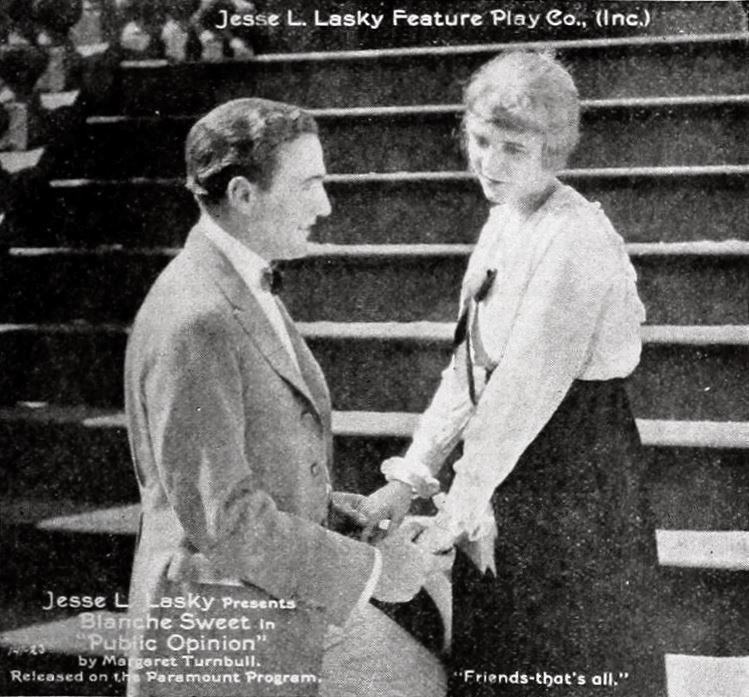
At the heart of this narrative is Hazel Gray, a character portrayed by Sweet with a mixture of stoic resilience and vulnerable bewilderment. Hazel is not merely a victim of circumstance but a victim of a systemic failure that allows the 'public' to act as both judge and executioner long before a jury has even been empaneled. The film’s opening movements establish a pastoral romance between Hazel and Phillip Carson (Elliott Dexter), yet this idyll is quickly corrupted by the shadow of Phillip’s step-father, the predatory Dr. Morgan. Unlike the more overt villainy found in The Black Chancellor, Morgan’s malice is cloaked in professional respectability, making his eventual betrayal of the medical oath all the more sinister.
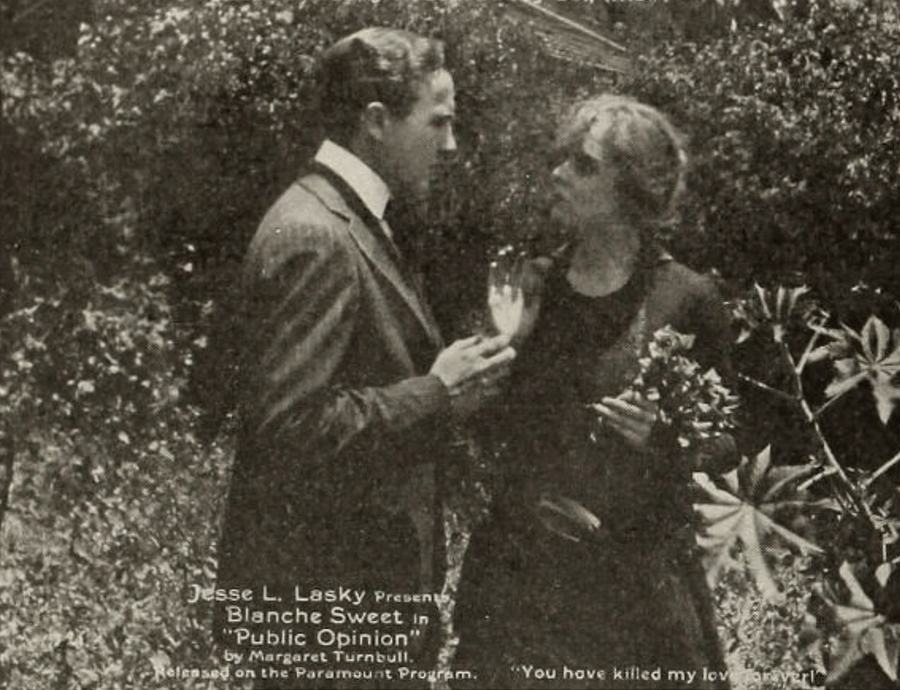
The plot thickens when Mrs. Carson-Morgan dies of arsenic poisoning. The cinematic language used to depict her demise is visceral, emphasizing the physical agony of the poison—a stark contrast to the ethereal, almost spectral interventions that follow. Here, Reicher utilizes the unique visual grammar of silent cinema to suggest that the dead have more clarity than the living. While the spirit of the poisoned woman attempts to point toward the true culprit, the living world remains blinded by prejudice. This thematic preoccupation with the unseen and the unproven echoes the psychological depth seen in The Witching Hour.
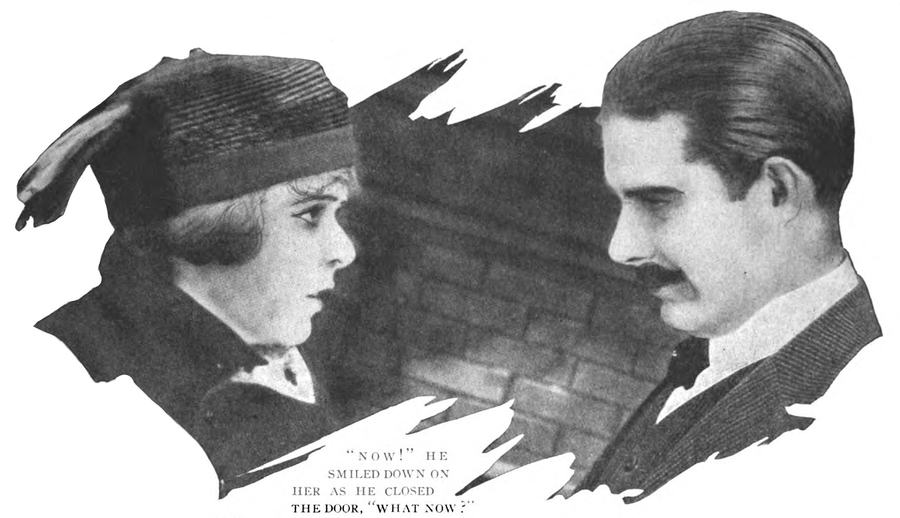
One of the most compelling aspects of Public Opinion is its scathing indictment of the press. As Hazel undergoes the trial of her life, the film portrays the newspapers as scavengers, amplifying every shred of circumstantial evidence into a definitive condemnation. The weight of 'Public Opinion'—the title taking on a crushing, literal quality—becomes an invisible prison. Even when the legal system, represented by the intuitive Gordon Graham (Tom Forman), finds her 'not guilty,' the court of the streets refuses to grant her an acquittal. The film explores the concept of social death with a sophistication that rivals The Woman Pays, highlighting how a woman’s honor, once tarnished by the ink of a tabloid, can rarely be polished back to its original sheen.
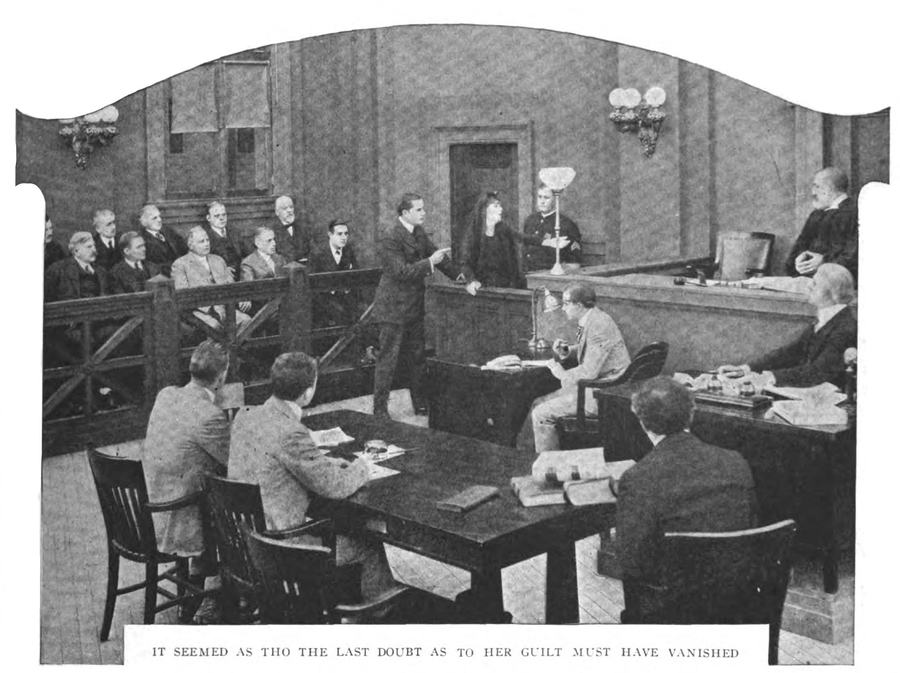
The character of Gordon Graham serves as the audience's moral compass. As a juror who sees through the performative outrage of the prosecution, he represents the triumph of individual reason over collective hysteria. His devotion to Hazel, which leads him to harbor her at his sister’s home, provides a counterpoint to the cowardice of Phillip Carson, whose testimony against the woman he supposedly loved underscores the fragility of male loyalty when faced with the threat of social ruin. This dynamic of the 'man who believes' versus the 'man who doubts' is a trope that Turnbull handles with exceptional nuance, avoiding the saccharine pitfalls often found in contemporary works like The Whirl of Life.
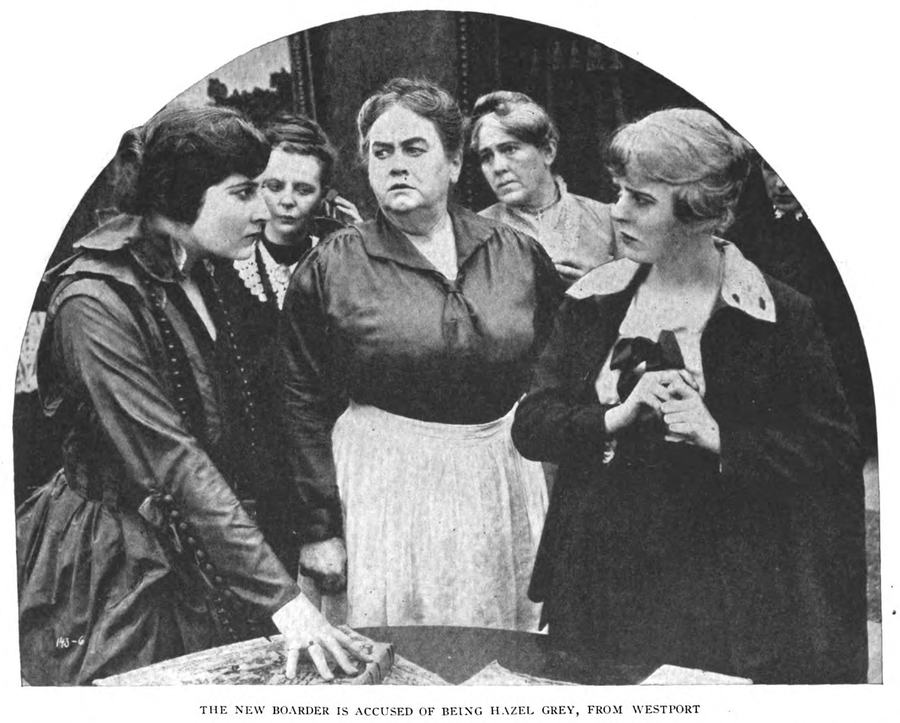
The film’s resolution is precipitated by an unlikely catalyst: Smith, a 'dope fiend' played with twitchy intensity. By introducing a character from the margins of society—a man driven by the desperation of addiction—the film bridges the gap between the high-society drama of the Morgans and the gritty reality of the streets. Smith’s confrontation with Dr. Morgan, who has been withholding drugs while simultaneously engaging in murder, exposes the hypocrisy of the elite. This inclusion of drug addiction as a plot device provides a fascinating glimpse into the era’s fascination with the 'underworld,' a theme also explored in The Devil's Needle and The Exploits of Elaine.
The climax, involving a struggle and a fatal gunshot, is staged with a frantic energy that serves as an emotional release for the preceding hour of repressed tension. As Dr. Morgan confesses on his deathbed, the truth finally emerges, but the film leaves the viewer with a lingering sense of unease. While Hazel is 'cleared,' the ease with which public opinion shifts—from vitriolic hatred to celebratory acceptance—suggests a fickleness that is as dangerous as the original accusation. It is a cynical, yet perhaps honest, take on the nature of societal consensus.
Blanche Sweet delivers a performance that is masterfully restrained. In an era often characterized by histrionic gestures, Sweet uses her eyes to convey the sheer exhaustion of a woman being hounded by the world. Her chemistry with Tom Forman is palpable, providing the necessary emotional anchor for a story that could otherwise feel overly episodic. Raymond Hatton, as Smith, provides a jarring, modern performance that feels decades ahead of its time, capturing the physical degradation of his character without descending into caricature. The cinematography, while limited by the technology of 1916, uses shadow and domestic space to create a sense of claustrophobia that mirrors Hazel’s internal state, much like the atmospheric tension found in De mystiske z straaler.
Furthermore, the writing by Margaret Turnbull deserves significant praise. She avoids the easy out of a purely romantic resolution by grounding the stakes in the very real consequences of slander and the corruption of power. The film’s structure, which moves from a domestic tragedy to a legal thriller and finally to a crime drama, is handled with a fluidity that keeps the pacing tight. It shares a certain DNA with Sins of the Parents and The Unwritten Law in its willingness to tackle the darker impulses of the human psyche.
Public Opinion is a remarkable artifact of the silent era that remains startlingly relevant in the age of social media and 'cancel culture.' It understands that the greatest threat to justice is not the absence of evidence, but the presence of a pre-determined narrative. While it employs the conventions of its time—the dying confession, the providential witness, the spectral mother—it uses them to interrogate the very concept of 'truth.' For fans of early cinema who appreciate a plot that offers more than just melodrama, this film is a mandatory watch. It stands alongside The Second Mrs. Tanqueray as a profound study of how society treats those it deems 'fallen,' and the rare courage required to stand against the tide of the majority.
Technical Note: For those interested in the evolution of the legal drama on film, compare the jury deliberations in this film with those in In Mizzoura or the gritty realism of Das Gesetz der Mine. The thematic threads of innocence and redemption are a perennial fascination of the medium.
IMDb 4.5
1929
Community
Log in to comment.