DbcultAccessing Vault...
Cult Review
Senior Film Conservator
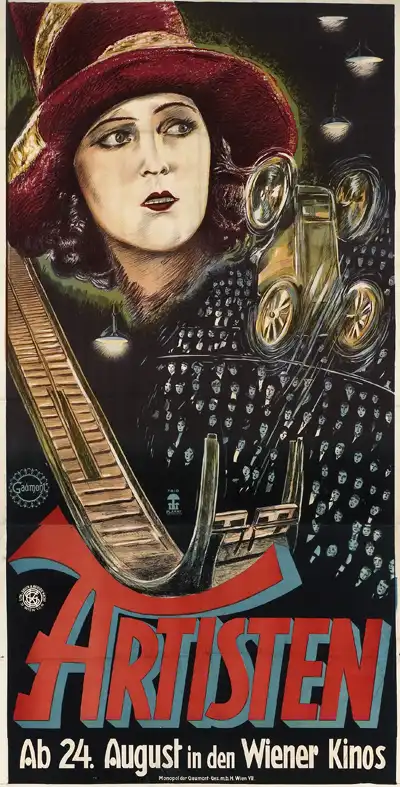
If you go into Artisten expecting a grand, high-flying circus spectacle with death-defying stunts and lion tamers, you’re going to be disappointed within about ten minutes. This isn't that kind of movie. It’s much smaller, quieter, and honestly, a bit more depressing. It’s for people who like to see what happens when the greasepaint starts to crack and the performers have to go back to living in cramped wagons next to smelly horse stalls. If you prefer the glossy, over-rehearsed energy of modern period pieces, stay away. This feels like it was filmed in a place that actually needed a good scrubbing.
The first thing that struck me was the lighting in the stable scenes. It’s not that polished, high-contrast look you get in a lot of late-silent German cinema. It’s murkier. You can almost see the dust motes dancing in the air when the light hits the straw. There’s a specific shot early on where one of the performers is just leaning against a wooden beam, and the camera lingers on the grain of the wood and the dirt under his fingernails for just a second too long. It’s great. It sets the tone immediately: this is a movie about the physical reality of the circus, not the myth of it.
Mary Johnson is the real standout here. She has this way of looking at her co-stars—especially during the more tense, private arguments—that feels surprisingly modern. She doesn't do that wide-eyed, frantic gesturing that gives silent acting a bad rap. She just looks tired. There’s a scene where she’s sitting at a small, cluttered table, and the way she moves a coffee cup aside to make room for her elbows tells you everything you need to know about her character’s headspace. It’s a tiny, domestic gesture in the middle of a "circus movie," and it works better than any of the bigger dramatic beats.
The pacing is... well, it's uneven. There’s a sequence in the middle involving a conflict between the clowns and the more "serious" entertainers that feels like it drags on for an eternity. You get the point within two minutes, but the movie insists on showing you every single hurt look and passive-aggressive shoulder shrug. It’s one of those moments where you can feel the director, or maybe the editor, falling a bit too much in love with the atmosphere and forgetting to move the needle on the plot. It reminded me a bit of the slower domestic stretches in Die drei Mannequins, where the environment starts to swallow the narrative.
Speaking of the clowns, the costume work is oddly unsettling. Not in a "scary clown" horror movie way, but in a "this fabric looks like it hasn't been washed in three years" way. The sequins are dull, and the ruffles are frayed. When Ernst Deutsch is on screen, there’s this palpable sense of discomfort. He has such a distinct, sharp face, and putting him in these baggy, ridiculous clothes creates this tonal friction that I couldn't quite shake. It’s never addressed directly, but he looks like he’s constantly itching in his own skin.
There are some weird edits, too. At one point, we jump from a fairly intimate conversation to a wide shot of the circus exterior so abruptly it feels like a frame might have been dropped. It’s jarring, and it breaks the spell of the scene for a second. But then, the movie pulls you back in with a close-up of a horse’s eye or the way the shadows stretch across the canvas of the tent at night. The cinematography isn't "beautiful" in the traditional sense, but it’s incredibly observant of textures.
I found myself focusing on the background extras quite a bit. Usually, in these old films, the people in the back are either over-acting or standing perfectly still like statues. Here, they seem genuinely busy. You see people hauling buckets, grooming animals, and just generally looking like they have a job to do. It makes the world feel lived-in. It’s not just a stage for the main actors; it’s a working environment that happens to be the setting for a drama. That groundedness is what kept me watching even when the "private conflicts" between the artists felt a bit repetitive.
The dialogue—or rather, the intertitles—are fairly standard, but there’s a recurring theme of professional jealousy that feels very real. It’s not about grand betrayals; it’s about who gets the better billing or who’s taking up too much space in the dressing room. It’s petty, and because it’s petty, it feels human. There's a moment where two performers are arguing while one of them is trying to put on a complicated wig, and the physical comedy of the wig not sitting right while they’re trying to be serious is probably the most honest moment in the whole film.
Does it all come together in the end? Sort of. The finale feels a bit rushed compared to the slow-burn energy of the first hour. It’s like they realized they had to wrap up all these small threads and decided to do it all at once. But the final shot—which I won't spoil—has a nice, lingering bit of ambiguity to it. It doesn't give you a clean, happy bow. It just lets the characters exist in their world for one more minute before the lights go out.
It’s a strange little film. It’s rough around the edges and definitely has some scenes that could have been left on the cutting room floor, but I’d take this over a polished, soulless blockbuster any day. It’s a movie that smells like sawdust and old makeup, and sometimes, that’s exactly what you want.
IMDb —
1918
Community
Log in to comment.