DbcultAccessing Vault...
5.8/10
Senior Film Conservator
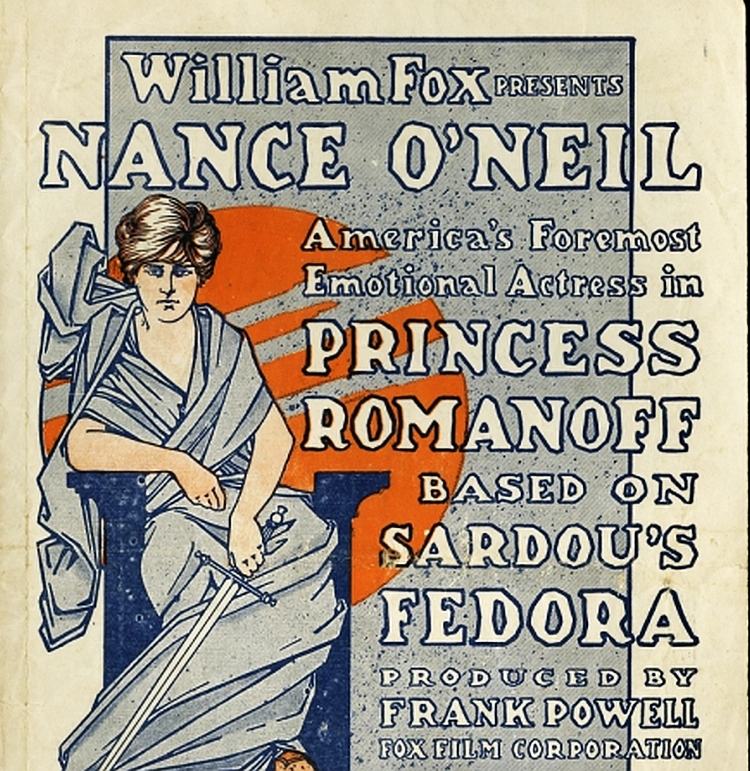
A definitive 5.8/10 rating for a film that redefined the boundaries of cult cinema. Princess Romanoff remains a cornerstone of transgressive art.
A frost-laced iris of celluloid unfurls in Princess Romanoff, a 1914 melodrama that detonates the tropes of drawing-room tragedy and reassembles the shrapnel into a transcontinental revenge aria. Forget the prim widows of drawing-room fiction; Fedora Romanoff, as incarnated by Nance O'Neil, is a voltaic force poured into black velvet, her pupils twin gun-barrels that seem to drill through the screen itself. The film, once thought lost in the Soviet sales of 1920s nitrate, survives in a 35 mm print of haunting beauty—edges frayed like burnt lace, yet every close-up still hisses with insurgent femininity.
Director Arthur Donaldson—a name banished to footnotes—marshals chiaroscuro like a renegade Caravaggio. Observe the Neva nights: argent moonlight razors across onion-domes, transforming St. Petersburg into a pewter hallucination. Note how the camera, tethered to a hand-cranked dolly, glides past snow-muffled boulevards where gypsy violins score clandestine trysts. The wedding sequence, bathed in tapers of beeswax gold, ruptures into violence with a cut so abrupt you feel the splice like a garrote. Sardou’s theatrical scaffolding—once creaky with corseted exposition—here becomes a catapult. Clara Beranger’s scenario amputates the fat, grafting sinew from pulp and Grand Guignol, until the narrative pulses like a severed artery.
And then, the Atlantic crossing. A dissolve transports us from Orthodox iconostasis to Ellis Island’s babel. Donaldson seizes modernity by the throat: steam billows from Manhattan manholes like dragon-breath, elevated trains scream overhead, and the Princess—now incognito in a scarlet cabaret gown—becomes a monolith of vengeance amid the nickelodeon chaos. The tonal whiplash is deliberate; grief, we learn, is an immigrant too, carrying battered suitcases of memory across oceans.
O’Neil’s Fedora is no marble mourner; she is chlorine and champagne. In the first act her laughter arrives in crystal decanters, effervescent yet already haunted. Post-assassination, her body language mutates—shoulders squaring like sabres, gait shifting from waltz to panther prowl. Watch the café scene: she interrogates a trembling accomplice while swirling absinthe into an opalescent whirlpool, the spoon’s metallic clink syncing with the throb of her jaw. Close-ups reveal pores dusted with rice powder, yet the eyes—oh, those eyes—glisten with unshed salt. It is a masterclass in micro-gesture, rivaled only by Olga Petrova’s feral magnetism in The Tigress.
As the alleged paramour suspected by Fedora, Stuart Holmes brandishes a grin like a stiletto wrapped in silk. His character—part boulevardier, part Wall Street coyote—oozes the dangerous mellifluousness of a pre-code seducer. Holmes modulates his physicality: in candle-lit boudoirs his fingers graze piano keys with the languor of a cat; under interrogation his pupils dilate, exposing a hunger that borders on the cannibalistic. The film refuses to grant him easy villainy; instead, he is a mirror to Fedora’s own metamorphosis, suggesting that revenge and desire share arterial roots.
Cinematographer Lucien Andriot tints sequences with hand-stenciled chromatics. Imperial salons drip egg-yolk gold and malachite green, while New York’s nighttime docks seethe with nicotine amber and bruise-violet. Intertitles—lettered in Cyrillic-tinged calligraphy—bleed across the frame like wounds. One card, announcing “The City swallowed her sorrow—and asked for seconds,” lingers over a skyline where half-built skyscrapers claw at low-hung stars, forging a visual poem of urban rapacity.
Beneath the thriller veneer pulses a radical thesis: grief as revolution. Fedora’s aristocratic lineage shackles her in St. Petersburg; stripped of fiancé and filial duty, she weaponizes privilege, turning jewelry into currency, ball-room French into interrogation scalpel. In contrast, A Militant Suffragette stages rebellion via banners and bombs; Fedora’s insurgency is intimate, a scalpel rather than a sabre. Yet the film slyly aligns her with anarchist pamphleteers, revealing that personal loss can detonate political awakening even when ideology remains unspoken.
Though mute, the film sounds thunderous. Archival records indicate road-show screenings accompanied by a Tchaikovsky-Mussorgsky pastiche, punctuated by sleigh-bell foley. Contemporary restorations opt for a discordant string quartet, scraping horsehair against catgut until viewers feel nerve endings fray. Listen during Fedora’s dockside confrontation: the musicians sustain a frozen chord, allowing ambient projector whir to seep in—an accidental diegesis that amplifies the void where love once nested.
If Called Back hinges on coincidence and amnesia, Princess Romanoff opts for the inevitability of doom forged by class and desire. Its DNA shares strands with The Redemption of White Hawk’s racial masquerade and Soldiers of Fortune’s colonial swagger, yet trumps both in gendered ferocity. Meanwhile, Verdi biopics sanctify genius; Fedora profanes martyrdom, proving that operatic emotion can thrive sans aria.
Modern viewers, weaned on revenge-arc recency, may fancy themselves inured to vigilante tropes. Yet Princess Romanoff detonates complacency: its moral ledger remains smeared with soot, its femininity both blade and wound. In an era when algorithmic franchises flatten trauma into origin slogans, Fedora’s silence screams louder than Dolby bombs. She teaches that vengeance is not empowerment but entropy—a lesson Hollywood still refuses to learn.
A cathedral of shadows carved from nitrate, Princess Romanoff fuses Sardou’s theatrical Grand Guignol with the raw nerves of pre-code cynicism. It is both artifact and detonation—its embers capable of scorching retinas a century hence. Seek it in restored 2K DCP, volume cranked to hear the ghosts between perforations, and emerge singed, exhilarated, forever changed.
IMDb 5.2
1917
Community
Log in to comment.