DbcultAccessing Vault...
5.9/10
Senior Film Conservator
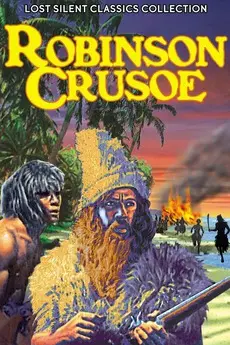
A definitive 5.9/10 rating for a film that redefined the boundaries of cult cinema. Robinson Crusoe remains a cornerstone of transgressive art.
Short answer: Yes, but only for those who find beauty in the slow decay of the human spirit. This film is for the patient cinephile and the student of early 20th-century colonial perspectives; it is certainly not for those accustomed to the polished, high-octane survivalism of modern blockbusters.
While many modern viewers might find the 1927 pacing difficult, the sheer physicality of the performance and the rugged location shooting offer a texture that studio-bound films of the era, such as Burnt Wings, often lacked. It is a raw piece of history that demands your full attention.
1) This film works because of its raw, location-based texture that modern green screens cannot replicate.
2) This film fails because its narrative structure is as jagged as the rocks Crusoe crashes upon.
3) You should watch it if you want to witness the birth of the survival genre in its most unvarnished form.
M.A. Wetherell does not just play Robinson Crusoe; he inhabits the man’s physical deterioration with a commitment that feels almost dangerous. In an era where many actors relied on the theatrical gesticulations seen in melodramas like An Alien Enemy, Wetherell opts for a more internal, weary approach. His eyes do the heavy lifting. When he first discovers the footprint in the sand, the camera lingers on his face for an uncomfortably long time. We don't see a man thinking; we see a man being hunted by his own paranoia.
The physical transformation is equally striking. As the years pass on the island, the costume design—utilizing actual animal skins—begins to look less like a disguise and more like a second skin. There is a scene midway through where Crusoe attempts to maintain his English dignity by setting a table for a meal. The contrast between his ragged appearance and his disciplined ritual is heartbreaking. It’s a moment of quiet madness that speaks louder than any dialogue could.
Wetherell’s direction is equally uncompromising. He avoids the stagey setups common in 1920s cinema. Instead, he uses the natural light of the coast to create a sense of vast, indifferent space. You can almost feel the humidity and the salt spray on the lens. It’s a far cry from the stylized, urban grit of Saturday, favoring instead a documentary-like observation of survival.
We cannot discuss this 1927 adaptation without addressing the elephant in the room: the relationship between Crusoe and Friday. Herbert Waithe’s performance as Friday is, by the standards of the time, surprisingly dignified, yet the power dynamic remains firmly rooted in the colonial mindset of the 1920s. Crusoe’s immediate assumption of the role of "Master" is presented not as a choice, but as a natural law. This makes for a difficult viewing experience for a modern audience, but it serves as a vital historical document.
The film presents the "civilizing" of Friday as a moral victory for Crusoe. However, the camera often betrays this narrative. There are shots where Friday’s confusion and forced subservience are palpable, creating a subtext that Wetherell might not have intended but which resonates today. It’s a fascinating, if troubling, look at how the British Empire viewed its role in the world—a theme also explored, albeit differently, in The Governor's Ghost.
Despite these dated elements, the chemistry—or lack thereof—between the two men creates a palpable tension. The island is no longer a place of solitude; it becomes a place of social hierarchy. This shift changes the tone of the film from a survivalist drama to a psychological study of authority. It is uncomfortable. It is provocative. It is necessary.
The cinematography in Robinson Crusoe is its most enduring legacy. While many films of 1927 were beginning to experiment with the early sound technology that would eventually lead to films like The Price of Pleasure, Wetherell stayed true to the visual language of the silent era. The use of long shots to emphasize Crusoe’s insignificance against the horizon is masterful. The sea is not a character; it is an obstacle, a blue wall that keeps him imprisoned.
There is a specific sequence involving a storm that stands out. The editing is frantic, cutting between the crashing waves and Crusoe’s desperate attempts to secure his shelter. Unlike the choreographed action of modern films, this feels chaotic and real. You can see the actor struggling against the wind. It isn't pretty. It's effective.
The pacing of the film, however, is its greatest hurdle. It moves with the speed of a tide coming in. For long stretches, nothing happens except the mundane tasks of survival—foraging, building, waiting. While this accurately reflects the boredom and monotony of isolation, it tests the patience of the viewer. It lacks the punchy narrative drive of something like White Eagle, choosing instead to drown the audience in the passage of time.
Yes, the 1927 version adheres closely to the survival mechanics of Daniel Defoe's novel. It prioritizes the logistics of island life over Hollywood melodrama. The film captures the isolation and religious contemplation present in the original text. It avoids the unnecessary romantic subplots that often plague more modern interpretations of the story.
The location shooting provides an authenticity that is rare for the 1920s. The film doesn't shy away from the ugliness of survival; Crusoe looks dirty, tired, and aged. The visual storytelling is strong enough that you rarely miss the presence of dialogue. It is a masterclass in using the environment to tell a story.
The runtime feels excessive due to the repetitive nature of the island activities. The treatment of Friday is undeniably problematic and requires a critical lens to navigate. Some of the animal sequences are difficult to watch by modern ethical standards. It is a film that feels its age in every frame.
Robinson Crusoe (1927) is a difficult, demanding, and ultimately rewarding piece of cinema. It isn't a masterpiece in the traditional sense. It’s too clunky for that. But it is a vital bridge between the theatricality of early film and the realism of the mid-20th century. It works. But it’s flawed. It captures the essence of Defoe’s work better than many of its successors because it isn't afraid to be boring. Survival is boring. Isolation is boring. And Wetherell makes you feel every second of it. If you can handle the colonial baggage, you will find a film that is surprisingly modern in its psychological depth. It is a relic, but one that still has a sharp edge.
IMDb —
1928
Community
Log in to comment.