DbcultAccessing Vault...
Cult Review
Senior Film Conservator
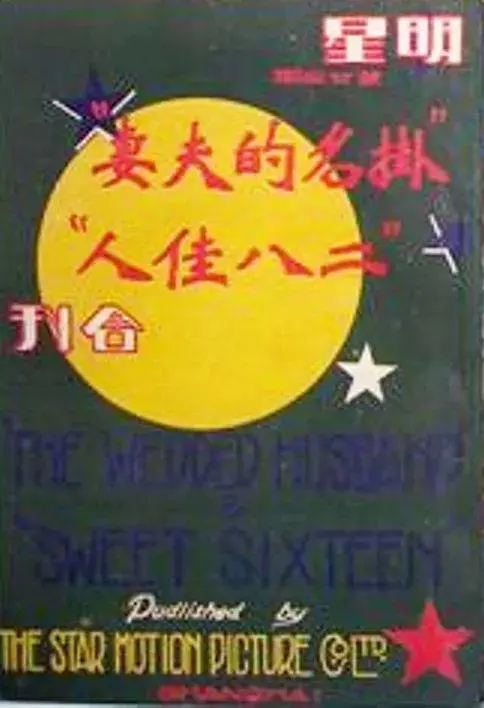
Should you invest your time in a century-old silent film about arranged marriage? Short answer: yes, but only if you value the historical DNA of social realism over modern cinematic flash.
This film is for students of Asian cinema and those who appreciate slow-burn character studies that challenge societal norms. It is absolutely not for viewers who require fast pacing, synchronized sound, or high-definition spectacle to stay engaged.
Before diving into the technical nuances, let’s establish the core of the film’s impact in a modern context.
To answer the most pressing question: is Gua ming de fu qi worth your time today? The answer depends entirely on your tolerance for the 'Civilized Drama' style that dominated early Chinese screens.
If you are looking for a museum piece that breathes with surprisingly modern anxieties about bodily autonomy and marital consent, it is essential viewing. It isn't just a relic; it is a protest. The film captures a specific moment in Shanghai's history where the 'New Culture Movement' was clashing violently with Confucian traditions.
While it lacks the visual experimentation of something like Vanina from the same decade, it makes up for it with a grounded, almost gritty focus on domestic politics. It is a film that asks uncomfortable questions about who owns a woman's future.
The acting in Gua ming de fu qi, featuring Xieyan Wang and the iconic Lingyu Ruan in a supporting capacity, represents a bridge between the exaggerated gestures of the opera and the nuanced naturalism of later silent masterpieces.
Xieyan Wang carries the emotional burden of the film with a performance that is remarkably restrained. In the scene where she first enters her husband's home, her posture alone tells the story. She isn't just a weeping bride; she is a political prisoner. Her movements are stiff, her eyes vacant, conveying a soul that has already checked out of its physical reality.
Contrast this with the performance of Bang Wei as the 'dull-witted' husband. Early in the film, he plays into the caricature, but as the narrative shifts, he sheds the layers of perceived idiocy. This transition is handled with a subtlety that was rare for 1927. It forces the viewer to realize that the 'dullness' was perhaps a shield or a projection of the parents' own lack of imagination.
Director Zhengqiu Zheng was never one for flashy camera movements. His style is architectural. He uses the interior of the Chinese home as a series of cages. The cinematography, while static, is deeply purposeful in its framing.
Consider the use of doorways and windows. Characters are often framed within frames, emphasizing their entrapment. This technique is far more effective than the more overt melodrama found in films like The Apple-Tree Girl. In Gua ming de fu qi, the house itself is the antagonist.
The pacing is deliberate. Some might call it slow. I call it honest. It reflects the agonizingly slow passage of time for a woman waiting for a life she didn't choose to begin. It doesn't rush to the 'twist' because the misery of the wait is the point of the film.
The title itself, which translates roughly to 'The Nominal Married Couple' or 'Married in Name Only,' is a biting critique. In the 1920s, many progressive intellectuals were trapped in 'nominal' marriages—arranged unions that existed on paper but lacked intellectual or emotional parity.
This film takes that concept and flips it. By making the husband 'different than expected,' the film suggests that the tragedy isn't just the arrangement itself, but the lack of communication and the assumptions made by a patriarchal society. It suggests that even within a flawed system, individual humanity can find a way to manifest.
This is a much more complex take than the straightforward moral lessons found in Honesty - The Best Policy. It acknowledges that the system is broken, but the people within it are still trying to breathe.
Pros:
1. Pioneering social commentary that still feels biting.
2. Exceptional lead performance by Xieyan Wang.
3. Provides a fascinating look at 1920s Shanghai domestic life.
4. Subverts audience expectations regarding the 'simpleton' character.
Cons:
1. Slow pacing that may alienate modern viewers.
2. Limited visual variety due to the stage-influenced directing style.
3. Surviving prints can be of varying quality, making some details hard to discern.
Here is an observation most critics miss: Gua ming de fu qi is actually a proto-feminist horror film. While it is categorized as a drama, the first two acts utilize the tropes of a nightmare. A woman is sold before she is born. She is hunted by a contract. She is delivered to a man she believes is a monster.
The fact that the 'monster' turns out to be human doesn't negate the horror of the process. In fact, it makes it worse. It suggests that the parents were willing to sacrifice their daughter to a man they *thought* was a dullard. Their cruelty is the real focus here, not the husband's intellectual state.
It’s a brutal realization. The parents are the villains. The system is the weapon.
When compared to other films of the era like Cleaning Up or Home, Sweet Home, this film stands out for its refusal to give a simple 'happy ending.' Yes, the husband is different, but the fundamental violation of the daughter's autonomy remains.
Unlike the slapstick humor in Felix Minds His Business or the lightheartedness of Little Miss Mischief, Gua ming de fu qi maintains a somber, almost clinical tone. It wants you to feel the weight of the furniture, the thickness of the air, and the finality of the marriage vows.
Gua ming de fu qi is a foundational pillar of Chinese cinema that deserves more than a footnote in history books. It is a sharp, albeit slow, indictment of the ways in which tradition can be used as a mask for cruelty.
The film doesn't just tell a story; it documents a cultural shift. It captures the exact moment when the youth of China began to look at their parents' 'wisdom' and see only chains. It’s flawed. It’s dated. But it is undeniably powerful.
"A haunting exploration of the contracts we sign with our lives before we even have the words to read them."
Final Score: 8.2/10 - A vital piece of cinematic history that still possesses the power to provoke and unsettle.
IMDb 1.2
1933
Community
Log in to comment.